The depths of the ocean, a realm of immense pressure and profound mystery, conceal some of humanity’s most complex and strategically vital creations: nuclear submarines. These vessels, often referred to as silent hunters or the ultimate deterrent, operate beyond the reach of conventional observation, embodying a unique blend of engineering prowess, strategic intent, and enduring secrecy. Their very existence is a testament to the perpetual human drive to explore, control, and, in some cases, project power across the globe.
The concept of underwater warfare predates nuclear propulsion by centuries, with early designs ranging from rudimentary diving bells to hand-cranked submersibles. However, it was the advent of the nuclear age that truly revolutionized submarine capabilities, transforming them from limited coastal defenders into global power projection platforms.
From Diesel to Reactor: A Paradigm Shift
Early submarines, reliant on diesel-electric propulsion, were constrained by the need to surface frequently for air to recharge their batteries. This inherent limitation made them vulnerable to detection and imposed severe restrictions on their operational range and submerged endurance. The introduction of nuclear reactors as power sources eliminated this critical vulnerability.
- Unlimited Endurance: Nuclear propulsion allows submarines to remain submerged for months at a time, limited only by the crew’s endurance and the provisions they carry. Unlike their diesel counterparts, they do not require atmospheric oxygen for their power generation.
- High Speed Capabilities: Nuclear reactors provide significantly more power, enabling sustained high-speed operations underwater, a crucial advantage in both evasive maneuvers and pursuit.
- Reduced Acoustic Signature (Paradoxically): While nuclear reactors inherently generate heat and require cooling, presenting a potential acoustic signature, the ability to operate at much slower speeds on quiet electric motors for extended periods, and the incorporation of advanced quieting technologies, made nuclear submarines far more covert than their diesel predecessors during critical stealth operations. This contrast is often overlooked; the potential for high-speed noise is balanced by the ability for prolonged silence.
Cold War Catalysts: The Race for Underwater Dominance
The Cold War served as the primary accelerator for nuclear submarine development. Both the United States and the Soviet Union recognized the strategic imperative of an undetectable, nuclear-capable platform. This geopolitical tension fueled an unprecedented arms race beneath the waves.
- First Nuclear Submarines: The USS Nautilus, commissioned in 1954, marked the dawn of this new era, swiftly followed by Soviet counterparts. Its ability to circumnavigate the globe submerged and travel under the North Pole demonstrated a revolutionary operational capability.
- Strategic Deterrence: The development of Submarine-Launched Ballistic Missiles (SLBMs) transformed nuclear submarines into the most survivable leg of the nuclear triad, ensuring a retaliatory strike capability even if land-based assets were destroyed. This “second-strike capability” became a cornerstone of mutually assured destruction (MAD) during the Cold War.
Recent discussions surrounding nuclear-powered submarine secrets have been further explored in an insightful article on military advancements and their implications for global security. For a deeper understanding of the complexities involved in submarine technology and its strategic importance, you can read more in this article: Military Advancements and Global Security.
The Anatomy of Stealth: Engineering for the Unseen
At their core, nuclear submarines are sophisticated machines designed to be invisible. Every aspect of their construction, from the shape of the hull to the propulsion system, is meticulously engineered to minimize their acoustic, magnetic, and thermal signatures, allowing them to traverse the ocean’s depths undetected.
Hydrodynamics and Hull Design: Sculpting Silence
The exterior of a nuclear submarine is not merely aesthetic; it is a carefully calculated hydrodynamic form designed to reduce drag and minimize turbulence, both of which generate detectable noise.
- Teardrop Shape: Modern submarines often adopt a teardrop or “albacore” hull shape, which is highly efficient for submerged travel and vastly reduces hydrodynamic flow noise compared to earlier cigar-shaped designs.
- Anechoic Tiles: The hull surface is frequently covered with anechoic tiles, specifically designed to absorb active sonar pings, preventing them from reflecting back to the source. Imagine an acoustically damped room, but for sonar waves at ocean depths.
- Propeller Design: The screw, or propeller, is a critical source of noise. Modern submarines employ highly refined, often shrouded, or pump-jet propulsors designed to minimize cavitation – the formation and collapse of vapor bubbles that produce significant noise. This is achieved through complex blade geometries and precise manufacturing tolerances.
The Quiet Heart: Reactor and Propulsion System
The nuclear reactor, while an immense power source, presents a challenge for stealth due to the inherent noise of pumps, turbines, and primary cooling systems. Extensive engineering efforts are dedicated to isolating and mitigating this noise.
- Reactor Compartment Isolation: The reactor and its associated machinery are typically mounted on shock-absorbing rafts and isolated from the main hull structure, preventing vibrations from propagating throughout the vessel.
- Natural Circulation: Some reactor designs employ natural circulation for cooling at low power settings, eliminating the need for noisy pumps and allowing for exceptionally quiet operation during stealth missions.
- Steam Turbine Redundancy: The steam generated by the reactor drives turbines that power the propeller. These systems are highly redundant and designed for whisper-quiet operation, with active monitoring for any anomalous sounds.
The World Beneath the Waves: Life and Operation
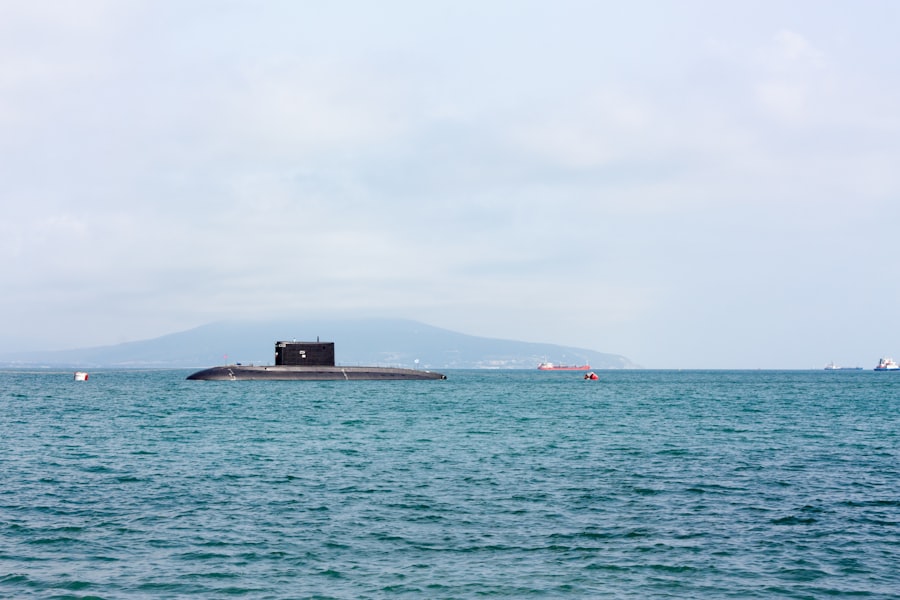
Life aboard a nuclear submarine is a unique experience, characterized by extreme isolation, demanding routines, and an unwavering reliance on technology and teamwork. The environment is one of controlled artificiality, a world sustained solely by human ingenuity.
The Human Element: Sustaining Life in an Alien Environment
Confined within a steel tube for months, often hundreds of meters beneath the surface, crews face significant psychological and physical challenges.
- Atmospheric Control: Sophisticated systems continuously filter and regenerate the air, removing carbon dioxide, adding oxygen, and controlling humidity and temperature. This is a critical life support function, akin to a space station, but operating in an inverse pressure environment.
- Water Production: Desalination plants convert seawater into potable fresh water for drinking, cooking, and hygiene, illustrating the self-sufficient nature of these vessels.
- Psychological Resilience: The lack of natural light, constant hum of machinery, and limited personal space necessitate resilient individuals and robust psychological support mechanisms. Strict routines, exercise facilities, and access to entertainment are often employed to maintain morale.
Missions and Doctrine: The Silent Guardians
The missions of nuclear submarines are diverse, ranging from intelligence gathering and special operations to strategic deterrence. Their roles are deeply ingrained in national security doctrines.
- Strategic Deterrence Patrols (SSBNs): Ballistic missile submarines (SSBNs) are the stealthiest and most enduring platforms for nuclear weapons delivery. They continuously patrol designated areas, effectively serving as an insurance policy against existential threats. The very uncertainty of their location is their strength, keeping potential adversaries in a constant state of apprehension.
- Attack Submarine Operations (SSNs): Attack submarines (SSNs) specialize in anti-submarine warfare (ASW), anti-surface warfare (ASuW), intelligence gathering, and special forces insertion. They are the apex predators of the underwater realm, designed to seek out and neutralize threats.
- Reconnaissance and Surveillance: Due to their covert nature, nuclear submarines are ideally suited for discreetly monitoring naval activities, collecting intelligence, and mapping the seabed. They are the eyes and ears in hostile waters, observing without being observed.
The Technological Frontier: Innovations and Challenges
The development of nuclear submarines has always been at the cutting edge of engineering and science. This relentless pursuit of advantage continues, driven by evolving threats and the perpetual quest for superiority.
Sensor Technology: Eyes and Ears of the Deep
The ability to “see” and “hear” in an environment where light doesn’t penetrate far is paramount. Sensor technology is a major area of ongoing development.
- Advanced Sonar Arrays: Passive sonar, which listens for sounds, is the primary sensory input. Modern submarines employ massive, highly sensitive sonar arrays – both hull-mounted and towed – to detect even the faintest acoustic signatures from hundreds of miles away. Active sonar, which emits pings, is used more sparingly due to its potential for revealing the submarine’s position.
- Non-Acoustic Detection Methods: Research continues into non-acoustic detection methods, such as magnetic anomaly detection (MAD) from aircraft or satellites (though highly challenging for submerged subs), wake detection, and variations in ocean characteristics caused by the vessel’s passage. These are the elusive “ghosts” submersibles try to avoid.
- Optronic Masts: Traditional periscopes are being replaced by optronic masts that use cameras and sensors, allowing for a smaller penetration of the hull and reducing the submarine’s visible signature when at periscope depth.
Cyber Security and Data Vulnerability: New Battlegrounds
As submarines become more interconnected and reliant on digital systems, cyber security has emerged as a crucial area of concern.
- System Hardening: Submarine control systems, navigation, and weapon systems are increasingly integrated and complex, making them potential targets for cyberattacks. Robust cybersecurity measures are essential to prevent infiltration and sabotage.
- Data Integrity and Secrecy: The vast amounts of intelligence gathered by submarines, as well as their operational plans, represent highly sensitive data that must be protected from compromise.
Recent discussions surrounding the secrets of nuclear-powered submarines have sparked interest in the broader implications of military technology. For those looking to delve deeper into this topic, an insightful article can be found that explores the intricacies of submarine design and the strategic advantages they provide. You can read more about it in this related article, which sheds light on the advancements in underwater warfare and the importance of maintaining secrecy in military operations.
The Future of Underwater Deterrence and Warfare
| Metric | Details |
|---|---|
| Reactor Type | Pressurized Water Reactor (PWR) |
| Maximum Operating Depth | Approximately 800 meters (classified) |
| Submerged Speed | Over 30 knots (classified exact speed) |
| Endurance | Unlimited (limited by food supplies and crew endurance) |
| Noise Reduction Techniques | Special anechoic tiles, isolated machinery mounts |
| Stealth Features | Hydrodynamic hull design, sound dampening materials |
| Typical Crew Size | Approximately 100-150 personnel |
| Primary Armament | Ballistic missiles, torpedoes |
| Power Output | Several hundred megawatts thermal (exact figures classified) |
| Operational Range | Unlimited, constrained by supplies and maintenance |
The landscape of naval warfare is continuously evolving, prompting ongoing adaptation in submarine design and operational doctrine. The future holds both continuity in their fundamental roles and revolutionary advancements in technology.
Autonomous Underwater Vehicles (AUVs): The Robotic Companions
The integration of AUVs promises to expand the reach and capabilities of manned submarines, acting as their remote scouts, sensor platforms, or even decoys.
- Extended Sensor Networks: AUVs can be deployed from submarines to conduct long-duration patrols, extending the submarine’s sensor net without exposing the main vessel.
- Mine Countermeasures: AUVs can be equipped with specialized sensors and effectors for mine detection and neutralization, reducing risk to the manned submarine.
- Reconnaissance in Contested Waters: These robotic companions can explore areas too dangerous or shallow for the parent submarine.
Advanced Propulsion and Energy Storage: Beyond the Reactor?
While nuclear reactors remain the preeminent power source, research continues into alternative or supplementary propulsion systems that could offer new advantages, particularly for smaller, specialized platforms.
- Air Independent Propulsion (AIP): For conventional (non-nuclear) submarines, AIP systems extend submerged endurance significantly, narrowing the gap with nuclear submarines in certain operational scenarios, although they don’t offer the same speed or unlimited endurance.
- Energy Density Breakthroughs: Breakthroughs in battery technology or other compact, high-density energy sources could lead to new classes of smaller, stealthier, and potentially more affordable long-endurance submersibles. Imagine a silent partner, less a battle-axe and more of a rapier for surgical strikes.
The Ethical and Strategic Dilemmas: A Constant Negotiation
The existence and deployment of nuclear submarines raise profound ethical and strategic questions that remain central to international relations.
- Nuclear Proliferation: The dual-use nature of nuclear technology, in general, means the knowledge and infrastructure necessary for nuclear propulsion could potentially be diverted for weapons programs, leading to ongoing diplomatic efforts to control proliferation.
- Escalation Risks: The deployment of SLBMs, while a deterrent, also raises concerns about unintended escalation in times of crisis, as their destruction could be perceived as a first strike.
- Underwater Arms Control: The inherent secrecy of submarine operations makes arms control agreements incredibly difficult to verify, posing a unique challenge for international security.
Nuclear submarines represent a triumph of engineering and a stark reminder of the complexities of global power dynamics. They are, in essence, an ocean-going paradox: vessels built for devastating power, yet designed for profound silence. Their secrets, guarded with the utmost vigilance, continue to shape geopolitical strategy and underscore humanity’s enduring quest to master the most inhospitable environments on Earth. They are the hidden bastions, the deep-sea shadows, forever patrolling the underwater frontier.
FAQs
What is a nuclear powered submarine?
A nuclear powered submarine is a type of submarine that uses a nuclear reactor as its primary power source. This allows it to operate underwater for extended periods without surfacing, providing greater endurance and speed compared to conventional diesel-electric submarines.
How does the nuclear reactor in a submarine work?
The nuclear reactor in a submarine generates heat through nuclear fission, which is then used to produce steam. This steam drives turbines connected to the submarine’s propellers and electrical systems, enabling propulsion and onboard power generation.
What are the advantages of nuclear powered submarines over conventional ones?
Nuclear powered submarines have several advantages, including longer underwater endurance, higher speeds, and the ability to operate silently for extended periods. They do not need to surface frequently for air or refueling, making them more effective for strategic military operations.
Are the details of nuclear powered submarines publicly available?
Many technical details and operational capabilities of nuclear powered submarines are classified by governments for national security reasons. While general information is available, specific secrets related to design, technology, and missions are typically kept confidential.
What safety measures are in place for nuclear powered submarines?
Nuclear powered submarines are equipped with multiple safety systems to prevent nuclear accidents, including robust reactor containment, emergency shutdown procedures, and radiation shielding. Crews undergo extensive training to handle emergencies and maintain reactor safety during operations.