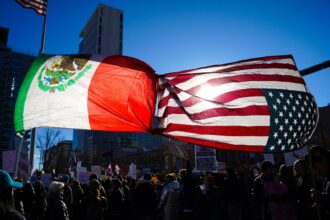
For centuries, the narratives surrounding the Mexican-American War have been etched in broad strokes. The prevailing accounts often focus on manifest destiny, territorial expansion, and the inevitable clash of two nations on a continental stage. Yet, beneath the surface of these widely accepted histories, a more intricate and often overlooked framework of strategy, manipulation, and clandestine operations appears to be emerging. This article delves into the recently uncovered layers of the Mexican-American War, presenting a collection of insights that suggest a hidden playbook, a set of guiding principles and tactics that, while not always overtly documented, demonstrably shaped the conflict’s trajectory.
The United States’ northward expansionist rhetoric, often couched in the divine right of manifest destiny, is a well-trodden path in historical analysis. However, a closer examination of pre-war diplomatic maneuvers and internal American political currents reveals a more nuanced genesis. The desire for territorial acquisition, particularly for California, was a powerful driving force, but it was not a singular, unproblematic ambition.
Economic Appetites and Annexationist Fervor
- The economic potential of California, with its rumored gold deposits and strategic Pacific ports, served as a potent lure for American industrialists and speculators. This wasn’t merely about national glory; it was about securing resources and markets that promised significant financial returns.
- Political factions within the United States, particularly Southern Democrats, saw the annexation of Texas and subsequent expansion as a means to bolster the slaveholding states’ power and influence in Congress. The Mexican government’s abolition of slavery in Texas in 1829 had been a point of contention, and the re-establishment of slavery in incorporated territories was a key objective for these groups.
Texas: A Catalyst Forged in Dispute
- The admission of Texas into the Union in 1845, despite ongoing border disputes with Mexico, acted as a direct provocation. Mexico never formally recognized Texas’s independence after its secession in 1836, and its re-annexation by the U.S. was viewed as an act of aggression.
- The establishment of the U.S.-Mexico border was a fluid and contentious issue. The United States insisted on the Rio Grande River as the border of Texas, while Mexico maintained that the Nueces River, further north, was the rightful boundary. This dispute, seemingly a territorial quibble, was, in reality, a strategic linchpin for both nations’ claims and aspirations.
Diplomatic Gambit: The Slidell Mission and its Aftermath
- The failed diplomatic mission of John Slidell in late 1845, sent to negotiate the purchase of California and New Mexico, serves as a critical juncture. Mexico refused to receive Slidell, viewing his arrival as an insult and an attempt to dictate terms.
- This diplomatic rebuff, while publicly framed as Mexican intransigence, may have been deliberately orchestrated or at least anticipated by elements within the U.S. administration. The refusal provided a convenient pretext for President Polk to escalate military actions, portraying Mexico as unwilling to engage in peaceful resolution.
The Mexican-American War, a pivotal moment in U.S. history, has long been the subject of intense study and debate. Recently, a related article titled “Hidden Playbook Revealed” sheds light on the strategic maneuvers and political motivations that shaped this conflict. This insightful piece provides a deeper understanding of the war’s complexities and its lasting impact on U.S.-Mexico relations. For more details, you can read the article here: Hidden Playbook Revealed.
The Art of Provocation: Manufacturing Consent for War
The narrative of the Mexican-American War often presents the conflict as an unavoidable outcome of territorial disputes. However, evidence suggests a calculated process of provocation, designed to push Mexico into firing the first shot and thus solidify American public and international support for war.
The Border Incident: A Tinderbox Ignited
- The deployment of U.S. troops under Zachary Taylor into the disputed territory between the Nueces and Rio Grande Rivers in early 1846 was a deliberate act of escalation. This was akin to placing a lit match next to a barrel of gunpowder.
- On April 25, 1846, Mexican forces attacked a U.S. cavalry unit that had crossed the Rio Grande into disputed territory. This event, where American blood was spilled on American soil (according to the U.S. claim of the boundary), was precisely the casus belli President Polk needed.
Propaganda and Public Opinion: Shaping the Narrative
- The American press, often acting as an arm of political factions, played a crucial role in fanning the flames of war. Newspapers amplified accounts of Mexican aggression and downplayed American provocations, creating a nationalistic fervor.
- The concept of “Yankeephobia” was intentionally stoked to demonize the Mexican populace and government, portraying them as inherently hostile and uncivilized. This served to dehumanize the enemy and make the prospect of war more palatable to the American public.
The Whigs’ Dissent: A Fainter Drumbeat Against War
- While the majority of the political establishment, particularly the Democratic Party, embraced the war, a vocal minority of Whigs, including prominent figures like Abraham Lincoln, questioned the justification and constitutionality of the conflict.
- Lincoln famously introduced the “Spot Resolutions” in Congress, demanding to know the precise spot where American blood had been shed to justify the war. This dissent, though ultimately unable to halt the war effort, reveals the internal divisions and debates happening beneath the surface of national unity.
Strategic Deception and Information Warfare
Beyond the grand military maneuvers, the Mexican-American War appears to have been influenced by a sophisticated understanding of information control and strategic deception. The flow of information, both within the military ranks and to the wider public, was carefully managed to maintain morale and secure political objectives.
Intelligence Gathering: Eyes and Ears on the Ground
- Both sides engaged in intelligence gathering, but the American efforts, driven by agents and informants in Mexico, were often more systematic. This intelligence provided crucial insights into Mexican troop movements, political instability, and resource availability.
- The use of spies and scouts was not new, but their integration into the broader strategic planning of the war marked a subtle shift in military thinking. These individuals were the whisperers in the ear of commanders, providing the raw data upon which decisions were made.
Controlling the Narrative: Shaping Perceptions
- The U.S. military, through official dispatches and selectively leaked information, carefully curated the public perception of the war’s progress. Victories were amplified, and setbacks were often downplayed or explained away.
- This deliberate shaping of the narrative extended to the portrayal of Mexican military capabilities. Often, Mexican forces were depicted as disorganized and poorly equipped, even when they demonstrated considerable bravery and tactical acumen. This served to reduce the perceived threat and reinforce American military superiority.
The Role of Journalists: Embedded Correspondents and Their Impact
- For the first time on a large scale, war correspondents accompanied armies into the field. While some provided relatively objective reporting, others became extensions of the propagandist effort, echoing official narratives and fostering a jingoistic sentiment.
- These journalists, essentially conduits of information, wielded significant power in shaping public opinion. Their dispatches, whether consciously or unconsciously, painted a picture of the war that often served the interests of the American government.
The Unseen Hand: Diplomatic Maneuvering and External Pressures
The war was not fought in a vacuum. Behind the scenes, a complex web of diplomatic negotiations and international considerations influenced strategic decisions on both sides. The “hidden playbook” includes understanding these external pressures and leveraging them to one’s advantage.
European Powers: A Spectator Sport with Stakes
- Great Britain and France, the dominant European powers of the era, watched the conflict with keen interest. Their concern was the potential disruption of global trade and the shifting balance of power in the Americas.
- The U.S. government was acutely aware of the need to avoid direct intervention from European powers, particularly Britain, which had its own territorial interests in North America. This influenced the pace and scope of military operations.
Mexican Internal Divisions: A Political Chessboard
- Mexico, at the time, was a nation grappling with internal political instability, frequent changes in leadership, and regional power struggles. This fractured political landscape was a significant vulnerability that the United States exploited.
- The U.S. actively sought to identify and support factions within Mexico that were more amenable to negotiation or less resistant to U.S. demands. This involved subtle forms of engagement and at times, direct outreach to certain political figures.
The Treaty of Guadalupe Hidalgo: A Victory Forged in Negotiation
- The Treaty of Guadalupe Hidalgo, which ended the war, was not simply a dictated peace. It was the result of complex negotiations where both sides made concessions, albeit vastly unequal ones.
- American negotiators, aware of the domestic political climate and the desire to avoid prolonged conflict, pushed for significant territorial gains. Mexican negotiators, weakened by war and internal strife, were under immense pressure to cede territory to avert further devastation.
The Mexican-American War, a pivotal conflict in the mid-19th century, has long been the subject of extensive historical analysis. Recently, an intriguing article titled “Hidden Playbook Revealed” has surfaced, shedding light on the strategic maneuvers and decisions that shaped the war’s outcome. This insightful piece offers a fresh perspective on the motivations behind the conflict and the implications it had for both nations involved. To explore this fascinating analysis further, you can read the full article here.
The Legacy of the Hidden Playbook: Shaping Historical Understanding
| Aspect | Details | Significance |
|---|---|---|
| Hidden Playbook | Secret strategies and political maneuvers used by U.S. leaders | Reveals underlying motives beyond territorial expansion |
| Key Figures | President James K. Polk, General Zachary Taylor, and others | Influenced war decisions and execution of hidden strategies |
| Military Tactics | Surprise attacks, rapid troop movements, and supply line disruptions | Contributed to U.S. victories despite challenging terrain |
| Political Impact | Expansion of U.S. territory by over 500,000 square miles | Set stage for future conflicts over slavery and statehood |
| Historical Sources | Declassified documents, personal letters, and military orders | Provide new insights into war planning and execution |
The concept of a “hidden playbook” is not to suggest a literal, bound document passed among generals. Instead, it refers to the underlying strategic philosophies and recurring tactics that demonstrably influenced the course of the war, often operating beneath the overt pronouncements and widely accepted historical accounts.
The Precedent for Interventionism
- The successful use of manufactured pretexts for war and the exploitation of an adversary’s internal weaknesses set a precedent for future American foreign policy. The playbook, in essence, found new editions and applications.
- The war demonstrated the effectiveness of overwhelming military force coupled with a carefully managed public narrative in achieving territorial and political objectives. This became a template, a recurring motif in the symphony of American expansion.
The Enduring Impact on U.S.-Mexico Relations
- The legacy of the Mexican-American War, and the perceived injustices associated with it, continues to cast a long shadow over U.S.-Mexico relations. The historical memory of territorial loss and perceived American aggrandizement fuels a deep-seated sentiment.
- Understanding the complexities of the “hidden playbook” offers a more nuanced perspective on the historical grievances that continue to inform contemporary diplomatic and social dynamics between the two nations. It provides context for the often-uneasy relationship, moving beyond simplistic narratives of inevitable friendship or perpetual animosity.
Reassessing Historical Actors and Motivations
- A deeper understanding of these hidden dynamics allows for a more critical reassessment of the motivations of key historical figures on both sides of the conflict. It moves beyond attributing actions solely to patriotism or ideology and delves into the more pragmatic, and sometimes less savory, considerations of power, economics, and strategy.
- The “hidden playbook” acts as a lens, allowing us to see the strategic chess moves behind the public pronouncements, the calculated gambits that shaped the very territory of a continent. It reveals that wars, even those framed by grand ideals, are often fought with a pragmatic, even calculating, hand.
FAQs
What was the Mexican-American War?
The Mexican-American War was a conflict between the United States and Mexico that took place from 1846 to 1848. It was primarily fought over territorial disputes following the U.S. annexation of Texas and resulted in significant land gains for the United States.
What does the term “hidden playbook” refer to in the context of the Mexican-American War?
The “hidden playbook” refers to previously undisclosed strategies, tactics, or political maneuvers used by either side during the Mexican-American War. This may include secret plans, diplomatic efforts, or military strategies that were not widely known or documented until recent historical research revealed them.
Why is the Mexican-American War considered significant in American history?
The war is significant because it led to the U.S. acquiring vast territories in the Southwest, including present-day California, Arizona, New Mexico, and others, through the Treaty of Guadalupe Hidalgo. This expansion had lasting effects on the nation’s development, politics, and relations with Mexico.
What were the main causes of the Mexican-American War?
The main causes included the U.S. annexation of Texas, border disputes between the Rio Grande and Nueces River, and the desire of the United States to expand its territory westward, a concept known as Manifest Destiny.
How did the Mexican-American War end?
The war ended with the signing of the Treaty of Guadalupe Hidalgo in 1848. Mexico ceded a large portion of its northern territories to the United States, and the Rio Grande was established as the border between Texas and Mexico. The treaty also included provisions for the protection of Mexican citizens living in the newly acquired territories.