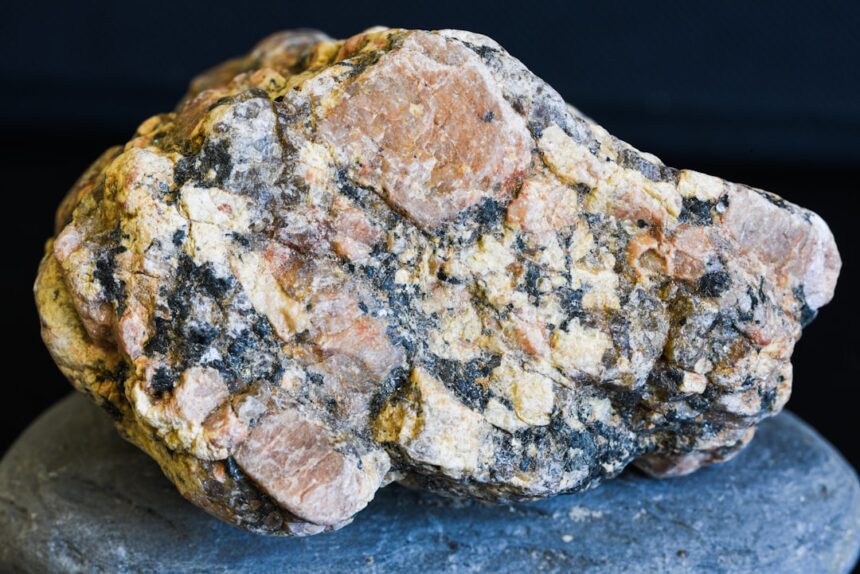
The allure of vast mineral wealth beneath the ocean’s surface has captivated humanity for decades. Manganese nodules, polymetallic concretions scattered across the abyssal plains, represent a potential windfall of critical raw materials like nickel, copper, cobalt, and, of course, manganese. However, the promise of easy extraction and economic prosperity associated with deep-sea mining of these nodules is increasingly being challenged by a growing body of scientific evidence and expert opinion. This article aims to dismantle the foundational assumptions underpinning the deep-sea mining narrative, exploring the ecological costs, economic realities, and geopolitical complexities that render the “false promise” of manganese nodule mining a dangerous illusion.
The deep seabed, once considered a barren wasteland, is now recognized as one of the planet’s largest and least-explored biomes. Its extraordinary biodiversity, characterized by unique adaptations to extreme conditions, is exquisitely fragile and susceptible to even minor disturbances.
Irreversible Habitat Destruction
The primary method proposed for manganese nodule mining involves massive seafloor collectors that scrape the seabed, indiscriminately removing nodules along with the sediment, an activity akin to clear-cutting a forest. This process, designed to maximize nodule recovery, devastates benthic communities that have evolved over millennia.
- Loss of Unique Species: Many species found in abyssal plains are endemic to specific regions, meaning they exist nowhere else on Earth. The physical removal of their habitat, coupled with the crushing and smothering effects of collector vehicles, could lead to localized or even global extinctions before these species are even fully described by science. Imagine a library being burned before its books have been cataloged – that is the parallel ecological tragedy.
- Permanent Scarring of the Seafloor: The deep sea floor accumulates sediment at an incredibly slow rate, often less than a centimeter per thousand years. Scars left by mining activities are therefore likely to persist for geological timescales, preventing ecological recovery for many generations. This is not a landscape that will quickly heal, but one that will bear the indelible marks of industrial activity for unimaginable durations.
Sediment Plumes and Their Far-Reaching Impacts
Beyond direct habitat destruction, mining operations generate vast plumes of suspended sediment. These plumes, created by the collector vehicles and the riser pipes that transport nodules to the surface, have the potential to spread hundreds of kilometers from the mining site.
- Smothering and Suffocation: The fallout from sediment plumes can smother sessile organisms, reduce light penetration, and clog the filtering apparatus of filter-feeding organisms, effectively suffocating them. This is an insidious form of pollution, a silent rain of death that impacts communities beyond the immediate extraction zone.
- Disruption of Food Webs: The deep sea relies on a delicate rain of organic matter from the surface for its sustenance. Sediment plumes can interfere with this vital transport, altering the availability of food for scavengers and deposit feeders, thereby unraveling the intricate fabric of the deep-sea food web. The impact reverberates upwards, affecting larger predators and ultimately the entire ecosystem.
Acoustic Pollution and Its Unforeseen Consequences
The constant noise generated by mining machinery, including collector vehicles, support vessels, and processing plants, introduces another layer of disturbance to the deep-sea environment.
- Impact on Marine Mammals: Whales, dolphins, and other marine mammals rely heavily on sound for navigation, communication, and foraging. Anthropogenic noise can disrupt these vital activities, leading to stress, behavioral changes, and even injury. The deep ocean, long a realm of profound quietude, is threatened by an encroaching cacophony.
- Disorientation and Habitat Avoidance: Many deep-sea organisms, including fish and invertebrates, utilize sound cues for various life functions. Increased noise levels could disorient these creatures, drive them away from vital foraging grounds or breeding sites, and generally compromise their ability to thrive.
Manganese nodule mining has been a topic of growing concern, particularly regarding its environmental impact and the potential for exploitation in international waters. A related article that delves into the implications of this emerging industry can be found on In the War Room, where it discusses the geopolitical and ecological ramifications of deep-sea mining. For more insights, you can read the article here: In the War Room.
The Dubious Economic Calculus
The economic arguments for deep-sea mining often hinge on projected demand for critical minerals and the notion of resource security. However, a closer examination reveals a more complex and considerably less optimistic picture.
Uncertain Market Demand and Material Substitution
Proponents of deep-sea mining frequently cite the burgeoning demand for minerals required for renewable energy technologies and electric vehicles. However, market dynamics are fluid, and technological advancements can quickly alter the demand landscape.
- Recycling as a Viable Alternative: Significant quantities of the very metals sought from nodules are present in existing consumer electronics and industrial waste streams. Investing in robust recycling infrastructure and developing more efficient recycling technologies could significantly reduce the need for primary extraction, both terrestrial and marine. This represents a circular economy approach, far more sustainable than a linear model of extraction and disposal.
- Innovation in Material Science: Research into alternative materials and battery chemistries is constantly evolving. Breakthroughs in solid-state batteries or hydrogen fuel cells, for instance, could drastically reduce the demand for certain metals currently considered critical. Placing all hopes on deep-sea mining without acknowledging these possibilities is shortsighted.
High Operational Costs and Financial Risks
Deep-sea mining is an inherently complex and technologically challenging undertaking. The extreme pressures, low temperatures, and remote nature of the deep ocean translate into exceedingly high operational costs and substantial financial risks.
- Prohibitive Infrastructure Investment: Developing the specialized vessels, robotic collectors, and processing facilities required for deep-sea mining entails massive upfront capital investment. Recovering these costs would necessitate extraction on a scale that further amplifies environmental risks.
- Logistical Challenges and Maintenance: Operating at depths of several kilometers presents unparalleled logistical challenges. Equipment breakdowns, which are inevitable in such harsh environments, would be extremely difficult and costly to repair, leading to significant downtime and financial losses. The deep ocean is an unforgiving environment for industrial machinery.
“Resource Curse” Potential and Equity Concerns
The history of resource extraction, particularly in developing nations, is replete with examples of the “resource curse,” where mineral wealth fails to translate into broad-based prosperity and instead exacerbates corruption and inequality.
- Benefit Sharing Mechanism Uncertainties: The International Seabed Authority (ISA), the body responsible for regulating deep-sea mining in international waters, is still developing a robust and equitable benefit-sharing mechanism. Without clear and enforceable provisions, there is a significant risk that the profits from deep-sea mining will primarily accrue to a few powerful corporations and technologically advanced nations, leaving developing countries with minimal gains and disproportionate environmental burdens. This echoes historical patterns of colonial exploitation, merely shifted to a new frontier.
- Displacement of Existing Industries: While deep-sea mining promises new jobs, it could also displace traditional livelihoods, particularly in fishing communities that rely on healthy ocean ecosystems. The potential economic benefits must be weighed against these negative impacts.
Regulatory Gaps and Governance Challenges
The regulatory framework governing deep-sea mining in international waters remains incomplete, raising fundamental questions about accountability, enforcement, and the protection of common heritage.
The “Two-Year Rule” Controversy
In 2021, Nauru, a sponsoring state for a deep-sea mining contractor, triggered a provision in the United Nations Convention on the Law of the Sea (UNCLOS) that allows for mining to proceed two years after a request for regulations if a comprehensive regime is not in place. This move has created an artificial and dangerous deadline.
- Pressure to Fast-Track Regulations: The “two-year rule” places immense pressure on the ISA and its member states to finalize regulations without adequate scientific understanding or robust environmental safeguards. This rushed process undermines the principles of precautionary environmental management.
- Risk of “Default” Mining: If comprehensive regulations are not adopted by the deadline, there is a risk that mining could commence under a provisional framework, essentially allowing industrial-scale extraction to begin without proper oversight or environmental protections. This could set a dangerous precedent, opening the floodgates to exploitation before the implications are fully understood.
Lack of Baseline Data and Environmental Impact Assessment (EIA) Limitations
A fundamental challenge in effectively regulating deep-sea mining is the severe lack of baseline ecological data for most potential mining areas. Without knowing what exists before mining, it is impossible to accurately assess the impact.
- Insufficient Scientific Understanding: Decades of research are needed to adequately understand the biodiversity, ecosystem functions, and interconnectivity of deep-sea environments. Proceeding with mining without this foundational knowledge is akin to performing surgery without understanding human anatomy.
- Challenges of Monitoring and Enforcement: The vastness and inaccessibility of the deep ocean make comprehensive environmental monitoring and enforcement exceptionally difficult. How can regulatory bodies effectively police operations occurring kilometers beneath the surface, hundreds or thousands of kilometers from shore? The capacity for illicit discharge or rule-breaking is significant.
The Illusion of Resource Security
The narrative of deep-sea mining as a solution to resource scarcity and a guarantor of “resource security” is a compelling but ultimately misleading one. The concept itself is complex and multifaceted.
Geopolitical Dimensions and Control
Even if deep-sea mining were to commence, the control over these resources would likely remain concentrated among a select few nations and corporations. This does not fundamentally alter a nation’s “resource security” if access remains limited or dependent on geopolitical alignments.
- Concentration of Technology and Expertise: The technology and expertise required for deep-sea mining are highly specialized and currently concentrated in developed nations. This could create new dependencies rather than alleviating existing ones.
- Potential for New Geopolitical Tensions: The scramble for deep-sea resources could, in fact, create new areas of geopolitical tension and conflict, undermining rather than enhancing global stability. The race for minerals could become another flashpoint between great powers.
Interconnectedness of Global Supply Chains
The idea that deep-sea mining provides an independent source of minerals, isolating a nation from global supply chain disruptions, is simplistic. Minerals extracted from the deep sea would still enter complex global processing and manufacturing networks.
- Processing Infrastructure: Extracted nodules would still require extensive processing, often in facilities located in other countries, creating continued reliance on international supply chains. Mining is only one step in a long and interconnected value chain.
- Vulnerability to Market Fluctuations: Even with a new source of raw materials, nations would remain vulnerable to global market fluctuations in commodity prices, exchange rates, and geopolitical events that impact the entire supply chain. No single source can insulate a nation from the inherent volatility of global markets.
The ongoing debate surrounding manganese nodule mining has sparked interest in various aspects of the industry, including its environmental implications and economic viability. A related article discusses the potential pitfalls of this emerging sector, highlighting concerns about the sustainability of deep-sea mining practices. For further insights into the complexities of this topic, you can read more in this informative piece found here. As the conversation continues, it becomes increasingly important to weigh the benefits against the potential risks associated with this so-called “fake industry.”
Sustainable Alternatives and the Precautionary Principle
| Metric | Value | Unit | Notes |
|---|---|---|---|
| Estimated Global Manganese Nodule Reserves | 500 | Million Metric Tons | Potentially recoverable from deep-sea mining |
| Average Manganese Content in Nodules | 20-30 | Percent | Varies by location |
| Current Active Mining Operations | 0 | Operations | No commercial mining due to environmental concerns |
| Reported Fake Industry Claims | Multiple | Instances | Unverified companies claiming mining capabilities |
| Environmental Impact Studies Conducted | 15 | Studies | Focus on deep-sea ecosystem disruption |
| Estimated Cost of Real Mining Setup | 1000-2000 | Million Units | High capital investment required |
| Number of Fake Industry Warnings Issued | 5 | Warnings | By regulatory bodies and experts |
In the face of profound uncertainties and potential irreversible harm, a responsible approach necessitates prioritizing sustainable alternatives and upholding the precautionary principle.
Prioritizing a Circular Economy
A truly sustainable future for mineral resources lies in moving away from a linear “take-make-dispose” model towards a circular economy that emphasizes reuse, repair, and recycling.
- Investment in Recycling Infrastructure: Significant public and private investment is needed to develop state-of-the-art recycling facilities for critical minerals, drastically improving recovery rates from electronic waste and other industrial byproducts. Imagine the “urban mines” of forgotten electronics, waiting to yield their treasures.
- Design for Durability and Recyclability: Products need to be designed with a longer lifespan and ease of recycling in mind. This includes modular designs, readily separable components, and the avoidance of hazardous materials that complicate recycling.
Technological Innovation and Material Efficiency
The pursuit of material efficiency and the development of alternative technologies can significantly reduce the demand for primary mineral extraction.
- Substitution and Efficiency Gains: Continued research into material substitution and the development of more efficient technologies can alleviate pressure on mineral resources. For example, using less of a critical mineral to achieve the same or better performance in a battery.
- Renewed Focus on Terrestrial Mining Best Practices: While not without its own environmental footprint, conventional terrestrial mining can be conducted with increasingly stringent environmental and social safeguards. Focusing efforts on improving these practices and ensuring responsible extraction could yield more immediate and sustainable results.
Upholding the Precautionary Principle
The precautionary principle dictates that where there are threats of serious or irreversible damage, lack of full scientific certainty shall not be used as a reason for postponing cost-effective measures to prevent environmental degradation. This principle is particularly relevant to deep-sea mining.
- Moratoriums and “No Go” Zones: Many scientists, environmental organizations, and even some nations advocate for a moratorium on deep-sea mining until comprehensive scientific assessments are completed and robust, enforceable regulations are in place. This would provide a vital pause to properly understand the risks.
- Responsible Stewardship of the Global Commons: The deep seabed and its resources are considered the “common heritage of humankind.” This implies a collective responsibility to protect these environments, not to exploit them prematurely for short-term economic gain. It is a shared inheritance that demands intergenerational care.
The promise of manganese nodule mining is largely built on a foundation of unproven technologies, uncertain economics, and a profound underestimation of environmental costs. It presents a dangerous illusion, distracting from more sustainable and responsible pathways to resource security. The scientific community’s warnings are growing louder, echoing the urgent need for caution and a re-evaluation of this potentially destructive endeavor. Humanity stands at a crossroads: to repeat the mistakes of terrestrial resource exploitation in a new, even more vulnerable frontier, or to embrace a future where innovation, conservation, and genuine sustainability guide our actions. The deep ocean, a realm of wonders yet to be fully discovered, deserves nothing less than our utmost protection.
STOP: The Fake Mining Ship That Almost Started WW3
FAQs
What are manganese nodules?
Manganese nodules are rock concretions found on the ocean floor, primarily composed of manganese and iron oxides, along with other valuable metals like nickel, copper, and cobalt.
What is manganese nodule mining?
Manganese nodule mining refers to the process of extracting these nodules from the seabed for their metal content, which can be used in various industrial applications such as battery production and steel manufacturing.
What does the term “fake industry” imply in the context of manganese nodule mining?
The term “fake industry” in this context suggests that some claims or operations related to manganese nodule mining may be misleading, exaggerated, or not based on genuine commercial activity, possibly involving scams or unproven technologies.
Are there environmental concerns associated with manganese nodule mining?
Yes, manganese nodule mining poses potential environmental risks, including disruption of deep-sea ecosystems, sediment plumes, and impacts on marine biodiversity, which are subjects of ongoing scientific research and regulatory discussions.
Is manganese nodule mining currently a widespread commercial industry?
As of now, manganese nodule mining is not yet a widespread commercial industry; it remains largely in the exploration and experimental stages, with several countries and companies conducting research and pilot projects under international regulations.