The vast, unforgiving abyss of the Pacific Ocean holds many secrets, and for decades, the wreck of the Soviet submarine K-129 was one of its most tantalizing mysteries. Its story is not one of triumph, but a stark testament to the colossal challenges and inherent risks of deep-sea retrieval. The tale of the failed attempt to recover K-129 is a crucial chapter in the larger narrative of Cold War espionage and the relentless pursuit of technological dominance, a phantom limb of ambition that still aches in the annals of naval history.
The Soviet Project 629, or Golf-class, diesel-electric submarines were a formidable presence during the Cold War. These vessels, designed for strategic deterrence, carried ballistic missiles, making them potent tools in the geopolitical chess game. K-129, launched in 1959, was one such submarine, a vessel designed to project Soviet power into the farthest reaches of the ocean. Its operational life, however, was tragically cut short.
A Silent Departure
In the early months of 1968, K-129 embarked on a patrol in the Pacific Ocean. Its mission, like many undertaken during this tense period, was shrouded in secrecy. The submarine was believed to be operating off the coast of Hawaii, a region where both Soviet and American naval assets were frequently engaged in a silent ballet of surveillance and counter-surveillance.
The Unanswered Signal
On March 11, 1968, K-129 ceased all communication. For the Soviet Navy, this was not merely a lost contact; it was the alarming silence that signals a catastrophe. The definitive cause of K-129’s demise remains a subject of speculation, a ghost whispered in classified documents.
Potential Catastrophic Events
- Internal Accident: A catastrophic internal event, such as an explosion or a hull breach due to design flaw or maintenance issue, is a leading theory. The nature of these submarines, with their volatile fuel and missile systems, made them susceptible to such dangers.
- Collision: While less documented, the possibility of a collision with another vessel, either civilian or military, cannot be entirely discounted. The vastness of the ocean can also be a deceptive cloak for unseen hazards.
- Missile Malfunction: A missile detonation or a related system failure could have led to the submarine’s rapid sinking. Such an event would have been swift and devastating.
The loss of an entire crew, along with a nuclear-armed submarine, was a significant blow to the Soviet Union, not only in terms of military capability but also as a profound intelligence embarrassment.
The K-129 submarine recovery attempt, which took place in the 1970s, was a significant event in Cold War history, highlighting the complexities of underwater salvage operations. For a deeper understanding of the challenges faced during this mission, you can read a related article that discusses the intricacies of the operation and its implications on U.S.-Soviet relations. To explore more about this fascinating topic, visit this article.
Project Azorian: The Audacious Plan
The United States, through its sophisticated intelligence gathering capabilities, quickly detected the disappearance of K-129. The potential for the Soviets to recover their lost submarine, or for the US to gain invaluable intelligence from its wreckage, ignited a clandestine operation of unprecedented ambition: Project Azorian. This was not just a salvage mission; it was a daring act of technological one-upmanship veiled in layers of secrecy.
A Cold War Gambit
The Cold War was a crucible where scientific advancement and national security were inextricably linked. The information contained within K-129 – its advanced sonar technology, its communication systems, and critically, its three R-21 ballistic missiles – represented a treasure trove of intelligence. For the Americans, recovering the submarine offered a chance to pry open the vault of Soviet naval secrets.
The Hidden Hand of the CIA
The Central Intelligence Agency (CIA) was the architect and orchestrator of Project Azorian. Recognizing the immense strategic value of K-129, they embarked on a mission that would test the limits of human ingenuity and engineering capability. The complexity of the task at hand was akin to trying to lift a mountain from the ocean floor.
Objectives of Project Azorian
- Intelligence Gathering: The primary goal was to retrieve sensitive intelligence documents, encryption devices, and any other materials that could reveal Soviet naval capabilities and operational strategies.
- Technological Acquisition: Accessing the submarine’s advanced technology, particularly its sonar and communication systems, would provide invaluable insights into Soviet engineering prowess.
- Missile Recovery: The nuclear warheads on the R-21 missiles posed a dual threat and opportunity. Their recovery was paramount to prevent potential proliferation or unauthorized use, and also offered direct access to Soviet nuclear technology.
- Propaganda Value: While highly classified, the eventual, albeit limited, revelation of some aspects of the operation could serve as a potent symbol of American technological superiority.
The Herculean Task: Engineering the Impossible
The sheer depth at which K-129 lay – approximately 16,000 feet – presented a monumental engineering challenge. No vessel capable of such a feat existed. Project Azorian demanded the creation of entirely new technologies and the adaptation of existing ones to an extent never before attempted. The operation was a titanic struggle against the crushing pressures and frigid temperatures of the deep ocean.
Introducing the Glomar Explorer
To undertake this audacious mission, a specialized, purpose-built vessel was required. The CIA contracted with Global Marine Inc., a leading offshore drilling company, to construct a revolutionary platform. The result was the Glomar Explorer, a ship designed not for exploring, but for performing the impossible.
Innovations of the Glomar Explorer
- The “Clementine” Capture Vehicle: The centerpiece of the Glomar Explorer‘s capabilities was an enormous, remotely operated submersible affectionately known as “Clementine.” This sophisticated machine was designed to be lowered to the ocean floor to grapple with and secure the submarine wreck.
- Advanced Dynamic Positioning System: Maintaining the Glomar Explorer‘s position precisely over the wreck site, even in rough seas, was critical. The ship was equipped with a state-of-the-art dynamic positioning system, a digital anchor that allowed it to hold its ground with remarkable accuracy.
- Large Moonpool and Lifting System: The ship featured a massive moonpool, an opening in the hull through which “Clementine” would be deployed and the recovered wreckage hoisted. An enormous hydraulic lifting system was designed to manage the immense weight of the submarine.
The Art of the Deal: A Cover Story
The construction and deployment of such a specialized vessel on a clandestine mission required a plausible cover story. Project Azorian was masked as a deep-sea mining operation, specifically for rare earth minerals. This ingenious deception allowed for the massive expenditure and the unusual design of the Glomar Explorer to go largely unnoticed.
The Facade of Mining
- Global Marine Inc. as a Front: The involvement of a legitimate offshore drilling company provided the necessary veneer of commercial activity.
- “Deep Ocean Mining” Narrative: The search for rare earth minerals offered a scientifically credible, albeit complex, reason for the extensive deep-sea operations.
- Media Management: Strict control over information and carefully curated public statements were essential to maintain the illusion.
The Descent into the Abyss: The First Attempts
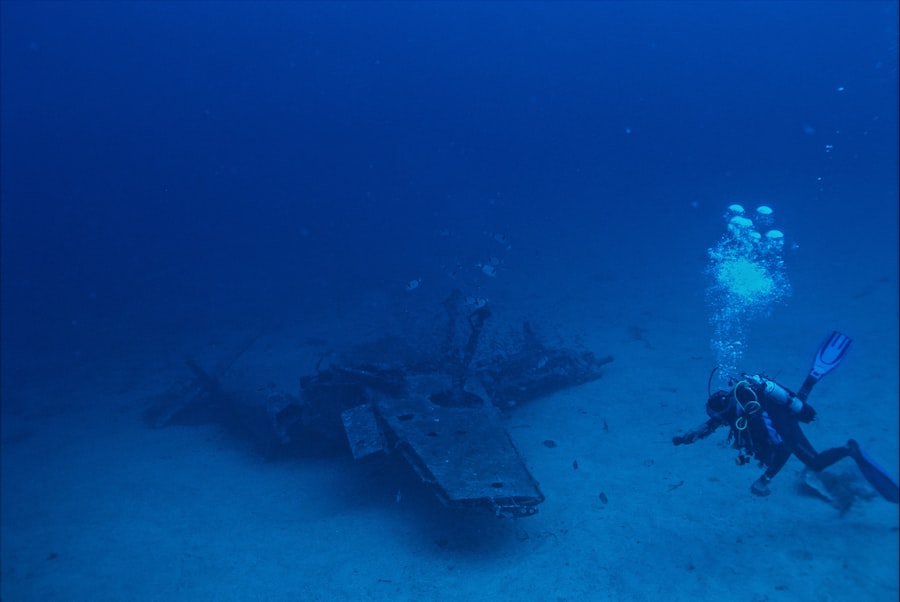
In the summer of 1974, the Glomar Explorer set sail for the designated recovery zone, hundreds of miles northwest of Hawaii. The atmosphere on board would have been a palpable mix of anticipation, anxiety, and the steely resolve of men about to embark on a mission of immense consequence. The ocean, however, proved to be a formidable and unforgiving adversary.
Navigating the Unseen
The target wreck, K-129, lay in the abyssal plains, a region characterized by extreme pressure, perpetual darkness, and incredibly low temperatures. The journey to the seabed was a perilous descent, with each foot of depth amplifying the challenges.
Challenges of the Deep
- Immense Pressure: The pressure at 16,000 feet is over 500 times that at sea level, capable of crushing any conventional vessel. “Clementine” and the lifting equipment had to be engineered to withstand these crushing forces.
- Absolute Darkness: Sunlight penetrates only a few hundred feet into the ocean. The recovery operations relied entirely on powerful lights and sophisticated sonar systems.
- Extreme Cold: The water temperature is barely above freezing, adding another layer of stress to the equipment and any potential human intervention.
The Grapple and the Grip
The initial attempts to secure K-129 were agonizingly slow and fraught with technical difficulties. The submarine’s resting place was not a neatly presented artifact but a fractured wreckage, making it a difficult target to grasp.
The Clumsy Dance with the Wreck
- Locating the Wreckage: Precise navigation was essential. The wreck site was confirmed using sonar, but the fragmented nature of the debris field made it difficult to identify the primary hull.
- The “Clementine” Maneuvers: The complex articulated arms of “Clementine” were deployed to attempt to grip the submarine. These maneuvers were akin to performing delicate surgery in zero gravity, but with the added weight of a submerged city.
- Structural Integrity Concerns: The age and condition of K-129 meant that any attempt to lift it could result in further fragmentation. The goal was to lift as much of the intact hull as possible.
The K-129 submarine recovery attempt, which aimed to retrieve the sunken Soviet submarine from the depths of the Pacific Ocean, faced numerous challenges that ultimately led to its failure. This operation, conducted by the United States in the 1970s, was shrouded in secrecy and has since become a subject of intrigue and speculation. For those interested in exploring the complexities and implications of such military endeavors, a related article can be found at In The War Room, which delves into the broader context of underwater recovery missions and their impact on Cold War dynamics.
The Unforeseen Catastrophe: The Gruesome Reality
| Metric | Details |
|---|---|
| Submarine Name | K-129 |
| Country | Soviet Union |
| Year of Sinking | 1968 |
| Depth of Wreck | Approximately 16,500 feet (5,000 meters) |
| Recovery Attempt | Project Azorian (Glomar Explorer) |
| Year of Recovery Attempt | 1974 |
| Recovery Success | Partial; only a portion of the submarine was recovered |
| Failure Cause | Mechanical failure during lift caused the submarine section to break off and fall back to the ocean floor |
| Estimated Recovery Depth | Approximately 16,000 feet (4,900 meters) |
| Project Cost | Classified, estimated hundreds of millions in 1970s USD |
| Significance | One of the deepest and most secretive ocean recovery operations in history |
Despite immense effort and significant technological achievement, Project Azorian encountered a devastating setback. It is a moment that underscores the fickle nature of even the most meticulously planned endeavors. The deep ocean, as it often does, exerted its dominance.
A Moment of Fragility
During one of the most critical phases of the operation, the attempt to lift K-129 from the seabed, disaster struck. The immense stress on the lifting mechanisms, combined with the fragile nature of the partially corroded submarine, proved to be too much.
The Fateful Fracture
- Stress on the Lifting Claws: The specialized claws designed to secure the submarine experienced unforeseen stresses.
- Hull Integrity Failure: The structural integrity of K-129, weakened by its long submersion, could not withstand the forces exerted during the lift.
- Catastrophic Breakage: The submarine, or significant portions of it, is believed to have broken free from the lifting equipment and slipped back into the abyss. The precise moment of this failure remains a closely guarded secret.
The Partial, Tragic Retrieval
While official records are sparse and heavily redacted, it is understood that some parts of K-129 were indeed brought to the surface. However, the hoped-for intact recovery, the prize of an entire strategic submarine, was not achieved.
What Was Lost, What Was Gained
- The Main Hull Remains Lost: The bulk of the submarine, including potentially sensitive compartments and missile systems, is believed to have been lost.
- Fragmentary Recoveries: It is speculated that some sections, possibly the bow or stern, were recovered. These fragments may have yielded limited intelligence, but not the comprehensive understanding anticipated by Project Azorian.
- The Psychological Toll: The failure to achieve the primary objective, after years of planning and billions of dollars spent, must have been a profound disappointment for all involved.
The failed attempt to recover K-129 serves as a humbling reminder of the immense power of nature and the inherent limitations of human ambition when confronting the unforgiving environment of the deep sea. It is a story etched in the silence of the ocean depths, a testament to a bold effort that ultimately yielded more questions than answers, and a stark illustration of the risks inherent in reaching for the unknown.
WARNING: The $800 Million Mechanical Failure That Almost Started WWIII
FAQs
What was the K-129 submarine?
The K-129 was a Soviet Golf II-class ballistic missile submarine that sank in the Pacific Ocean in 1968 under mysterious circumstances.
What was the objective of the K-129 submarine recovery attempt?
The objective was to recover the sunken submarine and its contents, including nuclear missiles and cryptographic materials, for intelligence and strategic purposes.
Who conducted the recovery attempt of the K-129 submarine?
The recovery attempt was conducted by the United States, specifically through a secret project known as Project Azorian, led by the CIA and involving the specially designed ship Hughes Glomar Explorer.
Why did the K-129 submarine recovery attempt fail?
The recovery attempt failed due to technical difficulties, including the failure of the mechanical claw designed to lift the submarine, resulting in only a partial recovery of the wreckage.
What was the significance of the K-129 submarine recovery attempt failure?
The failure highlighted the challenges of deep-sea recovery operations and led to increased secrecy and technological development in underwater salvage and intelligence gathering during the Cold War.