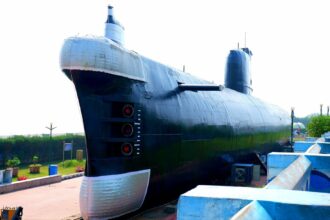
The ocean, a domain often described as the “final frontier,” has long presented both a barrier and an opportunity for human conflict. From ancient naval battles fought on the surface, the character of warfare has progressively descended beneath the waves, transforming into a complex, high-stakes game of hide-and-seek. This evolution, driven by technological innovation and strategic imperative, has redefined naval power and continues to shape geopolitical landscapes. One observes a continuous interplay between offensive capabilities designed to exploit the underwater environment and defensive measures seeking to counter them.
The aspiration to operate undetected beneath the waves is not a recent invention. Historical accounts and early scientific endeavors demonstrate a persistent human interest in submersible vehicles, long before their practical application in warfare.
Ancient Notions and Apocryphal Tales
Records suggest early thinkers conceptualized submerged travel. Alexander the Great, for instance, is famously, if apocryphally, said to have descended into the sea in a glass barrel. While such tales are likely fictitious, they illustrate a long-standing fascination with the potential for underwater exploration and, by extension, clandestine activity. These early imaginings laid the symbolic groundwork for what would become a cornerstone of naval strategy.
The Dawn of Practical Submersibles
The 17th and 18th centuries witnessed the first serious attempts at constructing functional submersibles. Cornelis Drebbel, a Dutch inventor in the employ of the English Crown, is credited with building a steerable submarine in the early 17th century. This craft, a wooden vessel reportedly propelled by oars and covered in greased leather for waterproofing, could purportedly remain submerged for several hours. While its military utility was limited, its existence proved the feasibility of underwater navigation.
The Turtle and the American Revolution
The American Revolutionary War provided the first documented instance of a submarine being used in a combat scenario. Designed by David Bushnell, the Turtle was a one-man, hand-powered submersible. Its mission was to attach a mine to the hull of a British warship, HMS Eagle. Although the attack ultimately failed due to the Turtle‘s inability to penetrate the Eagle‘s copper sheathing, it served as a powerful harbinger of future undersea warfare. The Turtle represented a nascent understanding of stealth and surprise, qualities that would become synonymous with submarine operations.
The military history of undersea warfare is a fascinating subject that highlights the strategic importance of submarines and underwater combat throughout various conflicts. For a deeper exploration of this topic, you can read the article titled “The Evolution of Submarine Warfare” on In The War Room, which delves into the technological advancements and pivotal battles that have shaped undersea tactics over the years. To access the article, click here: The Evolution of Submarine Warfare.
The Age of the Torpedo and the Submarine’s Rise
The 19th century brought forth innovations that would fundamentally transform undersea warfare, most prominently the self-propelled torpedo and the continued development of more capable submarines. These two technologies, acting as a synergistic pair, irrevocably altered naval doctrine.
The Birth of the Self-Propelled Torpedo
Prior to the self-propelled torpedo, underwater explosive devices were primarily stationary mines or spar torpedoes, which required direct contact with a target. The invention of the Whitehead torpedo in 1866 revolutionized naval warfare. This autonomous, steerable underwater projectile provided submarines with a long-range, potent offensive weapon. Imagine, if you will, the torpedo as the arrow loosed from a hidden bow, striking an enemy unaware. Its introduction immediately sparked a scramble among naval powers to develop both torpedoes and countermeasures.
Early Submarine Development and the Diesel Engine
The late 19th and early 20th centuries saw rapid advancements in submarine design. Early submarines, often powered by unreliable and internal combustion engines on the surface and batteries underwater, were limited in range and endurance. The integration of the diesel engine, providing superior power and lower fuel consumption, significantly enhanced the submarine’s operational capabilities. Concurrently, the development of electric propulsion for submerged running addressed the challenges of engine emissions underwater. These improvements transformed the submarine from a curious novelty into a credible, if still imperfect, warship.
The Submarine in World War I: A New Doctrine Emerges
World War I witnessed the true potential of the submarine as a strategic weapon. German U-boats, operating under unrestricted submarine warfare, wreaked havoc on Allied shipping, particularly in the Atlantic. This era demonstrated the submarine’s effectiveness in commerce raiding and its ability to disrupt enemy supply lines. The U-boat became a phantom hunter, often unseen until its deadly payload found its mark. The war also spurred the development of early anti-submarine warfare (ASW) tactics and technologies, such as hydrophones for passive acoustic detection and depth charges for attacking submerged targets. This dynamic created a perpetual arms race, where every offensive innovation was met with a defensive reaction.
The Silent Hunter’s Ascent: World War II and the Cold War
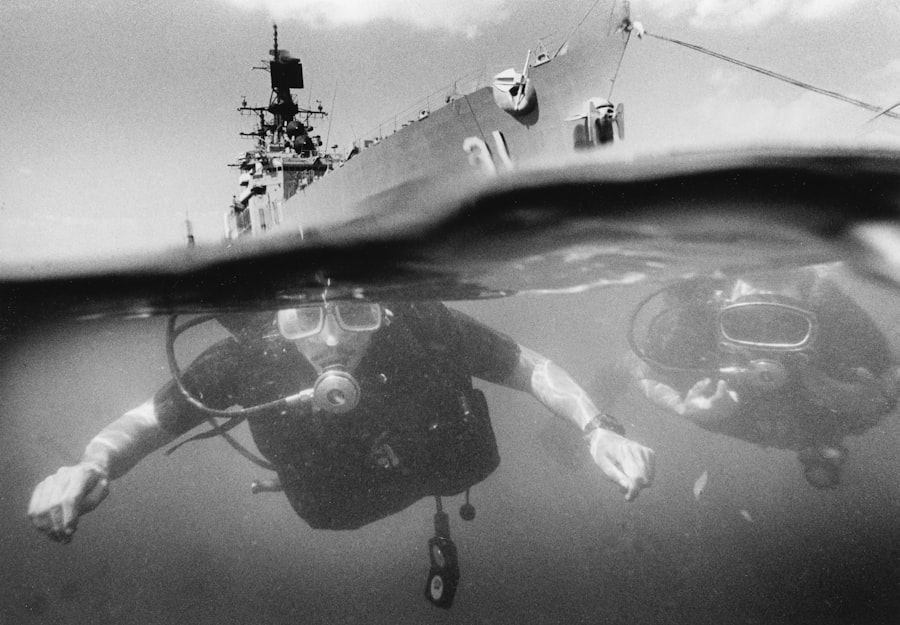
The mid-20th century marked a golden age for submarine development, characterized by significant technological leaps and a shift toward larger, more capable undersea platforms. The Cold War, in particular, solidified the submarine’s role as a primary instrument of strategic deterrence.
Technological Leaps in World War II
World War II saw further refinement of submarine design and tactics. German Type VII and Type IX U-boats were highly successful, employing “wolfpack” tactics to overwhelm Allied convoys. However, Allied ASW technology also advanced considerably, with the introduction of radar, sonar (ASDIC), and long-range patrol aircraft. The battle for the Atlantic became a desperate struggle between the hunter and the hunted. The war also saw the emergence of the Snorkel, allowing diesel-electric submarines to operate their engines while submerged, significantly extending their underwater endurance.
The Nuclear Revolution
The most profound transformation in submarine warfare occurred with the advent of nuclear propulsion. The USS Nautilus, commissioned in 1954, was the world’s first nuclear-powered submarine. Nuclear power offered virtually unlimited submerged endurance and independence from atmospheric oxygen, freeing submarines from the constraints of frequently surfacing. This innovation gave birth to the true “silent hunter,” capable of traversing vast distances underwater, independent of external support. Nuclear submarines could operate at greater depths and speeds, making them incredibly difficult to detect and track.
The Ballistic Missile Submarine (SSBN) and Strategic Deterrence
The Cold War saw the development of the Ballistic Missile Submarine (SSBN), armed with nuclear-tipped intercontinental ballistic missiles. These submarines became the quintessential component of the “second-strike” capability, providing an undetectable and survivable platform for nuclear retaliation. The SSBN, often referred to as a “boomer,” patrols the ocean depths, a silent sentinel carrying the ultimate deterrent. Its existence fundamentally altered the calculus of superpower conflict, ensuring that even a devastating first strike would not preclude retaliation, thereby establishing a precarious but enduring peace through mutually assured destruction.
Attack Submarines (SSN) and the Cold War Underwater Chess Match
Alongside the SSBNs, nuclear-powered attack submarines (SSNs) emerged as formidable platforms for anti-submarine warfare, anti-surface warfare, and intelligence gathering. These submarines engaged in a covert underwater chess match with their Soviet counterparts, tracking, evading, and sometimes simulating attacks. This era of intense submarine-on-submarine competition drove innovation in sonar technology, quieting techniques, and evasive maneuvers. The deep ocean became a shadow battleground, unseen by the surface world, yet bristling with tension and advanced technology.
Modern Undersea Warfare: The Digital Age and Asymmetrical Threats
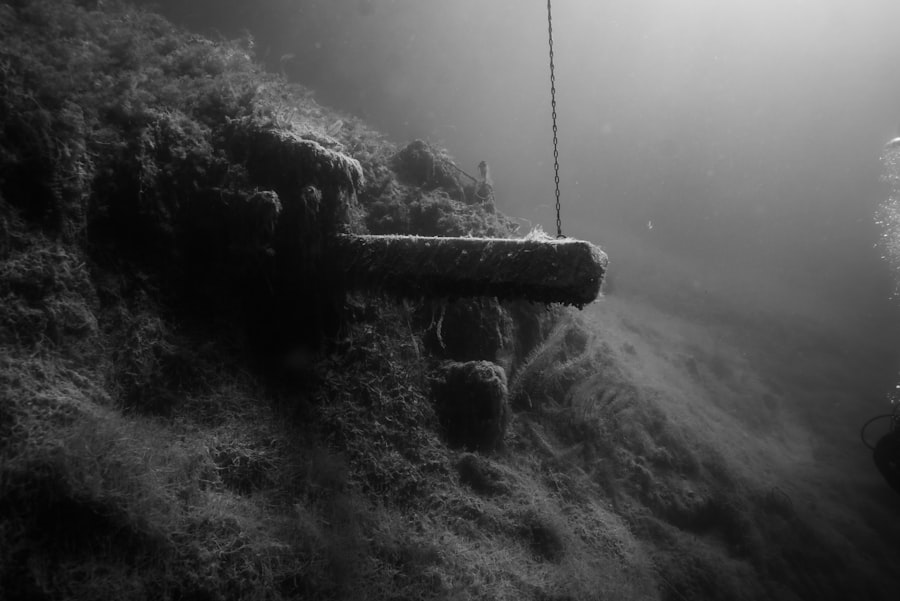
As the Cold War concluded, the landscape of undersea warfare continued to evolve, integrating advanced electronics, automation, and grappling with new types of threats and operational environments.
The Quiet Revolution and Acoustic Stealth
Modern submarines prioritize acoustic stealth above all else. Engineers employ an array of sophisticated technologies to reduce a submarine’s acoustic signature, including advanced anechoic coatings, redesigned propulsion systems, and isolated machinery. These efforts aim to make the submarine blend into the ambient noise of the ocean, effectively disappearing from enemy sonar. The quietest submarines are often considered the most lethal, as they are virtually undetectable until they choose to reveal their presence – a whisper in a world of shouts.
Advanced Sonar and Sensor Integration
Sonar technology has undergone continuous development, moving beyond basic active and passive arrays to highly sophisticated multi-static, towed array, and very low frequency (VLF) systems. These advanced sensors allow submarines to detect increasingly quieter targets at greater ranges. Furthermore, modern submarines integrate a multitude of non-acoustic sensors, including wake detection systems, magnetic anomaly detectors (MAD), and electronic support measures (ESM), providing a comprehensive picture of the underwater battlespace. This integration of diverse sensory inputs creates a richer, more accurate understanding for the submarine’s crew.
Unmanned Undersea Vehicles (UUVs)
The rise of Unmanned Undersea Vehicles (UUVs) represents a significant paradigm shift. UUVs, ranging from man-portable to large autonomous platforms, can perform a variety of missions, including intelligence, surveillance, and reconnaissance (ISR), mine countermeasures (MCM), and even offensive operations. They can operate in risky or hazardous environments, extending the reach and endurance of naval forces. The deployment of UUVs allows for persistent presence in areas previously inaccessible or too dangerous for manned submarines, acting as silent scouts or persistent guardians.
Littoral Operations and Asymmetrical Threats
Modern undersea warfare is increasingly concerned with littoral (coastal) operations. The shallow, noisy, and complex environment of coastal waters presents unique challenges for submarines, both for detection and evasion. Furthermore, the proliferation of relatively inexpensive, quiet diesel-electric submarines among smaller navies poses a significant asymmetrical threat to larger, technologically advanced navies. These “pocket submarines” can operate effectively in choke points and coastal areas, creating a potent defensive capability and a difficult problem for potential adversaries.
The evolution of undersea warfare has played a pivotal role in military history, shaping naval strategies and technologies over the years. For a deeper understanding of this fascinating subject, you can explore a related article that delves into the significant advancements and key battles that have defined underwater combat. This insightful piece can be found at this link, where you will discover how submarines and underwater tactics have transformed the landscape of warfare.
The Future of Undersea Warfare: Emerging Technologies and Strategic Imperatives
| Period | Key Event | Technology/Weapon | Significance | Notable Vessel |
|---|---|---|---|---|
| 1864 | American Civil War – CSS Hunley | Hand-cranked submarine | First successful combat submarine to sink a warship | CSS Hunley |
| World War I (1914-1918) | U-boat Campaign | Diesel-electric submarines | Disrupted Allied shipping, introduced unrestricted submarine warfare | SM U-9 |
| World War II (1939-1945) | Battle of the Atlantic | Improved diesel-electric subs, sonar, depth charges | Critical role in supply line disruption and anti-submarine warfare | Type VII U-boat |
| Cold War (1947-1991) | Development of nuclear submarines | Nuclear propulsion, ballistic missile subs (SSBNs) | Strategic deterrence and extended underwater endurance | USS Nautilus (SSN-571) |
| Modern Era (2000s-present) | Advanced stealth and unmanned underwater vehicles | Air-independent propulsion, AUVs, advanced sonar | Enhanced covert operations and underwater surveillance | Virginia-class submarine |
Looking ahead, the evolution of undersea warfare is likely to be characterized by increasing autonomy, enhanced connectivity, and a continued emphasis on multi-domain integration. The ocean floor is becoming not merely a transit route, but a battleground in itself.
Artificial Intelligence and Automation
Artificial Intelligence (AI) and machine learning are poised to revolutionize undersea warfare. AI can assist in processing vast amounts of sensor data, automating target recognition, optimizing mission planning, and even enabling autonomous decision-making for UUVs. This integration will reduce human workload, improve operational tempo, and potentially allow for more complex and clandestine missions. Imagine an AI-powered submarine acting as a super-sentinel, constantly monitoring and analyzing its environment with unerring precision.
Advanced Propulsion and Energy Storage
Further advancements in propulsion technology, including improvements in fuel cell technology, superconducting motors, and potentially non-nuclear options for extended endurance, will continue to enhance submarine capabilities. Energy storage improvements will allow for longer missions and higher power output for sensors and weapons. These developments will push the boundaries of submerged endurance and operational flexibility.
Networked Undersea Battlefields
Future undersea warfare will likely feature highly networked battlefields, where manned submarines, UUVs, and even fixed underwater sensors communicate and cooperate to achieve mission objectives. This interconnected “internet of underwater things” will provide a distributed and resilient sensor network, enhancing situational awareness and enabling coordinated attacks or defensive operations. This creates a multi-layered, multi-faceted approach to dominating the undersea domain.
Hypersonics and Directed Energy Weapons
While still largely theoretical for underwater application, the development of hypersonic weapons and directed energy weapons presents potential future challenges and opportunities for undersea warfare. Should these technologies become viable for submarine deployment, they could dramatically alter the speed and lethality of underwater engagements. However, the unique challenges of transmitting high-energy beams or achieving hypersonic speeds in a dense medium like water remain significant hurdles.
The journey of undersea warfare, from the fanciful notions of ancient philosophers to the sophisticated, networked platforms of today, is a testament to human ingenuity and the relentless pursuit of strategic advantage. It is a domain where silence is power, concealment is survival, and technological superiority is a constant race. The silent world beneath the waves remains a critical arena for global power projection, a testament to its enduring strategic importance and a fascinating study in the ceaseless evolution of conflict.
WATCH NOW ▶️ SHOCKING: Why the Seafloor Went Silent
FAQs
What is undersea warfare?
Undersea warfare refers to military operations conducted beneath the surface of the sea, primarily involving submarines, underwater mines, and other naval assets designed for combat or strategic purposes below water.
When did undersea warfare first become significant in military history?
Undersea warfare became significant during World War I, with the widespread use of submarines, particularly German U-boats, which targeted enemy shipping and naval vessels, marking a new dimension in naval combat.
What are the main types of vessels used in undersea warfare?
The main vessels used in undersea warfare are submarines, which can be nuclear or diesel-electric powered. These vessels are equipped for stealth, reconnaissance, and launching torpedoes or missiles against surface ships and other submarines.
How has technology influenced the development of undersea warfare?
Technological advancements such as sonar, nuclear propulsion, advanced torpedoes, and stealth technology have greatly enhanced the capabilities of undersea warfare, allowing submarines to operate more quietly, stay submerged longer, and detect enemies at greater distances.
What role did undersea warfare play during the Cold War?
During the Cold War, undersea warfare was a critical component of the strategic balance between the United States and the Soviet Union, with both sides developing extensive submarine fleets for nuclear deterrence, intelligence gathering, and maintaining control of the seas.