The evolution of submarine stealth technology represents a continuous trajectory of innovation, driven by the imperative to operate undetected in a hostile maritime environment. From rudimentary attempts at concealment to the sophisticated, multi-faceted approaches employed today, the journey underscores a fundamental principle of naval warfare: the advantage of the unseen. For the modern submarine, stealth is not merely a desirable attribute but the very essence of its operational viability, a complex interplay of physics, engineering, and tactical doctrine.
The earliest submarines, often crude and experimental, inherently possessed a degree of concealment simply by virtue of their ability to submerge. However, this initial concealment was largely passive and reactive, limited by the technological constraints of their era. The primary challenges in these nascent stages revolved around mechanical reliability and propulsion, with active stealth considerations only emerging as the vessels themselves became more capable.
Early Submersion Tactics
In the late 19th and early 20th centuries, submarines like the Holland class primarily relied on visual concealment. Their dark hulls, often painted in muted colors, disappeared relatively well against the murky backdrop of the ocean. The act of submerging itself presented the first layer of stealth, removing the vessel from the direct line of sight of surface observers. This was a significant advantage in an era dominated by surface combatants.
The Auditory Challenge
Even at this early stage, designers recognized the significance of noise. Early steam or gasoline engines, while effective for surface travel, generated considerable acoustic signatures when operating, requiring a switch to battery-powered electric motors for submerged operations. This dual-propulsion system, while introducing complexity, laid the foundation for the enduring struggle against acoustic detection. The quietness of electric motors, though limited in endurance, provided a momentary cloak of silence, a fleeting window of relative invulnerability.
The evolution of submarine stealth technology has been a fascinating journey, marked by significant advancements that have reshaped naval warfare. For a deeper understanding of this topic, you can explore the article detailing the history and development of submarine stealth capabilities, which highlights key innovations and their impact on modern naval strategies. To read more about this intriguing subject, visit this article.
Acoustic Stealth: The Silent Hunter
Acoustic stealth has arguably been the most enduring and critical aspect of submarine concealment. The ocean, a relatively opaque medium for electromagnetic waves, readily transmits sound. Thus, for a submarine, being “seen” acoustically is tantamount to being detected. The development of sophisticated hydrophones and sonar systems by adversaries spurred a continuous arms race in acoustic quieting.
Machinery Isolation and Damping
A significant leap in acoustic stealth involved isolating noise-generating machinery from the submarine’s hull. This often employed flexible mounts, sound-damping materials, and meticulous design to prevent vibrations from propagating into the surrounding water. Imagine it as creating a “silent room” within the submarine, where the machinery operates without directly shaking the structure that touches the water.
- Rafting Systems: A key innovation involved mounting entire sections of machinery, such as propulsion systems and generators, on large, resilient rafts. These rafts, isolated from the main hull by shock absorbers, effectively dampened vibrations before they could reach the external environment.
- Decoupled Components: Even individual components, from pumps to motors, underwent rigorous engineering to minimize their acoustic output. Gears were precisely machined, bearings were designed for low friction, and fluid flows were optimized to reduce cavitation noise.
Propeller Design and Cavitation Reduction
The propeller is a major source of submarine noise, particularly at higher speeds. The phenomenon of cavitation, where vapor bubbles form and collapse due to rapid pressure changes around the propeller blades, generates a distinctive and easily detectable broadband noise.
- Skewed Propellers: Modern submarines often feature highly skewed propellers, where the blades are swept back significantly. This design helps to distribute pressure more evenly across the blade surface, delaying the onset of cavitation and reducing its intensity.
- Seven-Bladed Propellers: An increased number of blades, often seven, can also contribute to quieter operation by distributing the thrust over a larger area and reducing the pressure differential that leads to cavitation.
- Pump-Jet Propulsors: An even more advanced solution is the pump-jet propulsor, which encloses the impeller within a shroud. This design not only reduces cavitation but also offers improved efficiency and maneuverability, presenting a “covered ear” to the ocean.
Anechoic Coatings
The application of anechoic tiles or coatings to the submarine’s hull represents another crucial layer of acoustic stealth. These specialized materials are designed to absorb incoming sonar pings and dampen internally generated noises, effectively making the submarine “acoustically invisible” to active sonar.
- Active Sonar Absorption: Anechoic tiles work by altering the impedance of the hull, allowing a significant portion of incoming sonar waves to penetrate the material rather than reflect. The energy is then dissipated as heat, reducing the strength of the returning echo.
- Internal Noise Damping: These coatings also serve to absorb vibrations originating from within the submarine, preventing them from radiating outwards into the water. Think of it as soundproofing a room, but on a massive scale and designed for an underwater environment.
Non-Acoustic Signatures: Beyond Sound
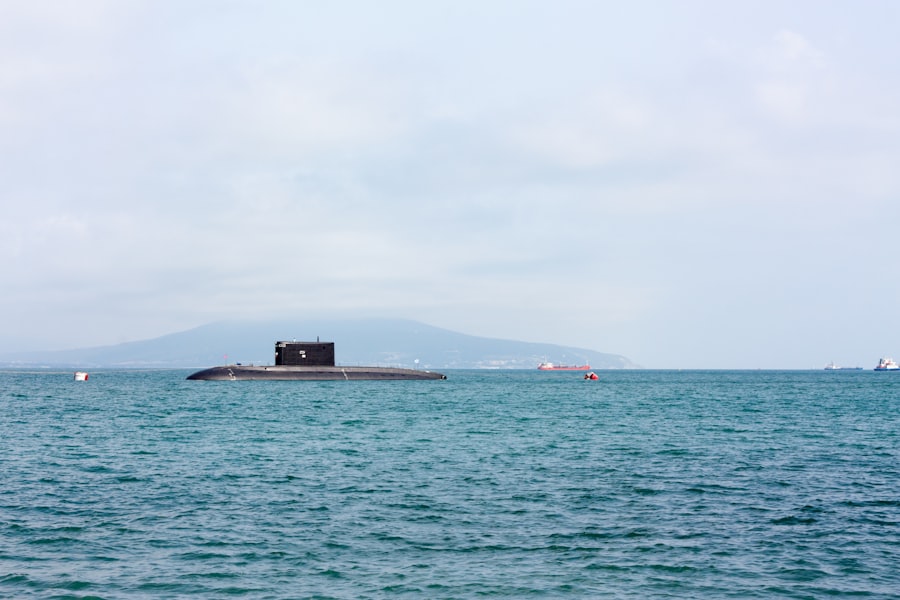
While acoustic stealth remains paramount, modern submarine design increasingly focuses on reducing a wide array of non-acoustic signatures. As detection technologies become more diverse, so too must the methods of concealment.
Magnetic Signature Reduction
Submarines, being large metallic objects, generate a magnetic field that can be detected by specialized magnetometers. This signature can betray a submarine’s presence, particularly in shallow waters.
- Degaussing Systems: A primary method for reducing magnetic signature involves degaussing coils. These coils are wrapped around the submarine’s hull and carry an electric current, generating an opposing magnetic field that cancels out the submarine’s inherent magnetism.
- Low Magnetic Materials: The use of non-magnetic or low-magnetic permeability materials in construction also contributes to reducing the overall magnetic anomaly.
Thermal Signature Management
Even underwater, a submarine produces heat from its reactors, machinery, and crew. This thermal signature, though subtle, can theoretically be detected by highly sensitive infrared sensors or by observing minute changes in water temperature.
- Cooling Systems: Nuclear submarines, in particular, generate significant heat. Advanced cooling systems are designed to dissipate this heat efficiently and discreetly into the vast thermal sink of the ocean without creating localized hot spots.
- Hull Coatings: Specialized coatings can also help to distribute heat evenly across the hull, preventing the formation of easily detectable thermal plumes.
Pressure Signature Reduction
A submarine displaces a significant volume of water, creating a pressure wave as it moves. This pressure signature, though typically very small, could theoretically be detected by highly sensitive pressure sensors. Minimizing sharp edges and optimizing hull form for laminar flow helps to reduce this.
- Hydrodynamic Hull Forms: Modern submarines feature carefully sculpted hull forms, often resembling a teardrop or an elongated spindle, to minimize drag and turbulence. This design not only enhances speed and efficiency but also reduces the pressure fluctuations the submarine generates as it moves through the water.
- Stern Design: The stern, where water rejoins after flowing around the hull, is particularly critical. Designs that minimize wake and turbulence are essential for reducing the pressure signature.
Advanced Stealth Methodologies and Future Horizons
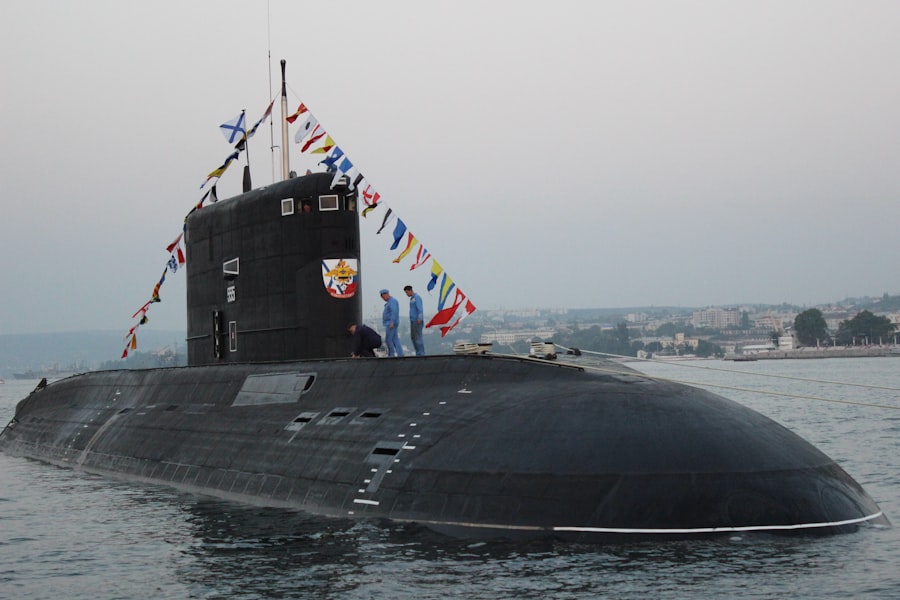
The pursuit of submarine stealth is an ever-evolving field, with researchers and engineers constantly exploring new physical principles and technological applications to gain an advantage. The future of submarine stealth will likely involve a blending of established techniques with radical new approaches.
Active Signature Cancellation
While traditional stealth relies on passive reduction, active signature cancellation represents a more proactive approach. Imagine a submarine that can actively counter incoming sonar pings by emitting its own precisely tailored sound waves, effectively “erasing” its echo.
- Adaptive Anechoic Systems: Future anechoic materials might be dynamic, capable of actively adjusting their acoustic absorption properties in real-time to match different sonar frequencies and conditions.
- Active Noise Control (ANC): Similar to noise-canceling headphones, ANC systems could emit sound waves that are precisely out of phase with internally generated machinery noise, effectively canceling it out before it leaves the hull.
Non-Acoustic Detection Countermeasures
As adversaries develop new detection methods, submarines must evolve countermeasures. This includes addressing novel forms of detection that might exploit subtle changes in the ocean environment.
- Wake Dispersion: The wake left by a submarine, consisting of swirling water, micro-bubbles, and temperature anomalies, can persist for some time. Future stealth technologies may aim to actively disperse or minimize these lingering traces.
- Biological Signature Management: The presence of a submarine can potentially disturb marine life or introduce trace chemicals. While speculative, managing these subtle biological or chemical signatures could become a future stealth consideration.
The Rise of Unmanned Underwater Vehicles (UUVs)
The integration of UUVs presents new dimensions to submarine stealth. These smaller, often quieter, and potentially expendable platforms can act as forward scouts, decoys, or sensor platforms, extending the reach and enhancing the stealth of the main submarine.
- Distributed Sensing: UUVs can deploy sensors in a distributed fashion, creating a broader picture of the underwater battlespace without exposing the main submarine.
- Forward Deployment and Reconnaissance: Operating ahead of the main submarine, UUVs can gather intelligence and identify potential threats, allowing the manned vessel to remain further back and maintain its stealth.
- Decoy Operations: UUVs can also serve as decoys, emitting acoustic or other signatures to draw attention away from the more valuable manned submarine, creating a “ghost in the machine” effect.
The evolution of submarine stealth technology mirrors an ongoing chess match between concealment and detection. Each technological leap in stealth is met with a corresponding advancement in sensor capabilities, driving a perpetual cycle of innovation. For the operators of these silent hunters, understanding and mastering these intricate facets of stealth is not merely a technical exercise but a strategic imperative, ensuring their continued ability to project power from the depths, unseen and unheard.
FAQs
What is submarine stealth technology?
Submarine stealth technology refers to the various methods and materials used to reduce the detectability of submarines by sonar, radar, and other detection systems. This includes noise reduction, special hull coatings, and design features that minimize acoustic and magnetic signatures.
When did submarine stealth technology first develop?
Submarine stealth technology began to develop significantly during World War II, as navies sought ways to make submarines less detectable to enemy sonar and radar. Early efforts focused on sound-dampening techniques and hull design improvements.
What are some key advancements in the history of submarine stealth technology?
Key advancements include the introduction of anechoic tiles in the 1960s to absorb sonar waves, improved propeller designs to reduce cavitation noise, and the use of quieter nuclear propulsion systems. Modern submarines also employ advanced electronic countermeasures and low-noise machinery.
How has stealth technology impacted submarine warfare?
Stealth technology has greatly enhanced the effectiveness of submarines by allowing them to operate undetected for longer periods, increasing their survivability and strategic value. It has shifted naval tactics towards greater emphasis on silent running and covert operations.
Are there ongoing developments in submarine stealth technology?
Yes, ongoing developments include the use of new materials for better sound absorption, improved hull designs to reduce hydrodynamic noise, and advanced sensor and communication systems that minimize electronic emissions. Research continues to focus on making submarines quieter and harder to detect.