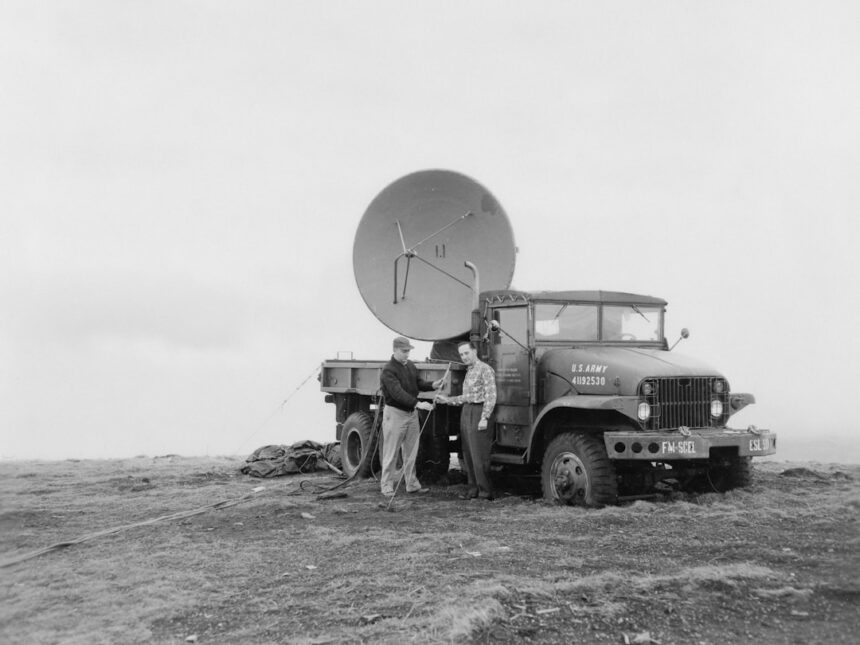
The evolution of the National Security Agency’s (NSA) signals intelligence (SIGINT) capabilities represents a profound journey, mirroring the technological advancements of the past century and the ever-shifting global geopolitical landscape. From its nascent origins in deciphering enemy communications during wartime to its current role in managing and analyzing an ocean of digital data, the NSA’s SIGINT apparatus has been a constant, albeit evolving, presence, shaping the very nature of intelligence gathering for the United States and its allies. This article will delve into key milestones and developments in this evolution, offering a factual account of how the NSA’s ability to listen to, intercept, and analyze communications has transformed.
The roots of modern American SIGINT are firmly planted in the fertile, albeit often bloody, ground of the World Wars. The necessity of understanding enemy intentions and capabilities drove the initial, rudimentary efforts in breaking codes and ciphers. This was not a task undertaken by a single, monolithic entity from the outset, but rather a piecemeal endeavor born of urgent need, often involving academics, mathematicians, and military personnel working in ad-hoc groups.
World War I: The Spark of Necessity
Prior to World War I, a centralized, coordinated approach to codebreaking was largely absent within the U.S. military. Intelligence gathering was more about traditional espionage and open-source information. However, as the conflict escalated, the limitations of these methods became glaringly apparent. The ability to intercept and comprehend enemy messages offered a significant tactical and strategic advantage.
Early Codes and the Rise of Cryptanalysis
The communication methods of the era, while rudimentary by today’s standards, still presented challenges. Simple substitution ciphers, transposition ciphers, and early forms of mechanical encryption were in use by various nations. The development of cryptanalysis – the science of breaking codes – became a critical, albeit clandestine, field. Figures like Herbert Yardley, who would later play a pivotal role, began to lay the groundwork for more systematic approaches. This was akin to learning the alphabet in a foreign language; before you could read the book, you had to understand the fundamental building blocks of its communication.
World War II: The Crucible of Cryptanalysis and the Birth of a Formal Agency
World War II marked a profound acceleration in the development of SIGINT. The scale and complexity of the conflict demanded a more sophisticated and organized approach to intelligence. The successes achieved in breaking enemy codes, particularly by the British at Bletchley Park and their American counterparts, demonstrably shortened the war and saved countless lives.
The Colossus and the Enigma Busters
The breaking of the German Enigma code by the Allied forces, spearheaded by British efforts at Bletchley Park, is a legendary tale in the history of SIGINT. Likewise, the American efforts, particularly against the Japanese Purple cipher, were equally crucial. These achievements were the result of immense intellectual firepower, relentless effort, and the development of early computational devices. The development of machines like the Colossus, designed to break the Lorenz cipher used by the German High Command, represented a significant leap in mechanized cryptanalysis, foreshadowing the computational power that would define future SIGINT operations.
The Precursors to the NSA: Research and Development Board and Signal Intelligence Service
In the United States, the need for centralized coordination led to the establishment of various bodies. The Signal Intelligence Service (SIS) was a key precursor, focusing on the interception and cryptanalysis of radio communications. The Research and Development Board also played a crucial role in fostering technological innovation in the field of signals intelligence. These early organizations were like the scattered seeds that would eventually grow into the mighty oak of the NSA.
For those interested in the history of NSA signals intelligence, a compelling article can be found at In the War Room, which delves into the evolution of surveillance practices and the pivotal role the NSA has played in shaping modern intelligence operations. This resource provides valuable insights into the agency’s methods, challenges, and the ethical implications surrounding its activities throughout the decades.
The Cold War Era: Global Reach and the Data Explosion
The advent of the Cold War transformed SIGINT from a wartime necessity into a permanent, pervasive instrument of national security. The ideological struggle between the United States and the Soviet Union, coupled with the burgeoning global network of telecommunications, created an insatiable demand for intelligence. The NSA, formally established in 1952, became the focal point of American SIGINT efforts, tasked with gathering and processing foreign intelligence from electronic sources. This era witnessed a dramatic expansion in the scope and ambition of SIGINT.
The Rise of Electronic Surveillance
The Cold War decades saw a remarkable proliferation of electronic communication technologies. Radio, in its many forms, remained a primary target, but the gradual emergence of telegraphy, telephony, and eventually early forms of data transmission presented new avenues for interception. The NSA began to build an expansive network of listening posts around the globe, from covert facilities in allied nations to clandestine ships and aircraft. This was the era when SIGINT truly went global, developing an ear that could stretch across continents.
Listening Posts and the “Great Wall” of Surveillance
The construction and operation of vast listening posts, often shrouded in secrecy, became a hallmark of Cold War SIGINT. These facilities, such as the legendary U-2 spy plane program, were designed to penetrate sensitive airspace and collect signals intelligence from afar. The sheer scale of these operations meant that the volume of intercepted data began to increase exponentially, a trend that would continue unabated. This vast network was like a colossal spiderweb, designed to ensnare every whisper of electronic communication.
Cryptologic Modernization and the Arms Race
Both the United States and the Soviet Union engaged in a relentless cryptologic arms race. As one side developed new encryption methods, the other dedicated vast resources to breaking them. This continuous cycle of innovation and counter-innovation drove significant advancements in both cryptology and cryptanalysis, pushing the boundaries of what was technologically possible.
The Advent of the Computer Age and its Impact
While early SIGINT relied heavily on human analysts and mechanical aids, the latter half of the Cold War saw the transformative impact of computers. The ability to process and analyze vast quantities of data at speeds previously unimaginable began to revolutionize SIGINT operations. This was the dawn of the digital age for intelligence, where algorithms started to become as important as human intuition.
Early Data Processing and Analysis
Initial computer applications in SIGINT focused on tasks like correlating intercepted messages, identifying patterns, and automating routine decryption processes. These early computers, while primitive by today’s standards, represented a quantum leap in efficiency and capability. They were the first timid steps into a world of data that would soon become an overwhelming flood.
The Need for Sophistication: From Manual Labor to Algorithmic Power
The sheer volume of intercepted traffic necessitated the development of more sophisticated analytical tools. The transition from manual decipherment to computer-assisted analysis was a gradual but inevitable process. This allowed analysts to sift through larger datasets and identify potential intelligence leads more effectively.
The Digital Revolution and the Transformation of SIGINT

The late 20th and early 21st centuries witnessed a seismic shift in global communication with the advent of the internet and the proliferation of digital technologies. The NSA’s SIGINT mission was fundamentally reshaped by this digital revolution, moving from the interception of analog signals to the complex challenges of managing and analyzing the vast, interconnected digital universe. This era represents a period of profound adaptation and, for the NSA, an unprecedented expansion of its operational domain.
The Internet: A New Frontier and a Data Deluge
The internet’s explosive growth created an entirely new landscape for SIGINT. Suddenly, communication was no longer confined to radio waves or telephone lines; it was flowing through fiber optic cables, across vast server networks, and in encrypted packets across the globe. The NSA found itself with an unprecedented opportunity to observe and analyze digital communications, but also a monumental challenge in managing the sheer volume of data. It was like transitioning from listening to a few radio stations to trying to hear every conversation happening in every room of a city.
Intercepting the Flow: Infrastructure and Partnerships
The NSA’s strategy shifted to accessing the flow of data at key internet exchange points and through partnerships with telecommunications companies. This involved a complex interplay of technical capabilities and legal frameworks, enabling the agency to tap into the digital arteries of global communication.
The Rise of Network Exploitation
Beyond simply intercepting communications, the NSA began to focus on network exploitation. This involved understanding the architecture of digital networks, identifying vulnerabilities, and developing techniques to gain access to sensitive data residing within these networks. This evolved from listening at the front door to understanding the entire blueprint of the building.
Encryption and Counter-Measures: The Eternal Cat and Mouse Game
As digital communication became more prevalent, so too did encryption. The widespread adoption of strong encryption algorithms presented a significant hurdle for traditional SIGINT methods. The NSA invested heavily in developing techniques to circumvent or break encryption, perpetuating the perpetual cat-and-mouse game that is central to cryptology.
Cryptanalytic Challenges and the Quest for Keys
The increasing sophistication of encryption meant that simply intercepting data was often insufficient if it remained unreadable. The NSA dedicated significant resources to cryptanalysis, seeking weaknesses in algorithms and developing methods to acquire encryption keys, either through technical means or human intelligence.
The Importance of Metadata
When direct decryption proved impossible, the value of metadata – information about the communication itself, such as who communicated with whom, when, and for how long – became paramount. This metadata, even when the content was encrypted, could provide invaluable intelligence insights. This was like knowing everyone who was present at a clandestine meeting, even if you couldn’t hear what they said.
The Evolution of Analytical Capabilities: From Human Analysts to AI
The sheer volume and complexity of digital data demanded a revolution in analytical capabilities. The reliance solely on human analysts became untenable. The NSA began to leverage advanced computing power, artificial intelligence (AI), and machine learning (ML) to process, analyze, and disseminate intelligence derived from SIGINT.
The Promise of Artificial Intelligence in SIGINT
AI and ML offered the potential to automate tedious analytical tasks, identify subtle patterns and anomalies that human analysts might miss, and process data at an unprecedented scale. This represented a fundamental shift in how intelligence was derived, moving towards more predictive and proactive analysis.
Data Mining and Pattern Recognition
The development of sophisticated data mining techniques allowed analysts to sift through massive datasets to identify trends, connections, and potential threats. Pattern recognition algorithms became essential tools for identifying suspicious activities within the vast ocean of digital information.
The Post-9/11 Era: Counterterrorism and the Blurring Lines
The September 11, 2001, terrorist attacks profoundly reshaped the NSA’s SIGINT priorities and operational focus. The urgent need to prevent future attacks led to an expansion of its counterterrorism SIGINT capabilities, often involving increased surveillance and a more aggressive approach to data collection. This period marked a significant turning point, where the lines between foreign intelligence and domestic security began to blur.
The Focus on Counterterrorism Intelligence
Following 9/11, counterterrorism became the paramount mission for the NSA. The agency was tasked with identifying and disrupting terrorist plots, tracking terrorist movements, and understanding terrorist networks. This led to a heightened focus on communications associated with known or suspected terrorist groups.
Pre-emptive Intelligence: A New Imperative
The emphasis shifted towards pre-emptive intelligence – gathering information that could prevent an attack before it occurred. This meant more proactive and extensive data collection, aiming to identify nascent threats before they could materialize.
Fusion Centers and Interagency Collaboration
The post-9/11 environment also emphasized greater collaboration between intelligence agencies and law enforcement. The establishment of Fusion Centers, for instance, aimed to pool intelligence from various sources, including SIGINT, to provide a more comprehensive picture of threats.
The Debate Over Privacy and Civil Liberties
The expanded scope of NSA surveillance in the post-9/11 era sparked significant public debate and scrutiny regarding privacy and civil liberties. Revelations about large-scale data collection programs, such as those exposed by Edward Snowden, raised concerns about the balance between national security and individual freedoms.
The Legal Framework and its Evolution
The legal frameworks governing SIGINT collection, such as the Foreign Intelligence Surveillance Act (FISA), underwent significant debate and amendment in this period. The expansion of surveillance capabilities often tested the boundaries of existing legal protections.
Public Scrutiny and the Snowden Revelations
The Snowden leaks in 2013 brought the workings of NSA SIGINT into the public spotlight, igniting a global discussion about the extent of government surveillance and its implications for privacy. This period was a watershed moment in challenging the secrecy that had long surrounded SIGINT operations.
The Role of Technology in Enhanced Surveillance
Advancements in technology continued to play a critical role in enhancing NSA’s surveillance capabilities. Innovations in data storage, processing power, and analytical tools allowed for the collection and analysis of even more sensitive information. This was like upgrading from a magnifying glass to a powerful microscope, revealing even the finest details.
Big Data and its Implications for Intelligence
The concept of “big data” became central to SIGINT operations. The ability to collect, store, and analyze vast, diverse datasets offered unprecedented opportunities for intelligence discovery. However, it also presented significant challenges in terms of data management, security, and ethical considerations.
Next-Generation Encryption and the Ongoing Cryptanalytic Challenge
The continuous development of more robust encryption technologies presented ongoing challenges for NSA cryptanalysts. The race to stay ahead of adversaries in securing communications remained a critical aspect of SIGINT.
The history of NSA signals intelligence is a fascinating topic that reveals the evolution of surveillance technologies and their impact on national security. For those interested in exploring this subject further, a related article can provide deeper insights into the agency’s operations and its role in modern intelligence gathering. You can read more about it in this informative piece available at this link.
The Future of SIGINT: AI, Quantum Computing, and the Information War
| Year | Event | Description | Impact |
|---|---|---|---|
| 1952 | Establishment of NSA | The National Security Agency was officially established to centralize signals intelligence (SIGINT) operations. | Consolidated U.S. SIGINT efforts under one agency, enhancing intelligence capabilities. |
| 1960s | Operation SHAMROCK | NSA began intercepting international telegraph and telephone communications entering and leaving the U.S. | Expanded global surveillance reach, raising later privacy concerns. |
| 1975 | Church Committee Investigation | U.S. Senate committee investigated NSA and other intelligence agencies for abuses. | Led to reforms and oversight mechanisms for intelligence activities. |
| 1990s | ECHELON Program | Global signals intelligence network developed to monitor communications worldwide. | Enhanced global surveillance but sparked international privacy debates. |
| 2001 | Post-9/11 Expansion | NSA significantly expanded surveillance programs under the Patriot Act. | Increased intelligence gathering to combat terrorism, with controversy over civil liberties. |
| 2013 | Edward Snowden Leaks | Revelations about NSA’s mass surveillance programs were made public. | Global debate on privacy, security, and government transparency intensified. |
| 2020s | Modernization and Cybersecurity Focus | NSA invests in quantum computing, AI, and cyber defense capabilities. | Strengthened U.S. cyber intelligence and defense posture. |
Looking ahead, the evolution of NSA Signals Intelligence is poised for further dramatic transformations, driven by emerging technologies like advanced artificial intelligence, quantum computing, and the increasing sophistication of information warfare. The challenges and opportunities that lie on the horizon will redefine the very nature of intelligence gathering and national security in the digital age.
The Dominance of Artificial Intelligence and Machine Learning
AI and ML are no longer emerging tools; they are becoming the bedrock of future SIGINT operations. The ability to automate complex analysis, predict adversary behavior, and identify subtle anomalies will be paramount.
Predictive Analytics and Threat Forecasting
Advanced AI algorithms are being developed to move beyond reactive analysis to predictive forecasting. By identifying patterns and trends in vast datasets, SIGINT aims to anticipate future threats and adversary actions with greater accuracy. This is akin to forecasting the weather, but with the aim of predicting and preventing a storm before it hits.
AI-Powered Cryptanalysis and Data Exploitation
AI is also revolutionizing cryptanalysis, enabling faster and more efficient decryption and exploitation of encrypted communications. Machine learning models can be trained to identify patterns in seemingly random encrypted data, potentially unlocking previously inaccessible intelligence.
The Quantum Computing Conundrum
Quantum computing represents a potential double-edged sword for SIGINT. While it promises to revolutionize fields like drug discovery and materials science, it also poses a significant threat to current encryption standards.
The Threat to Current Encryption
The development of powerful quantum computers could render many of the encryption algorithms used today obsolete, potentially exposing vast amounts of previously secure data. This threat necessitates a rapid transition to quantum-resistant cryptography.
Quantum-Enhanced SIGINT Capabilities
Conversely, quantum computing itself might offer new avenues for SIGINT. The unique properties of quantum mechanics could potentially be harnessed to develop new methods for signal detection, analysis, and decryption that are currently unimaginable.
The Evolving Landscape of Information Warfare
The concept of “information warfare” is becoming increasingly relevant, blurring the lines between traditional espionage and sophisticated influence operations. SIGINT will play a crucial role in understanding and countering these evolving threats.
Disinformation and Influence Operations
SIGINT will be critical in identifying and analyzing disinformation campaigns, propaganda, and influence operations orchestrated by state and non-state actors. Understanding the source and dissemination of such information is vital for national security.
Securing the Information Domain
As critical infrastructure and societal functions become increasingly reliant on digital networks, securing the information domain from disruption and attack becomes a paramount SIGINT concern. This includes protecting against cyberattacks that could cripple communications and vital services.
The Ethical and Legal Crossroads
As SIGINT capabilities continue to evolve, so too will the ethical and legal debates surrounding them. The responsible use of AI, the implications of quantum computing for privacy, and the challenges of applying existing legal frameworks to new technologies will require ongoing consideration and adaptation. Navigating this complex terrain will be as critical as mastering the technology itself.
FAQs
What is the NSA and what does signals intelligence mean?
The NSA, or National Security Agency, is a U.S. government agency responsible for global monitoring, collection, and processing of information and data for foreign intelligence and counterintelligence purposes. Signals intelligence (SIGINT) refers to the interception and analysis of electronic signals and communications, such as phone calls, emails, and radar transmissions.
When was the NSA established and why?
The NSA was officially established in 1952 by a presidential directive. It was created to consolidate and enhance the United States’ signals intelligence capabilities during the Cold War, aiming to better intercept and decode foreign communications and protect national security.
What are some key historical milestones in NSA signals intelligence?
Key milestones include the development of advanced cryptographic techniques during World War II, the establishment of the NSA in 1952, the expansion of electronic surveillance during the Cold War, the use of satellite and digital technology for intelligence gathering, and the revelations about mass data collection programs in the 21st century.
How has NSA signals intelligence evolved with technology?
NSA signals intelligence has evolved from manual code-breaking and radio interception to sophisticated computer algorithms, satellite surveillance, and cyber operations. Advances in computing power, encryption, and global communications have significantly expanded the NSA’s ability to collect and analyze vast amounts of data.
What controversies have surrounded the NSA’s signals intelligence activities?
The NSA has faced controversies related to privacy and civil liberties, especially following disclosures about mass surveillance programs such as PRISM and the collection of phone metadata. These revelations sparked debates about the balance between national security and individual privacy rights.