
The Cold War, a protracted period of geopolitical tension between the United States and the Soviet Union and their respective allies, was not merely a clash of ideologies and military posturing. It was also a monumental economic endeavor, characterized by an insatiable demand for advanced weaponry, sophisticated technologies, and expansive logistical networks. The procurement price of this global rivalry was astronomical, shaping national economies, influencing industrial development, and leaving a lasting legacy on the global arms market.
The core tenet of Cold War strategy, particularly for the United States, was deterrence. This concept hinged on maintaining a military force so powerful and so credible that potential adversaries would be dissuaded from launching an attack, especially a nuclear one, due to the unacceptable consequences. Achieving this level of deterrence necessitated an unprecedented and continuous build-up of military hardware.
Nuclear Arsenal Expansion: The Ultimate Deterrent
The development and proliferation of nuclear weapons represented the apex of Cold War procurement. This was not a singular expenditure but a cascading series of investments.
The Manhattan Project and Beyond: The Genesis of Atomic Power
The initial research and development of the atomic bomb, epitomized by the Manhattan Project, was a colossal undertaking involving vast resources, scientific ingenuity, and manpower. The success of this project, however, did not mark an end but a beginning. It fueled a relentless drive to improve existing weapon designs, increase yield, and develop new delivery systems.
Intercontinental Ballistic Missiles (ICBMs): Reaching the Unreachable
The advent of ICBMs fundamentally altered the strategic landscape. Producing and deploying these long-range missiles required immense industrial capacity, the extraction and processing of rare materials, and the construction of complex launch facilities. The Strategic Air Command (SAC) of the USAF became a dominant force, requiring a constant supply of bombers, tankers, and the infrastructure to support them.
Submarine-Launched Ballistic Missiles (SLBMs): The Invisible Threat
The development of nuclear-powered submarines capable of launching ballistic missiles introduced an element of survivability and stealth to the nuclear triad. The construction and maintenance of these sophisticated vessels, along with the missiles they carried, represented another significant procurement drain. The Navy, tasked with this responsibility, saw its shipbuilding budgets soar.
Tactical Nuclear Weapons: Widening the Spectrum of Conflict
Beyond strategic deterrence, both sides sought tactical nuclear weapons for use on the battlefield. The procurement of artillery shells, mines, and short-range missiles equipped with nuclear warheads further diversified and expanded the nuclear arsenal, adding another layer of complexity and cost to the procurement equation.
Conventional Forces: The Unseen Burden
While nuclear weapons often dominated headlines and strategic discussions, the maintenance and modernization of conventional forces constituted a substantial and ongoing procurement burden. These forces, designed for brushfire wars, limited conflicts, and the projection of power, demanded a constant influx of personnel, equipment, and training.
Naval Power Projection: From Battleships to Aircraft Carriers
The global reach of both superpowers necessitated a formidable naval presence. The construction of aircraft carriers, destroyers, submarines (conventional and nuclear-powered), and auxiliary vessels was a continuous process. The maintenance of these complex machines, often operating in harsh environments, required substantial ongoing procurement of spare parts and specialized services. The shift from battleship-centric navies to carrier-centric ones represented a significant technological and financial leap.
Air Superiority and Tactical Air Support: The Backbone of Warfare
The Air Force, responsible for air defense, strategic bombing, and tactical close air support, was a major consumer of defense dollars. The procurement of fighter jets, bombers, reconnaissance aircraft, and transport planes, each generation more advanced and expensive than the last, was a constant. The development of electronic warfare capabilities and advanced targeting systems added further layers of complexity and cost.
Ground Forces and Mechanized Warfare: The Tanks and Trucks of Conflict
The large armies maintained by both sides required vast quantities of tanks, armored personnel carriers, artillery pieces, and logistical vehicles. The constant need for upgrades, maintenance, and replacement of these systems, often subjected to rigorous testing and deployment, represented a significant and consistent drain on procurement budgets. The logistical tail – the supplies, fuel, ammunition, and transportation networks necessary to sustain these forces – was itself a colossal procurement undertaking.
In exploring the intricate dynamics of military spending during the Cold War, the article “The Cost of Cold War Procurement Cascades” provides a comprehensive analysis of the financial implications of arms races and military procurement strategies. For further insights into the broader context of military expenditures and their long-term effects on national budgets, readers may find the article “Understanding Military Spending Trends” particularly enlightening. You can access it through this link: Understanding Military Spending Trends.
Technological Innovation: The Engine of Procurement
The Cold War was as much a scientific and technological race as it was a military one. The constant drive for superior military capabilities spurred massive investment in research and development (R&D), which in turn fueled a continuous cycle of procurement for new and improved technologies.
The Space Race: A Proxy for Military Prowess
While often framed as a competition to reach the moon, the Space Race was deeply intertwined with military objectives. The technologies developed for space exploration – rocketry, guidance systems, telecommunications, and materials science – had direct applications for missile development, reconnaissance, and global communication.
Satellite Technology: Eyes in the Sky
The development of reconnaissance satellites, communication satellites, and early warning satellites was a direct response to military needs. The procurement of launch vehicles, satellite components, and ground control infrastructure represented a significant investment in this burgeoning field. These satellites provided invaluable intelligence and enhanced command and control capabilities.
Rocketry and Propulsion: The Power to Launch
The development of powerful and reliable rocket engines was crucial for both space exploration and missile deployment. Funding for rocket research, testing, and manufacturing was substantial, as the ability to deliver payloads accurately and at high speeds was paramount.
Electronics and Computing: The Digital Battlefield
The Cold War witnessed a revolution in electronics and computing, largely driven by military requirements. The need for faster processing, more accurate targeting, and sophisticated communication systems spurred innovation.
Radar and Sonar: Perceiving the Invisible
The development of advanced radar and sonar systems was essential for detecting enemy aircraft, missiles, and submarines. Continuous upgrades and the procurement of new generations of these systems, capable of greater range and resolution, were a constant requirement.
Communications Systems: Connecting the Front Lines
Secure and reliable communication systems were vital for coordinating military operations across vast distances. This led to significant investment in radio, microwave, and later, early satellite communication technologies, all subject to rigorous specifications and procurement processes.
Early Computing and Data Processing: Managing the War Machine
The vast amounts of data generated by military operations – intelligence reports, logistics manifests, target data – required increasingly sophisticated computing power. The procurement of early mainframe computers and the development of specialized software and data processing capabilities were crucial for effective command and control.
Materials Science and Manufacturing: The Foundation of Everything
The demand for faster, stronger, and lighter materials was a constant driver of innovation and procurement.
Advanced Alloys and Composites: Building Stronger and Lighter
The development of new alloys, such as titanium and specialized aluminum, and later, composite materials, was driven by the need for more efficient and durable aircraft, missiles, and vehicles. The procurement of these materials, often rare and expensive, had a significant impact on manufacturing costs.
Miniaturization and Integrated Circuits: The Heart of Modern Electronics
The miniaturization of electronic components, culminating in the development of integrated circuits, revolutionized military electronics. The procurement of early semiconductors and integrated circuits, and the complex manufacturing processes involved, represented a significant technological and financial leap.
The Economic Impact: A Double-Edged Sword
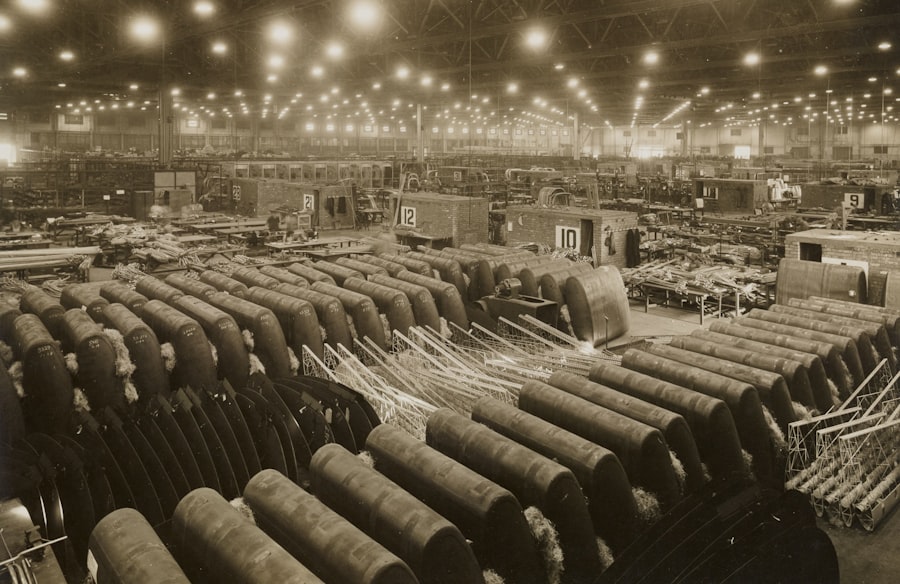
The immense scale of Cold War procurement had profound and multifaceted economic impacts, both domestically and internationally. While it fueled industrial growth and technological advancement, it also created significant economic distortions and dependencies.
The Military-Industrial Complex: A Powerful Nexus
President Eisenhower’s famous warning about the “military-industrial complex” highlighted the symbiotic relationship between the defense industry, the military, and government policymakers. This complex fostered a powerful lobbying force that consistently advocated for increased defense spending and thus, continued procurement.
Defense Contractors and Innovation: Profits and Progress
Large defense contractors became major employers and drivers of economic activity. Their investments in R&D, driven by the constant demand for new weapons and technologies, trickled down into civilian applications, fostering innovation in various sectors. However, it also created an environment where profit often dictated technological development goals, sometimes at the expense of genuine strategic needs.
Job Creation and Economic Stimulus: The Cold War Dividend
Defense spending, through its procurement orders, directly and indirectly created millions of jobs. This provided a significant economic stimulus, particularly in regions with major defense installations or manufacturing facilities. The constant demand ensured a stable, albeit specialized, employment base.
Opportunity Costs: What Was Left Undone
The colossal sums dedicated to defense procurement came at a significant opportunity cost. Resources, both financial and intellectual, that could have been invested in education, healthcare, infrastructure, or civilian research and development were diverted to military ends.
Diversion of Resources: Neglected Domestic Needs
The emphasis on military spending arguably led to a neglect of pressing domestic needs. Debates raged about the allocation of national wealth, with critics arguing that excessive defense expenditure hampered progress in social programs and civilian infrastructure development.
Impact on Civilian Industries: Resource Competition
The demand for raw materials, specialized manufacturing capabilities, and skilled labor by the defense sector could divert these resources from civilian industries, potentially hindering their growth or increasing their costs.
Global Arms Trade: The Cold War’s Enduring Legacy

The Cold War did not simply end with the fall of the Berlin Wall and the dissolution of the Soviet Union. The massive stockpiles of weapons and the established global networks of arms production and distribution have left a lasting legacy, continuing to fuel conflicts and shape global security.
Proliferation of Conventional Weapons: A Global Market
During the Cold War, both superpowers used arms sales as a tool of foreign policy, arming client states and allies. This led to the widespread proliferation of conventional weapons, many of which remain in circulation today, contributing to regional instability and ongoing conflicts. The procurement and sale of small arms, artillery, and tanks created a robust global arms market.
The Shadow of Surplus: Post-Cold War Arms Bazaar
The end of the Cold War led to significant reductions in military spending in many Western nations. However, the vast quantities of surplus conventional and even some advanced weapon systems required a market. This led to a surge in the global arms trade, with former Cold War adversaries selling off equipment to generate revenue.
The Rise of New Arms Producers: Aftershocks of Entanglement
The complex relationships forged during the Cold War, including joint ventures and technology transfers, contributed to the emergence of new arms producers in regions previously dependent on superpower patronage. This diversified the global arms market and introduced new dynamics to international security.
In exploring the intricate dynamics of military spending during the Cold War, one can gain further insights by examining a related article on the challenges of defense procurement strategies. This piece delves into how these strategies not only shaped military capabilities but also influenced economic policies and international relations. For a deeper understanding of these procurement cascades and their lasting impact, you can read more in this comprehensive analysis found at In the War Room.
The Financial Burden: A Debt Carried Forward
| Year | Cost (in billions) | Procurement Cascades |
|---|---|---|
| 1950 | 5.2 | Weapons and military equipment |
| 1960 | 8.9 | Missile systems and defense technology |
| 1970 | 12.4 | Nuclear arms race and space race |
| 1980 | 18.6 | Strategic defense initiative and military buildup |
The sustained high levels of defense spending characteristic of the Cold War had a substantial and enduring impact on national treasuries, with some nations still grappling with the financial repercussions decades later.
National Debt Accumulation: The Price of Security
The continuous outflow of capital for defense procurement, especially during periods of economic strain, contributed to the accumulation of national debt in many countries. The financing of these vast military budgets often relied on borrowing, creating a long-term financial burden.
Interest Payments: A Perpetual Cost
The servicing of this accumulated debt, through interest payments, represents a perpetual drain on public finances. A portion of national budgets continues to be allocated to paying down the financial commitments incurred during the Cold War procurement efforts.
Budgetary Constraints: The Lingering Shadow
The legacy of high defense spending continues to cast a long shadow over national budgets. Even in the post-Cold War era, established defense industries and the political influence of the military-industrial complex often make significant reductions in defense procurement challenging, perpetuating a cycle of substantial expenditure. The inherent cost of maintaining and modernizing existing weapon systems, coupled with the political imperative to retain defense industrial capacity, often proves difficult to overcome.
The procurement price of the Cold War was not just measured in dollars or rubles spent, but in the shaping of economies, the direction of innovation, and the enduring realities of global conflict. It was a period defined by a relentless demand for means of destruction and defense, a demand that left an indelible mark on the world.
FAQs
What is Cold War procurement cascades?
Cold War procurement cascades refer to the phenomenon where military procurement decisions made during the Cold War era continue to have long-term financial and strategic implications for countries involved in the conflict.
How did the Cold War impact military procurement?
During the Cold War, both the United States and the Soviet Union engaged in a massive arms race, leading to significant investments in military procurement. This included the development and acquisition of advanced weapons systems, such as nuclear weapons, aircraft, and naval vessels.
What are the long-term costs of Cold War procurement cascades?
The long-term costs of Cold War procurement cascades include the maintenance, modernization, and disposal of aging Cold War-era weapons systems. This can place a significant financial burden on countries as they continue to allocate resources to support these legacy systems.
How do Cold War procurement cascades impact modern defense budgets?
Cold War procurement cascades can impact modern defense budgets by diverting resources away from investing in new, cutting-edge technologies and capabilities. This can limit a country’s ability to adapt to evolving security threats and maintain a competitive edge in the global defense landscape.
What are some examples of Cold War procurement cascades?
Examples of Cold War procurement cascades include the continued operation of aging nuclear weapons systems, the maintenance of Cold War-era aircraft and naval vessels, and the challenges associated with disposing of obsolete military equipment.