The clandestine world of intelligence gathering often operates in the shadows, its successes pieced together from fragments of information, much like an archaeologist carefully excavating a lost civilization. The Central Intelligence Agency (CIA), in its pursuit of national security objectives, has historically leveraged a diverse array of tools and techniques. One such powerful yet often misunderstood resource is metadata. While not always the flashy evidence of smoking guns, metadata can be the silent witness, the subtle clue that unlocks an otherwise impenetrable mystery. The case of finding the lost Soviet submarine K-129 offers a compelling illustration of how the CIA’s sophisticated understanding and application of metadata played a pivotal role in a mission of immense strategic importance.
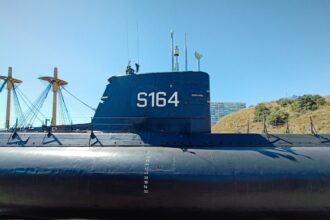
The year 1968 marked a significant escalation in the Cold War. Both the United States and the Soviet Union were engaged in a relentless arms race, with nuclear submarines representing a critical component of their respective naval power. On April 11, 1968, panic rippled through the Soviet military when their state-of-the-art Golf II-class diesel-electric ballistic missile submarine, K-129, vanished without a trace in the Pacific Ocean. This disappearance was not merely the loss of a vessel; it represented the potential loss of a significant strategic asset.
The Nature of the Loss
K-129 was no ordinary submarine. It was armed with nuclear-tipped ballistic missiles, capable of striking targets deep within the United States. Its loss raised immediate questions for the Soviets, ranging from operational failure to hostile action. For the United States, the implications were equally profound.
Potential for Intelligence Coup
The possibility of recovering K-129, or at least identifying its fate, presented an unparalleled intelligence opportunity. The submarine’s advanced technology, including its sonar systems, communication equipment, and potentially even the nuclear warheads themselves, were of immense interest. Understanding Soviet submarine capabilities was paramount to maintaining a strategic advantage.
Cold War Stakes
The Cold War was not a game of chess played solely on the borders of continents. The deep oceans were another battlefield, a place where silent predators roamed. The loss of K-129 in this hidden realm amplified the strategic stakes. Both superpowers were acutely aware that knowing the enemy’s capabilities could be the key to deterring conflict or, conversely, preparing for it.
Initial Soviet Response and US Observation
The Soviet Navy launched an extensive search operation. However, the vastness of the Pacific Ocean meant that finding a submerged submarine, especially one that had met with an accident, was an immensely difficult task. The United States, with its sophisticated surveillance networks, also became aware of the Soviet efforts.
Signals Intelligence Capabilities
The CIA, through its signals intelligence (SIGINT) operations, was actively monitoring Soviet naval communications. While the initial reports of K-129’s disappearance might have been couched in veiled language, the sheer scale of the Soviet search effort would have been an unmistakable indicator of a major incident.
Open-Source Intelligence and Diplomatic Channels
Beyond direct intelligence gathering, the CIA also paid attention to overt signals. Open-source reporting, diplomatic chatter, and the observations of allied nations contributed to a broader understanding of the unfolding situation. Even seemingly innocuous pieces of information, when viewed through the lens of intelligence analysis, could become significant.
In the realm of intelligence gathering, the CIA’s use of metadata played a crucial role in the recovery of the sunken Soviet submarine K-129. This operation, which took place during the Cold War, highlighted the innovative methods employed by intelligence agencies to track and locate underwater objects. For a deeper understanding of the implications and techniques involved in this operation, you can read a related article on the topic at In The War Room. This resource provides valuable insights into the intersection of technology and espionage during a pivotal time in history.
The Unseen Clues: Metadata as a Detective’s Notebook
Metadata, in its simplest form, is data about data. It describes other data, providing context and background information. In the realm of intelligence, metadata can encompass a vast spectrum of information, from the origin and destination of communications to the timing and duration of signals, the frequency of transmissions, and the type of equipment used. Think of it as the logbook of a ship, recording every movement, every communication, every operational detail – not the content of the captain’s diary, but the evidence of his actions.
Communication Metadata: The Invisible Trail
During the Cold War, communication was the lifeblood of naval operations. Submarines, despite their stealth, had to communicate with their command centers. These communications, encrypted for security, still generated metadata that could be exploited.
Transmission Patterns and Timing
The CIA would have been meticulously analyzing patterns of Soviet naval communications. Even if the content of messages was unintelligible, the frequency, time of day, and duration of transmissions from specific vessels or naval districts could reveal operational schedules, training exercises, or, in this case, a state of emergency. A sudden surge in activity from a particular region, or the unusual silence of a vessel expected to be operational, could be red flags.
Location Data from Signal Interception
While direct positioning of a submerged submarine was a formidable challenge, the interception of radio signals from the K-129, even if brief, could provide triangulation data. These signals, often emanating from its antenna mast when at periscope depth, left an electronic footprint. The metadata associated with these signals, including the direction of arrival and signal strength at various listening posts, allowed analysts to narrow down the potential search area.
Operational Metadata: The Echoes of Activity
Beyond direct communications, entire naval operations generate metadata that forms an operational picture.
Sonar Buoy Deployments and Data
Both the US and the Soviet Union employed networks of passive and active sonar buoys to monitor the ocean depths. The deployment and data collected by these buoys, even if they didn’t directly detect K-129, could reveal patterns of underwater activity, unusual sound signatures, or the presence of other vessels in a particular area. The metadata of these sonar deployments, such as their locations and activation times, became crucial pieces of the puzzle.
Satellite and Aerial Reconnaissance Data
Imagery intelligence, gathered from satellites and reconnaissance aircraft, provided another layer of metadata. While not always directly showing a submerged submarine, these platforms could capture the surface activity of naval vessels, the presence of large search fleets, or the patterns of shipping traffic in a suspected area. The metadata of these images – their resolution, angle of capture, and geographic coordinates – were vital for contextualizing the visual information.
The Power of Correlation: Weaving the Information Fabric
The true power of metadata lies not in isolated pieces of data but in their correlation and synthesis. It is like having countless threads, each seemingly insignificant on its own, but when woven together, they form a tapestry that reveals a hidden picture.
Cross-Referencing Across Intelligence Disciplines
The CIA’s strength lay in its ability to cross-reference metadata from different intelligence disciplines. SIGINT data would be compared with imagery intelligence, which in turn would be correlated with human intelligence reports and open-source information. This multi-pronged approach ensured that no single piece of data, or absence of it, was definitively interpreted in isolation.
Identifying Anomalies and Deviations
By establishing baseline operational patterns, intelligence analysts could identify anomalies. If K-129’s expected communication schedule was disrupted, or if sonar data indicated an unusual sound signature in a particular depth range, these deviations from the norm would be flagged. Analyzing the metadata of these anomalies provided the crucial starting point for further investigation.
Project Azorian: The Audacious Plan
The search for K-129 was not an endpoint but a prelude to an even more ambitious undertaking: Project Azorian. This highly classified operation, spearheaded by the CIA, aimed to recover the entire K-129 submarine from the ocean floor. The success of this complex mission rested heavily on the precise location data painstakingly gathered, much of which was derived from metadata.
Pinpointing the Location: The Metadata Advantage
The initial intelligence gathered, heavily reliant on metadata analysis, allowed the CIA to narrow down the search area to a specific region of the Pacific Ocean, roughly 1,500 nautical miles northwest of Hawaii at a depth of over 16,000 feet. This was a monumental task given the vastness of the ocean.
Triangulation from Intercepted Signals
As mentioned earlier, the analysis of K-129’s own radio transmissions before its disappearance, along with the metadata of Soviet search efforts, provided crucial spatial clues. The triangulation of these signals, even with limited accuracy, began to paint a picture of its last known operational vicinity.
Acoustic Signatures and Oceanographic Data
The CIA, in conjunction with the U.S. Navy, conducted extensive sonar surveys of the suspected area. The metadata from these sonar sessions, including the acoustic signatures detected and their corresponding time-stamps and locations, were meticulously analyzed. Anomalous acoustic readings, even faint ones, could be indicative of a submerged object. Oceanographic data, such as currents and seabed topography, also served as metadata, helping to refine search patterns and predict potential drift.
The Development of Specialized Technology
The immense depth at which K-129 lay required the development of entirely new technologies for its recovery. This included the Glomar Explorer, a uniquely designed ship capable of lifting a massive object from the seabed. The sophisticated navigation and positioning systems employed on the Glomar Explorer were informed by the precise location data derived from the prior metadata analysis.
Navigational Precision and Seabed Mapping
The metadata gathered during the search phase allowed for the creation of detailed seabed maps of the target area. This was critical for planning the deployment of the Glomar Explorer’s recovery system, the “Clementine” capture vehicle. The metadata associated with sonar mapping, bathymetry, and acoustic profiling guided the engineers in designing and operating these complex systems.
Real-time Data Processing
During the recovery operation itself, vast amounts of real-time data were generated and processed. This included information from the Glomar Explorer’s sonar, the Clementine vehicle’s sensors, and its own navigational systems. The metadata associated with this real-time data was crucial for making immediate adjustments and ensuring the success of the delicate lifting process.
The Ethical and Operational Implications of Metadata Usage

The CIA’s use of metadata in the K-129 recovery operation, while a testament to intelligence prowess, also raises broader questions about the ethical and operational implications of such extensive data collection and analysis.
Balancing National Security and Privacy Concerns
The inherent nature of intelligence gathering involves the collection and analysis of data that may, in other contexts, be considered private. The use of metadata, while often focused on operational patterns rather than individual content, still treads a fine line. In the case of K-129, the primary focus was on locating a lost military asset and gleaning vital strategic information, which was considered a paramount national security objective.
The “Meta” in Metadata: Context Beyond Content
It is crucial to reiterate that in the K-129 operation, the focus was largely on the metadata itself – the “who, what, when, where” of communications and operations – rather than the explicit content of any intercepted messages. This distinction is vital when considering the ethical landscape. For instance, knowing when a submarine transmitted and from where provided strategic insight without necessarily revealing the specific directives or intelligence exchanged.
Global Surveillance vs. Targeted Operations
The metadata utilized in the K-129 case stemmed from specific, targeted intelligence operations aimed at a known Soviet naval asset and its search efforts. This differs in scope and intent from generalized, mass surveillance programs. The operational context of the Cold War, with its high stakes and constant threat, heavily influenced the justification for such data collection.
The Evolving Landscape of Metadata Analysis
The techniques and technologies employed in the K-129 operation, while cutting-edge for their time, have evolved dramatically. The digital age has ushered in an explosion of data, and with it, ever more sophisticated methods of metadata extraction and analysis.
The Rise of Big Data and AI
Today, artificial intelligence and big data analytics allow for the processing of metadata on an unprecedented scale. Algorithms can identify subtle patterns, anomalies, and correlations that would have been impossible to detect manually. This has transformed metadata from a valuable tool into a foundational element of modern intelligence.
The Continued Relevance of Core Principles
Despite technological advancements, the core principles of metadata analysis that proved so effective in the K-129 case remain relevant. The understanding of communication patterns, operational footprints, and the correlation of disparate data sources continues to be a cornerstone of intelligence gathering. The CIA’s adeptness in applying these principles in a challenging historical context foreshadowed the critical role metadata would play in future intelligence endeavors.
The CIA’s innovative use of metadata played a crucial role in locating the Soviet submarine K-129, a mission that highlighted the agency’s ability to leverage seemingly innocuous data for significant intelligence breakthroughs. This operation is detailed in a fascinating article that explores the intersection of technology and espionage, shedding light on how metadata analysis transformed intelligence-gathering methods. For those interested in learning more about this intriguing topic, you can read the full article here.
Lessons Learned and the Legacy of K-129
| Metric | Data/Value | Description |
|---|---|---|
| Submarine Lost | K-129 | Soviet Golf-class ballistic missile submarine lost in 1968 |
| Metadata Type | Acoustic Signals | Underwater sound data used to track submarine movements |
| Signal Detection Range | Thousands of miles | Hydrophone arrays detected faint sounds across the Pacific Ocean |
| Number of Hydrophone Stations | ~30 | Global network of underwater listening posts used for triangulation |
| Triangulation Accuracy | Within a few miles | Precision in locating the submarine’s final resting place |
| Operation Name | Project Azorian | CIA mission to recover K-129 from the ocean floor |
| Depth of Recovery | ~16,500 feet | Depth at which the submarine was located and partially recovered |
| Time from Loss to Location | ~1 year | Duration between submarine sinking and successful location using metadata |
The recovery of K-129 was not just a triumph of engineering and operational planning; it was a testament to the power of intelligent data analysis, particularly the strategic leverage of metadata. The mission yielded significant intelligence on Soviet submarine technology and capabilities, shaping US naval strategy for years to come.
The Significance of Recovered Technology
The successful retrieval of K-129 provided the US with a treasure trove of intelligence. Direct examination of the submarine allowed for a detailed understanding of its systems, including its missile technology, sonar capabilities, and communication equipment. This insight was invaluable in closing technological gaps and developing countermeasures.
Post-Mortem Analysis of Soviet Systems
The salvage operation allowed for a thorough forensic analysis of the Soviet submarine. This included examining its hull for damage, understanding its propulsion systems, and crucially, analyzing its armament. The intact nuclear warheads, for instance, provided invaluable data on Soviet nuclear weapon design and yield.
Strategic Advantages Gained
The intelligence derived from K-129 allowed the United States to refine its own submarine designs, improve its anti-submarine warfare capabilities, and better anticipate Soviet naval deployments. This contributed to a more stable, albeit tense, strategic balance during the latter stages of the Cold War.
The Role of Secrecy and Deniability
Project Azorian was shrouded in extreme secrecy, including a masterful deception that portrayed the operation as a deep-sea mining venture called Project Sumex. This level of secrecy was essential to maintain plausible deniability and prevent escalation with the Soviet Union. The metadata analysis that enabled the precise location of K-129 was therefore conducted under the tightest of operational security.
The “Mining” Cover Story
The elaborate cover story of deep-sea mining was crucial in obscuring the true nature of the operation. The Glomar Explorer itself was a vessel designed to support this narrative, its unusual lifting mechanism appearing to be for mining equipment rather than a submarine recovery system. The metadata associated with the ship’s movements, its equipment, and its crew were all carefully curated to support this deception.
Information Control and Compartmentalization
The success of Project Azorian hinged on strict information control and compartmentalization. Only a select few individuals knew the true objective. The metadata, while the key to unlocking the mystery, was itself a highly classified asset, carefully guarded and accessed only by those with the highest security clearances.
The story of the CIA’s use of metadata in finding the K-129 submarine is a compelling historical case study. It demonstrates that even in the absence of direct visual confirmation, the subtle echoes of data – the metadata – can provide the critical breadcrumbs that lead to uncovering profound strategic secrets. It underscores the enduring importance of intelligent analysis and the relentless pursuit of information, proving that sometimes, the most significant discoveries are not in what is said, but in how and when it is communicated.
FAQs
What is metadata and how was it used by the CIA to locate K-129?
Metadata refers to data that provides information about other data, such as the time, location, and sender of a communication. The CIA used metadata from intercepted communications to analyze patterns and triangulate the location of the sunken Soviet submarine K-129.
Who was K-129 and why was it significant to the CIA?
K-129 was a Soviet Golf II-class ballistic missile submarine that sank in the Pacific Ocean in 1968. It was significant to the CIA because it carried nuclear missiles, and recovering it could provide valuable intelligence during the Cold War.
What methods did the CIA employ alongside metadata analysis to find K-129?
In addition to analyzing metadata, the CIA used underwater surveillance, oceanographic data, and the deployment of specialized vessels and equipment, such as the Hughes Glomar Explorer, to locate and attempt to recover K-129.
What was Project Azorian and how is it related to the search for K-129?
Project Azorian was a secret CIA mission in the early 1970s aimed at recovering the sunken K-129 submarine from the ocean floor. The project utilized intelligence gathered through metadata and other sources to pinpoint the submarine’s location.
What impact did the use of metadata have on intelligence operations during the Cold War?
The use of metadata allowed intelligence agencies like the CIA to gather critical information without intercepting the content of communications. This method enhanced their ability to track and locate targets such as K-129, improving strategic decision-making during the Cold War.