You are likely familiar with the image of the Cold War: a tense geopolitical standoff, a global struggle for influence, and clandestine operations conducted in the shadows. The CIA’s Azorian Project, a covert operation with the ambitious goal of salvaging a Soviet submarine from the ocean floor, stands as a testament to the ingenuity and daring of this era. This article will delve into the intricate details of this extraordinary undertaking, illuminating the challenges, the technologies employed, and the lasting impact of Azorian.
The story of Project Azorian begins not with a grand plan for retrieval, but with a devastating loss at sea. In 1968, the Soviet Union’s Golf II-class ballistic missile submarine, K-129, sank in the Pacific Ocean. The exact circumstances of its demise remain somewhat opaque, shrouded in official secrecy.
The Cold War’s Shadow Beneath the Waves
Whispers of a Sunken Prize
The sinking of the K-129 was not merely a naval tragedy; it represented a significant intelligence coup waiting to be exploited. The submarine, a carrier of nuclear ballistic missiles, held within its hull invaluable technological secrets that could offer a substantial advantage to the United States. The potential for reverse-engineering Soviet missile technology, understanding their sonar capabilities, and perhaps even recovering advanced encryption devices was a tantalizing prospect for American intelligence agencies. The Cold War was a chessboard of relentless observation, and the K-129 offered a unique opportunity to peer directly into the opponent’s strategy.
The Intelligence Imperative
The United States, locked in a constant arms race with the Soviet Union, viewed the recovery of the K-129 as a strategic imperative. Information gleaned from the submarine could inform defense spending, guide the development of countermeasures, and provide a crucial edge in the ongoing technological arms race. The potential intelligence dividends were immense, far outweighing the perceived risks of an ambitious and complex recovery operation.
The Veil of Secrecy
From its inception, Project Azorian was cloaked in an extraordinary level of secrecy. The very nature of the operation, the potential for international incident, and the sensitive intelligence it sought to acquire necessitated extreme discretion. The CIA understood that such a clandestine undertaking needed a plausible cover story, a narrative designed to explain away any unusual activities that might arise on the high seas.
The CIA Special Projects Staff Azorian, known for its ambitious underwater recovery mission, has been the subject of much intrigue and analysis over the years. For a deeper understanding of the complexities and implications of this operation, you can explore a related article that delves into the technological advancements and strategic motivations behind such covert missions. For more information, visit this article.
The Herculean Task: Raising a Ghost from the Abyss
The challenges presented by the K-129’s resting place were monumental. The submarine lay at a depth of approximately 16,000 feet in the unforgiving environment of the Pacific Ocean. This was a depth that pushed the boundaries of then-existing salvage technology to their absolute limits.
The Unforgiving Depths
Pressure and Peril
The immense hydrostatic pressure at 16,000 feet is a formidable adversary. It exerts a crushing force that can deform and destroy conventional submersibles and salvage equipment. Designing machinery and materials capable of withstanding such extreme conditions required pioneering engineering solutions. Think of it as trying to build a delicate watch that can remain functional under the weight of several large buildings.
The Technological Chasm
At the time, there was no readily available technology specifically designed for deep-sea salvage at these depths. Existing deep-sea submersibles were primarily for exploration and scientific research, not for lifting massive objects. The recovery of the K-129 demanded the development of entirely new systems, pushing the boundaries of naval engineering and underwater robotics.
The Ghost of the Abyss: A Target of Immeasurable Value
The K-129 was not just any vessel; it was a trove of potential intelligence. Its nuclear missiles, even in their degraded state, represented a significant technological puzzle. The desire to understand Soviet missile capabilities, guidance systems, and strategic doctrine was a powerful motivator for the operation.
The Phoenix Project: A Ship of Deception

To undertake such a colossal task, a sophisticated cover story was essential. The CIA devised Project Phoenix, a seemingly innocuous venture that would provide the necessary resources and a plausible reason for the presence of a large, specialized vessel in a remote area of the Pacific.
The Masquerade: A Commercial Façade
The Hughes Glomar Explorer: A Ship of Ambiguity
Central to Project Phoenix was the construction of the Hughes Glomar Explorer. This massive vessel was ostensibly built for deep-sea mining, a legitimate and growing commercial enterprise. This provided the perfect cover: a large, technologically advanced ship operating in international waters, engaging in activities that wouldn’t immediately raise eyebrows. The Glomar Explorer was a marvel of engineering in itself, designed to possess capabilities far beyond those required for routine mining operations.
The Dual Purpose of Illusive Mining
The deep-sea mining narrative served a critical purpose. It justified the ship’s specialized equipment, its extensive crew, and its prolonged presence in the target area. The mining equipment, in reality, was meticulously adapted and repurposed for the far more delicate and complex task of lifting the submarine. The public face of commercial enterprise masked the true, clandestine nature of the operation.
Funding the Shadows: A Network of Deceit
The funding for Project Azorian and the construction of the Hughes Glomar Explorer was a complex financial undertaking, involving shell corporations and offshore accounts. This intricate web of financial maneuvering ensured that the true cost and purpose of the operation remained hidden from public scrutiny and potential Soviet detection.
The Claw and the Cradle: Machinery of Redemption
The heart of Project Azorian lay in its innovative recovery system, a testament to human ingenuity in the face of extreme engineering challenges. The CIA, in collaboration with the Summa Corporation (a company owned by Howard Hughes, whose name lent further credibility to the mining cover story), developed a revolutionary piece of equipment.
The Engineering Marvels of the Deep
The ‘Clementine’ Claw: A Delicate Grasp
The primary retrieval mechanism was a massive, C-shaped grappling device nicknamed “Clementine.” It was designed to latch onto the hull of the K-129 with immense precision and strength. The claw itself was a sophisticated piece of engineering, capable of opening and closing with an accuracy that belied its sheer size and the extreme pressures it had to endure. Imagine a giant, mechanical hand designed to cradle a fallen titan.
The ‘Heart’ of the Operation: The Hathaway Platform
The Glomar Explorer itself served as the mobile base of operations, but the key to lifting the submarine was the Hathaway platform. This enormous platform, housed within the Glomar Explorer, housed the winches and the complex machinery required to raise and lower Clementine. The platform was designed to be lowered into the ocean, allowing Clementine to descend to the seabed. The immense power required to lift the submarine was generated by a network of powerful winches.
The “Jaws of Life” for a Sunken Giant
The Clementine claw, with its intricate hydraulic systems and custom-built components, was a symphony of engineering designed to perform a delicate, yet forceful, operation. The sheer scale of the mechanism and the precision required to successfully engage the K-129 were astounding.
The CIA’s Special Projects Staff, particularly known for the Azorian operation, has been the subject of much intrigue and analysis over the years. A fascinating exploration of this covert mission can be found in a related article that delves into the complexities and challenges faced by the agency during this high-stakes endeavor. For those interested in understanding the broader implications of such operations, the article provides valuable insights. You can read more about it in this detailed analysis that sheds light on the intricacies of intelligence work and its impact on global affairs.
The Rendezvous with the Past: Success and Shadowy Successes
| Metric | Details |
|---|---|
| Project Name | Azorian (also known as Project Jennifer) |
| Agency | CIA Special Projects Staff |
| Objective | Recovery of Soviet submarine K-129 from the Pacific Ocean floor |
| Year | 1974 |
| Location | North Pacific Ocean, approximately 1,500 miles northwest of Hawaii |
| Depth of Recovery | Approximately 16,500 feet (5,000 meters) |
| Vessel Used | Hughes Glomar Explorer |
| Outcome | Partial recovery of submarine; some parts lost during lift |
| Secrecy Level | Highly classified until declassified in the 2010s |
Project Azorian’s operational phase was a nail-biting sequence of events, fraught with tension and the constant threat of failure or detection. The mission, while ultimately achieving a partial success, was not without its significant challenges and lingering questions.
The Unveiling of the Abyss
The Launch of Clementine
In the summer of 1974, the Hughes Glomar Explorer arrived at the estimated location of the K-129. The Clementine claw was lowered into the dark, silent abyss. The descent took hours, each foot of depth amplifying the pressure and the stakes.
The Critical Grasp and the Ascent
The most critical moment was when Clementine was maneuvered to gently, yet firmly, grasp the K-129. The crew aboard the Glomar Explorer worked with precision and intense concentration, monitoring the sensitive instruments that indicated the claw’s engagement. The subsequent ascent of the submarine was a slow, agonizing process, with the entire massive structure of the Glomar Explorer working in concert to bring the lost vessel upwards.
A Partial Triumph: Bits and Pieces from the Deep
The recovery operation was not entirely successful in bringing the entire K-129 to the surface. While a significant portion of the submarine, including its missile compartment, was salvaged, the forward section of the vessel, containing what were believed to be the most sensitive intelligence materials and the submarine’s codebooks, broke off and plummeted back to the seabed. This means that while a significant prize was recovered, the full scope of potential intelligence remained elusive, forever lost to the depths.
The “Accidental” Exposure: A Ripple in the Cover
Despite the CIA’s meticulous planning, the sheer scale of the operation and the specialized nature of the Glomar Explorer could not remain entirely unnoticed. In 1975, muckraking journalist Jack Anderson broke the story of Project Azorian, exposing the true nature of the Glomar Explorer and its covert mission. This disclosure, while not revealing all the operational details, cast a significant shadow on the CIA’s carefully constructed cover.
The Legacy of Azorian: Echoes in the Deep
Project Azorian remains one of the most ambitious and secretive intelligence operations of the Cold War. Its legacy is multifaceted, touching upon technological innovation, geopolitical implications, and the enduring allure of maritime mysteries.
The Enduring Impact
A Technological Leap Forward
The technical challenges overcome during Project Azorian spurred significant advancements in deep-sea salvage technology, underwater robotics, and materials science. The engineering solutions developed for this operation had ripple effects, influencing later offshore engineering projects and deep-sea exploration efforts.
The Information Age Battlefield
The successful recovery of some intelligence from the K-129 undoubtedly provided valuable insights to the US military and intelligence community. It was a tangible victory in the silent war of information, a testament to the fact that even in the deepest oceans, the Cold War cast its long shadow.
The Unanswered Questions: The Ocean’s Secrets
Despite the public revelations, many aspects of Project Azorian remain shrouded in mystery. The exact nature of the intelligence recovered, the full scope of the Soviet technological secrets, and the precise reasons for the forward section’s detachment continue to be subjects of speculation and historical debate. The ocean, though yielding some of its secrets, still guards many others tightly.
The Azorian Doctrine: Caution and Ambition
Project Azorian serves as a powerful case study in the complexities of covert operations. It demonstrates the immense planning, technological prowess, and sheer audacity required to execute such a mission. It also highlights the inherent risks, the potential for partial success, and the ever-present threat of exposure. The Azorian Project remains a compelling chapter in the history of intelligence gathering, a daring dive into the unknown with echoes that continue to resonate.
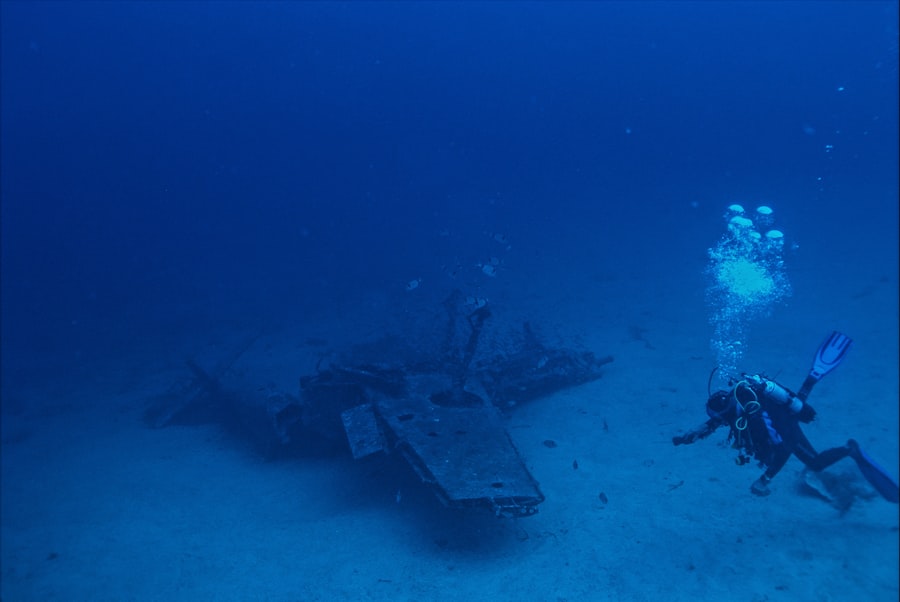
WATCH NOW ▶️ The CIA’s Impossible Mission To Steal A Nuclear Submarine
FAQs
What was the CIA Special Projects Staff Azorian?
The CIA Special Projects Staff Azorian was a secretive Cold War-era operation conducted by the CIA to recover a sunken Soviet submarine, K-129, from the Pacific Ocean floor using a specially designed ship called the Hughes Glomar Explorer.
When did the Azorian operation take place?
The Azorian operation took place in the early 1970s, with the recovery mission occurring primarily in 1974.
What was the purpose of the Azorian mission?
The purpose of the Azorian mission was to retrieve the Soviet submarine K-129, which had sunk in 1968, in order to gather intelligence, including cryptographic materials and technology, during the Cold War.
How was the Azorian operation kept secret?
The operation was kept secret by disguising the Hughes Glomar Explorer as a deep-sea mining vessel, maintaining strict confidentiality among personnel, and using cover stories to mislead the public and foreign governments.
What was the outcome of the Azorian mission?
The mission partially succeeded in recovering a portion of the submarine from the ocean floor, but much of the submarine remained unrecovered due to technical difficulties. The operation provided valuable intelligence but remained classified for many years.