The silent depths of the Pacific Ocean hold many secrets, and for decades, one of the most enigmatic was the fate of Soviet submarine K-129. This vessel, a project 629A Golf-class diesel-electric ballistic missile submarine, vanished without a trace in the early days of the Cold War. Its disappearance, however, was not merely the end of a vessel; it marked the beginning of an unprecedented intelligence operation by the United States, a daring gambit that would delve into the abyss to unearth vital secrets and potentially alter the delicate balance of power. The story of the CIA’s acquisition of K-129 is a testament to human ingenuity, strategic foresight, and the relentless pursuit of knowledge in the shadow of nuclear confrontation.
A Technological Marvel of the Soviet Navy
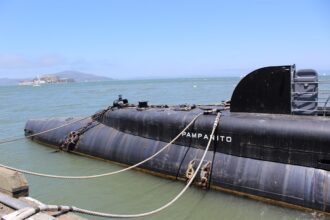
Project 629A submarines, known to NATO as Golf class, were a significant component of the Soviet Union’s nascent ballistic missile submarine force. Commissioned in the late 1950s, these vessels were designed to conduct strategic nuclear deterrence, carrying a trio of R-13 ballistic missiles armed with nuclear warheads. While not as technologically advanced as their later nuclear-powered counterparts, the Golf-class submarines represented a formidable threat in the hands of the Soviet Union, capable of delivering a nuclear punch from international waters. Their diesel-electric propulsion, however, limited their submerged operational time and speed compared to nuclear submarines, a factor that would play a role in their operational challenges.
The Last Patrol and Mysterious Disappearance
On March 11, 1968, K-129, under the command of Captain Valentin Savitsky, departed from her base in the Soviet Far East on a routine patrol in the Pacific Ocean. Her mission was ostensibly to operate near Hawaii, a strategically significant location for projecting Soviet power and intelligence gathering. What transpired during this patrol remains a subject of speculation and decryption, but it is understood that the submarine encountered an catastrophic event sometime in late March or early April. The precise cause of the sinking remains unclear, with various theories ranging from a battery explosion due to a hydrogen leak to a catastrophic hull breach during a missile launch attempt. The Soviet Navy conducted an extensive search for K-129, but their efforts proved fruitless. The submarine, and the 98 men aboard, were lost to the ocean’s embrace, a wound that festered in Soviet strategic thinking, its operational details and potential salvage value a closely guarded secret.
The CIA’s operation to recover nuclear secrets from the sunken Soviet submarine K-129 is a fascinating chapter in Cold War history, revealing the lengths to which intelligence agencies would go to secure vital information. For a deeper understanding of this covert mission and its implications, you can read a related article that explores the intricacies of the operation and its impact on U.S.-Soviet relations. Check it out here: Related Article on K-129 and CIA Operations.
Operation Ivy Mike: The Seeds of Recovery
The Intelligence Gap and the Urgency of the Mission
The news of K-129’s disappearance, though initially a cause for concern and a mystery for the Soviets, quickly translated into a golden opportunity for the United States intelligence community. At the height of the Cold War, understanding the capabilities and intentions of a superpower’s strategic assets was paramount. The loss of K-129 meant the loss of a platform for Soviet nuclear deterrence, but more importantly, it represented a treasure trove of potential intelligence that had just sunk to the ocean floor. The U.S. Navy’s SOSUS (Sound Surveillance System) hydrophone network, a vital instrument in tracking Soviet submarine activity, had detected the distress signals and the acoustic signatures of the sinking. This detection, a whisper in the vast ocean, sparked a feverish race against time and the crushing depths. The intelligence gap concerning Soviet naval capabilities, particularly their submarine-launched ballistic missile technology, was a gaping maw that K-129, if recovered, could help fill.
Reconstructing the Puzzle: Decoding the Signals
The initial detection of K-129’s sinking was not a precise pinpoint but a broad area of acoustical anomalies. The U.S. intelligence apparatus, a sophisticated web of sensors and analytical minds, worked tirelessly to triangulate the submarine’s final resting place. This involved piecing together fragments of data from SOSUS, correlating them with ship movements, and employing sophisticated algorithms to narrow down the search grid. It was akin to an archaeologist painstakingly assembling shattered pottery shards to reconstruct an ancient artifact, each faint acoustic echo a potential clue. The enormity of the challenge lay in the vastness of the Pacific, a blue expanse that could swallow any object whole.
Project Azorian: A Monumental Undertaking
The Genesis of a Daring Plan
Once the approximate location of K-129 was established, the Central Intelligence Agency (CIA), in collaboration with the U.S. Navy, embarked on arguably one of the most audacious and complex clandestine operations in history: Project Azorian. The objective was clear: to raise the sunken Soviet submarine from a depth of over 16,000 feet. This was a feat considered technologically impossible by many at the time, venturing into the crushing pressure of the abyssal plain, a realm where daylight never penetrates and the weight of the ocean is immense. The technical challenges were staggering, requiring the development of entirely new engineering solutions and a level of precision never before attempted.
The Cover Story: A Deep-Sea Mining Venture
To mask the true nature of Project Azorian, a plausible cover story was essential. The CIA, with its mastery of deception, orchestrated a highly sophisticated charade: a deep-sea mining research expedition. The story involved a fictional company, Global Marine, and a massive, specially constructed vessel named the Glomar Explorer. This ship, a marvel of engineering in its own right, was designed to look like a commercial deep-sea mining platform, complete with elaborate drilling equipment. This elaborate theatrical production was crucial to diverting Soviet suspicion and ensuring the success of the mission. The Glomar Explorer was not just a ship; it was a ghost, an illusion designed to sail before the eyes of the world, while its true purpose remained hidden beneath the waves.
The Glomar Explorer: A Technological Titan
The Glomar Explorer was the centerpiece of Project Azorian, a technological leviathan built specifically for the mission. Its most critical component was a massive, gimballed capture vehicle known as the “Clementine” or “Baby Hoot” which was designed to latch onto the submarine and lift it slowly from the seabed. The scale of the engineering was unprecedented. The ship itself was a testament to American industrial might, disguised as a civilian research vessel, but housing an array of sophisticated equipment that would make its Soviet counterparts green with envy. The Glomar Explorer‘s construction and deployment were conducted in such secrecy that only a handful of individuals were privy to its true purpose until years later.
The Descent into the Abyss
Navigating the Crushing Depths
The journey of the Glomar Explorer to the recovery site was a meticulously planned operation, fraught with tension. The vessel’s course was carefully plotted to avoid detection, and its crew was trained to maintain the illusion of a mining expedition. Once on location, the real work began. The Clementine, a colossal piece of machinery, was lowered into the ocean’s depths, a descent that took days. The pressure at these depths is immense, capable of crushing even the most robust structures. The engineers and technicians aboard the Glomar Explorer faced the constant threat of equipment failure brought on by this extreme environment. Each foot of descent was a victory against the unforgiving forces of nature.
The Capture Mechanism: A Delicate Dance
The Clementine featured a unique gripping mechanism designed to secure the submarine. This involved a series of giant mechanical claws that would attach to the hull of K-129. The precision required for this operation was astounding. The submariners of K-129 had likely not anticipated their vessel becoming a pawn in such a colossal game of underwater chess. The capture was a delicate dance between man-made ingenuity and the forces of the deep, a testament to the extraordinary engineering that had gone into the project. The slightest miscalculation, the smallest tremor, could have sent the Clementine and its precious cargo back to the seabed, shattering years of planning and billions of dollars.
The Ascent and the Hope of Secrets
The slow, arduous process of raising K-129 began. The sheer weight of the submarine, coupled with the immense depth, made this ascent a test of endurance and engineering prowess. This was the moment of truth, the culmination of years of clandestine planning and immense financial investment. The world held its breath, unaware of the silent drama unfolding miles below the surface. The hope that fueled this monumental effort was the unveiling of Soviet nuclear secrets, a peek behind the Iron Curtain that could provide invaluable insights into their weapon systems, operational tactics, and technological advancements.
A Partial Victory: The Price of the Abyss
As K-129 was being brought to the surface, disaster struck. The immense pressure had weakened the submarine’s structure, and as it neared the surface, the tail section, where the ballistic missiles were housed, broke off and sank back to the ocean floor. This was a devastating setback, a stark reminder of the unforgiving nature of the deep sea. Only about half of the submarine was successfully recovered. The prize, though still significant, was not as complete as initially envisioned. The broken tail section became a lingering ghost, a tantalizing enigma that hinted at the secrets still buried in the abyss.
The CIA’s operation to recover nuclear secrets from the sunken Soviet submarine K-129 has long been a topic of intrigue and speculation. This covert mission, known as Project Azorian, aimed to retrieve crucial intelligence that could provide insights into Soviet naval capabilities during the Cold War. For a deeper understanding of the implications and outcomes of this operation, you can read a related article that explores the complexities of underwater espionage and its impact on international relations. To learn more, visit this insightful article.
The Unveiling of Secrets
| Metric | Details |
|---|---|
| Submarine Name | K-129 (Soviet Golf II-class ballistic missile submarine) |
| Date of Sinking | March 8, 1968 |
| Operation Name | Project Azorian (also known as Project Jennifer) |
| Recovery Depth | Approximately 16,500 feet (5,000 meters) |
| Recovered Items | Partial submarine hull, cryptographic materials, missile components, nuclear torpedoes |
| Intelligence Gained |
|
| Impact on US Nuclear Strategy | Enhanced understanding of Soviet nuclear deterrent capabilities and improved US anti-submarine warfare tactics |
A Glimpse into Soviet Nuclear Capabilities
Despite the partial recovery, the salvaged portion of K-129 yielded a wealth of intelligence for the United States. The intact sections of the submarine provided invaluable information about Soviet naval architecture, engineering practices, and missile technology. Analysts meticulously dissected every component, searching for clues about the latest advancements in Soviet weaponry. Schematics, technical manuals, and even personal effects of the crew offered a rare and intimate glimpse into the operational realities of the Soviet submarine force. This was more than just salvaged hardware; it was a window into the enemy’s mind.
Deciphering Cryptographic Keys and Operational Data
Among the most valuable discoveries were cryptographic materials and operational logs. These documents, painstakingly translated and analyzed by intelligence experts, offered insights into Soviet communication protocols, command and control procedures, and mission planning. The ability to decrypt Soviet communications would have been a game-changer, allowing the U.S. to anticipate Soviet moves and gain a significant strategic advantage. The operational data provided a roadmap of their activities, revealing their deployment patterns and potential targets.
The Human Element: A Somber Discovery
The recovery operation also brought a somber realization of the human cost of the disaster. The U.S. Navy afforded the lost crew a solemn burial at sea, acknowledging the loss of life with respect and dignity before the examination of the vessel continued. While the primary objective was intelligence gathering, the human element could not be entirely ignored. The personal effects recovered offered a poignant reminder of the individuals who perished, transforming the sterile pursuit of intelligence into a more profound acknowledgment of the human tragedy.
The Legacy of Project Azorian
A Technological Milestone and a Propaganda Coup
Project Azorian stands as a monumental achievement in espionage and engineering. It demonstrated the extraordinary lengths to which the United States would go to gain a strategic advantage during the Cold War. The successful, albeit partial, recovery of K-129 was a significant intelligence coup, providing critical insights that shaped U.S. defense policy and strategy for years to come. The sheer audacity and success of the operation, despite the inherent risks and challenges, cemented its place in the annals of clandestine operations.
The Double-Edged Sword: Unforeseen Consequences
However, the story of Project Azorian is not without its complexities and ethical considerations. The operation, while successful in its primary objective, also raised questions about the morality of salvaging enemy vessels without full disclosure to the international community. The secrecy surrounding the mission and the eventual revelation of its true nature fueled speculation and debate. The broken portion of K-129 also became a subject of folklore and conspiracy theories, a testament to the enduring mystery that surrounds the ill-fated submarine. The legacy of Project Azorian serves as a stark reminder of the high stakes and intricate maneuvers that characterized the Cold War, where the pursuit of nuclear secrets often led to explorations into the deepest, darkest corners of human endeavor and the ocean’s embrace.
FAQs
What was K-129 and why was it significant?
K-129 was a Soviet Golf II-class ballistic missile submarine that sank in the Pacific Ocean in 1968. Its significance lies in the fact that it carried nuclear missiles and was part of the Soviet Union’s strategic nuclear forces during the Cold War.
How did the CIA become involved with K-129?
The CIA became involved with K-129 after the submarine sank, as they launched a secret operation called Project Azorian to recover parts of the submarine from the ocean floor. The goal was to gather intelligence on Soviet nuclear capabilities and technology.
What kind of nuclear secrets did the CIA hope to obtain from K-129?
The CIA aimed to obtain information about the design and technology of Soviet nuclear ballistic missiles, missile guidance systems, and cryptographic materials. This intelligence could provide insights into Soviet nuclear strategy and capabilities.
Was the CIA successful in recovering nuclear secrets from K-129?
The CIA partially succeeded in recovering parts of K-129 during Project Azorian in 1974. While the operation retrieved some sections of the submarine, much of the wreckage was lost during the recovery. Nonetheless, the mission provided valuable intelligence on Soviet missile technology.
What impact did the intelligence from K-129 have on U.S. national security?
The intelligence gathered from K-129 helped the United States better understand Soviet nuclear missile technology and capabilities, which informed U.S. strategic planning and arms control negotiations during the Cold War. It enhanced U.S. efforts to maintain nuclear deterrence and monitor Soviet military developments.