The narrative of American Cold War espionage is replete with clandestine operations, extraordinary individuals, and organizations pushing the boundaries of technological and political feasibility. Among these, the alleged connections between the Central Intelligence Agency (CIA), industrial titan Howard Hughes, and his enigmatic Summa Corporation stand as a particular testament to the era’s geopolitical complexities. This article will delve into the factual underpinnings of this intricate relationship, exploring the motivations, mechanisms, and ultimate implications of what many believe was a profound collaboration.
Howard Hughes: Architect of Ambition
To understand the CIA’s interest in Hughes, one must first grasp the sheer scope of his ambition and the diverse portfolio of his enterprises. Hughes, a figure of almost mythical proportions, was not merely a businessman; he was a pioneering aviator, a successful film director, and a visionary industrialist. This section examines the multifaceted nature of his empire and the inherent value these holdings presented to a clandestine intelligence agency.
Early Ventures and Diversification
Hughes’s initial forays into the film industry—producing and directing epics like Hell’s Angels—established his reputation for meticulousness and a disregard for conventional limitations. However, it was his subsequent pivot into aviation and manufacturing that truly set the stage for his later interactions with the state. Hughes Aircraft, founded in 1932, quickly evolved into a major defense contractor, producing innovative aircraft and, later, advanced electronics. This shift from Hollywood glamour to defense industry bedrock laid the financial and technological groundwork for what was to follow.
Strategic Assets and Technological Prowess
By the mid-20th century, Hughes’s empire encompassed a vast array of strategically significant assets. His ownership of Trans World Airlines (TWA) provided not only a commercial aviation network but also a potential logistical infrastructure for covert operations. More importantly, Hughes Aircraft’s capabilities extended far beyond aircraft manufacturing. The company became a leader in missile guidance systems, radar technology, and satellite communication development – all domains of paramount importance to the burgeoning intelligence apparatus of the Cold War. The agency, ever on the lookout for technological superiority, would have viewed such an organization as an irresistible resource.
The Summa Corporation: A Veil of Secrecy
As Hughes retreated further into his reclusive lifestyle, his vast holdings were consolidated under the umbrella of the Summa Corporation in 1972. This entity, characterized by its opaque structure and Hughes’s personal control, became the primary nexus for his endeavors, including those with alleged intelligence implications. The very nature of Summa, shrouded in secrecy and controlled by an increasingly eccentric figure, made it an ideal partner for covert government operations.
A Corporate Labyrinth
Summa Corporation was not a typical publicly traded entity. Its internal workings were largely a mystery, even to those purportedly working within its structure. This opacity, while ostensibly a reflection of Hughes’s desire for privacy and his distrust of outside scrutiny, coincidentally provided an almost perfect cover for sensitive projects. Financial transactions could be obscured, personnel movements disguised, and resources allocated without the typical oversight that would accompany a conventional government contract. The organization functioned, in essence, as a private kingdom, answerable only to its shadowy monarch.
Nevada Holdings and Strategic Locations
A significant portion of Summa’s assets, particularly in its later years, were concentrated in Nevada. Hughes acquired vast tracts of land, hotels, and casinos in Las Vegas, transforming the city’s economic landscape. While ostensibly commercial endeavors, these holdings also provided convenient cover for various activities. Remote desert properties could serve as testing grounds or staging areas, while the cash-rich casino environment could facilitate difficult-to-trace financial transactions – a valuable attribute for an intelligence agency operating outside conventional banking channels. The movement of individuals and equipment could be more readily camouflaged within the vibrant, transient environment of a resort city.
The Glomar Explorer Project: Unveiling the Connection
The most concrete evidence of a direct and significant liaison between the CIA and Hughes’s empire emerged in the form of Project Azorian, an audacious attempt to recover a sunken Soviet submarine. This project, which became publicly known as the Glomar Explorer incident, stands as the quintessential illustration of how Hughes’s assets were leveraged for national security objectives.
The K-129 Incident
In March 1968, the Soviet submarine K-129, a Golf II-class ballistic missile submarine carrying three nuclear ballistic missiles, sank in the Pacific Ocean northwest of Hawaii. The United States, through its surveillance capabilities, detected the submarine’s wreckage at an astonishing depth of approximately 16,000 feet (4,900 meters). The potential intelligence windfall of recovering this vessel – its codes, its cryptographic equipment, and its nuclear technology – was immense, a Cold War prize of unparalleled significance. The challenge, however, lay in the unprecedented technical difficulties of such a recovery operation.
The Cover Story: Deep-Sea Mining
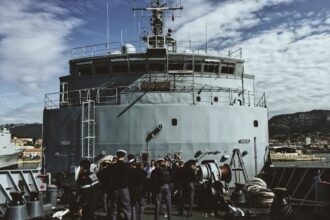
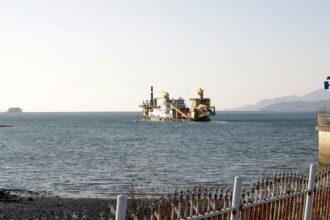
To execute this retrieval without alerting the Soviets, a meticulously crafted cover story was essential. The CIA enlisted Howard Hughes and Summa Corporation to construct the Hughes Glomar Explorer, a purpose-built salvage vessel. Publicly, the ship was presented as a commercial venture, designed for deep-sea manganese nodule mining. This narrative, plausible given Hughes’s reputation for industrial innovation and the burgeoning interest in seabed resources, served as an impenetrable shield for the ship’s true mission. The sheer scale and ambition of the “mining” operation further lent credibility to the deception, a massive undertaking that only a figure like Hughes could plausibly finance and execute.
The Technical Marvel and Partial Recovery
The Hughes Glomar Explorer itself was a marvel of covert engineering. It featured a colossal claw-like recovery system, designed to lift the immense weight of the submarine from the ocean floor. The project involved unprecedented technological challenges, requiring innovations in deep-sea mechanics and a level of precision heretofore unknown. While the full submarine was not recovered – sections of it broke off during the lifting process – a significant portion of the forward section was successfully retrieved. This section contained crucial intelligence, including two nuclear torpedoes, cryptographic material, and potentially the bodies of Soviet sailors, offering unparalleled insights into Soviet naval capabilities and technology. The operation remained a closely guarded secret for years, a testament to the effectiveness of the Hughes-Summa cover.
Broader Intelligence Asset and Operational Support
Beyond the dramatic spectacle of the Glomar Explorer, evidence and strong circumstantial indicators suggest that Hughes and his various enterprises served as a broader, more consistently utilized intelligence asset. His far-reaching influence provided avenues for observation, communication, and logistical support that would have been invaluable in an era of global strategic competition.
Surveillance and Observation Capabilities
Hughes’s vast holdings, particularly his aviation interests and his network of contacts, offered potential platforms for intelligence gathering. Aircraft could be modified for reconnaissance, and commercial flights could carry intelligence operatives or sensitive materials without arousing suspicion. Furthermore, his intimate knowledge of various industries and his connections within political and business circles provided a rich tapestry of information that the CIA could exploit, acting as a kind of human intelligence “force multiplier.” If you consider the expanse of his empire, it was almost a ready-made intelligence network, requiring minimal external structuring.
Financial Channels and Cover Operations
The immense wealth controlled by Hughes, and the deliberate opaqueness of Summa Corporation’s finances, provided a ready-made channel for funding covert operations. Money could be moved and disbursed without leaving a traceable government footprint, a recurring challenge for intelligence agencies operating with congressional oversight. Shell companies within Hughes’s corporate structure could serve as front organizations, providing legitimate-looking entities for clandestine activities. The very ambiguity surrounding Hughes’s financial dealings became a strategic asset.
Political Influence and Pressure Points
Hughes’s connections extended deep into the American political establishment. His substantial political donations and personal relationships with powerful figures provided him with a unique degree of influence. This influence, whether wielded directly or indirectly, could be beneficial to the CIA in shaping policy, securing resources, or deflecting unwanted scrutiny. The agency could, in essence, leverage Hughes’s political capital as a subtle form of diplomatic pressure, a quiet hand influencing the levers of power.
Conclusion: A Symbiotic Relationship in the Shadows
The connection between the CIA, Summa Corporation, and Howard Hughes represents a fascinating and, at times, unsettling chapter in the history of American intelligence. It illustrates a unique symbiosis between an eccentric but brilliant industrialist and a clandestine government agency, both operating in the shadows of the Cold War. Hughes, driven by his own peculiar blend of patriotism, technological ambition, and perhaps a touch of megalomania, provided the CIA with unprecedented access to technological prowess, logistical capabilities, and a ready-made corporate cover.
For the CIA, Hughes and his empire were a potent tool, a private sector leviathan that could be discreetly mobilized for national security objectives, circumventing bureaucratic hurdles and maintaining plausible deniability. The Glomar Explorer project stands as the most tangible and dramatic proof of this alliance, a testament to the lengths to which both parties were willing to go to secure a strategic advantage. While the full extent of this collaboration may never be completely known, the available evidence paints a compelling picture of a deeply intertwined relationship, a complex dance between corporate might and national security imperatives played out on the clandestine stage of global espionage. The legacy of this connection continues to resonate, reminding us that the lines between public and private interest can blur considerably when the stakes are as high as national survival.
STOP: The Fake Mining Ship That Almost Started WW3
FAQs
What was Summa Corporation?
Summa Corporation was a holding company established by Howard Hughes to manage his diverse business interests, including real estate, aviation, and entertainment.
Who was Howard Hughes?
Howard Hughes was an American business magnate, investor, aviator, and film director known for his contributions to aviation, his eccentric lifestyle, and his vast business empire.
Did Howard Hughes have any connection to the CIA?
There is no verified public evidence that Howard Hughes had a formal or direct connection to the CIA, although some conspiracy theories and speculative accounts have suggested possible links due to his involvement in aviation and defense contracts.
What types of businesses did Summa Corporation oversee?
Summa Corporation managed a variety of businesses, including Hughes Aircraft Company, real estate holdings, hotels, casinos, and other investments.
What happened to Summa Corporation after Howard Hughes’ death?
After Howard Hughes died in 1976, Summa Corporation was gradually dismantled and its assets were sold off or reorganized, with many of its holdings becoming independent companies or being acquired by other entities.