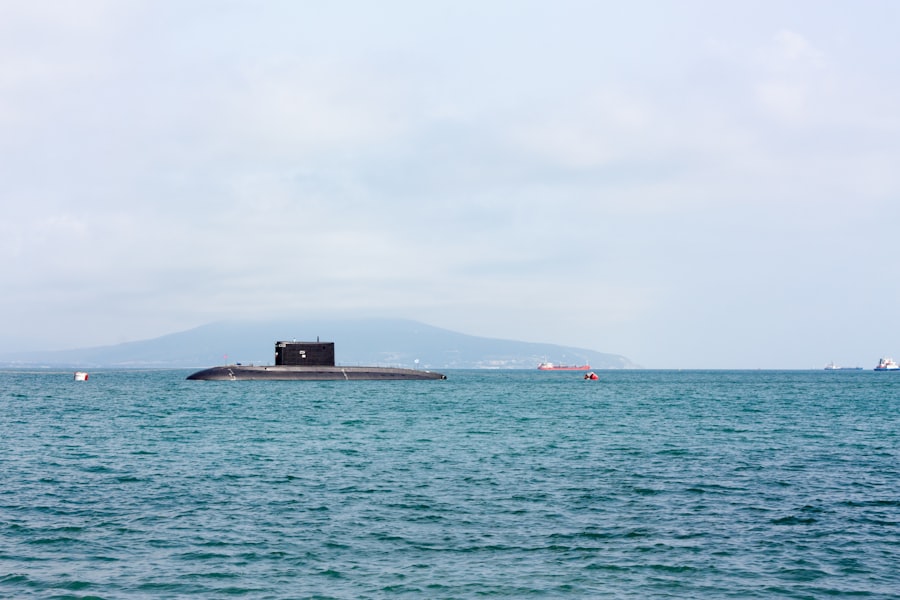
The sinking of the Soviet submarine K-129 in the Pacific Ocean in 1968 remains one of the most enduring mysteries of the Cold War. This diesel-electric powered Golf-class ballistic missile submarine, on a routine patrol, vanished without a trace, taking its entire crew of 98 souls to the abyssal depths. The K-129 was more than just a vessel; it was a symbol of the escalating arms race, a silent hunter in the ocean’s vast darkness, and its demise became a gaping wound in the Soviet naval consciousness. The exact circumstances leading to its catastrophic loss have been the subject of intense speculation, declassified documents, and covert operations for decades. This article aims to meticulously unravel the threads of evidence, examine the most plausible theories, and illuminate the efforts to uncover the truth behind this maritime tragedy.
A Shadow in the Deep: Introducing K-129
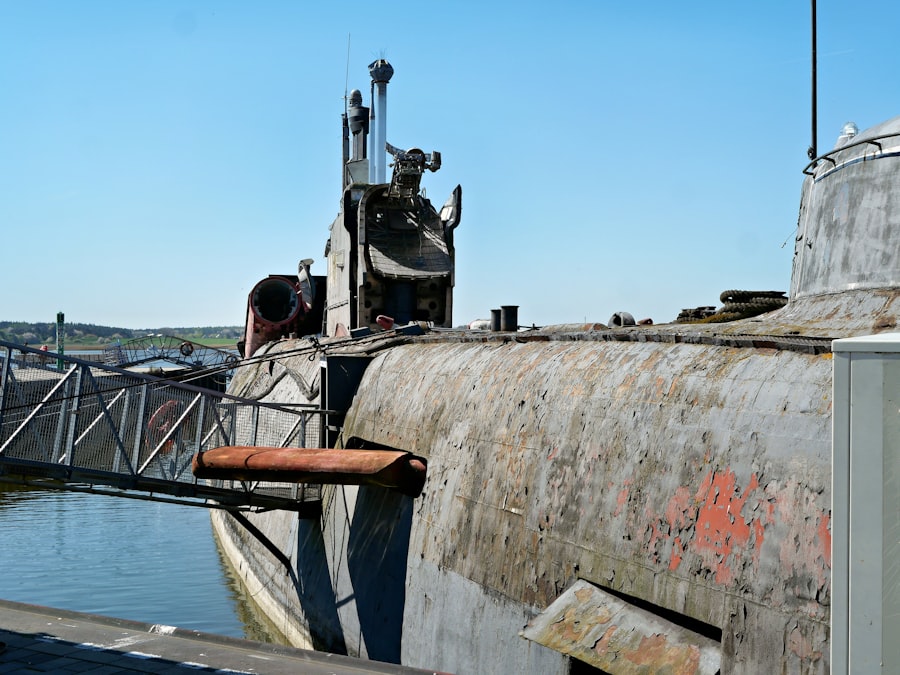
The K-129 was a Project 641B Som-class submarine (NATO reporting name: Foxtrot-class, though this designation is usually applied to a later, distinct class of Soviet submarines; K-129 belonged to a transitional class). These submarines, a significant advancement over earlier Soviet designs, were intended to project Soviet power across the globe and challenge the naval dominance of the United States. The K-129, commissioned in 1960, was armed with ballistic missiles capable of delivering nuclear warheads, making it a formidable asset in the Soviet arsenal. Its mission profile was clandestine, designed to operate deep beneath the waves, undetected, and ready to respond to any perceived threat. The submarine was a leviathan of its time, built with robust Soviet engineering, yet like any intricate machine, it possessed its vulnerabilities.
Patrolling the Strategic Frontier: The K-129’s Final Voyage
In early 1968, the K-129 embarked on a patrol in the central Pacific Ocean. While the precise objective of this patrol is not fully disclosed, it is widely believed to have been part of broader Soviet strategic exercises, potentially involving surveillance of American naval activities or readiness testing of its missile systems. The vast expanse of the Pacific served as a chessboard for the Cold War’s silent conflict, and submarines like the K-129 were the clandestine pawns, moving in the shadows. The submarine’s operational area was hundreds of miles from Soviet shores, a testament to its range and the ambitions of its operators. The inherent dangers of such long-duration patrols in hostile waters, coupled with the technological limitations of the era, were ever-present companions to the crew.
The sinking of the Soviet submarine K-129 in 1968 remains a topic of intrigue and speculation, with various theories surrounding its cause. For a deeper understanding of the events leading up to the tragedy and the subsequent recovery efforts, you can read a related article that explores the complexities of Cold War naval operations and the mysteries of underwater warfare. For more information, visit this article.
The Moment of Catastrophe: Pieces of the Puzzle
The Unanswered Signal: Last Known Communications
The last confirmed communication from the K-129 was a routine signal to its base on February 24, 1968. After this, the submarine fell silent, a chilling void appearing on the Soviet naval radar. This abrupt cessation of contact sent ripples of concern through the Soviet command. Submarine patrols, while inherently dangerous, were expected to maintain regular check-ins. The prolonged silence was an alarm bell, a siren wailing in the quiet halls of military intelligence. The absence of distress signals only deepened the enigma, suggesting an event so sudden and catastrophic that no warning could be issued. The ocean, a vast and indifferent entity, had swallowed the K-129 whole.
Witness Accounts and Debris Fields: The Search Begins
The Soviet Union initiated a massive search effort, deploying naval assets across the estimated patrol area. While definitive wreckage was not immediately found, reports of oil slicks and scattered debris circulated within naval circles. These fragmented clues acted as breadcrumbs, hinting at the submarine’s fate but offering no clear path to understanding it. The vastness of the ocean meant that finding a needle in a haystack was an understatement; it was like searching for a single grain of sand on all the world’s beaches. The initial search, hampered by the limited search technology of the time and the sheer scale of the Pacific, yielded little concrete evidence, leaving the K-129’s location a ghost story for the time being.
Dominant Theories of the Sinking
The Accidental Explosion: A Powder Keg Beneath the Waves
One of the most widely accepted theories posits an accidental internal explosion. The K-129 carried ballistic missiles armed with nuclear warheads, a volatile combination. Investigations and analyses of similar submarine incidents suggest that a fuel leak from one of the missile’s stages, or a malfunction in the missile’s propellant, could have triggered a catastrophic detonation. Imagine a delicate clockwork mechanism, pushed beyond its tolerances, eventually shattering. The K-129, with its array of powerful, albeit aging, weaponry, was a vessel that carried its own potential for destruction. This theory suggests that a moment of unforeseen technical failure transformed the submarine into its own undoing.
Missile Malfunction: The Nuclear Threat Ignites
Specifically, the theory points to the potential for a “hot firing” scenario within the missile’s launch tube. If a missile began to ignite prematurely or with extreme force due to a system failure, the resulting explosion could have ripped through the submarine’s hull. The missile storage bays were essentially powder kegs, and a single spark, a faulty valve, or a structural weakness could have ignited a chain reaction. The immense pressure and confined space within a submarine would have amplified the destructive force of such an event, leading to immediate and total disintegration.
Battery Compartment Fire: The Silent Killer
Another sub-theory within the accidental explosion scenario centers on the submarine’s batteries. Diesel-electric submarines rely on massive battery banks to power their systems when submerged. These batteries, particularly in the technology of that era, could be prone to generating flammable gases, such as hydrogen, if they malfunctioned or were improperly managed. A spark in a battery compartment could have ignited these gases, leading to a significant fire and subsequent explosion. The insidious nature of such a fire is that it could begin with little outward indication, silently building to a destructive crescendo.
The Collision Hypothesis: An Unseen Impact
A less prevalent but still considered theory involves a collision with another vessel. Given the K-129’s operational area, it’s plausible that it could have encountered an American submarine or surface ship. In the tense environment of the Cold War, encounters between opposing naval forces were always fraught with the risk of miscalculation or escalation.
The Cold War Chessboard: Encounters in the Dark
The Pacific Ocean was a complex and crowded theater of operations during the Cold War. Both the Soviet Union and the United States maintained a constant naval presence, conducting patrols, exercises, and surveillance. It is conceivable that the K-129, operating at periscope depth or near the surface for communications or navigation, could have been involved in a collision with another vessel navigating the same waters, perhaps in low visibility conditions. Such an impact, especially with a large warship, could have inflicted catastrophic damage.
The Unacknowledged Encounter: A Covert Clash
The nature of Cold War naval operations meant that many encounters were deliberately unacknowledged. If a collision had occurred, neither side might have been willing or able to admit it due to the political ramifications and the potential for escalation. The absence of a distress call could also be explained by the immediate incapacitation of the submarine following such an impact.
The Unveiling of Secrets: Project Azorian
The CIA’s Audacious Plan: A Daring Salvage Operation
The true extent of the efforts to discover the K-129’s fate would remain largely hidden for decades. In the 1970s, the U.S. Central Intelligence Agency (CIA) embarked on Project Azorian, one of the most ambitious and technologically sophisticated salvage operations ever conceived. The goal was not merely to find the submarine, but to recover it from the crushing depths of the Pacific. This operation was a prime example of the cat-and-mouse game played by intelligence agencies, where the pursuit of knowledge was a weapon in itself. The project was a testament to human ingenuity and the lengths to which nations would go to gain an advantage.
The Glomar Explorer: A Technological Marvel
To achieve this seemingly impossible feat, the CIA commissioned the construction of a unique vessel: the Glomar Explorer. This ship was disguised as a deep-sea mining vessel, a clever facade for its true purpose. It was equipped with a colossal robotic claw, affectionately nicknamed “Willie the Whale,” designed to grip and lift the massive submarine from the ocean floor. The Glomar Explorer was essentially a floating factory, a colossal arm reaching into the abyss. Its presence, ostensibly for peaceful mining research, masked a clandestine operation of immense strategic importance.
The Depths of the Pacific: A Crushing Embrace
The K-129 had sunk to an astonishing depth of approximately 16,000 feet (nearly 5,000 meters). At such depths, the water pressure is immense, capable of crushing any conventional vessel. The challenge for Project Azorian was not just finding the submarine, but developing the technology to not only reach it but to also safely lift its immense weight without causing it to disintegrate further. The sheer engineering prowess required to overcome these oceanic hurdles was staggering.
The Recovery Effort: A Delicate Dance with Destiny
The salvage operation was fraught with peril and complexity. The Glomar Explorer had to position itself precisely over the wreck, lower the massive claw through the darkness, grapple the submarine, and then slowly ascend. The operation was a ballet of sophisticated engineering and skilled seamanship, a testament to the meticulous planning involved. The suspense must have been palpable for those involved, the fate of the K-129 and the secrets it held hanging in the balance with every meter ascended.
The mysterious sinking of the Soviet submarine K-129 has long intrigued historians and naval enthusiasts alike, with various theories proposed regarding its cause. A related article explores the complexities surrounding this incident and delves into the geopolitical context of the Cold War era. For those interested in a deeper understanding of the events leading up to the submarine’s tragic fate, you can read more about it in this insightful piece on the subject. To learn more, visit this article.
The Verdict of the Wreckage
| Metric | Details |
|---|---|
| Submarine Name | K-129 |
| Type | Golf II-class ballistic missile submarine |
| Date of Sinking | March 8, 1968 |
| Location | North Pacific Ocean, approximately 1,560 nautical miles northwest of Hawaii |
| Depth at Wreck Site | Approximately 5,000 meters (16,400 feet) |
| Cause of Sinking (Official Soviet Explanation) | Unknown; officially stated as an accident |
| Cause of Sinking (Western Speculation) | Possible accidental missile explosion or collision with USS Swordfish |
| Recovery Operation | Project Azorian by CIA in 1974 |
| Recovered Items | Partial submarine hull and cryptographic materials |
| Casualties | All 98 crew members lost |
The Uncovered Truths: What the Salvage Revealed
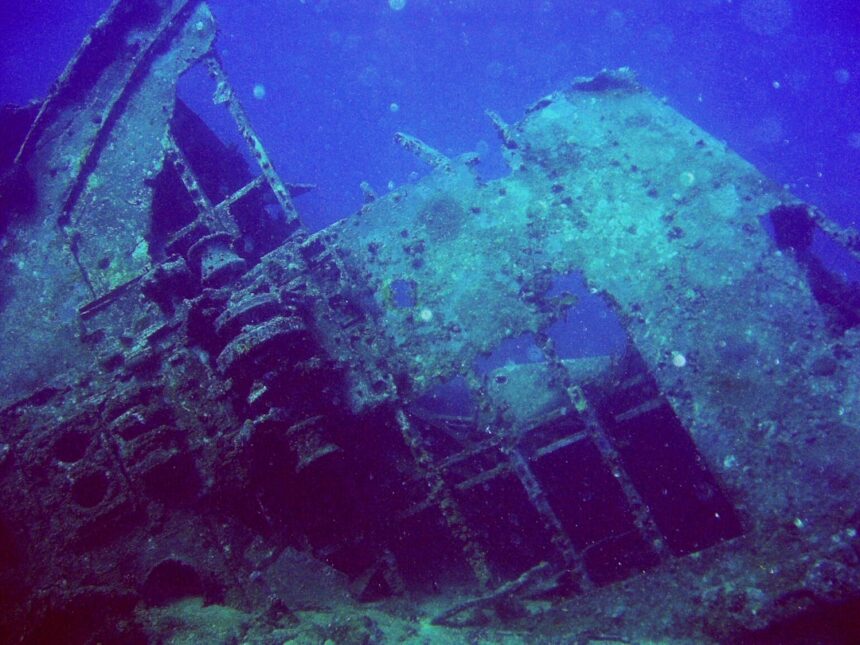
Project Azorian, while not entirely successful in recovering the entire K-129 (a section containing sensitive materials broke off during the ascent), did bring up significant portions of the submarine. The analysis of these recovered elements provided crucial clues that strengthened the accidental explosion theory. The damage observed on the wreckage was consistent with a severe internal blast, rather than a collision.
Evidence of Fire and Explosion: The Silent Witnesses
Examination of the recovered hull sections revealed evidence of intense heat and explosive force radiating outwards. Twisted metal, ruptured compartments, and the disarray of the internal structure all pointed towards an internal catastrophic event. The absence of significant external damage that would be typical of a collision further bolstered this conclusion. The submarine, it seemed, had been consumed by its own internal demons, the warheads within its belly.
The Fate of the Crew: A Grim Reality
The recovered debris also offered a grim confirmation of the loss of the entire crew. Analysis of human remains, where found, indicated that the explosion was sudden and likely instantaneous, offering no possibility of survival. The K-129’s crew, on that fateful day, met their end in a silent, violent instant, their stories forever entombed with their vessel. The recovered artifacts, though a triumph of intelligence gathering, also served as somber mementos of the human cost of this maritime disaster.
Lingering Questions and the Legacy of K-129
The Cover-Up and the Cold War Shadow
While Project Azorian provided a strong indication of the cause of the K-129’s sinking, the Soviet Union never officially acknowledged the recovery or admitted the full extent of their knowledge. The Cold War was a realm of secrets and propaganda, and the loss of such a vital asset would have been a significant blow to Soviet prestige. The official Soviet explanation remained vague, a murky cloud obscuring the truth. The truth, like a precious jewel, was hidden beneath layers of deception.
The Enduring Mystery: Echoes in the Deep
Despite the revelations brought forth by Project Azorian, some questions continue to linger. The precise sequence of events leading to the initial malfunction, the extent of the nuclear material recovered, and the full implications of the intelligence gained by the U.S. remain subjects of discussion and speculation among historians and defense analysts. The story of the K-129 serves as a stark reminder of the inherent dangers of nuclear proliferation and the silent, often unseen, toll of global conflict. The ocean continues to hold its secrets, and the K-129, though its fate is largely understood, remains a poignant symbol of a lost era and the enduring mysteries buried deep beneath the waves.
WARNING: The $800 Million Mechanical Failure That Almost Started WWIII
FAQs
What was the Soviet submarine K-129?
The Soviet submarine K-129 was a Golf II-class ballistic missile submarine of the Soviet Navy, launched in the early 1960s and equipped with nuclear missiles.
When did the K-129 sink?
The K-129 sank in March 1968 while on a patrol mission in the Pacific Ocean.
What are the known causes of the K-129 sinking?
The exact cause of the K-129 sinking remains uncertain, but theories include an internal explosion, a collision with a U.S. submarine, or a mechanical failure.
Was there any recovery effort after the sinking of K-129?
Yes, the United States conducted a secret recovery operation called Project Azorian in 1974 to retrieve parts of the submarine from the ocean floor.
Did the sinking of K-129 have any impact on Cold War relations?
The sinking and subsequent recovery efforts heightened tensions and secrecy during the Cold War, illustrating the risks and espionage activities between the U.S. and the Soviet Union.