
The annexation of Texas in the mid-19th century represented a major turning point in American history, fundamentally altering the nation’s territorial extent and political structure. Beyond simple territorial expansion, this event involved complex factors including national identity, cultural tensions, and strategic considerations. The push to annex Texas resulted from multiple motivations: economic opportunities, the ideology of Manifest Destiny, and disputes over slavery’s expansion.
As the United States pursued westward expansion, Texas annexation became a central national controversy, revealing both the country’s ambitions and internal divisions. Texas had a complex history preceding annexation. Originally under Spanish control, the region experienced significant transformation through colonization and independence movements.
By the time annexation discussions emerged, Texas had developed as an attractive destination for settlers seeking economic opportunity. Yet this growing identity faced substantial obstacles, including conflicts with Mexico and disagreements among Texas’s diverse population. The annexation would reshape American geography and create conditions for subsequent conflicts that would influence the nation’s future development.
Watch the heartbreaking moment of Mexico’s loss in the final seconds of the game.
Key Takeaways
- Texas gained independence from Mexico after the Texas Revolution, leading to the establishment of the Republic of Texas.
- The annexation of Texas by the United States sparked intense debate over issues like slavery and territorial expansion.
- Annexation was a key factor in the outbreak of the Mexican-American War, reshaping U.S.-Mexico relations.
- The event influenced international reactions and had lasting impacts on Texas’s political and social landscape.
- Modern perspectives critically assess the annexation’s role in expansionism, slavery, and U.S. history.
The Texas Revolution and Independence
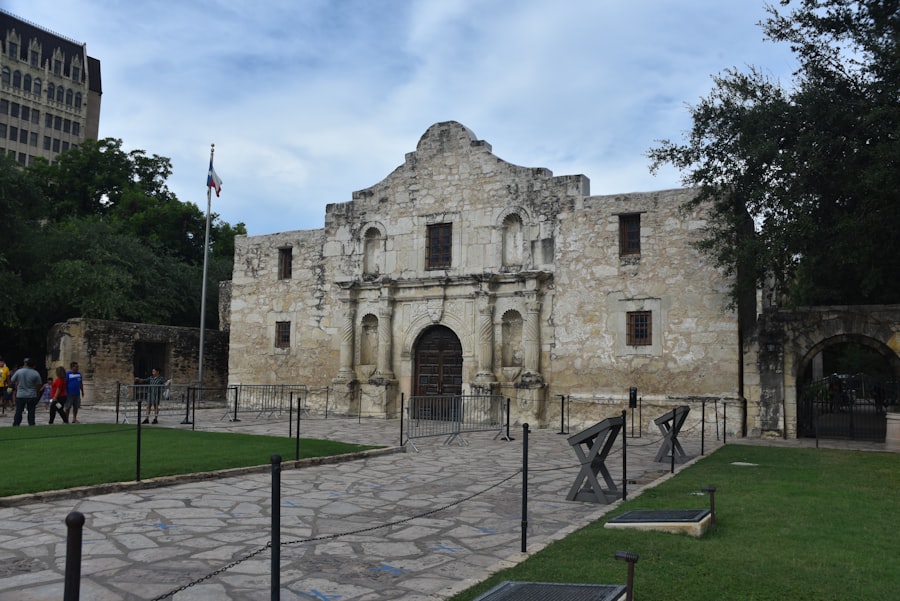
The Texas Revolution, which erupted in 1835, was a direct response to the increasing centralization of power by the Mexican government under President Antonio López de Santa Anna. Texan settlers, many of whom were American immigrants, found themselves at odds with Mexican policies that restricted their autonomy and cultural practices. The revolution was marked by key battles such as the Siege of Bexar and the infamous Battle of the Alamo, where a small group of Texan defenders made a valiant stand against overwhelming Mexican forces.
The fall of the Alamo became a rallying cry for Texan forces, igniting a fervor that would ultimately lead to their victory at the Battle of San Jacinto in April 1836. Following their triumph, Texas declared independence from Mexico and established itself as the Republic of Texas. This new republic faced numerous challenges, including economic instability, political fragmentation, and ongoing threats from Mexico, which refused to recognize Texan sovereignty.
The desire for annexation into the United States grew stronger among Texans, who viewed it as a means to secure their independence and ensure their safety against potential Mexican aggression.
The Republic of Texas

The Republic of Texas existed from 1836 until its annexation in 1845, serving as a unique experiment in governance and national identity. During this period, Texas operated under its own constitution and established a government that reflected both American and Mexican influences. The republic faced significant challenges in its early years, including financial difficulties and diplomatic isolation.
Despite these hurdles, Texas managed to cultivate a distinct identity that celebrated its revolutionary past while grappling with its future. The leadership of figures such as Sam Houston and Mirabeau Lamar played crucial roles in navigating the complexities of governance in the fledgling republic. Houston favored annexation to the United States as a means to stabilize the economy and secure military protection, while Lamar advocated for an independent Texas that could assert its sovereignty on the world stage.
This ideological divide highlighted the tensions within the republic and foreshadowed the contentious debates that would arise during discussions of annexation.
Annexation Debate in the United States
As discussions surrounding the annexation of Texas gained momentum, they ignited fierce debates within the United States. Proponents argued that annexing Texas would fulfill America’s manifest destiny—the belief that it was divinely ordained for the nation to expand across the continent. They envisioned a vast nation stretching from coast to coast, rich in resources and opportunities for settlement.
The political landscape was further complicated by the emergence of sectional tensions between the North and South. Northern abolitionists viewed annexation as a means to extend slavery’s reach, while Southern politicians championed it as an opportunity to bolster their agricultural economy.
This division within Congress reflected broader societal rifts that would ultimately culminate in the Civil War. The debate over Texas became emblematic of these larger issues, illustrating how territorial expansion was intertwined with questions of morality, governance, and national identity.
Manifest Destiny and Expansionism
| Year | Event | Key Figures | Impact | Notes |
|---|---|---|---|---|
| 1836 | Texas gains independence from Mexico | Sam Houston, Antonio López de Santa Anna | Established Republic of Texas | Texas becomes an independent nation after the Texas Revolution |
| 1844 | U.S. Presidential Election | James K. Polk, Henry Clay | Polk supports annexation of Texas | Annexation becomes a major campaign issue |
| 1845 | Annexation of Texas by the United States | James K. Polk, John Tyler | Texas becomes 28th U.S. state | Leads to increased tensions with Mexico |
| 1846-1848 | Mexican-American War | James K. Polk, General Zachary Taylor | U.S. victory expands territory | War partly triggered by Texas annexation dispute |
| 1848 | Treaty of Guadalupe Hidalgo | U.S. and Mexico negotiators | Mexico cedes large territory to U.S. | Ends Mexican-American War, confirms Texas border |
Manifest Destiny served as a powerful ideological force driving American expansionism during the 19th century. This belief system posited that Americans were destined to spread their democratic ideals and way of life across North America. The notion resonated deeply with many citizens who saw themselves as pioneers on a divine mission to civilize and cultivate new lands.
The annexation of Texas was viewed as a critical step in fulfilling this destiny, aligning with broader aspirations for territorial growth. However, this ideology was not without its critics. Many questioned the moral implications of expansionism, particularly regarding its impact on Indigenous populations and neighboring nations.
The belief in manifest destiny often justified aggressive policies that disregarded the rights and sovereignty of others. As Texas became a focal point in this narrative, it highlighted the contradictions inherent in American expansionism—while it promised progress and opportunity for some, it also perpetuated cycles of violence and dispossession for others.
Annexation and the Mexican-American War
The annexation of Texas in 1845 set off a chain reaction that ultimately led to the Mexican-American War (1846-1848). Mexico viewed the annexation as an act of aggression and a violation of its sovereignty over Texas. Tensions escalated when U.S. troops were deployed to disputed territories along the Rio Grande River, leading to skirmishes that ignited full-scale conflict. The war was characterized by significant battles such as those at Palo Alto and Buena Vista, showcasing both American military prowess and strategic miscalculations. The outcome of the war resulted in a decisive victory for the United States, culminating in the Treaty of Guadalupe Hidalgo in 1848. This treaty not only solidified U.S. control over Texas but also resulted in significant territorial gains for America, including present-day California, Arizona, New Mexico, Nevada, Utah, and parts of Colorado and Wyoming. The war’s aftermath further entrenched divisions over slavery and territorial expansion, setting the stage for future conflicts that would shape American history.
Impact of Annexation on Texas and the United States
The annexation of Texas had profound implications for both Texas itself and the broader United States. For Texas, joining the Union brought economic opportunities but also challenges related to governance and integration into a larger political framework. The transition from an independent republic to a state within a federal system required adjustments in administration and infrastructure development.
Additionally, issues related to land ownership and rights became increasingly complex as new settlers arrived. For the United States, annexation marked a significant expansion of territory but also exacerbated existing tensions over slavery. The addition of Texas intensified debates about whether new states would be free or slave-holding, contributing to sectional divisions that would ultimately lead to civil conflict.
Furthermore, the war with Mexico reshaped national identity by reinforcing notions of American exceptionalism while simultaneously raising questions about imperialism and moral responsibility.
International Reactions to Annexation
The annexation of Texas elicited varied reactions from international actors, reflecting broader geopolitical dynamics at play during this period. European powers such as Britain and France expressed concern over American expansionism and its potential implications for their own interests in North America. Some European leaders viewed U.S. actions as indicative of an aggressive imperialist agenda that could destabilize regional balances. Mexico’s response was particularly significant; it viewed annexation as an affront to its sovereignty and territorial integrity. Diplomatic relations between Mexico and the United States deteriorated rapidly following annexation, culminating in armed conflict during the Mexican-American War. The international ramifications of this event underscored how territorial disputes could reverberate beyond national borders, influencing global perceptions of American power and ambition.
Legacy of Annexation in Texas
The legacy of annexation continues to shape Texas’s identity today. As part of the United States, Texas has evolved into a diverse state characterized by its unique blend of cultures and histories. The historical narrative surrounding annexation is often celebrated by some as a triumph of independence while simultaneously critiqued by others for its implications regarding Indigenous rights and slavery.
Moreover, Texas’s status as a state has fostered a sense of pride among its residents who often embrace their distinct heritage while navigating contemporary issues related to governance and identity. The complexities surrounding annexation serve as reminders of how historical events can resonate through generations, influencing cultural narratives and societal values.
Annexation and the Issue of Slavery
The issue of slavery loomed large over discussions surrounding Texas’s annexation into the United States. As debates intensified within Congress regarding whether Texas would enter as a free or slave state, it became clear that this question would have far-reaching consequences for national politics. Southern politicians championed annexation partly because they saw it as an opportunity to expand slave-holding territories, while Northern abolitionists vehemently opposed any extension of slavery into new lands.
This contentious issue contributed significantly to sectional tensions that would eventually culminate in civil war. The Compromise of 1850 attempted to address these divisions by allowing California to enter as a free state while permitting popular sovereignty in other territories acquired from Mexico—an approach that sought to balance interests but ultimately failed to resolve underlying conflicts over slavery.
Modern Perspectives on the Annexation of Texas
In contemporary discourse, perspectives on the annexation of Texas are multifaceted and often reflect broader societal debates about nationalism, identity, and historical memory. Some view annexation through a lens of progress—celebrating it as part of America’s journey toward becoming a continental power—while others critique it for its imperialistic undertones and consequences for marginalized communities. Modern Texans grapple with this complex legacy as they navigate issues related to cultural identity amidst ongoing demographic changes within their state.
Discussions surrounding education about this period often highlight both triumphs and tragedies—encouraging critical engagement with history that acknowledges diverse perspectives while fostering dialogue about contemporary challenges rooted in past injustices. In conclusion, the annexation of Texas remains a defining moment in American history that encapsulates themes of expansionism, conflict, identity formation, and moral complexity. Its legacy continues to resonate today as Texans reflect on their unique heritage within a broader national narrative shaped by ambition and consequence.
The annexation of Texas in 1845 was a pivotal moment in American history, significantly influencing the nation’s expansionist policies and leading to the Mexican-American War. For a deeper understanding of the political and social ramifications of this event, you can explore a related article that provides a comprehensive historical analysis. Check it out here: Historical Analysis of the Annexation of Texas.
WATCH THIS 🛑 How Mexico’s Loss Became America’s $11 Trillion Engine
FAQs
What was the annexation of Texas?
The annexation of Texas refers to the process by which the Republic of Texas was admitted into the United States as the 28th state in 1845. This event followed Texas’ declaration of independence from Mexico in 1836 and was a significant factor leading up to the Mexican-American War.
When did Texas become part of the United States?
Texas was officially annexed and became a state on December 29, 1845, after the U.S. Congress passed a joint resolution for annexation and President James K. Polk signed it into law.
Why was the annexation of Texas controversial?
The annexation was controversial because it involved the expansion of U.S. territory into lands claimed by Mexico, which had never recognized Texas’ independence. Additionally, it intensified sectional tensions in the U.S. over the expansion of slavery, as Texas was a slaveholding territory.
What role did the annexation of Texas play in the Mexican-American War?
The annexation of Texas was a key catalyst for the Mexican-American War (1846-1848). Mexico viewed the annexation as an act of aggression and disputed the southern border of Texas, leading to military conflict between the two nations.
How did the annexation affect U.S. domestic politics?
The annexation heightened tensions between pro-slavery and anti-slavery factions in the U.S. It contributed to the sectional conflicts that eventually led to the Civil War by raising questions about the extension of slavery into new territories.
What was the Republic of Texas before annexation?
Before annexation, Texas was an independent nation known as the Republic of Texas, established in 1836 after winning independence from Mexico. It operated as a sovereign country for nearly a decade before joining the United States.
Who were the key figures involved in the annexation of Texas?
Key figures included President James K. Polk, who strongly supported annexation; President John Tyler, who initiated the annexation process; and Sam Houston, the first president of the Republic of Texas and a proponent of joining the U.S.
Did the annexation of Texas affect relations with other countries?
Yes, the annexation strained relations with Mexico, leading to war. It also influenced U.S. relations with Britain and France, who had interests in Texas and the broader region, and were concerned about U.S. territorial expansion.