Here lies the explanation of SURTASS Towed Array Sonar, presented in a factual and informative style, designed to elucidate its intricate workings and crucial role in underwater surveillance.
The Surveillance Towed Array Sensor System, or SURTASS, represents a cornerstone in maritime intelligence gathering, particularly for the United States Navy. At its heart lies the towed array sonar, a sophisticated system designed to “listen” to the underwater world with an unparalleled degree of sensitivity and directional accuracy. Imagine this towed array as a long, flexible “ear” trailing far behind a vessel, designed to pick up the faintest whispers of underwater activity. This intricate network of hydrophones, encased within a robust yet flexible sheath, is the primary instrument through which SURTASS operates. It’s not a single microphone, but a distributed array of hundreds, even thousands, of individual sensing elements, spread out over considerable distances.
The Architecture of Hearing: Hydrophones and Their Arrangement
The foundational elements of the towed array are its hydrophones. These are transducers, devices that convert acoustic energy (sound waves) into electrical signals. In the context of SURTASS, these hydrophones are specifically designed to be highly sensitive to the low-frequency sounds that travel furthest in water. Water, being a denser medium than air, is an excellent conductor of sound, and low frequencies, in particular, can propagate for hundreds, even thousands, of miles. This makes them ideal for long-range detection. The hydrophones are not haphazardly placed; they are meticulously arranged along the length of the towed body. This precise spacing is critical, acting like the fingers on a pianist’s hand, allowing for the complex interpretation of incoming sound waves. The distance between each hydrophone is precisely measured and maintained, a vital parameter for the subsequent signal processing that unlocks the array’s true potential.
The Signal’s Journey: From Water to Data
Once a sound wave strikes a hydrophone, it is converted into a tiny electrical signal. This raw signal is then transmitted through a series of internal cables and electronics within the towed body to the processing unit onboard the host ship. This is akin to the nerve impulses traveling from sensory organs to the brain. The electrical signals are initially analog, meaning they are continuous and vary in amplitude and frequency in direct proportion to the sound wave. However, modern sonar systems overwhelmingly rely on digital processing. Therefore, the analog signals must be converted into a digital format. This process, known as analog-to-digital conversion (ADC), effectively transforms the continuous electrical fluctuations into discrete numerical values that can be manipulated by computers. This conversion is a crucial step, paving the way for complex mathematical operations that will extract meaningful information from the raw data.
For a deeper understanding of the technology behind the Surtass towed array sonar, you can explore the article titled “Advanced Sonar Technologies in Modern Naval Warfare” available at this link. This article delves into various sonar systems, including their applications and advancements, providing valuable context to the capabilities and significance of the Surtass system in contemporary maritime operations.
The Shepherd of Sound: Signal Processing and Beamforming
The raw, digitized data from the towed array is a cacophony of incoming sounds, a multitude of signals arriving from various directions. The true magic of SURTASS lies in its ability to sift through this sonic soup and isolate specific targets. This is achieved through sophisticated signal processing techniques, with beamforming being a pivotal element. Beamforming is the process by which the sonar system “steers” its listening focus in different directions, allowing for the identification of the bearing (direction) of a sound source. Imagine a farmer using a very sensitive directional microphone to pinpoint the bleating of a lost sheep in a vast pasture; beamforming is the sonar equivalent.
Digital Ears: The Concept of Time Delays
The fundamental principle behind beamforming, in the context of a towed array, relies on the slight differences in the arrival times of a sound wave at each individual hydrophone. Since the hydrophones are spread out along a linear array, a sound originating from a specific direction will reach one hydrophone fractions of a second before it reaches another. These tiny time delays are the key. By precisely measuring and compensating for these time differences, the sonar system can electronically “focus” its sensitivity in a particular direction. If the system knows the exact relative positions of all the hydrophones and measures the arrival times of a sound wave at each, it can mathematically determine the angle from which that sound originated.
Steering the Beam: Constructive and Destructive Interference
The process of beamforming can be visualized through the concept of constructive and destructive interference of waves. When the electrical signals from different hydrophones are time-shifted and summed together in a specific way, signals arriving from the intended direction are amplified (constructive interference), while signals arriving from other directions are attenuated or canceled out (destructive interference). This allows the sonar operator to effectively create a directional “beam” of sensitivity. By systematically altering the time delays applied to the signals from each hydrophone, the system can “sweep” this beam across the underwater environment, searching for acoustic signatures of interest. Modern systems can even form multiple beams simultaneously, allowing for a broader search or simultaneous tracking of multiple targets.
Noise Reduction: The Unseen Battle Against Interference
The underwater environment is inherently noisy. Besides the sounds of potential targets, there are numerous other acoustic sources that can mask crucial signals. These include the sonar system’s own self-noise (generated by the towed body and cabling), biological noise (whales, dolphins, fish), geological noise (underwater earthquakes, volcanic activity), and man-made noise (shipping traffic, offshore construction). SURTASS employs advanced techniques to mitigate and filter out this unwanted noise. This is a constant, silent battle to ensure that the faint sounds of submarines or other vessels are not lost in the general underwater din.
Filtering the Cacophony: Spectral and Spatial Filtering
Signal processing within SURTASS involves sophisticated filtering techniques. Spectral filtering targets noise based on its frequency characteristics. If a particular type of noise is known to exist within a specific frequency band, that band can be attenuated or removed. This is done through algorithms that analyze the frequency content of the received signals. Spatial filtering, as discussed with beamforming, is also a critical noise reduction technique. By focusing on specific directions, the system can effectively ignore noise originating from other directions. Furthermore, techniques like adaptive filtering are employed, where the system dynamically adjusts its filtering parameters based on the prevailing noise conditions. This allows the sonar to adapt to changing acoustic environments in real-time, a crucial capability for operations in diverse maritime settings.
Understanding the “Noise Floor”: The Limits of Detection
It’s important to understand that even with the most advanced processing, there exists a “noise floor” in any sonar system – a minimum level of ambient noise below which signals cannot be reliably detected. The goal of SURTASS is to push this noise floor as low as practically possible, thereby extending the range and sensitivity of detection. The design and operation of the towed array are all geared towards achieving this objective. The long length of the array, the high density of hydrophones, and the sophisticated processing are all means to this end, allowing the system to hear the “whispers” that would otherwise be swallowed by the ocean’s natural or artificial din.
The Unseen Adversary: Target Identification and Classification
Detecting an anomaly in the underwater soundscape is only the first step. The crucial next stage is identifying what that anomaly represents. SURTASS systems are designed not just to detect but also to classify potential targets, distinguishing between a harmless marine mammal and a potentially hostile submarine. This is where the detailed analysis of acoustic signatures comes into play. Each type of underwater object, particularly vessels, produces a unique acoustic fingerprint.
The Acoustic Fingerprint: Distinctive Signatures of Vessels
Submarines, by their very nature, are designed to be quiet. However, they are not entirely silent. Their propulsion systems (propellers, pumps), internal machinery, and even hull friction generate distinct acoustic signatures. These signatures are often characterized by specific harmonic frequencies and patterns. For example, the sound of a propeller might have a dominant fundamental frequency along with a series of overtones. By analyzing the spectral content and temporal variations of a detected sound, experienced sonar analysts can identify these characteristic patterns and match them to known signatures of different vessel types. It’s akin to a physician listening to a patient’s heartbeat and recognizing the irregularities that indicate a particular condition.
Doppler Shift: Unmasking Movement and Velocity
The Doppler effect, a phenomenon familiar from the changing pitch of an ambulance siren as it passes, also plays a critical role in target identification. As a vessel moves towards or away from the sonar array, the received sound waves are either compressed or stretched in frequency. This “Doppler shift” provides vital information about the target’s radial velocity – its speed directly towards or away from the sonar. By analyzing the Doppler signature, analysts can estimate the target’s speed and even its direction of travel, adding another layer of crucial intelligence about the detected entity.
The Art and Science of Analysis: Human Interpretation and Artificial Intelligence
While sophisticated algorithms perform much of the initial processing, the ultimate interpretation of complex acoustic data often still relies on human expertise. Experienced sonar technicians and analysts bring years of training and pattern recognition skills to bear on the information presented. They understand the nuances of different acoustic environments and the subtle cues that might be missed by automated systems. However, SURTASS is increasingly incorporating artificial intelligence (AI) and machine learning (ML) to assist in this process. AI algorithms can be trained on vast datasets of known acoustic signatures, allowing them to identify patterns and anomalies with remarkable speed and accuracy. The combination of human insight and AI prowess creates a powerful analytical capability.
Machine Learning for Signature Recognition: Learning from the Past
Machine learning algorithms can be trained to recognize the acoustic signatures of known submarine classes and other vessel types. By feeding these algorithms extensive libraries of recorded sounds, they learn to identify subtle variations and recurring patterns that distinguish one type of acoustic source from another. This allows for faster and more consistent classification, reducing the reliance solely on manual analysis for common signatures. The more data the AI is exposed to, the more refined its classification abilities become, essentially “learning” the language of the underwater acoustic world.
The Silent Watcher: Operational Capabilities and Limitations
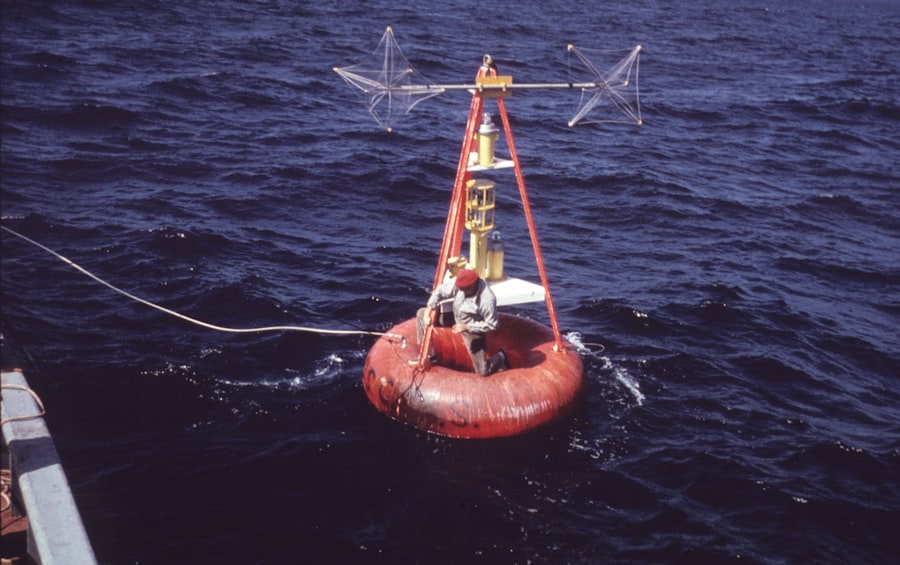
SURTASS Towed Array Sonar is not a static system; it is a dynamic tool deployed in a constantly evolving operational environment. Its effectiveness is a direct consequence of its inherent design and the strategic deployment of its host platforms. Understanding its capabilities and limitations is key to appreciating its role in naval warfare and maritime security.
Stealthy Deployment: The Role of Specialized Vessels
SURTASS is typically deployed from specialized acoustic research vessels or, more commonly, from Auxiliary General Ocean Research (AGOR) ships, which are scientific vessels that can be adapted for military surveillance. These vessels are often designed with acoustic stealth in mind, minimizing their own noise emissions to avoid interfering with the towed array’s listening capabilities. The long length of the towed array itself also allows the host ship to maintain a considerable distance from a potential target, further enhancing its own stealth and making it harder for adversaries to detect its presence. The ship acts as the “tugboat” for this giant underwater “ear,” ensuring it can operate effectively without betraying its own location.
Extended Persistence: Endurance in Maritime Operations
The towed nature of the array means that SURTASS can operate for extended periods, providing continuous surveillance over vast areas of the ocean. Unlike active sonar systems, which emit powerful pulses that can reveal the sonar system’s own position, SURTASS is a passive system. It listens. This passive operation is crucial for maintaining stealth and for prolonged monitoring of areas where intelligence gathering is paramount. This sustained vigilance is like having an unseen sentinel patrolling the deep, always listening, always watching, for any stirrings beneath the waves.
The Ocean’s Challenges: Environmental Factors and Their Impact
The ocean is a complex and dynamic medium, and its characteristics significantly influence sonar performance. Factors such as water temperature, salinity, and pressure create layers and gradients that can bend, reflect, and absorb sound waves, creating “shadow zones” or areas where sound propagation is amplified. These thermoclines and salinity gradients can distort acoustic signals, making them harder to interpret. Understanding and accounting for these environmental variables is a critical part of SURTASS operation. The ocean is not a uniform glass of water; it has currents, layers, and hidden pockets that can play tricks on sound.
Sound Propagation Anomalies: Refraction and Channeling
Sound waves in the ocean do not travel in straight lines. They refract (bend) as they pass through areas with different acoustic properties. This can lead to sound being channeled along specific paths or being lost in shadow zones where detection is difficult. For instance, a strong thermocline can act like a lens, bending sound waves downwards, making it harder for a sonar array positioned above it to detect a submarine operating below. Conversely, conditions can sometimes create acoustic channels that allow sound to travel exceptionally long distances, enhancing detection ranges. SURTASS operators must constantly consider these propagation effects to optimize their listening strategy.
Surtass towed array sonar is a sophisticated underwater surveillance system that plays a crucial role in naval operations. For those interested in exploring more about advanced sonar technologies and their applications in modern warfare, a related article can be found at In the War Room. This resource delves into various sonar systems and their strategic importance, offering valuable insights into how these technologies enhance maritime security and situational awareness.
The Future of Underwater Surveillance: Evolution and Integration
| Metric | Description | Typical Value / Range | Unit |
|---|---|---|---|
| Array Length | Length of the towed array sonar cable | 1,500 – 3,000 | meters |
| Frequency Range | Operational frequency band of the sonar array | 100 – 500 | Hz |
| Detection Range | Maximum effective detection distance for submarines | 20 – 50 | nautical miles |
| Depth Range | Operational depth of the towed array | 50 – 300 | meters |
| Number of Hydrophones | Number of individual sensors in the array | 100 – 300 | units |
| Signal Processing | Type of processing used to detect and classify targets | Beamforming and Doppler processing | N/A |
| Platform | Typical vessel deploying the SURTASS array | US Navy Surveillance Ships | N/A |
| Purpose | Primary mission of the SURTASS system | Long-range submarine detection and tracking | N/A |
SURTASS Towed Array Sonar is not a static technology; it is continuously evolving to meet the ever-changing demands of modern naval operations. Advancements in sensor technology, signal processing, and integration with other intelligence platforms are shaping its future.
Enhanced Sensitivity and Miniaturization: Smaller, Better Ears
Ongoing research focuses on developing more sensitive hydrophones that can detect even fainter acoustic signals. Furthermore, there is a drive towards miniaturizing the components of the towed array, allowing for longer arrays with more hydrophones to be deployed from smaller platforms, or allowing for existing platforms to carry longer arrays. This miniaturization not only increases the number of sensing elements but can also reduce the physical size and complexity of the towed body, making it more streamlined and less prone to acoustic interference.
Swarm Sonar and Distributed Arrays: A Networked Approach
Future developments may involve the concept of “swarm sonar” or distributed towed arrays. Instead of a single, very long array, multiple smaller arrays could be deployed in a coordinated manner, acting as a networked sensing system. This could offer greater flexibility, redundancy, and the ability to cover wider areas more effectively. Imagine a school of fish working together to find food; a swarm of sonar arrays could similarly coordinate their listening efforts to build a more comprehensive acoustic picture of the underwater domain.
Integration with Other Intelligence Systems: A Holistic View
Perhaps the most significant evolution will be the deeper integration of SURTASS data with other intelligence, surveillance, and reconnaissance (ISR) systems. This includes integrating acoustic data with information from satellite imagery, electronic intelligence (ELINT), and other sonar platforms. By fusing data from multiple sources, a more complete and accurate picture of the operational environment can be created. This holistic approach allows for cross-referencing and validation of information, reducing ambiguity and enhancing the overall effectiveness of maritime intelligence. The lone ear of SURTASS will become part of a larger, interconnected network of sensing eyes and ears, providing a truly comprehensive understanding of the underwater world.

WATCH NOW ▶️ WARNING: The $17M Deal That Blinded The US Navy
FAQs
What is a SURTASS towed array sonar?
SURTASS stands for Surveillance Towed Array Sensor System. It is a passive sonar system used by naval forces to detect and track submarines over long distances by towing a long array of hydrophones behind a ship.
How does the SURTASS towed array sonar work?
The system works by passively listening for underwater sounds using its towed array of hydrophones. The array captures acoustic signals, which are then processed to identify and locate submarines or other underwater objects without emitting any sound waves.
What are the main components of a SURTASS towed array sonar?
The main components include the towed array of hydrophones, the winch and cable system for deploying and retrieving the array, onboard signal processing equipment, and the ship’s control systems that analyze and display sonar data.
What advantages does SURTASS towed array sonar offer?
SURTASS provides long-range detection capabilities, high sensitivity to quiet submarines, and the ability to operate covertly since it is a passive system. It enhances maritime surveillance and anti-submarine warfare effectiveness.
Which vessels typically use SURTASS towed array sonar?
SURTASS is commonly deployed on specialized surveillance ships operated by navies, such as the U.S. Navy’s T-AGOS (Ocean Surveillance) class vessels, designed specifically for anti-submarine warfare and maritime domain awareness missions.