Underwater warfare has undergone a remarkable transformation since its inception, evolving from rudimentary tactics to sophisticated strategies that define modern naval engagements. The earliest forms of underwater combat can be traced back to the use of primitive submarines and torpedoes during the American Civil War. These early vessels, such as the Confederate submarine H.L.
Hunley, demonstrated the potential of underwater warfare but were limited by technology and understanding of the marine environment. As naval powers recognized the strategic advantages of stealth and surprise, investments in submarine technology began to accelerate, particularly during the World Wars. The interwar period saw significant advancements in submarine design and capabilities, leading to the development of more effective and lethal underwater vessels.
By World War II, submarines had become a critical component of naval strategy, with nations like Germany and the United States employing them to disrupt enemy supply lines and conduct reconnaissance missions. The Cold War further propelled the evolution of underwater warfare, as both the United States and the Soviet Union invested heavily in nuclear-powered submarines and advanced weaponry. This era marked a shift towards a more complex understanding of underwater combat, incorporating not only offensive capabilities but also defensive strategies to counteract emerging threats.
Key Takeaways
- Underwater warfare has evolved significantly with advances in submarine technology and tactics.
- Effective communication, navigation, and sonar systems are critical for underwater operations.
- Modern underwater weapons and countermeasures enhance both offensive and defensive capabilities.
- Coordinating underwater efforts with surface and air forces is essential for comprehensive military strategy.
- Emerging technologies and environmental factors will shape the future landscape of underwater warfare.
Submarine Tactics and Technology
Submarine tactics have evolved significantly over the decades, adapting to changes in technology and the nature of warfare itself. Modern submarines are equipped with advanced stealth capabilities, allowing them to operate undetected in enemy waters. This stealth is achieved through a combination of hull design, noise reduction technologies, and sophisticated materials that minimize sonar signatures.
The tactical approach has shifted from surface engagements to covert operations, where submarines can launch surprise attacks or gather intelligence without revealing their presence. In addition to stealth, modern submarines employ a variety of tactics to maximize their effectiveness in combat scenarios. For instance, the use of “wolf pack” tactics during World War II demonstrated how groups of submarines could coordinate attacks on larger vessels, overwhelming enemy defenses through sheer numbers.
Today, submarines utilize advanced algorithms and artificial intelligence to enhance decision-making processes during engagements. These technologies allow for real-time analysis of threats and opportunities, enabling submarines to adapt their tactics dynamically based on the evolving battlefield conditions.
Underwater Communication and Navigation
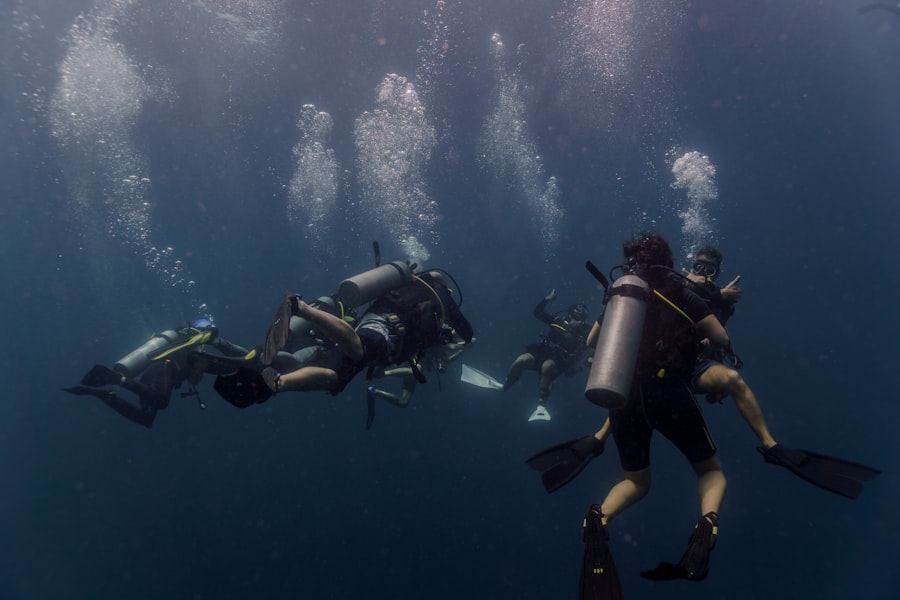
Effective communication and navigation are paramount for successful underwater operations. Historically, submarines faced significant challenges in maintaining contact with command structures while submerged. Traditional radio waves do not penetrate water effectively, necessitating the development of specialized communication systems.
Modern submarines utilize low-frequency sound waves for underwater communication, allowing them to transmit messages over considerable distances while remaining hidden from enemy detection. Navigation underwater presents its own set of challenges due to the absence of visual cues and reliance on GPS signals that are ineffective beneath the surface. To address this issue, submarines employ inertial navigation systems combined with sonar data to determine their position accurately.
These systems allow submarines to navigate through complex underwater environments while avoiding obstacles and potential threats. As technology continues to advance, innovations such as quantum navigation may further enhance underwater navigation capabilities, providing even greater precision and reliability.
Sonar and Detection Systems
Sonar technology plays a crucial role in underwater warfare, serving as both a detection system for identifying enemy vessels and a means of gathering intelligence on the surrounding environment. Active sonar systems emit sound waves that bounce off objects in the water, allowing operators to detect and classify targets based on the returning echoes. Conversely, passive sonar systems listen for sounds generated by other vessels, providing valuable information without revealing the listener’s position.
The development of advanced sonar technologies has significantly improved detection capabilities in recent years. Modern sonar systems can differentiate between various types of vessels and even identify specific classes of submarines based on their unique acoustic signatures. This level of detail enhances situational awareness for naval commanders and allows for more informed decision-making during operations.
However, as detection technologies improve, so too do countermeasures employed by adversaries, leading to an ongoing arms race between sonar systems and stealth technologies.
Underwater Weapons and Countermeasures
| Metric | Description | Typical Values/Examples |
|---|---|---|
| Sonar Detection Range | Maximum distance at which submarines or underwater vehicles can detect targets using sonar | 5 to 20 nautical miles (active sonar), 10 to 50 nautical miles (passive sonar) |
| Torpedo Speed | Speed at which torpedoes travel underwater to reach their target | 20 to 50 knots |
| Submarine Stealth Duration | Time a submarine can remain undetected while submerged | Several days to weeks, depending on battery and air supply |
| Depth Operating Range | Maximum operational depth for submarines or underwater vehicles | 300 to 600 meters for conventional subs, over 1000 meters for specialized subs |
| Underwater Communication Range | Distance over which underwater communication systems can transmit signals | 1 to 10 kilometers (acoustic communication) |
| Minefield Density | Number of underwater mines per square nautical mile in a tactical minefield | 10 to 50 mines per square nautical mile |
| Countermeasure Deployment Time | Time required to deploy decoys or countermeasures against incoming torpedoes | Less than 30 seconds |
| Submarine Speed (Silent Running) | Speed at which submarines move to minimize noise and avoid detection | 3 to 5 knots |
The arsenal of underwater weapons has expanded dramatically over the years, with innovations ranging from torpedoes to missile systems designed specifically for submarine deployment. Torpedoes remain a primary weapon for submarines, with modern variants featuring advanced guidance systems that allow them to home in on targets with remarkable accuracy. Additionally, submarine-launched ballistic missiles (SLBMs) have become a cornerstone of nuclear deterrence strategies for several nations, providing a second-strike capability that enhances national security.
As underwater warfare evolves, so too do countermeasures designed to protect against these threats. Advanced decoys and electronic warfare systems are employed by submarines to confuse enemy targeting systems and evade detection. Furthermore, the development of anti-submarine warfare (ASW) technologies by naval forces aims to counteract the growing threat posed by submarines.
This includes deploying specialized aircraft equipped with sonar systems and torpedoes designed specifically for hunting submarines, creating a complex interplay between offensive and defensive capabilities in underwater combat.
The Role of Underwater Warfare in Modern Military Operations
Underwater warfare has become an integral component of modern military operations, influencing strategic planning and execution across various theaters of conflict. Submarines provide nations with unparalleled stealth capabilities, allowing them to conduct surveillance missions, gather intelligence, and project power without revealing their presence. This ability to operate undetected is particularly valuable in regions where traditional naval forces may be constrained by geopolitical considerations or hostile environments.
Moreover, the role of underwater warfare extends beyond direct combat engagements; it encompasses a wide range of missions including reconnaissance, special operations support, and deterrence strategies. Submarines can launch covert operations in enemy territory or support ground forces by providing intelligence on enemy movements. As military operations increasingly rely on joint force integration, the coordination between underwater assets and surface or air forces becomes essential for achieving operational objectives.
Training and Preparation for Underwater Warfare
The complexity of underwater warfare necessitates rigorous training programs for personnel involved in submarine operations. Crews must be proficient not only in operating sophisticated technologies but also in understanding the unique challenges posed by the underwater environment. Training programs often include simulations that replicate real-world scenarios, allowing crews to practice decision-making under pressure while honing their technical skills.
Additionally, physical conditioning plays a vital role in preparing personnel for the demands of underwater warfare. Submarine crews must be able to work effectively in confined spaces while maintaining focus during extended missions. Training exercises often emphasize teamwork and communication skills, as successful operations rely on seamless coordination among crew members.
As technology continues to evolve, training programs must adapt to incorporate new systems and tactics, ensuring that personnel remain prepared for the challenges of modern underwater warfare.
The Importance of Underwater Intelligence Gathering
Intelligence gathering is a critical aspect of underwater warfare that significantly influences military strategy and decision-making processes.
This capability allows naval forces to monitor maritime traffic, assess potential threats, and gather data on enemy capabilities—all essential components for effective operational planning.
The importance of underwater intelligence extends beyond immediate military objectives; it also plays a crucial role in shaping broader geopolitical dynamics. Nations rely on submarine-based intelligence-gathering missions to inform their strategic assessments and diplomatic efforts. By understanding adversaries’ capabilities and intentions through covert surveillance, military leaders can make informed decisions that enhance national security while minimizing risks associated with miscalculation or escalation.
Coordinating Underwater Warfare with Surface and Air Operations
The integration of underwater warfare with surface and air operations is essential for achieving comprehensive military objectives in modern conflicts. Effective coordination among different branches of the armed forces enhances situational awareness and maximizes the impact of combined operations. Submarines can provide critical intelligence support to surface fleets while also serving as a deterrent against potential threats from adversary naval forces.
Joint exercises that simulate multi-domain operations are increasingly common as militaries recognize the need for seamless collaboration among air, surface, and underwater assets. These exercises allow forces to practice coordinated responses to various scenarios, ensuring that each branch understands its role within the larger operational framework. As technology continues to advance, integrating real-time data sharing among different platforms will further enhance coordination efforts, enabling more effective responses to emerging threats.
Environmental Challenges and Considerations in Underwater Warfare
Operating in an underwater environment presents unique challenges that must be considered during military planning and execution. Factors such as water temperature, salinity levels, and ocean currents can significantly impact submarine performance and operational effectiveness. Understanding these environmental variables is crucial for optimizing navigation routes, ensuring effective communication, and maximizing weapon system performance.
Moreover, environmental considerations extend beyond immediate operational challenges; they also encompass broader implications for maritime ecosystems. As militaries engage in underwater warfare exercises or conduct operations near sensitive marine habitats, they must balance operational objectives with environmental stewardship. Increasing awareness of ecological impacts has led some nations to adopt policies aimed at minimizing harm to marine environments while conducting military activities.
The Future of Underwater Warfare: Emerging Technologies and Strategies
The future of underwater warfare is poised for further transformation as emerging technologies reshape naval capabilities and strategies. Innovations such as unmanned underwater vehicles (UUVs) are gaining prominence in military operations, offering new avenues for reconnaissance and surveillance without risking human lives. These autonomous systems can operate in challenging environments where manned submarines may face limitations, expanding the scope of underwater missions.
Additionally, advancements in artificial intelligence are set to revolutionize decision-making processes within submarine operations. AI-driven systems can analyze vast amounts of data from various sources—ranging from sonar readings to satellite imagery—enabling commanders to make informed decisions rapidly. As nations continue to invest in research and development for underwater warfare technologies, the landscape will likely evolve further, presenting both opportunities and challenges for military strategists navigating this complex domain.
In conclusion, underwater warfare has evolved into a multifaceted domain that encompasses advanced technologies, intricate tactics, and strategic considerations essential for modern military operations. As nations continue to adapt to changing geopolitical landscapes and technological advancements, understanding the nuances of underwater warfare will remain critical for ensuring national security in an increasingly interconnected world.
Underwater warfare tactics have evolved significantly over the years, adapting to new technologies and strategies. A comprehensive overview of these developments can be found in the article on