Submarine tactical decisions are critical components of naval warfare, influencing the effectiveness and safety of underwater operations. These decisions encompass a wide range of considerations, from strategic positioning to the management of resources and technology. The unique environment in which submarines operate necessitates a distinct approach to decision-making, one that is informed by both the complexities of the underwater world and the ever-evolving nature of maritime threats.
As nations continue to invest in advanced submarine capabilities, understanding the intricacies of tactical decision-making becomes increasingly vital for naval commanders and their crews. The underwater domain presents a myriad of challenges that require submariners to be adept at making quick, informed decisions. The stakes are high; a single miscalculation can lead to catastrophic consequences, not only for the submarine itself but also for broader military objectives.
Therefore, the ability to analyze situations rapidly and respond effectively is paramount. This article delves into the various aspects of submarine tactical decisions, exploring the challenges faced, the technologies employed, and the strategies developed to navigate the complexities of undersea operations.
Key Takeaways
- Submarine tactical decisions require deep understanding of underwater challenges and terrain.
- Sonar technology is crucial for effective navigation and maneuvering in confined underwater spaces.
- Communication and adaptability are key to responding to changing underwater conditions and enemy threats.
- Navigating obstacles and hazards demands precise decision-making and collaboration among submarine crews.
- The future of submarine navigation hinges on advanced technology and integrated tactical teamwork.
Understanding Undersea Challenges
The underwater environment is fraught with challenges that can complicate tactical decision-making for submarines. One of the most significant obstacles is the sheer unpredictability of oceanic conditions. Factors such as currents, temperature variations, and salinity levels can all impact a submarine’s performance and maneuverability.
These environmental variables necessitate a deep understanding of oceanography and hydrodynamics among submarine crews. Moreover, submarines must contend with the threat of detection by enemy forces.
The stealthy nature of submarines is both an advantage and a vulnerability; while they can operate undetected, they are also at risk of being located by advanced sonar systems employed by adversaries. This duality requires submariners to constantly assess their surroundings and make tactical decisions that balance stealth with operational effectiveness. The ability to navigate these challenges is essential for maintaining a strategic edge in underwater engagements.
Importance of Navigating Underwater Terrain
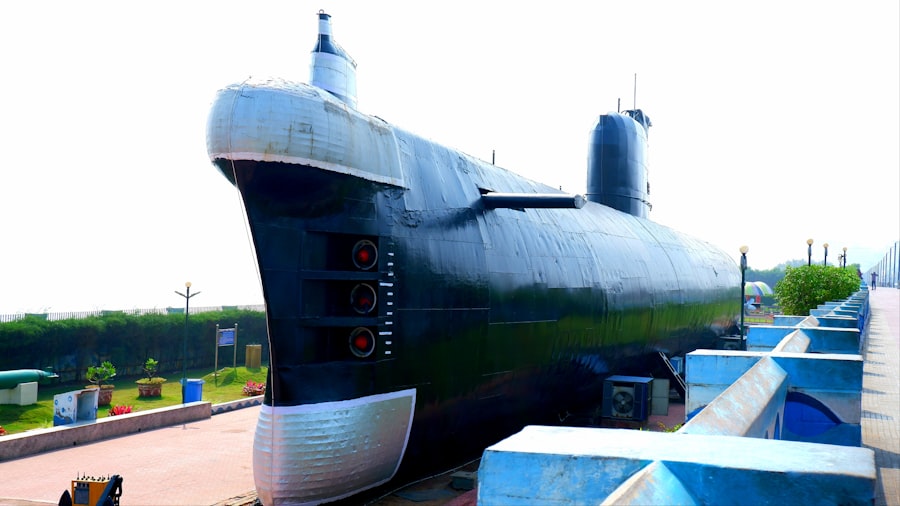
Navigating underwater terrain is a fundamental aspect of submarine operations that directly influences tactical decision-making. The ocean floor is not a uniform landscape; it is characterized by varying topographies, including ridges, valleys, and underwater mountains. Understanding these features is crucial for submariners as they plan their routes and execute missions.
Furthermore, the ability to navigate complex underwater environments can enhance a submarine’s operational effectiveness. For instance, utilizing natural features such as underwater canyons or seamounts can provide cover from enemy sonar systems while allowing submarines to approach targets undetected.
This strategic use of terrain requires careful planning and real-time adjustments based on changing conditions. As such, effective navigation is not merely about reaching a destination; it is about leveraging the underwater landscape to achieve tactical objectives.
Utilizing Sonar Technology for Navigation
Sonar technology plays a pivotal role in submarine navigation and tactical decision-making. By emitting sound waves and analyzing their echoes, submarines can detect other vessels, map underwater terrain, and assess potential threats. This technology has evolved significantly over the years, with advancements in both active and passive sonar systems enhancing situational awareness for submarine crews.
Active sonar sends out sound pulses and listens for their return, while passive sonar relies on detecting sounds emitted by other vessels. The integration of sonar technology into tactical decision-making processes allows submariners to make informed choices based on real-time data. For example, when approaching a potentially hostile area, a submarine can utilize sonar to gather intelligence on enemy movements and adjust its course accordingly.
Additionally, sophisticated sonar systems can help identify underwater obstacles or hazards that may pose risks during navigation. As technology continues to advance, the capabilities of sonar systems will likely expand, further enhancing the decision-making processes for submarine operations.
Strategies for Maneuvering in Confined Spaces
| Metric | Description | Typical Values | Impact on Tactical Decisions |
|---|---|---|---|
| Sonar Detection Range | Maximum distance at which enemy vessels or objects can be detected using sonar | 5-20 nautical miles (varies by sonar type and environment) | Determines engagement timing and stealth approach |
| Speed (knots) | Submarine’s current or maximum speed | 3-25 knots | Affects maneuverability, evasion, and pursuit capabilities |
| Depth (meters) | Current operating depth of the submarine | 20-600 meters (depending on class) | Influences stealth, sonar effectiveness, and survivability |
| Battery Life / Endurance | Remaining power for submerged operations | Hours to days (depending on battery and speed) | Limits duration of silent running and tactical options |
| Weapon Readiness | Status of torpedoes, missiles, and countermeasures | Ready / Reloading / Depleted | Determines offensive and defensive engagement capability |
| Noise Signature Level | Acoustic noise emitted by the submarine | Low / Medium / High | Affects detectability by enemy sonar |
| Communication Status | Ability to send and receive messages securely | Active / Jammed / Silent | Impacts coordination with fleet and command |
| Enemy Contact Count | Number of detected enemy vessels or threats | 0-10+ | Influences threat assessment and engagement strategy |
Maneuvering in confined underwater spaces presents unique challenges that require specialized strategies for effective navigation. Submarines often operate in areas such as narrow straits or coastal waters where space is limited and obstacles abound. In these environments, precision becomes paramount; even minor errors in navigation can lead to collisions or grounding.
Therefore, submariners must employ meticulous planning and execution when operating in confined spaces. One effective strategy involves utilizing advanced navigation systems that provide real-time feedback on a submarine’s position relative to surrounding obstacles. Coupled with sonar data, these systems enable crews to make rapid adjustments to their course as needed.
Additionally, training exercises that simulate confined space operations can help crews develop the skills necessary to navigate these challenging environments safely. By honing their abilities in realistic scenarios, submariners can enhance their confidence and decision-making capabilities when faced with real-world challenges.
Considerations for Underwater Communication

Effective communication is essential for successful submarine operations, yet it poses significant challenges in the underwater environment. Traditional radio communications are ineffective beneath the surface due to water’s density, which absorbs radio waves. As a result, submarines must rely on alternative methods for communication, such as buoyant antennas or underwater telephone systems that utilize sound waves.
The limitations of underwater communication necessitate careful planning and coordination among submarine crews. Tactical decisions often hinge on timely information sharing; therefore, establishing reliable communication protocols is crucial. Submariners must be trained to use available communication technologies effectively while also being prepared for scenarios where communication may be compromised.
This adaptability ensures that crews can maintain situational awareness and respond appropriately to evolving circumstances during missions.
Adapting to Changing Underwater Conditions
The underwater environment is dynamic, with conditions that can change rapidly due to factors such as weather patterns, ocean currents, and geological activity. Submariners must be adept at adapting their tactics in response to these fluctuations to maintain operational effectiveness. This adaptability requires a keen understanding of environmental science and the ability to interpret data from various sensors and instruments.
For instance, if a submarine encounters unexpected currents that could affect its trajectory, the crew must quickly reassess their navigation strategy and make necessary adjustments. This may involve altering depth or course to compensate for the changing conditions. Additionally, training exercises that simulate varying underwater scenarios can help crews develop the skills needed to respond effectively to unforeseen challenges.
By fostering a culture of adaptability within submarine operations, naval forces can enhance their resilience in the face of unpredictable underwater conditions.
Decision-Making in Response to Enemy Threats
In the realm of submarine warfare, decision-making in response to enemy threats is a critical aspect of tactical operations. Submariners must be prepared to assess potential threats quickly and determine appropriate courses of action based on available intelligence and situational awareness. This process often involves weighing multiple factors, including the capabilities of enemy forces, environmental conditions, and the submarine’s own strengths and weaknesses.
Effective decision-making in these high-stakes situations requires a combination of experience, training, and access to real-time data. Submarine crews must be able to analyze information from various sources—such as sonar readings, satellite imagery, and intelligence reports—to form a comprehensive picture of the operational landscape. By fostering a culture of collaboration and information sharing within the crew, submariners can enhance their collective decision-making capabilities when faced with enemy threats.
Navigating Undersea Obstacles and Hazards
Navigating undersea obstacles and hazards is an essential skill for submariners that directly impacts tactical decision-making. The ocean floor is littered with natural formations such as rocks, reefs, and wrecks that can pose significant risks during navigation. Additionally, man-made structures like underwater pipelines or cables may also present hazards that require careful consideration.
To mitigate these risks, submariners must employ advanced navigation techniques that incorporate data from sonar systems and other sensors. By continuously monitoring their surroundings and adjusting their course as needed, crews can avoid potential collisions or grounding incidents. Furthermore, thorough pre-mission planning that includes mapping known hazards can enhance situational awareness and inform tactical decisions during operations.
Collaborative Tactical Decision-Making in Submarine Operations
Collaboration among crew members is vital for effective tactical decision-making in submarine operations. Given the complexity of undersea environments and the multitude of factors influencing operational success, fostering a culture of teamwork is essential. Each crew member brings unique skills and perspectives that contribute to informed decision-making processes.
Regular training exercises that emphasize collaboration can help build trust among crew members while enhancing their ability to work together under pressure. Additionally, implementing structured communication protocols ensures that information flows seamlessly throughout the crew during missions. By prioritizing collaboration in tactical decision-making processes, submariners can leverage their collective expertise to navigate challenges more effectively.
The Future of Submarine Navigation
As technology continues to advance at an unprecedented pace, the future of submarine navigation holds exciting possibilities for enhancing tactical decision-making processes. Innovations in artificial intelligence (AI), machine learning, and autonomous systems are poised to revolutionize how submariners operate beneath the waves. These technologies have the potential to improve situational awareness by providing real-time data analysis and predictive modeling capabilities.
Moreover, advancements in communication technologies may further enhance collaboration among submarine crews while mitigating some of the challenges posed by underwater communication limitations. As naval forces adapt to these emerging technologies, they will likely find new ways to navigate complex undersea environments more effectively than ever before. In conclusion, understanding submarine tactical decisions is crucial for maintaining operational effectiveness in an increasingly complex maritime landscape.
By addressing the challenges posed by undersea environments and leveraging advanced technologies, submariners can enhance their decision-making capabilities and ensure mission success in future operations.
In the realm of submarine warfare, tactical decisions are crucial for mission success and the safety of the crew. A related article that delves into the intricacies of these decisions can be found on In The War Room, which explores various strategies and technologies employed by submarines in modern naval operations. For more insights, you can read the article [here](https://www.inthewarroom.com/).
FAQs
What are submarine tactical decisions?
Submarine tactical decisions refer to the strategic choices made by submarine commanders and their crews during operations. These decisions involve navigation, stealth, engagement with targets, evasion, and communication to achieve mission objectives while minimizing detection and risk.
What factors influence submarine tactical decisions?
Factors influencing submarine tactical decisions include the submarine’s capabilities, mission objectives, enemy presence and behavior, environmental conditions such as water depth and temperature, sonar and sensor data, and communication with command centers.
How do submarines maintain stealth during tactical operations?
Submarines maintain stealth by minimizing noise, using silent running techniques, avoiding detection by enemy sonar, operating at optimal depths, and carefully planning routes to avoid known enemy patrols or sensor coverage.
What role does sonar play in submarine tactical decisions?
Sonar is critical for detecting other vessels, navigating underwater, and assessing threats. Tactical decisions often depend on sonar data to identify enemy positions, determine safe paths, and decide when to engage or evade.
How do submarine commanders decide when to engage a target?
Commanders consider factors such as the target’s threat level, mission priorities, weapon availability, risk of detection, and potential consequences. Engagement decisions are made to maximize mission success while ensuring the submarine’s safety.
What are common evasion tactics used by submarines?
Common evasion tactics include changing depth and course, deploying countermeasures like decoys, reducing noise output, using thermal layers to hide from sonar, and exploiting environmental conditions to avoid detection.
How important is communication in submarine tactical decision-making?
Communication is vital for receiving orders, sharing intelligence, and coordinating with other units. However, submarines often limit communication to maintain stealth, using secure and low-probability-of-intercept methods.
What training do submarine crews undergo for tactical decision-making?
Submarine crews undergo extensive training in navigation, sonar operation, weapons systems, emergency procedures, and tactical simulations. This training prepares them to make quick, informed decisions under pressure during real missions.
How do environmental conditions affect submarine tactics?
Environmental conditions such as water temperature, salinity, currents, and seabed topography affect sonar performance and maneuverability. Commanders use this information to optimize stealth and detection capabilities.
Can submarine tactical decisions impact broader naval operations?
Yes, submarine tactical decisions can influence the outcome of naval battles, protect carrier groups, gather intelligence, and disrupt enemy supply lines, thereby playing a crucial role in broader military strategies.