
Submarines, often likened to steel sharks navigating the ocean’s silent depths, have long occupied a pivotal role in military strategy. Their ability to operate unseen beneath the waves provides them with a unique advantage in intelligence gathering, a discipline crucial to national security and strategic planning. This exploration delves into the multifaceted world of submarine intelligence, examining its historical evolution, operational methodologies, technological underpinnings, and the profound implications it holds for contemporary geopolitics.
The concept of using underwater vessels for reconnaissance dates back to the nascent stages of submarine development. Early pioneers quickly recognized the strategic advantage conferred by stealth and the ability to approach enemy coastlines undetected. Initially, intelligence gathering was rudimentary, relying on visual observation through periscopes. However, with the advent of more sophisticated technologies, the scope and nature of submarine intelligence underwent a revolutionary transformation.
Early Reconnaissance Missions
During World War I, submarines conducted limited reconnaissance, primarily focused on identifying enemy fleet movements and coastal defenses. These missions were inherently perilous, constrained by limited endurance and primitive sensor technology. The primary method of intelligence collection involved a crew member identifying targets through the periscope and relaying observations to command. Navigation was often crude, making precise data acquisition challenging.
World War II: A Leap Forward
The Second World War marked a significant evolution in submarine intelligence. Advances in sonar technology allowed submarines to detect surface vessels and, more crucially, other submerged boats from greater distances. Codebreaking efforts, such as the famous Ultra program, provided invaluable insights into enemy intentions, further enhancing the effectiveness of submarine deployments. Submarines were increasingly tasked with not only disrupting enemy shipping but also with gathering photographic intelligence of naval bases and troop concentrations. The miniaturization of cameras and recording devices, though still bulky by modern standards, pushed the boundaries of what was achievable in the clandestine environment beneath the waves.
Submarine intelligence gathering plays a crucial role in modern naval operations, providing vital information while remaining undetected. For a deeper understanding of the strategic importance of submarines in intelligence operations, you can read a related article on this topic at In The War Room. This resource explores various aspects of submarine capabilities and their impact on global security dynamics.
Operational Modalities of Submarine Intelligence
Modern submarine intelligence encompasses a wide array of specialized missions, each tailored to specific information requirements. These operations often involve Extended Deterrence Patrols, surveillance of critical sea lanes, and clandestine insertion of special forces. The objective is always the same: to collect actionable intelligence without revealing one’s presence.
Acoustic Intelligence (ACINT)
A cornerstone of submarine intelligence, ACINT involves the collection and analysis of sound signatures. Every vessel, from a supertanker to another submarine, emits a unique acoustic fingerprint. By meticulously cataloging and analyzing these sounds, intelligence agencies can identify specific ships, determine their activities, and even infer their technological capabilities. This is akin to an underwater “listening post,” where subtle vibrations in the water column betray the presence and intentions of others.
Passive Sonar Arrays
Submarines employ sophisticated passive sonar arrays, which function like highly sensitive underwater ears. These arrays do not transmit sound, making them undetectable. They pick up subtle acoustic energy from distant sources, triangulating positions and identifying targets based on their distinctive acoustic profiles. The efficacy of passive sonar is heavily dependent on factors such as water temperature, salinity, and bottom topography, all of which affect sound propagation.
Active Sonar Limitations
While active sonar can provide more precise ranging and bearing information, its use in intelligence gathering is highly constrained. Transmitting sound waves in the ocean is akin to shouting in a library; it immediately gives away the submarine’s position. Therefore, active sonar is generally reserved for situations where stealth is secondary to immediate tactical requirements or for brief, targeted interrogations of suspected contacts.
Signals Intelligence (SIGINT)
Beyond acoustic signatures, submarines are equipped to intercept and analyze electronic emissions. SIGINT encompasses the collection of communications intelligence (COMINT) and electronic intelligence (ELINT). This provides insights into enemy command and control structures, technological advancements, and operational plans.
Communications Intelligence (COMINT)
COMINT involves the interception and decryption of radio transmissions, satellite communications, and other forms of electronic messaging. Submarines, operating in close proximity to target areas, can act as crucial forward-deployed platforms for COMINT collection. The ability to intercept signals directly at their source often yields information unavailable through other means. The development of advanced signal processing and decryption algorithms is paramount to exploiting this type of intelligence.
Electronic Intelligence (ELINT)
ELINT focuses on the collection and analysis of non-communications electronic emissions, such as radar signals, telemetry data from missile tests, and electronic warfare systems. By analyzing the characteristics of these emissions – their frequency, pulse repetition interval, and antenna patterns – intelligence analysts can identify specific platforms, understand their capabilities, and track their movements. This provides a crucial understanding of an adversary’s technological landscape and operational readiness.
Imagery Intelligence (IMINT)
While less common than ACINT or SIGINT for deep-water submarines, IMINT still plays a role, particularly in littoral operations or when submarines are tasked with covertly observing coastal installations. The use of advanced periscope-mounted cameras and remotely operated vehicles (ROVs) allows for visual and photographic reconnaissance.
Periscope-Mounted Systems
Modern periscopes are far more than simple optical tubes. They incorporate high-resolution digital cameras, thermal imagers, and even laser rangefinders, enabling the collection of detailed visual intelligence from a safe distance. The challenge lies in operating shallow enough to deploy the periscope without compromising stealth, a delicate balance naval commanders constantly evaluate.
Remotely Operated Vehicles (ROVs)
For specific, high-risk IMINT missions, submarines can deploy and recover specialized ROVs. These unmanned underwater vehicles, equipped with cameras and other sensors, can venture into areas too dangerous or confined for the submarine itself, providing close-up visual and other forms of intelligence. This is akin to sending a robotic scout ahead to survey challenging terrain.
The Technological Arsenal
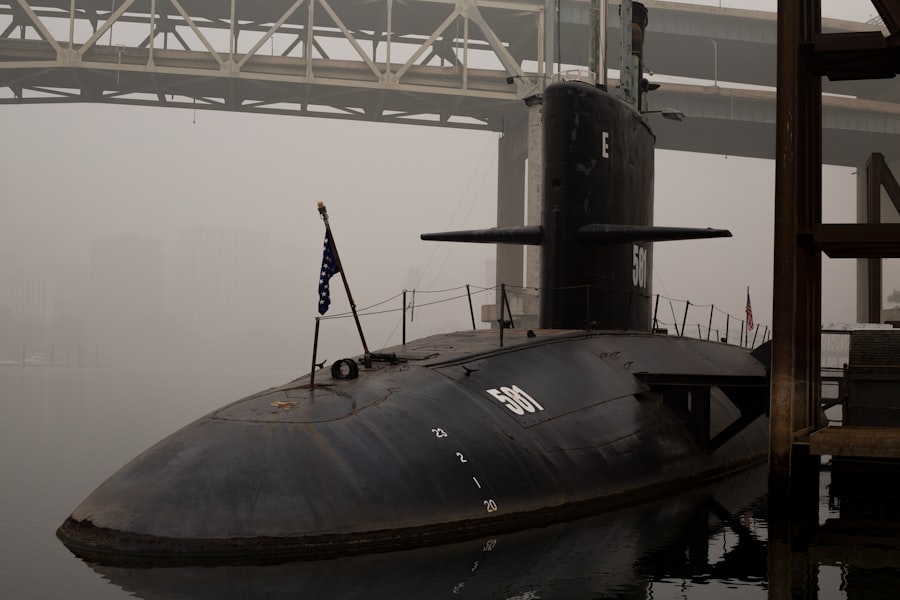
The efficacy of submarine intelligence is intrinsically linked to the sophistication of its technological arsenal. From propulsion systems to sensor suites and data processing capabilities, every component contributes to the overall collection capability.
Stealth and Evasion Technology
The fundamental principle of submarine intelligence is anonymity. Without effective stealth, a submarine becomes a target rather than a collector. Significant investment is made in noise reduction technologies, anechoic coatings, and advanced propulsion systems that minimize acoustic and thermal signatures.
Acoustic Signature Reduction
This involves meticulous design of propellers, machinery mounts, and hull forms to minimize emitted noise. The goal is to make the submarine blend into the ambient background noise of the ocean, effectively disappearing to enemy sonars. Advanced materials and active noise cancellation technologies are continuously being refined to achieve even greater levels of acoustic stealth.
Non-Acoustic Signature Reduction
Beyond acoustics, submarines also focus on reducing other detectable signatures. This includes minimizing magnetic fields, infrared emissions, and wake generation. While these signatures are generally less significant than acoustic ones underwater, they can be exploited by specialized sensors, particularly in shallower waters or for close-range detection.
Advanced Sensor Suites
Modern submarines are equipped with an array of highly sensitive sensors designed for optimal intelligence collection in a complex underwater environment.
Multi-Static Sonar Systems
These systems involve the deployment of multiple sonar transmitters and receivers, often distributed over a wide area. By analyzing the echoes from multiple vantage points, multi-static sonar can provide a more comprehensive and accurate picture of the underwater environment, making it harder for targets to evade detection.
Non-Acoustic Sensors
Research and development continue in non-acoustic sensors that could potentially revolutionize submarine intelligence. These include gravity gradiometers for detecting mass anomalies, synthetic aperture sonars for high-resolution seabed mapping, and even systems that can detect subtle changes in the Earth’s magnetic field caused by the presence of a large metallic object.
Data Processing and Analysis
Collecting raw data is only the first step. The sheer volume and complexity of the intelligence gathered by submarines necessitate sophisticated onboard and shore-based data processing and analysis capabilities.
Onboard Processing
Modern submarines feature powerful onboard computing systems capable of real-time data correlation, preliminary analysis, and filtering of extraneous information. This allows the crew to make immediate tactical decisions and to prioritize the transmission of critical intelligence to shore-based command centers.
Shore-Based Analysis Centers
Upon return or during satellite communication windows, the collected data is transmitted to dedicated intelligence analysis centers. Here, teams of specialists, utilizing advanced algorithms and vast databases, process, interpret, and correlate the submarine’s findings with other intelligence sources to generate comprehensive reports and strategic assessments.
The Human Element: Training and Specialization

Even with the most advanced technology, the success of submarine intelligence ultimately rests on the expertise and dedication of its personnel. Submarine crews undergo rigorous training, specializing in various aspects of intelligence collection and analysis.
Specialized Training Programs
Submariners earmarked for intelligence roles undergo extensive training in acoustics, signal analysis, cryptography, and various intelligence methodologies. They must not only understand the technology but also develop a deep intuition for the subtle cues and patterns that reveal an adversary’s intentions. This training instills a profound understanding of the underwater environment as well as the geopolitical landscape.
Endurance and Resilience
Submarine operations are inherently demanding. Crews operate in confined spaces for extended periods, far from sunlight and external communication. This requires exceptional mental fortitude, resilience, and the ability to maintain focus and precision under sustained pressure. The success of intelligence missions often hinges on the unwavering dedication of these highly specialized individuals.
Submarine intelligence gathering plays a crucial role in modern naval operations, allowing nations to monitor underwater activities and gather vital information without detection. For those interested in exploring this topic further, a related article provides an in-depth analysis of the technologies and strategies employed in underwater surveillance. You can read more about these advancements and their implications for global security by visiting this informative resource.
Geopolitical Implications and Future Trends
| Metric | Description | Typical Values | Relevance to Submarine Intelligence Gathering |
|---|---|---|---|
| Sensor Range | Maximum effective distance of onboard sensors (sonar, radar, electronic surveillance) | 5-50 km (active sonar), 100+ km (passive sonar) | Determines the area of surveillance and detection capabilities |
| Acoustic Signature | Noise level emitted by the submarine, measured in decibels (dB) | 80-120 dB (lower is stealthier) | Lower acoustic signature improves stealth and reduces detection risk |
| Data Transmission Rate | Speed of sending gathered intelligence to command centers | Up to several Mbps via satellite or buoy relays | Critical for timely intelligence sharing and operational coordination |
| Endurance | Maximum operational duration without resurfacing or resupply | 30-90 days depending on submarine class | Longer endurance allows extended intelligence missions |
| Depth Capability | Maximum operational depth of the submarine | 200-600 meters (conventional), 600+ meters (nuclear) | Deeper operation enhances stealth and access to sensitive areas |
| Electronic Intelligence (ELINT) Systems | Number and type of ELINT sensors onboard | Multiple antennas and receivers covering HF, VHF, UHF bands | Enables interception and analysis of enemy electronic emissions |
| Signal Processing Capability | Onboard computing power for real-time data analysis | High-performance processors with AI-assisted analysis | Improves speed and accuracy of intelligence extraction |
Submarine intelligence remains a critical component of national security, offering unique insights and strategic advantages that cannot be replicated by other intelligence platforms. Its impact on geopolitical dynamics is profound, shaping international relations and military strategies.
Deterrence and Power Projection
The very existence of a stealthy and capable submarine intelligence fleet acts as a powerful deterrent. Potential adversaries are aware that their actions, even in remote ocean expanses, can be observed and analyzed. This contributes to strategic stability by making pre-emptive or covert actions riskier and more transparent.
Countering Peer and Near-Peer Competitors
In an era of renewed great power competition, submarine intelligence plays an increasingly vital role in monitoring and understanding the capabilities and intentions of advanced naval powers. This includes tracking new submarine designs, observing technological advancements in anti-submarine warfare, and monitoring naval exercises.
Emerging Technologies and Challenges
The future of submarine intelligence will undoubtedly be shaped by emerging technologies. Advances in artificial intelligence and machine learning could autonomously process vast datasets, identifying faint signals and complex patterns that human analysts might miss. The development of new sensor technologies, such as quantum sensors, could further push the boundaries of detection capabilities.
However, challenges persist. The proliferation of quiet submarine technologies makes detection more difficult for all parties. The increasing transparency of the ocean environment through advanced sensors and data fusion techniques presents both opportunities and threats. As the “silent service” adapts to these evolving dynamics, its role as an indispensable gatherer of secrets from the depths will undoubtedly continue to expand. The ability to collect accurate and timely intelligence from the most inaccessible environments remains a cornerstone of informed decision-making and strategic superiority in the complex global arena.
FAQs
What is submarine intelligence gathering?
Submarine intelligence gathering refers to the use of submarines to collect information and data about enemy activities, naval movements, communications, and underwater environments. This intelligence is crucial for military strategy and national security.
How do submarines collect intelligence?
Submarines collect intelligence through various means, including electronic surveillance, signal interception, sonar detection, and deploying special reconnaissance equipment. They can also carry out covert operations such as tapping undersea communication cables.
Why are submarines effective for intelligence gathering?
Submarines are effective because of their stealth capabilities, allowing them to operate undetected in hostile or sensitive areas. Their ability to remain submerged for extended periods enables prolonged surveillance and data collection without being easily detected.
What types of intelligence can submarines gather?
Submarines can gather signals intelligence (SIGINT), electronic intelligence (ELINT), acoustic intelligence (ACINT), and imagery intelligence (IMINT). They can monitor enemy communications, track naval vessels, map underwater terrain, and detect missile launches.
Are there international laws governing submarine intelligence gathering?
Yes, international laws such as the United Nations Convention on the Law of the Sea (UNCLOS) regulate submarine operations, including intelligence activities. However, covert intelligence gathering often occurs in contested or disputed waters, leading to complex legal and diplomatic challenges.