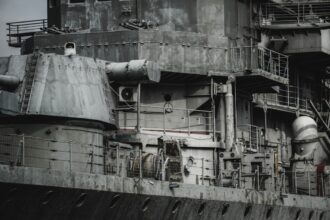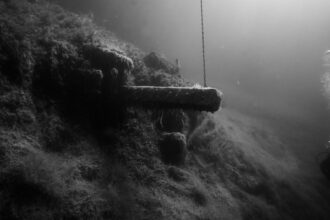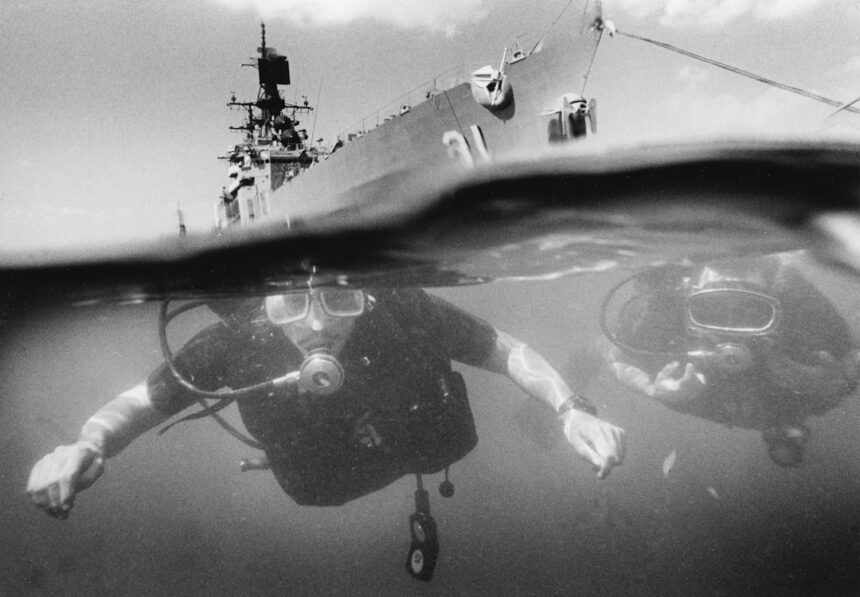
The origins of the submarine arms race can be traced back to the late 19th and early 20th centuries, a period marked by rapid advancements in naval technology and a growing emphasis on maritime power. The introduction of the first modern submarines, such as the USS Holland in 1898, sparked interest among naval powers around the world. These early vessels were rudimentary compared to their successors, yet they represented a significant shift in naval warfare.
Nations began to recognize the potential of submarines not only as tools for reconnaissance but also as formidable weapons capable of disrupting enemy supply lines and engaging surface vessels. As tensions escalated in the lead-up to World War I, countries like Germany and Britain invested heavily in submarine technology. The German U-boat campaign during the war showcased the effectiveness of submarines in disrupting Allied shipping, leading to a reevaluation of naval strategies.
The success of these underwater vessels prompted other nations to accelerate their submarine programs, resulting in an arms race that would continue throughout the 20th century. The interwar period saw further innovations, with countries experimenting with different designs and capabilities, setting the stage for the pivotal role submarines would play in future conflicts.
Key Takeaways
- The submarine arms race began as nations sought underwater dominance during the Cold War.
- Technological innovations, including nuclear propulsion, revolutionized submarine capabilities.
- Stealth technology became crucial for maintaining strategic advantages underwater.
- Submarines played a pivotal role in key events like the Cuban Missile Crisis, influencing global diplomacy.
- Modern submarines continue to shape warfare strategies while raising environmental and geopolitical concerns.
The Role of Submarines in Cold War Strategy
During the Cold War, submarines became central to the military strategies of both the United States and the Soviet Union. The advent of nuclear weapons transformed the nature of warfare, and submarines emerged as a crucial component of deterrence strategies. The ability to launch nuclear missiles from submerged platforms provided both superpowers with a second-strike capability, ensuring that even if one side was attacked, it could retaliate with devastating force.
This led to a precarious balance of power known as Mutually Assured Destruction (MAD), where both sides were deterred from initiating conflict due to the catastrophic consequences. Submarines also played a vital role in intelligence gathering and surveillance during this period. The vast expanses of ocean provided cover for covert operations, allowing submarines to monitor enemy movements and gather critical information without detection.
The development of advanced sonar technology further enhanced their capabilities, enabling them to track surface ships and other submarines. As a result, both superpowers invested heavily in their submarine fleets, leading to an unprecedented arms race that would shape naval strategy for decades.
Technological Advancements in Submarine Warfare
The evolution of submarine warfare has been marked by significant technological advancements that have transformed these vessels into highly sophisticated instruments of war. From the early days of diesel-electric submarines to the modern nuclear-powered fleet, innovations have continually enhanced their capabilities.
These systems have evolved from simple passive listening devices to complex arrays capable of active sonar and multi-beam imaging. In addition to sonar technology, advancements in weaponry have also played a crucial role in submarine warfare. The introduction of guided missiles and torpedoes has expanded the offensive capabilities of submarines, enabling them to engage targets at greater distances and with increased accuracy.
Furthermore, improvements in communication systems have allowed submarines to maintain contact with command centers while remaining submerged, facilitating coordinated operations and enhancing situational awareness. These technological strides have not only increased the lethality of submarines but have also made them integral components of modern naval strategy.
The Development of Nuclear-Powered Submarines
The development of nuclear-powered submarines marked a watershed moment in naval history, fundamentally altering the dynamics of underwater warfare. The first operational nuclear submarine, USS Nautilus, was launched in 1954 and represented a leap forward in terms of endurance and operational range. Unlike their diesel-electric predecessors, nuclear submarines could remain submerged for extended periods without the need for refueling, allowing them to operate far from home ports and conduct prolonged missions without surfacing.
Nuclear propulsion also enabled submarines to achieve higher speeds, making them more agile and difficult to detect. This capability was particularly advantageous during the Cold War, as it allowed submarines to evade enemy detection while patrolling strategic areas. Additionally, the ability to carry ballistic missiles transformed nuclear submarines into formidable deterrents, capable of delivering devastating strikes against land-based targets.
As a result, nations around the world began investing heavily in their own nuclear submarine programs, leading to an arms race that would shape global security dynamics for decades.
The Race for Submarine Stealth Technology
| Metric | United States | Soviet Union | Notes |
|---|---|---|---|
| Number of Nuclear Submarines (1960) | 2 | 1 | Early stages of nuclear submarine development |
| Number of Nuclear Submarines (1980) | 70+ | 60+ | Peak of Cold War submarine fleet sizes |
| First Nuclear-Powered Submarine | USS Nautilus (1954) | Lenin (1958) | Marked start of nuclear submarine era |
| First Ballistic Missile Submarine | USS George Washington (1960) | Hotel-class (1961) | Enabled underwater nuclear deterrence |
| Maximum Submarine Speed (knots) | 35+ | 40+ | Soviets generally had faster attack submarines |
| Number of SSBNs (Ballistic Missile Submarines) in 1985 | 41 | 40 | Key component of nuclear triad |
| Notable Submarine Classes | Los Angeles, Ohio | Typhoon, Delta | Represented technological advancements |
| Primary Submarine Roles | Strategic deterrence, attack, reconnaissance | Strategic deterrence, attack, reconnaissance | Both navies focused on multi-role capabilities |
As submarine warfare evolved, so too did the emphasis on stealth technology. The ability to operate undetected became paramount for submarines, as it directly influenced their effectiveness in both offensive and defensive operations. Early submarines relied on their submerged status for concealment; however, as detection technologies improved, navies recognized the need for more sophisticated stealth measures.
This led to significant investments in research and development aimed at reducing noise signatures and enhancing camouflage. One of the key advancements in stealth technology has been the development of anechoic coatings—specialized materials designed to absorb sound waves and minimize sonar reflections. These coatings have been applied to modern submarines, significantly reducing their acoustic signature and making them harder to detect by enemy sonar systems.
Additionally, advancements in hull design have contributed to improved hydrodynamics, allowing submarines to move more quietly through water. As a result, stealth technology has become a critical factor in submarine design and operational strategy, influencing how navies approach underwater warfare.
The Cuban Missile Crisis and Submarine Warfare

The Cuban Missile Crisis of 1962 stands as a defining moment in Cold War history and highlighted the pivotal role submarines played during this tense standoff between the United States and the Soviet Union. As tensions escalated over Soviet missile installations in Cuba, both superpowers prepared for potential military confrontation. Submarines were deployed as part of this strategic calculus, with American forces using them for surveillance and deterrence while Soviet submarines were positioned near Cuba.
During this crisis, one particular incident involving Soviet submarines underscored the precarious nature of underwater warfare. A Soviet submarine was detected by American forces during a depth charge attack intended to force it to surface. The crew faced immense pressure as they grappled with whether to respond with their own nuclear torpedoes or comply with orders from Moscow.
Ultimately, cooler heads prevailed, and the crisis was resolved without escalating into nuclear conflict. This episode illustrated not only the strategic importance of submarines but also the potential for miscommunication and miscalculation during high-stakes military confrontations.
The Impact of Submarine Arms Race on International Relations
The submarine arms race has had profound implications for international relations throughout the 20th century and into the 21st century. As nations invested heavily in their submarine fleets, concerns over security and military balance intensified. The proliferation of advanced submarine technology among various countries led to an environment characterized by suspicion and rivalry.
Nations sought to enhance their own capabilities while simultaneously monitoring potential adversaries’ developments. This arms race also contributed to regional tensions as countries sought to assert their maritime interests through naval power.
The presence of advanced submarines has become a symbol of national strength and deterrence capability, influencing diplomatic relations and military alliances across regions. As countries continue to invest in submarine technology, the dynamics of international relations will likely remain shaped by these underwater capabilities.
The Legacy of the Submarine Arms Race
The legacy of the submarine arms race is multifaceted, encompassing technological advancements, strategic doctrines, and geopolitical dynamics that continue to influence contemporary naval warfare. The innovations born from this competition have not only enhanced military capabilities but have also set standards for future developments in underwater technology. The emphasis on stealth, endurance, and firepower has become integral to modern naval strategy.
Moreover, the historical context of the submarine arms race serves as a cautionary tale about the dangers of unchecked military competition. The lessons learned from past confrontations underscore the importance of diplomacy and communication in mitigating conflicts arising from military posturing. As nations navigate an increasingly complex security landscape characterized by emerging threats and shifting alliances, understanding this legacy will be crucial for fostering stability and cooperation among global powers.
The Future of Submarine Warfare
Looking ahead, the future of submarine warfare is poised for further transformation driven by technological advancements and evolving strategic imperatives. Emerging technologies such as artificial intelligence (AI) and unmanned underwater vehicles (UUVs) are set to redefine how submarines operate on the battlefield. AI could enhance decision-making processes by analyzing vast amounts of data in real-time, allowing submarines to respond more effectively to threats.
Additionally, advancements in materials science may lead to even quieter hull designs and more effective stealth coatings, further complicating detection efforts by adversaries. As nations continue to invest in these technologies, the nature of underwater warfare will evolve, presenting new challenges and opportunities for naval forces worldwide. The integration of cyber capabilities into submarine operations may also become increasingly important as adversaries seek to exploit vulnerabilities in maritime systems.
The Environmental Impact of Submarine Operations
While submarines are often viewed through a lens of military strategy and technological prowess, their operations also carry significant environmental implications that warrant consideration. Submarine activities can impact marine ecosystems through noise pollution generated by sonar systems and propulsion mechanisms. This noise can disrupt marine life communication patterns and migratory behaviors, posing challenges for biodiversity conservation.
Furthermore, concerns about potential accidents involving nuclear-powered submarines raise questions about environmental safety. Incidents involving leaks or accidents could have catastrophic consequences for marine environments and coastal communities alike. As awareness grows regarding environmental sustainability, navies are increasingly tasked with balancing operational readiness with ecological responsibility—a challenge that will shape future submarine operations.
The Role of Submarines in Modern Warfare
In contemporary conflicts, submarines continue to play a vital role as versatile platforms capable of executing a wide range of missions beyond traditional naval engagements. Their ability to conduct covert operations makes them invaluable assets for intelligence gathering and special operations forces support. Modern submarines are equipped with advanced sensors that allow them to monitor maritime traffic and detect potential threats long before they escalate into open conflict.
Moreover, as hybrid warfare strategies gain prominence—blending conventional military tactics with cyber operations—submarines are adapting to meet these challenges head-on. Their stealthy nature allows them to operate undetected while gathering critical intelligence on adversaries’ activities or launching precision strikes against high-value targets. As geopolitical tensions persist around the globe, submarines will remain essential components of national defense strategies—ensuring that they continue to shape the future landscape of modern warfare.
The Cold War submarine arms race was a pivotal aspect of the broader military competition between the United States and the Soviet Union, characterized by advancements in underwater technology and strategic deterrence. For a deeper understanding of the implications and developments during this tense period, you can read more in the article available at this link. This article provides insights into the technological innovations and the geopolitical strategies that defined the era.
WATCH THIS! 🎖️ The Silent Underwater Network That Doomed Every Soviet Submarine
FAQs
What was the Cold War submarine arms race?
The Cold War submarine arms race was a period of intense competition between the United States and the Soviet Union to develop and deploy advanced submarines, particularly nuclear-powered and ballistic missile submarines, as part of their strategic military capabilities.
Why were submarines important during the Cold War?
Submarines were crucial during the Cold War because they provided stealthy platforms for launching nuclear missiles, ensuring second-strike capability and deterrence. Their ability to operate undetected made them key assets in maintaining the balance of power.
What types of submarines were developed during the Cold War arms race?
Both superpowers developed nuclear-powered attack submarines (SSNs) and ballistic missile submarines (SSBNs). The SSBNs were equipped with submarine-launched ballistic missiles (SLBMs) capable of delivering nuclear warheads over long distances.
How did the submarine arms race impact naval strategy?
The arms race led to significant advancements in submarine technology, sonar, and anti-submarine warfare tactics. It emphasized the importance of underwater stealth and detection capabilities, influencing naval strategies focused on deterrence and counter-detection.
What were some notable submarines from the Cold War era?
Notable submarines include the U.S. Navy’s USS Nautilus (the first nuclear-powered submarine), the Ohio-class SSBNs, and the Soviet Union’s Typhoon-class SSBNs, which were among the largest submarines ever built.
Did the submarine arms race contribute to arms control agreements?
Yes, the submarine arms race was a factor in arms control negotiations such as the Strategic Arms Limitation Talks (SALT) and later treaties like START, which aimed to limit the number and capabilities of strategic nuclear weapons, including those deployed on submarines.
When did the Cold War submarine arms race end?
The arms race effectively ended with the conclusion of the Cold War in the early 1990s, marked by the dissolution of the Soviet Union and subsequent arms reduction agreements between the U.S. and Russia.