Stealth technology, a collection of techniques used to make aircraft, ships, and missiles less visible to radar, infrared, sonar, and other detection methods, played a profound and often underestimated role in the latter stages of the Cold War. While not the sole determinant, its emergence and successful deployment by the United States and its allies significantly shifted the strategic balance, contributing to the ultimate dissolution of the Soviet Union. This article will explore the historical context, technological innovations, strategic impact, and enduring legacy of stealth technology.
The concept of reducing an object’s detectability by radar predates the Cold War, with theoretical work on radar cross-section (RCS) reduction emerging during World War II. However, it was the intense geopolitical rivalry between the United States and the Soviet Union that provided the impetus and funding for its practical application. Both superpowers invested heavily in radar development, leading to increasingly sophisticated systems capable of tracking high-altitude bombers and intercepting missiles. The desire to circumvent these advancements became a primary driver for stealth research.
Theoretical Foundations and Early Research
The foundational principles of stealth technology rest on understanding the electromagnetic spectrum and how objects interact with it. Radar systems emit electromagnetic waves and detect the reflections. To reduce detectability, one must minimize these reflections. This involves several key principles:
- Shaping: Designing objects with angles and facets that scatter radar waves away from the receiver, rather than reflecting them directly back. This radically departed from the smooth, aerodynamic forms typical of conventional aircraft.
- Radar-Absorbent Materials (RAM): Developing materials that absorb electromagnetic energy rather than reflecting it. These materials convert radar energy into heat, dissipating it before it can return to the radar. Early RAM formulations were often heavy and challenging to apply.
- Passive Techniques: Reducing emissions from the aircraft itself, such as infrared signatures from engines and radar emissions from onboard systems.
During the 1960s and 1970s, significant classified research commenced in the United States, particularly at Lockheed Martin’s Skunk Works. These early explorations laid the groundwork for the revolutionary aircraft that would eventually emerge.
The Soviet Counterpart: A Different Approach
While the United States pursued “low observable” technologies, the Soviet Union also recognized the importance of evading detection. Their approach, however, often diverged. Soviet efforts focused more on electronic countermeasures (ECM) – jamming enemy radars and developing fast, high-altitude interceptors. While they experimented with some stealth concepts, a fully integrated, operational stealth aircraft program comparable to the American efforts did not materialize to the same extent during the critical decades of the Cold War. This disparity in technological focus would prove to be a significant factor.
The discussion surrounding whether stealth technology played a pivotal role in ending the Cold War is intriguing, especially when considering the broader implications of military advancements on international relations. For a deeper exploration of this topic, you might find the article “The Impact of Military Innovations on Global Politics” insightful, as it delves into how technological developments have historically influenced geopolitical dynamics. You can read it here: The Impact of Military Innovations on Global Politics.
The Dawn of a New Era: The F-117 Nighthawk and B-2 Spirit
The 1980s witnessed the unveiling and subsequent operational deployment of the first true stealth aircraft, signifying a paradigm shift in aerial warfare. The emergence of these platforms was shrouded in intense secrecy, acting as a direct challenge to existing Soviet air defense networks.
The F-117 Nighthawk: Operation Desert Storm’s Silent Predator
The Lockheed F-117 Nighthawk, oft-referred to as the “Stealth Fighter” despite being a ground-attack aircraft, achieved initial operational capability in 1983. Its angular, “faceted” design, resembling a flying pyramid, was a direct consequence of early computational limitations. Engineers had to design surfaces that could be mathematically modeled to scatter radar waves, resulting in its distinctive shape.
- Design Philosophy: The F-117 was optimized for radar stealth, sacrificing some aerodynamic performance in the process. Its primary mission was to penetrate heavily defended airspace unchallenged and deliver precision munitions.
- Operational Secrecy: For years, the F-117 operated in profound secrecy, its existence only officially acknowledged in 1988. This secrecy enhanced its psychological impact when finally revealed, underscoring the advanced capabilities of American technology.
- Desert Storm Debut: The F-117’s combat debut in Operation Desert Storm in 1991 was a resounding success. Flying unimpeded through the most sophisticated Iraqi air defenses, it struck critical targets with precision, often before conventional aircraft could even enter the theater. This demonstrated the undeniable effectiveness of stealth against modern radar systems.
The B-2 Spirit: A Leap in Stealth Technology
While the F-117 represented the first generation of operational stealth, the Northrop Grumman B-2 Spirit bomber, first flown in 1989, represented a significant leap. Its “flying wing” design was a far more elegant and aerodynamically efficient solution to stealth shaping, enabled by advancements in supercomputing and composite materials.
- Sophisticated Shaping and Materials: The B-2 incorporated advanced composite materials, intricate shaping, and sophisticated radar-absorbent coatings to achieve an unparalleled level of broadband stealth across multiple radar frequencies.
- Strategic Deterrence: Designed as a long-range strategic bomber, the B-2 could penetrate Soviet airspace undetected, carrying both conventional and nuclear payloads. Its existence significantly complicated Soviet air defense planning and increased the credibility of American strike capabilities.
- Multi-Spectrum Stealth: Unlike the F-117, which primarily focused on radar stealth, the B-2 incorporated measures to reduce its infrared, acoustic, and visual signatures, making it a truly “all-aspect” stealth platform.
The Strategic Domino Effect: Shifting the Balance of Power
The emergence and deployment of stealth technology had a profound and multifaceted impact on the Cold War’s strategic landscape, acting as a powerful lever in the eventual erosion of Soviet power.
Undermining Soviet Air Defense Investments
For decades, the Soviet Union had poured enormous resources into developing a layered and robust air defense system. This network comprised thousands of radar stations, surface-to-air missile (SAM) batteries, and interceptor aircraft. Their doctrine relied on detecting and engaging any incoming threat, particularly strategic bombers.
- Rendered Obsolete: Stealth platforms like the F-117 and B-2 posed an existential threat to this entire defensive umbrella. The ability to penetrate undetected rendered vast portions of Soviet air defense infrastructure obsolete overnight. This created a profound sense of vulnerability and wasted investment within the Soviet military establishment.
- Resource Drain: To counter stealth, the Soviets would have had to invest colossal sums in entirely new detection paradigms, a burden their already strained economy could ill afford. This financial pressure acted as a corrosive force.
Enhancing Conventional Deterrence and First-Strike Capabilities
Stealth technology dramatically enhanced the offensive capabilities of the United States, both conventionally and strategically.
- Precision and Surprise: Stealth aircraft allowed for precision strikes deep within enemy territory with unprecedented levels of surprise. This capability meant that critical command and control centers, airfields, and missile sites could be targeted effectively, potentially crippling an adversary’s ability to wage war before they could react.
- Asymmetric Advantage: Stealth created an asymmetric advantage, forcing the Soviet Union to confront a technologically superior foe that could negate their defensive strengths. This put immense psychological pressure on Soviet military planners.
The Nuclear Calculus: A New Dimension
While often discussed in the context of conventional warfare, stealth’s impact on nuclear deterrence was equally significant.
- Survivable Strategic Platforms: The B-2, with its ability to penetrate Soviet airspace undetected at sustained subsonic speeds, dramatically improved the survivability and effectiveness of the American strategic bomber force. This complicated Soviet calculations regarding a potential first strike, as the possibility of an undetected retaliatory strike with strategic bombers became a very real threat.
- Reduced Warning Time: The prospect of stealth bombers bypassing radar networks meant a significant reduction in warning time for Soviet leadership, further increasing the stakes and creating an environment of heightened tension and uncertainty.
The Cold War’s Quiet Ending: Stealth as a Contributor
While many factors contributed to the end of the Cold War – economic collapse, internal dissent, diplomatic efforts – stealth technology played an undeniable role in hastening its conclusion. It acted as both a psychological weapon and a significant economic drain.
Psychological Warfare and Moral Erosion
The very existence of stealth aircraft created a demoralizing effect within the Soviet military and political leadership.
- Technological Inferiority: The realization that the United States possessed a technological capability that rendered decades of Soviet defense investment largely irrelevant fostered a deep sense of inferiority. This undermined the narrative of Soviet scientific and technological parity, a cornerstone of their ideological struggle.
- Unwinnable Arms Race: The prospect of having to develop an entirely new generation of radar systems and air defenses to counter stealth, combined with their already struggling economy, presented a truly unwinnable arms race. This contributed to a growing sense of futility among Soviet leadership.
Economic Strain and the Collapse
The economic implications of stealth technology adoption were devastating for the Soviet Union.
- Unsustainable Expenditure: To maintain any semblance of parity, the Soviets would have had to embark on immense research and development programs, diverting precious resources from other sectors. This would have further exacerbated their already critical economic woes.
- Opportunity Cost: The funds already invested in traditional air defense systems were effectively wasted, representing a monumental opportunity cost that the Soviet system could not bear. This financial pressure was a direct, albeit sometimes invisible, contributor to the Soviet Union’s eventual economic and political collapse.
The role of stealth technology in shaping modern warfare strategies has sparked considerable debate among historians and military analysts, particularly regarding its influence on the Cold War’s conclusion. In exploring this topic, one can find insightful perspectives in a related article that discusses the broader implications of advanced military technologies on global politics. For a deeper understanding of how these innovations contributed to the shifting dynamics during that era, you can read more in this article.
The Enduring Legacy of Invisibility: Post-Cold War and Beyond
| Metric | Data/Information |
|---|---|
| Stealth Technology Development Start | 1970s |
| First Operational Stealth Aircraft | F-117 Nighthawk, introduced in 1983 |
| Cold War Duration | 1947 – 1991 |
| Impact of Stealth on Cold War | Contributed to U.S. military technological superiority, but not sole factor in ending Cold War |
| Other Key Factors Ending Cold War | Economic issues in USSR, political reforms (Perestroika, Glasnost), arms control agreements |
| Stealth Technology Role in Arms Race | Increased pressure on Soviet defense spending and technological development |
| Stealth Technology Influence on Diplomacy | Enhanced U.S. leverage in negotiations, but diplomacy and internal Soviet changes were decisive |
Stealth technology did not fade with the end of the Cold War; instead, it continued to evolve and proliferate, shaping modern military doctrines and international relations. Its legacy extends far beyond its initial Cold War impact.
Continued Evolution and Proliferation
The principles of stealth, once a closely guarded secret, have become fundamental to modern military design.
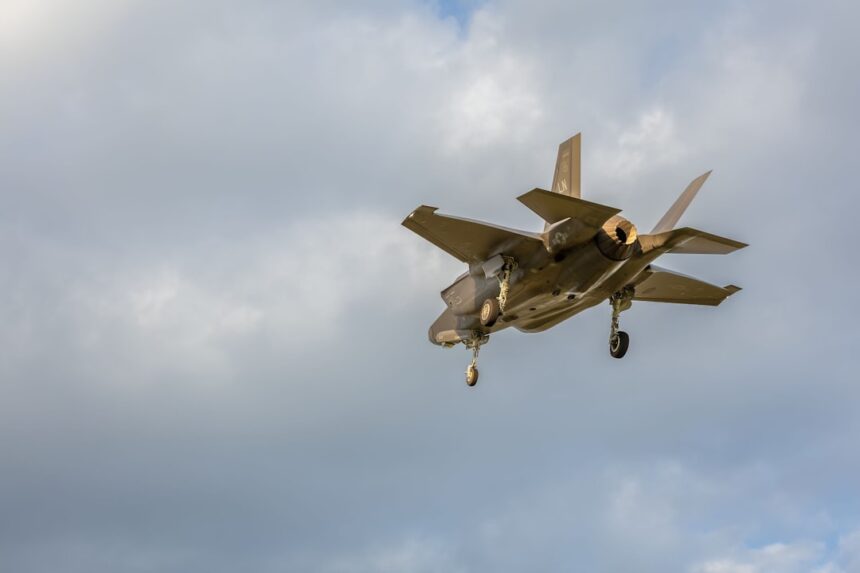
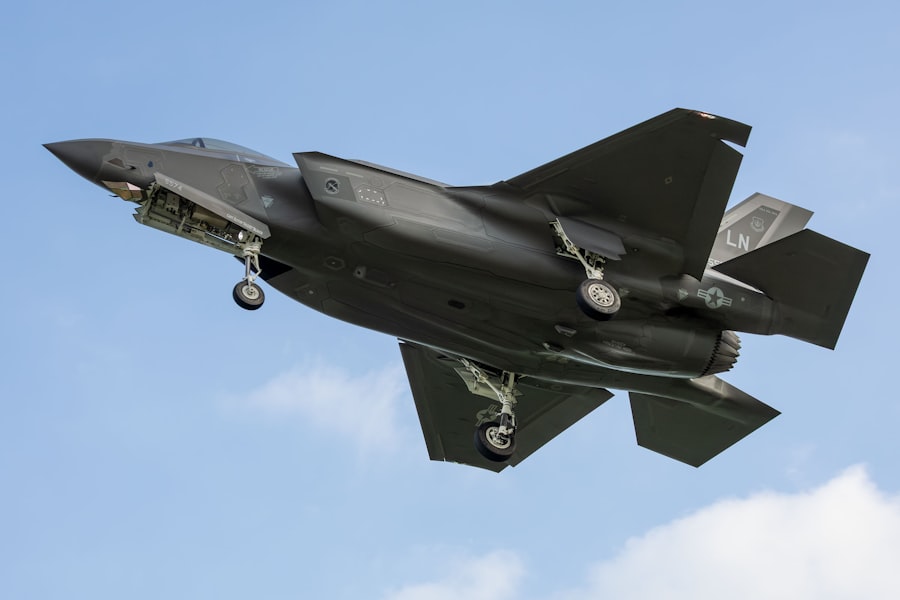
- Fifth-Generation Fighters: The F-22 Raptor and F-35 Lightning II, America’s fifth-generation fighters, represent the evolution of stealth into multi-role, highly interconnected platforms. These aircraft integrate stealth with advanced avionics, sensor fusion, and supercruise capabilities.
- Beyond Aircraft: Stealth concepts are now applied to a wide array of military assets, including naval vessels (e.g., Zumwalt-class destroyers), cruise missiles, and even ground vehicles, demonstrating its pervasive influence.
- Global Spread: While initially a Western advantage, other nations, including China and Russia, have also developed and deployed their own stealth aircraft, indicating the enduring strategic importance of this technology.
The Perpetual Arms Race and Counter-Stealth
The emergence of stealth naturally led to efforts to counter it, fueling a perpetual arms race.
- Low-Frequency Radars: Detection systems operating at lower frequencies (VHF, UHF) have shown some promise in detecting stealth aircraft, though often with limitations in targeting precision. The trade-off is often resolution versus detection.
- Passive Detection: Advancements in passive electromagnetic detection, infrared search and track (IRST) systems, and quantum sensing technologies represent ongoing efforts to find vulnerabilities in stealth.
- Data Fusion and Networking: The ability to fuse data from multiple sensors, including non-traditional sources, offers another avenue for countering stealth by building a more comprehensive picture of the battlespace.
The Future of Stealth: Adaptability and AI
The future of stealth technology will likely involve continued innovation in materials, adaptive shaping, and the integration of artificial intelligence (AI).
- Metamaterials and Active Stealth: Research into metamaterials, which can manipulate electromagnetic waves in unprecedented ways, offers the prospect of “active stealth” – dynamically adapting an object’s RCS in real-time.
- AI-Enhanced Design: AI algorithms are increasingly being used to optimize stealth designs, taking into account complex aerodynamic and electromagnetic interactions.
- UAVs and Swarms: Stealth will be a critical enabling technology for future Unmanned Aerial Vehicles (UAVs) and drone swarms, allowing them to penetrate sophisticated air defenses autonomously.
In conclusion, stealth technology, emerging from the crucible of the Cold War, was more than just a technological marvel; it was a strategic game-changer. By rendering vast Soviet defensive investments largely obsolete, enhancing American strike capabilities, and imposing unsustainable economic pressure, it peeled back a crucial layer of Soviet military power. It was not a silver bullet, but rather a powerful, silent weapon that reshaped the geopolitical landscape, nudging the world toward the eventual, and relatively peaceful, resolution of the Cold War. Its legacy continues to influence military doctrine and technological development to this day, a testament to the profound impact of invisible power.

SHOCKING: How Stealth Technology Bankrupted An Empire
FAQs
What is stealth technology?
Stealth technology refers to a set of techniques and materials used in military aircraft and other vehicles to make them less detectable by radar, infrared, sonar, and other detection methods.
When was stealth technology first developed?
Stealth technology was first developed and implemented by the United States during the 1970s and 1980s, with the F-117 Nighthawk being the first operational stealth aircraft.
Did stealth technology directly end the Cold War?
No, stealth technology did not directly end the Cold War. The Cold War ended due to a combination of political, economic, and social factors, including the policies of Soviet leader Mikhail Gorbachev, economic pressures on the USSR, and diplomatic negotiations.
How did stealth technology impact military strategy during the Cold War?
Stealth technology gave the United States a strategic advantage by allowing aircraft to penetrate enemy airspace with reduced risk of detection, which influenced military planning and deterrence strategies during the later stages of the Cold War.
Is stealth technology still relevant in modern military conflicts?
Yes, stealth technology remains a critical component of modern military capabilities, with ongoing advancements improving the ability of aircraft, ships, and other systems to evade detection in contemporary conflicts.