The dissolution of the Soviet Union in December 1991 represented a monumental geopolitical shift, the implications of which reverberated across the globe. Among the myriad factors contributing to this collapse, the unsustainable burden of the Soviet military budget stands out as a critical, often underestimated, catalyst. The relentless pursuit of military parity, and often superiority, with the United States and NATO allies drained the Soviet economy, leaving it parched and brittle. This essay will explore the intricate relationship between the Soviet military expenditure and the ultimate demise of the state, examining it as a historic turning point with far-reaching consequences.
The Soviet Union’s commitment to its armed forces was not merely a budgetary line item; it was a foundational pillar of its ideology and foreign policy. From the wake of World War II, the Soviet leadership, scarred by invasion and committed to the global propagation of communism, prioritized military strength above almost all else. This prioritization, however, came at an exorbitant cost, effectively creating a bottomless pit that consumed an ever-increasing share of national resources.
Quantitative Strain on Civilian Sectors
The allocation of resources to the military industrial complex (MIC) starved other vital sectors of the economy. Investment in civilian infrastructure, consumer goods production, and technological innovation consistently lagged. It is estimated that at various points, the Soviet military budget constituted anywhere from 15% to 25% of its Gross National Product (GNP), a figure significantly higher than that of its Western counterparts. For example, during the height of the Cold War, the United States typically spent between 6% and 10% of its GNP on defense. This disparity effectively meant that for every ruble invested in tanks, missiles, and nuclear submarines, a ruble was withheld from housing, healthcare, and everyday necessities. This imbalance created a palpable sense of deprivation among the populace, fostering disillusionment and a growing awareness of the gap between Soviet and Western living standards.
Technological Obsolescence and Inefficiency
The focus on military hardware often diverted the best scientific minds and technological capabilities towards defense industries. While this led to impressive achievements in areas like space exploration and nuclear weaponry, it simultaneously hindered the development of competitive civilian technologies. Soviet consumer electronics, for instance, consistently lagged behind their Western counterparts in terms of quality, innovation, and availability. Furthermore, the centrally planned economy, with its inherent inefficiencies and lack of market signals, exacerbated these issues. Military production, though state-of-the-art in certain niches, often operated with little regard for cost-effectiveness or adaptability, creating a vast, insulated sector that consumed resources without generating broader economic benefits or innovation spillover into the civilian economy.
The collapse of the Soviet Union’s military budget in the late 1980s played a significant role in the eventual disintegration of the superpower, as it struggled to maintain its extensive military commitments while facing economic decline. For a deeper understanding of the factors that contributed to this budgetary crisis and its implications for global security, you can read a related article on this topic at In The War Room.
The Afghanistan War: The Last Straw
While the systemic economic drain was a long-term debilitator, the Soviet invasion of Afghanistan in 1979 proved to be a critical accelerant to its economic woes and a profound miscalculation. Often dubbed the Soviet Union’s “Vietnam,” this protracted conflict bled the nation in terms of both human lives and financial resources.
Direct Costs and Opportunity Costs
The direct financial cost of the Afghan war is difficult to ascertain precisely, but estimates range from tens of billions to even hundreds of billions of rubles over its ten-year duration. This expenditure included the maintenance of a large expeditionary force, sophisticated weaponry, logistical support, and the construction of infrastructure in a hostile environment. Beyond the direct costs, the opportunity costs were immense. Resources diverted to Afghanistan could have been invested in modernizing Soviet industry, improving agricultural output, or funding social programs. Instead, they were poured into a quagmire, yielding negligible strategic benefits but significant fiscal strain.
International Isolation and Sanctions
The invasion also triggered widespread international condemnation and sanctions from Western powers, further isolating the Soviet economy. The United States, for example, imposed a grain embargo, impacting a nation already struggling with agricultural inefficiencies. This isolation made it challenging for the Soviet Union to access Western technology and markets, hindering its ability to modernize and compete in the global economy. The pariah status deepened its reliance on internal resources and its Comecon allies, many of whom were themselves economically struggling.
The Reagan Doctrine and the “Star Wars” Gambit
The 1980s saw a significant escalation in the Cold War under the administration of U.S. President Ronald Reagan. His assertive foreign policy, coupled with a substantial increase in American defense spending, placed immense pressure on an already faltering Soviet economy. The proposed Strategic Defense Initiative (SDI), popularly known as “Star Wars,” represented a particularly potent psychological and economic challenge.
The SDI Challenge: A Technological Mirage?
While the feasibility of SDI as a complete defensive shield was debated even within the U.S., its mere announcement and the commitment of significant resources to its research and development created a profound dilemma for Soviet leadership. The Soviet military doctrine relied heavily on its offensive missile capabilities as a deterrent. A perceived American ability to neutralize this deterrent would necessitate a massive, and likely economically ruinous, Soviet counter-investment in new offensive weapons or its own defensive systems. The prospect of an arms race in space, requiring cutting-edge computing and materials science, was a terrifying prospect for an economy already struggling with domestic technological development.
The Economic Arms Race and Material Exhaustion
Reagan’s military buildup, which saw U.S. defense spending surge, forced the Soviet Union into a choice: either concede military inferiority or attempt to match the American pace. Given its ideological commitment to parity, the Soviet leadership opted for the latter, accelerating its own military production. This accelerated arms race became a game of catch-up that the Soviet economy was ill-equipped to win. The constant demand for resources, both material and human, coupled with the systemic inefficiencies of the centrally planned economy, led to material exhaustion. Factories worked round-the-clock producing tanks and missiles, while consumer goods remained scarce and of poor quality, further eroding public morale.
Perestroika and Glasnost: Attempts at Reform and Unintended Consequences
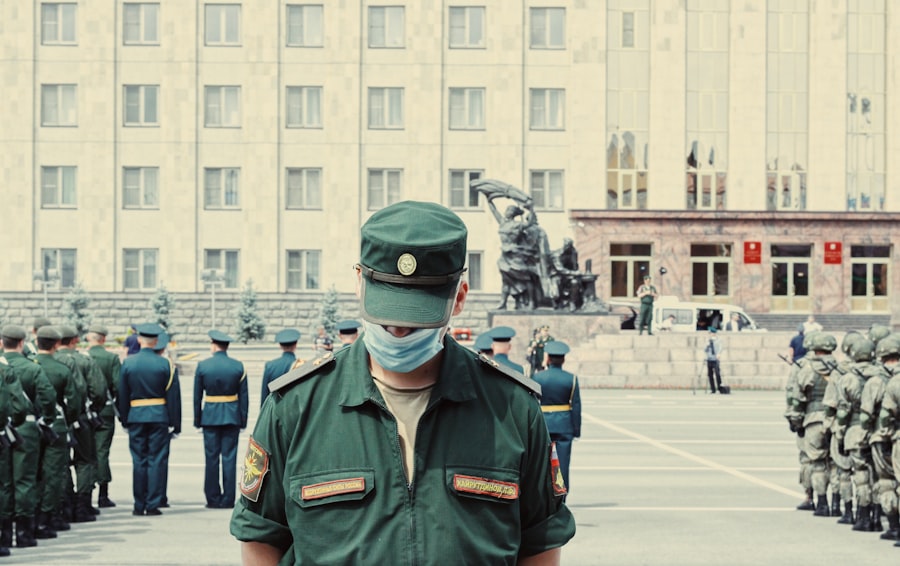
By the mid-1980s, the writing was on the wall. The Soviet system was stagnating, and its economic woes were undeniable. Mikhail Gorbachev’s ascension to power in 1985 brought with it an unprecedented wave of reforms: “Perestroika” (restructuring) and “Glasnost” (openness). While intended to revitalize the Soviet Union, these reforms inadvertently highlighted the depth of the economic crisis and further challenged the rationale for massive military expenditure.
Exposing the “Truths” of Economic Decay
Glasnost, by allowing for greater freedom of information and expression, made it increasingly difficult to conceal the true state of the Soviet economy. The public gained a clearer understanding of the vast sums being spent on the military, often at the expense of basic necessities. Reports detailing the immense cost of maintaining the empire, from military garrisons abroad to proxy wars in the developing world, fueled public discontent. The previously sacrosanct military budget became a subject of open debate, with many questioning the wisdom of such lavish spending when grocery shelves were bare.
Shifting Priorities and Internal Resistance
Perestroika aimed to introduce market mechanisms and decentralize economic decision-making. While these reforms were often piecemeal and inconsistent, they implicitly challenged the traditional allocation of resources that prioritized the MIC. Gorbachev sought to reduce military spending and divert resources to civilian sectors, recognizing the unsustainable nature of the existing system. However, he faced significant resistance from powerful elements within the military-industrial complex and conservative factions of the Communist Party, who viewed these cuts as an existential threat to Soviet power. This internal struggle further destabilized the system and hindered effective reform implementation.
The collapse of the Soviet Union’s military budget had profound implications for its global standing and internal stability. As the economy struggled to support an increasingly outdated military infrastructure, resources were diverted away from essential services, leading to widespread discontent among the populace. For a deeper understanding of the factors that contributed to this budgetary crisis, you can explore a related article that delves into the economic challenges faced by the Soviet Union during its final years. This analysis provides valuable insights into how military expenditures impacted the nation’s overall economic health and societal well-being. To read more, visit this article.
The Final Unraveling: A House of Cards
| Year | Military Budget (Billion Rubles) | Percentage of GDP | Notes |
|---|---|---|---|
| 1985 | 90 | 15% | Peak military spending during late Cold War |
| 1988 | 85 | 13.5% | Beginning of budget constraints under Gorbachev |
| 1990 | 70 | 10% | Significant cuts due to economic difficulties |
| 1991 | 50 | 7% | Collapse of Soviet Union and military budget drastically reduced |
| 1992 | 20 | 3% | Post-Soviet Russia military budget, sharp decline from Soviet era |
The cumulative effect of these pressures – the chronic economic drain, the bleed of Afghanistan, the intense pressure of the Reagan era, and the disruptive forces of reform – created an unstable equilibrium that could not be sustained. The Soviet Union, already a house of cards economically, began to buckle under the strain.
Decline in Oil Prices and Hard Currency Shortages
A significant portion of Soviet hard currency earnings came from oil exports. The sharp decline in global oil prices in the mid-1980s delivered a severe blow to the Soviet budget, drastically reducing its ability to import essential goods and technology from the West. This external shock exacerbated existing economic problems and made it even harder to finance the military industrial complex and maintain its global commitments. The diminished flow of hard currency further highlighted the structural weaknesses of an economy that relied heavily on raw material exports rather than diversified, value-added production.
Loss of Political Will and Ideological Erosion
Ultimately, the unsustainable military burden contributed to a profound loss of political will and an erosion of ideological conviction within the Soviet leadership and among the general populace. The perceived failure of the Soviet system to deliver on its promises of prosperity, coupled with the ever-present specter of military confrontation, led to widespread disillusionment. The military, once a symbol of strength and national pride, increasingly became seen as a drain on resources and a barrier to a better life. When the satellite states of Eastern Europe began to break free in 1989, and internal republics within the Soviet Union clamored for independence, the central government lacked the economic wherewithal and the political legitimacy to forcefully suppress these movements. The military, though still vast, was increasingly seen as an expensive relic, too costly to maintain and increasingly irrelevant to the aspirations of a population yearning for economic relief and political freedom.
The collapse of the Soviet Union’s military budget was not merely a fiscal adjustment; it was a profound historical turning point. It illustrated the limits of military power when unaccompanied by a robust and adaptable economic foundation. The Soviet experience serves as a stark reminder that even the most formidable military apparatus can crumble if its underlying economic pillars are allowed to erode. For the successor states, the challenge became one of dismantling this massive military machine and redirecting its human and material resources toward civilian development, a process that continues to unfold to this day. The historic turning point of 1991 was, in essence, the moment the world witnessed the limits of an economy built on guns, rather than butter.

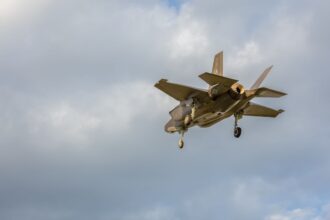
SHOCKING: How Stealth Technology Bankrupted An Empire
FAQs
What was the Soviet Union’s military budget during its peak?
At its peak in the 1980s, the Soviet Union’s military budget was estimated to be around 15-17% of its Gross Domestic Product (GDP), making it one of the largest military expenditures in the world at the time.
What factors contributed to the collapse of the Soviet Union’s military budget?
The collapse of the Soviet Union’s military budget was primarily due to economic stagnation, declining oil revenues, inefficient centralized planning, and the overall financial strain of maintaining a large military during the late 1980s and early 1990s.
How did the military budget collapse affect the Soviet armed forces?
The collapse led to severe underfunding, resulting in reduced training, maintenance, and modernization of equipment. This weakened the operational readiness and effectiveness of the Soviet armed forces during the final years of the USSR.
Did the military budget collapse contribute to the dissolution of the Soviet Union?
Yes, the unsustainable military spending combined with economic difficulties contributed to the broader financial crisis, which was one of the factors that hastened the political and social instability leading to the dissolution of the Soviet Union in 1991.
What happened to the Soviet military budget after the USSR dissolved?
After the dissolution, the newly formed Russian Federation inherited a significantly reduced military budget. Economic challenges and restructuring led to further cuts, and Russia’s military spending only began to increase substantially in the late 1990s and early 2000s.