The Soviet Union, during the Cold War, engaged in a continuous and multifaceted naval arms race with the Western powers, primarily the United States. A critical component of this competition was the development and deployment of advanced submarine classes, each designed to fulfill specific strategic roles. Among these, the Victor-class submarines, a series of nuclear-powered attack submarines, represented a significant leap forward in Soviet naval engineering and operational capabilities. These vessels, designated Project 671 by the Soviet Navy, were not the largest or the most heavily armed of their era, but their combination of speed, acoustic stealth, and endurance made them formidable adversaries, often operating in the shadowy depths of the world’s oceans, a testament to the ingenuity and perseverance of their designers and crews.
The development of the Victor-class stemmed from a Soviet realization of the limitations inherent in their earlier nuclear-powered submarine designs. Preceding classes, while providing valuable operational experience, often suffered from higher levels of radiated noise and slower submerged speeds compared to their American counterparts. The need for a quieter, faster, and more capable hunter-killer submarine became paramount as the strategic landscape evolved. You can learn more about John Walker in this informative video.
Project 671: Initial Design Goals
The initial design brief for Project 671 was ambitious. Soviet naval architects and engineers at the Malakhit Design Bureau in Leningrad (now St. Petersburg) were tasked with creating a submarine that could effectively counter NATO’s nuclear-powered attack submarines and carrier battle groups. Key objectives included:
- Enhanced Acoustic Stealth: This was arguably the most critical requirement. Previous Soviet designs had often prioritized speed over stealth, leading to detectable signatures. The Victor-class aimed to reverse this trend.
- High Submerged Speed: The ability to rapidly intercept or evade enemy forces remained a priority, crucial for both offensive and defensive operations.
- Deep Diving Capability: To withstand anti-submarine warfare (ASW) attacks and to leverage oceanographic features for tactical advantage, a robust hull capable of deep dives was essential.
- Improved Sonar Systems: To effectively detect and track enemy vessels, advanced passive and active sonar arrays were indispensable.
- Standardized Weaponry: The submarine was to be equipped with a versatile array of torpedoes and potentially anti-ship cruise missiles, adaptable to various combat scenarios.
Technological Innovations
Achieving these goals necessitated adopting new technologies and refining existing ones. The Victor-class benefited from advancements in metallurgy, hydrodynamics, and acoustic isolation techniques.
- Hull Design: The teardrop-shaped hull, refined through extensive hydrodynamic testing, minimized drag and contributed to higher speeds. The use of high-strength steel allowed for deeper operational depths.
- Noise Reduction Measures: This was a multi-faceted effort. Machinery was mounted on raft-like structures, isolated from the hull by rubberized shock absorbers. Quieter main propulsion turbines and pumps were developed. The propeller itself underwent significant redesign to reduce cavitation noise, a perennial challenge for high-speed submarines.
- Reactor Technology: The submarines were powered by a pressurized water reactor (PWR) system, similar in principle to those found in Western nuclear submarines, but refined for improved reliability and power output.
The Soviet Union’s Victor-class submarines were a significant advancement in underwater warfare technology during the Cold War, designed for anti-submarine and anti-surface warfare. For a deeper understanding of their operational history and impact on naval strategy, you can read a related article on this topic at In The War Room. This resource provides insights into the development, capabilities, and legacy of these formidable vessels in the context of global military dynamics.
Evolution of the Class: Victor I, II, and III
The Victor-class comprised three distinct sub-classes, each building upon the experiences and lessons learned from its predecessor, incrementally enhancing capabilities and addressing operational shortcomings.
Victor I (Project 671 “Yersh”)
The first iteration, Project 671 “Yersh” (Ruffe), often referred to as the Victor I, represented the foundational design. The lead ship, K-38, was commissioned in 1967, marking a new chapter in Soviet submarine development.
- Operational Debut: These submarines, displacing approximately 4,500 tons submerged, were capable of speeds exceeding 30 knots. Their improved stealth was immediately recognized by Western intelligence, signalling a qualitative shift in the Soviet submarine threat.
- Initial Armament: Equipped with six 533mm torpedo tubes, they carried a mix of conventional and nuclear-tipped torpedoes, alongside mine-laying capabilities.
Victor II (Project 671RT “Semga”)
Building on the Victor I, Project 671RT “Semga” (Atlantic Salmon), or Victor II, was a transitional design, incorporating lessons learned from the initial deployments. Only seven units of this variant were built.
- Increased Size and Endurance: Slightly larger and displacing around 5,100 tons submerged, the Victor II offered improved crew habitability and potentially greater endurance.
- Enhanced Sonar Systems: This sub-class saw the integration of more advanced sonar arrays, improving detection range and target classification.
Victor III (Project 671RTM “Shchuka”)
The most numerous and recognizable variant, Project 671RTM “Shchuka” (Pike), or Victor III, represented the zenith of the Victor-class development. This variant generated significant interest and concern in Western naval circles due to a distinctive feature.
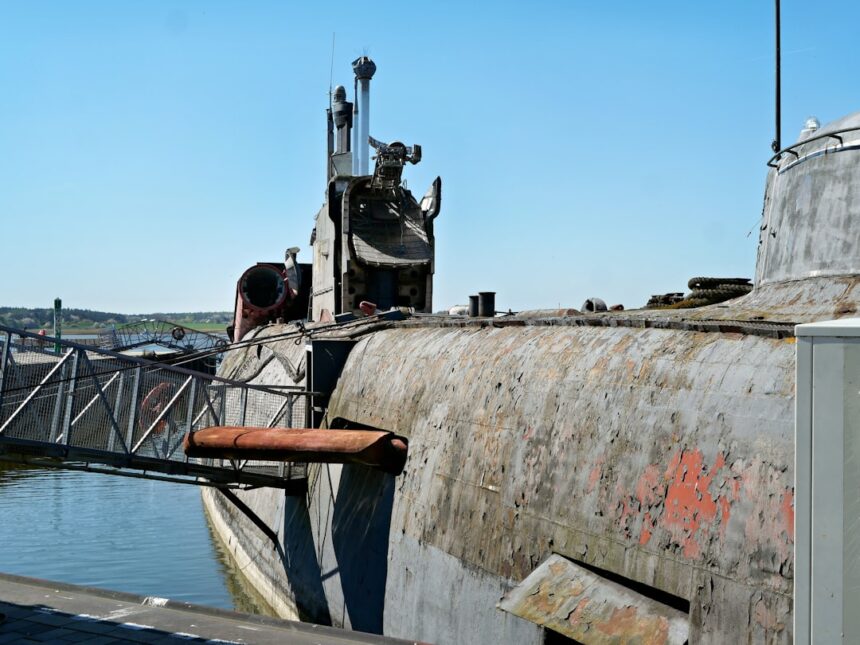
- The “Hump” Mystery: Perhaps the most enduring image of the Victor III is the prominent fin-like structure on its stern, often referred to as the “hump.” For years, Western analysts speculated intensely about its purpose. Initial theories ranged from a towed array sonar deployment mechanism to a special propulsor designed for ultra-quiet operation. It was eventually confirmed to be a housing for a highly advanced towed array sonar system (Skate Tail/Pelamida), significantly extending the submarine’s passive acoustic detection range. This innovation, while adding to the submarine’s recognizable silhouette, provided a critical tactical advantage.
- Further Noise Reduction: The Victor III incorporated further refinements in noise reduction, making it significantly quieter than its predecessors. These efforts included improved machinery mounting, advanced anechoic tiles on the hull, and propeller design modifications.
- Cruise Missile Capability: A significant upgrade was the ability to fire SS-N-21 Sampson (Novator RK-55 Granat) long-range land-attack cruise missiles from its torpedo tubes. This transformed the Victor III from a purely anti-ship/anti-submarine platform into a potential strategic asset, capable of striking land targets from submerged positions. This versatility made it an even more potent threat.
Operational History and Strategic Impact

The Victor-class submarines were the workhorses of the Soviet Northern and Pacific Fleets for decades, undertaking numerous patrols and participating in exercises that tested the limits of both their capabilities and the patience of Western naval forces.
Cold War Engagements
Throughout the Cold War, Victor-class submarines were frequently encountered by NATO forces, particularly in the North Atlantic and Pacific Oceans. Their primary missions included:
- Anti-Carrier Operations: To target and neutralize NATO aircraft carrier battle groups, a cornerstone of Western naval power.
- Anti-Submarine Warfare (ASW): To hunt and destroy enemy submarines, particularly ballistic missile submarines (SSBNs) and attack submarines (SSNs).
- Intelligence Gathering: To monitor Western naval activities and acoustic signatures.
- Covert Operations: The inherent stealth of the Victor III made it suitable for covert patrols and special operations.
The “Whiskey on the Rocks” Incident (Victor I)
While not involving a Victor-class submarine directly in a combat scenario, one incident involving a Soviet submarine highlights the overarching context of Cold War undersea operations. The “Whiskey on the Rocks” incident in 1981, wherein a Soviet Whiskey-class submarine ran aground in Swedish territorial waters, underscored the constant probing and surveillance activities undertaken by Soviet submarines. While the Victor-class were more advanced and less prone to such blatant navigational errors, the incident serves as a stark reminder of the close operational proximity and the ever-present tension.
Technological Espionage and Countermeasures
The Victor-class, particularly the Victor III with its distinctive “hump,” became a focus of intense interest for Western intelligence agencies. Efforts to understand its capabilities, especially its acoustic signature and sonar performance, were paramount within organizations like the US Office of Naval Intelligence and the British Defence Intelligence.
- SOSUS Network: The Victor-class submarines were persistently tracked by the US Navy’s Sound Surveillance System (SOSUS) network, a chain of underwater listening posts designed to detect and localize Soviet submarines. The improvements in Victor-class stealth presented a continuous challenge to this network.
- Acoustic Signatures: Western ASW forces continually sought to identify and categorize the unique acoustic “signature” of each Victor-class submarine, a critical component of their tracking efforts. The quieter they became, the harder this task became.
Sunset of an Era: Decommissioning and Legacy

With the dissolution of the Soviet Union in 1991 and the subsequent economic challenges faced by the Russian Federation, the operational tempo of the Victor-class submarines significantly decreased. Their aging reactors and systems, coupled with high maintenance costs, led to a gradual decommissioning process.
Retirement and Scrapping
The majority of Victor-class submarines were decommissioned throughout the 1990s and early 2000s. These vessels, once formidable symbols of Soviet naval power, faced the difficult and expensive process of reactor defueling and environmental remediation.
- Environmental Concerns: The safe disposal of nuclear-powered submarines often presents substantial environmental challenges, requiring specialized facilities and procedures to manage radioactive waste.
- International Cooperation: In some instances, international cooperation and funding were essential for the safe and environmentally sound dismantling of these Cold War relics.
Lasting Influence
Despite their eventual retirement, the Victor-class submarines left an indelible mark on naval history and submarine development.
- Influencing Successor Designs: The design philosophies and technological innovations pioneered in the Victor-class, particularly regarding acoustic stealth and advanced sonar systems, directly influenced subsequent Soviet and Russian submarine designs, such as the Akula-class (Project 971 “Shchuka-B”). The Akula, a more advanced hunter-killer, built upon the foundation laid by the Victors.
- Cold War Stalemate: The Victor-class played a crucial role in maintaining the Cold War’s underwater “balance of terror.” Their ability to threaten NATO’s naval forces forced Western powers to continuously invest in and refine their own anti-submarine warfare capabilities, leading to an ever-evolving game of cat and mouse beneath the waves.
- Enduring Symbol of Soviet Naval Engineering: For naval enthusiasts and historians, the Victor-class remains a compelling example of Soviet engineering prowess, demonstrating their capacity to produce high-performance, technologically sophisticated weaponry despite facing significant geopolitical and economic constraints. These vessels were not merely machines; they were silent giants, patrolling the depths, embodiments of a superpower’s global reach and its unyielding commitment to naval parity. Their legacy continues to inform our understanding of the Cold War’s complex naval strategies and technological arms races, reminding us of the hidden struggles that shaped the modern world.
WATCH THIS 🔐 The Submarine That Broke The Cold War | Naval Intelligence Espionage | SOSUS Compromise
FAQs
What are Victor class submarines?
Victor class submarines are a series of nuclear-powered attack submarines developed and operated by the Soviet Union during the Cold War. They were designed primarily for anti-submarine warfare and reconnaissance missions.
Why are they called “quieting” Victor class submarines?
The term “quieting” refers to the Soviet efforts to reduce the noise levels produced by Victor class submarines. This was achieved through design improvements and advanced technologies aimed at making the submarines less detectable by enemy sonar.
How many Victor class submarines were built?
There were three main variants of the Victor class: Victor I, Victor II, and Victor III. In total, around 50 Victor class submarines were constructed between the late 1960s and the early 1990s.
What were the main differences between the Victor I, II, and III classes?
The Victor I was the initial design with basic noise reduction features. Victor II introduced improved quieting technologies and better sonar systems. Victor III featured the most advanced quieting measures, enhanced weapon systems, and improved hydrodynamic design for reduced noise and better performance.
What role did Victor class submarines play in the Soviet Navy?
Victor class submarines served as key components of the Soviet Navy’s attack submarine fleet. They were tasked with hunting enemy submarines and surface ships, gathering intelligence, and protecting Soviet ballistic missile submarines.
Are Victor class submarines still in service today?
Most Victor class submarines have been retired or decommissioned following the end of the Cold War. Some may still be in limited service or used for training purposes, but they have largely been replaced by more modern Russian submarine classes.
What made the Victor class submarines significant in naval history?
The Victor class represented a significant advancement in Soviet submarine technology, particularly in noise reduction and stealth capabilities. Their development marked a shift towards quieter, more survivable attack submarines capable of challenging Western naval forces.
What types of weapons did Victor class submarines carry?
Victor class submarines were equipped with torpedoes and anti-ship missiles. They could engage enemy submarines and surface vessels using a variety of torpedo types and, in later variants, cruise missiles.
How did the quieting technologies on Victor class submarines compare to Western submarines?
While initially noisier than their Western counterparts, the Soviet Union made significant progress with the Victor II and III classes in reducing acoustic signatures. By the time of the Victor III, their quieting technologies were competitive with contemporary Western attack submarines.
What materials and design features contributed to the quieting of Victor class submarines?
The quieting improvements included the use of anechoic tiles on the hull, improved propeller designs to reduce cavitation, vibration isolation for onboard machinery, and streamlined hull shapes to minimize hydrodynamic noise.