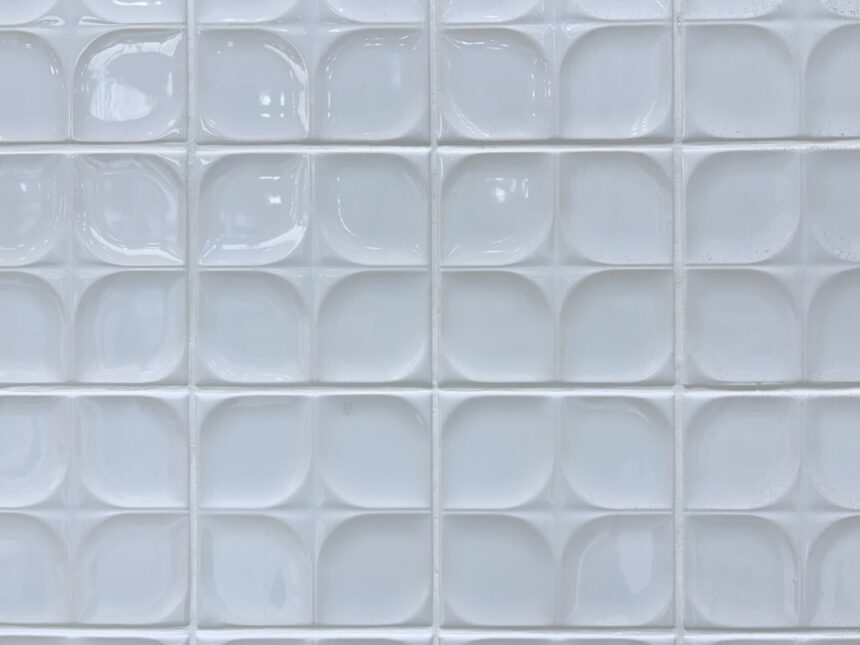
The development of naval technology in the 20th century was a relentless arms race, a silent struggle waged beneath the waves. For Soviet submarine designers, the quest for stealth was paramount. The enemy’s sonar, a persistent ear listening in the abyss, was a constant threat. To counter this, Soviet engineers turned to an unlikely material, a substance that would transform their underwater vessels from detectable behemoths into phantoms of the deep: anechoic tiles. These remarkable components, often overlooked in the grander narratives of submarine warfare, were crucial in shaping the operational capabilities and strategic effectiveness of the Soviet submarine fleet.
Early Acoustic Detection Methods
Before the widespread adoption of anechoic tiles, submarines were, in essence, noisy vessels. Their very movement through the water generated a symphony of sounds: the hum of machinery, the cavitation from propellers, the groaning of the hull under pressure, and even the acoustic leakage from within. These sounds, though subtle to the human ear, were amplified and analyzed by increasingly sophisticated sonar systems employed by potential adversaries. Early sonar relied on active pinging – sending out sound waves and listening for their echoes. While effective, it also revealed the sonar operator’s own position. Passive sonar, which listened for ambient sounds, became the primary tool for detecting submarines, and the louder a submarine was, the easier it was to find. Imagine trying to whisper in a crowded room; the task becomes infinitely harder. The Soviet Union, keenly aware of this vulnerability, sought ways to silence their underwater predators.
The Imperative of Surprise
In the context of Cold War naval strategy, the element of surprise held immense tactical and strategic value. A submarine that could approach undetected could launch a devastating attack, disrupt enemy supply lines, or conduct intelligence gathering with relative impunity. Conversely, a detected submarine was a vulnerable target, often forced to evade rather than engage. The Soviet Union, with its vast coastline and ambitions for global power projection, recognized that a silent submarine fleet was a formidable deterrent and a potent offensive weapon. This imperative for surprise fueled a deep dive into acoustic countermeasures, a scientific endeavor to make their submarines disappear into the oceanic soundscape.
Anechoic tiles played a crucial role in the design of Soviet submarines, significantly enhancing their stealth capabilities by reducing sonar detection. For a deeper understanding of the technological advancements in submarine design during the Cold War, you can explore a related article that discusses various innovations and their implications on naval warfare. This article provides insights into how these developments shaped modern submarine technology. For more information, visit this link.
The Science of Sound Absorption
Understanding Sound Propagation in Water
Water, unlike air, is a much more efficient medium for sound transmission. Sound travels approximately four times faster in water than in air, and its energy dissipates far more slowly. This makes the underwater environment a challenging acoustic battlefield. For sonar systems, the ocean acts as a vast amplifier, allowing faint sounds to travel considerable distances. The complexity of the underwater soundscape, with its layers of temperature, salinity, and pressure, further complicates detection mechanisms, but also provides a framework for acoustic camouflage. Understanding these variables was the crucial first step for Soviet scientists.
The Principle of Anechoic Materials
Anechoic literally means “without echo.” Anechoic materials are designed to absorb sound energy, preventing it from reflecting back. In the context of submarines, this meant creating a surface that would swallow the sound waves emanating from the hull and internal machinery, rather than allowing them to bounce off and be detected by enemy sonar. This is akin to covering a noisy engine with thick, sound-dampening insulation. The goal was to reduce the submarine’s acoustic signature to a level where it would be indistinguishable from the ambient noise of the ocean.
Cavitation and Its Acoustic Signature
One of the most significant sources of underwater noise from a submarine is cavitation. This occurs when the propeller blades move through the water at high speed, creating low-pressure areas that form tiny bubbles. When these bubbles collapse, they generate shock waves and a characteristic popping sound, a sonic “tell” that can be detected by sonar. Reducing cavitation noise was a primary target for anechoic tile development.
Hull Vibrations and Machinery Noise
Beyond cavitation, the submarine’s hull itself, subjected to the immense pressure of the deep, can vibrate and emit noise. Internal machinery, such as pumps, turbines, and generators, also contribute to the overall acoustic footprint. Anechoic tiles needed to address both the transmission of internal noise outwards and the reflection of external sonar pings inwards.
Soviet Innovation in Anechoic Tile Design

Early Experiments and Material Development
The Soviet Union began exploring anechoic materials for naval applications relatively early. Initially, this involved rubber-based compounds, known for their inherent sound-absorbing properties. These early tiles were often thick and heavy, presenting engineering challenges in terms of application and durability. However, they represented a significant step forward, offering a tangible way to reduce acoustic reflections. Imagine applying thick felt to a reverberating wall – the effect is similar, but the underwater environment demands a far more sophisticated and robust solution.
The “Sormovich” Type Tiles
Among the most notable Soviet contributions were the “Sormovich” type tiles. These were a sophisticated development, often consisting of a complex multi-layered structure. A typical design might feature a porous rubber or composite outer layer designed to absorb sound, backed by a layer of honeycomb or other cellular structure to further dissipate acoustic energy. The precise composition and arrangement of these layers were often highly classified, representing significant engineering and material science breakthroughs.
Porous Structure for Sound Absorption
The porosity of the outer layer was critical. Sound waves entering the pores would be converted into heat through friction, effectively converting acoustic energy into thermal energy. This is a fundamental principle of acoustic absorption. The design of these pores, their size, distribution, and depth, was meticulously engineered to be most effective against the specific frequencies used by naval sonar.
Internal Damping Layers
Beneath the porous surface, internal damping layers played a crucial role. These layers were designed to absorb any sound energy that managed to penetrate the outer layer, preventing it from reaching the hull and being re-radiated outwards. They also helped to dampen vibrations originating from the submarine’s structure.
Application and Integration Challenges
Applying these tiles to a submarine hull was a complex undertaking. The curved surfaces of a submarine require precise fitting and bonding to ensure a continuous acoustic barrier. The tiles had to withstand the extreme pressures of deep dives, the corrosive effects of saltwater, and the potential for impact damage. The method of attachment, whether adhesive or mechanical, was as critical as the tile material itself. The integrity of the tile coverage was paramount; even a small gap could act as an acoustic doorway for enemy sonar.
Impact on Soviet Submarine Operations

The “Whispering Giant” Era
The introduction of effective anechoic tiles ushered in an era where Soviet submarines became significantly quieter. This dramatically reduced their detectability by passive sonar, transforming them from readily locatable targets into elusive predators. Submarines like the Akula class and the Sierra class, equipped with advanced anechoic coatings, earned a reputation for their stealth. This made them a far more potent threat, capable of operating closer to enemy shores and conducting reconnaissance missions with a lower risk of exposure. The submarines essentially learned to blend into the background noise of the ocean, becoming auditory ghosts.
Enhanced Tactical Prowess
The improved stealth provided Soviet submarine commanders with greater tactical flexibility. They could penetrate contested waters, disrupt enemy naval formations, and pose a significant threat to aircraft carriers and other high-value targets without immediate fear of detection. This forced opposing navies to invest heavily in more advanced sonar systems and anti-submarine warfare (ASW) capabilities, escalating the technological arms race. The ability to remain undetected for extended periods allowed for more strategic positioning, enabling surprise attacks and prolonged surveillance.
The Threat to Naval Power Projection
For nations reliant on naval power projection, such as the United States, the silent Soviet submarines represented a significant strategic challenge. The possibility of unseen submarines lurking near vital shipping lanes or naval bases created a climate of constant apprehension. This led to the development of specialized ASW strategies and technologies specifically designed to counter these stealthy underwater platforms.
Intelligence Gathering and Espionage
Beyond offensive capabilities, anechoic tiles also enhanced the effectiveness of Soviet submarines in intelligence gathering. Their ability to operate undetected allowed them to approach closely to enemy naval exercises, gather acoustic intelligence on other vessels, and conduct clandestine surveillance operations with a much lower risk of detection. This intelligence was invaluable for strategic planning and understanding the capabilities of potential adversaries.
The innovative use of anechoic tiles in Soviet submarine design significantly enhanced stealth capabilities, allowing these vessels to evade detection by sonar systems. For a deeper understanding of the technological advancements in military submarines, you can explore a related article that delves into the evolution of underwater warfare strategies and the role of acoustic materials. This insightful piece can be found at In The War Room, where you will discover more about the intricate balance between technology and tactics in naval operations.
Legacy and Evolution of Anechoic Technology
| Metric | Description | Typical Value / Range | Notes |
|---|---|---|---|
| Material Composition | Type of rubber or synthetic polymer used in tiles | Neoprene-based or synthetic rubber composites | Formulated for sound absorption and durability in seawater |
| Tile Thickness | Thickness of anechoic tiles applied to hull | 10-30 mm | Varies by submarine class and acoustic requirements |
| Tile Size | Dimensions of individual anechoic tiles | Approximately 300 mm x 300 mm | Designed for ease of installation and coverage |
| Sound Absorption Frequency Range | Frequency range over which tiles effectively absorb sonar pings | 500 Hz to 10 kHz | Optimized to reduce active sonar detection |
| Reduction in Acoustic Signature | Estimated decrease in sonar detectability due to tiles | 5-15 dB | Depends on tile quality and hull coverage |
| Adhesion Method | Technique used to attach tiles to submarine hull | Epoxy resin or specialized adhesives | Must withstand high pressure and seawater exposure |
| Operational Depth Impact | Effect of water pressure on tile integrity | Effective up to 300-600 meters | Tiles designed to resist compression and maintain performance |
| Maintenance Interval | Recommended time between tile inspections or replacements | 5-10 years | Depends on operational conditions and wear |
The Never-Ending Arms Race
The success of anechoic tiles in Soviet submarine design did not end the quest for stealth; it merely shifted the goalposts. As Soviet submarines became quieter, anti-submarine warfare forces responded by developing new detection methods, including improved sonar processing, towed arrays, and magnetic anomaly detectors. This ongoing cycle of innovation and counter-innovation is a hallmark of military technology development. The development of anechoic tiles was not a final solution, but a crucial chapter in the ongoing narrative of acoustic warfare.
Modern Naval Applications
The principles pioneered by Soviet engineers in anechoic tile technology are still central to modern submarine design across the globe. While specific materials and designs have evolved, the fundamental goal remains the same: to minimize the acoustic signature of underwater vessels. Today’s advanced anechoic coatings are often composite materials, precisely engineered to absorb and dissipate a wider range of frequencies, making submarines even harder to detect. The quest for silence is a continuous process, with research and development constantly pushing the boundaries of what is acoustically possible.
Advanced Composite Materials
Modern anechoic tiles often incorporate advanced composite materials, allowing for thinner, lighter, and more durable coatings. These materials can be engineered with specific acoustic properties, targeting particular sonar frequencies and environmental conditions. The evolution has moved from simple rubbers to complex, multi-component systems.
Mathematical Modeling and Simulation
The design and application of anechoic tiles today rely heavily on advanced mathematical modeling and computer simulations. These tools allow engineers to predict the acoustic behavior of a submarine hull with and without the tiles, optimizing the design for maximum stealth. This analytical approach, born from the early empirical efforts, allows for a more precise and efficient development cycle.
The Enduring Significance of Silent Submarines
The story of anechoic tiles in Soviet submarine design is a testament to the ingenuity and strategic foresight of Soviet engineers. They recognized a critical vulnerability and developed a sophisticated solution that had a profound impact on naval warfare. These silent hunters, cloaked in layers of sound-absorbing material, fundamentally altered the balance of power beneath the waves and continue to inspire the pursuit of ultimate stealth in maritime operations. The echoes of their silent patrols resonate through the history of submarine warfare, a reminder that sometimes, the most potent weapons are the ones that are never heard.

WATCH NOW ▶️ WARNING: The $17M Deal That Blinded The US Navy
FAQs
What are anechoic tiles used for in Soviet submarine design?
Anechoic tiles are rubber or synthetic polymer tiles applied to the hull of Soviet submarines to absorb sonar waves, reducing the submarine’s acoustic signature and making it harder to detect by enemy sonar systems.
When did the Soviet Navy start using anechoic tiles on their submarines?
The Soviet Navy began experimenting with anechoic tiles in the late 1960s and early 1970s, with widespread implementation on various classes of submarines during the 1970s and 1980s.
How do anechoic tiles improve a submarine’s stealth capabilities?
Anechoic tiles absorb and scatter active sonar pulses, minimizing the amount of sound reflected back to the sonar source. This reduces the submarine’s detectability and helps it evade enemy anti-submarine warfare efforts.
Were Soviet anechoic tiles different from those used by other navies?
While the basic principle of anechoic tiles was similar worldwide, Soviet designs often featured unique materials and tile patterns tailored to their specific submarine classes and acoustic environments, reflecting their own research and technological capabilities.
Do modern submarines still use anechoic tiles?
Yes, modern submarines from many navies, including Russia, continue to use advanced anechoic tiles as a critical component of their stealth technology to reduce sonar detection and improve survivability underwater.