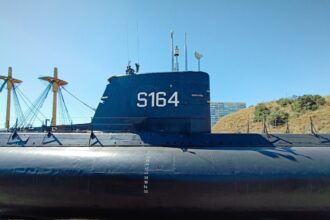
To understand the critical role of structure-borne noise isolation in submarine operations, one must first appreciate the environment in which these vessels operate. Submarines are the silent hunters of the ocean, their operational success hinges on remaining undetected. The very act of propulsion, the humming of machinery, the flow of water, and even the crew’s movements generate vibrations. These vibrations, if not meticulously controlled, can radiate outwards as acoustic signals, painting a clear picture of the submarine’s presence to its adversaries. Structure-borne noise is the invisible ink of the submarine’s operational footprint, and its isolation is paramount to maintaining true stealth.
Submarines are complex, integrated systems where countless components work in concert. Each piece of equipment, from the main propulsion shaft and its associated gearbox to the auxiliary pumps circulating coolant, is a potential source of vibration. These vibrations, often imperceptible to the human ear within the hull, travel through the metallic structure of the submarine like ripples on a pond.
Propulsion Systems: The Heartbeat of the Submarine
The primary source of structure-borne noise is invariably the propulsion system. Modern submarines typically employ nuclear reactors powering steam turbines, which in turn drive generators or directly couple to reduction gears and propeller shafts.
Gearbox Dynamics and Noise Generation
Gearboxes, the mechanical nexus between turbines and shafts, are particularly notorious for generating noise. Imperfections in gear tooth profiles, backlash (the clearance between meshing teeth), and the high rotational speeds can lead to impact forces and resonant vibrations. These vibrations are transmitted through the gearbox mounts and directly into the submarine’s hull and internal structure.
Shaft Alignment and Bearing Integrity
Misalignment of propeller shafts, even by fractions of a millimeter, can induce significant bending moments and radial forces. These forces stress the bearings, leading to increased friction and vibration. Worn or damaged bearings are a persistent concern, acting as miniature sonic beacons that broadcast the submarine’s motion.
Auxiliary Machinery: The Supporting Cast
Beyond the main propulsion, a vast array of auxiliary machinery contributes to the overall acoustic signature. These systems are essential for life support, power generation, and operational functions, but they cannot be ignored in the pursuit of silence.
Pumps and Compressors: The Unseen Buzz
Water circulation pumps, bilge pumps, cooling pumps, and air compressors all operate with rotating components and internal fluid dynamics that create vibrations. The cavitation phenomenon, where vapor bubbles form and collapse within a liquid due to pressure fluctuations, is a particularly insidious source of noise from pumps.
HVAC Systems: Breathing Life, Radiating Sound
The Heating, Ventilation, and Air Conditioning (HVAC) systems, crucial for crew comfort and equipment performance, also generate structure-borne noise. Fans, motors, and the airflow itself create vibrations that can propagate through ductwork and structural members.
Control Surfaces and Hull Appendages: Interacting with the Flow
Control surfaces, such as fins and rudders, and other hull appendages, like sonar domes and fairings, interact with the surrounding water. The hydrodynamic forces generated can induce vibrations in these components, which then transmit into the hull.
In the realm of submarine design, effective isolation of structure-borne noise is crucial for stealth and operational efficiency. A related article that delves into innovative techniques and materials used for noise isolation in submarines can be found at this link: Structure Borne Noise Isolation in Submarines. This resource provides valuable insights into the challenges faced by naval engineers and the advancements being made to enhance the acoustic stealth of underwater vessels.
The Principles of Vibration Isolation
The fundamental goal of structure-borne noise isolation is to disconnect the vibration source from the structure that transmits it. This is achieved by introducing elements that absorb or dissipate vibrational energy before it can propagate extensively. Think of it like placing a soft cushion between a loud speaker and a wooden table; the cushion dampens the sound before it can resonate through the table.
Elastomeric Mounts: The Shock Absorbers
Elastomeric mounts are the workhorses of vibration isolation in submarines. These components, typically made of rubber compounds or synthetic polymers, are designed to deform elastically under load, absorbing impact and continuous vibrations.
Material Properties: The Key to Performance
The effectiveness of an elastomeric mount is dictated by its material properties. Factors such as hardness (durometer), damping coefficient, and resistance to environmental degradation (oil, ozone, temperature) are critical design considerations. A well-chosen elastomer will effectively isolate a specific frequency range without becoming prematurely worn or brittle.
Load Bearing Capacity and Stiffness
Each mount must be sized to handle the static and dynamic loads of the equipment it supports. Too soft a mount can lead to excessive displacement and contact with adjacent structures, while too stiff a mount will not provide adequate isolation. The stiffness of the mount dictates its natural frequency; the goal is to have the mount’s natural frequency significantly lower than the operating frequencies of the equipment.
Inertial Mass and Decoupling: The Strategy of Separation
Beyond direct isolation, submarines employ strategies of inertial mass and decoupling to further reduce noise transmission.
Inertial Mass: The Unwilling Mover
By mounting heavy equipment onto a substantial, isolated base, a large inertial mass is created. This mass resists acceleration, meaning it requires more force to vibrate. If this base is itself well-isolated from the hull, the vibrations from the equipment will be largely contained within the base.
Decoupling Techniques: Creating the Gap
Decoupling involves physically separating vibrating components from the main structure. This can be achieved through flexible connections, such as hoses for fluid lines, and by ensuring adequate gaps are maintained between vibrating equipment and static structures.
Advanced Isolation Technologies
Passive isolation methods, while effective, have limitations. As operational demands push towards lower acoustic signatures, more sophisticated techniques are employed.
Active Noise Control: The Electronic Countermeasure
Active Noise Control (ANC) is a more recent and advanced approach to noise reduction. Unlike passive methods that aim to block or absorb sound, ANC actively generates anti-noise to cancel out the unwanted sound.
The Principle of Destructive Interference
ANC systems rely on the principle of destructive interference. Microphones strategically placed near the noise source detect the vibrations. This information is fed into a digital signal processor which generates an inverse sound wave – a wave that is identical in amplitude but opposite in phase. This anti-noise is then broadcast through small speakers, effectively canceling out the original noise.
Challenges in Submarine Applications
Implementing ANC in a submarine environment presents unique challenges. The complex acoustic field within the hull, the dynamic motion of the vessel, and the need for robust, reliable systems all contribute to the difficulty. However, successful applications have demonstrated significant reductions in specific noise frequencies.
Resilient Mounts and Foundations: Layered Defense
In critical areas, submarines utilize layered isolation systems. This involves mounting equipment on resilient foundations, which are themselves mounted on elastomeric isolators.
Multi-Stage Isolation: The Sandwich Effect
This multi-stage isolation acts like a series of shock absorbers in sequence. Vibrations are first attenuated by the primary resilient foundation, and then further reduced by the secondary elastomeric mounts. This layered approach is particularly effective against low-frequency vibrations, which are notoriously difficult to isolate.
Damping Materials: Absorbing Energy Within the Structure
Beyond isolating entire components, damping materials can be applied directly to structural elements to absorb and dissipate vibrational energy. These materials, often viscoelastic in nature, convert mechanical vibration into heat.
Design and Implementation Considerations
The effective implementation of structure-borne noise isolation is not an afterthought; it is a core consideration from the earliest stages of submarine design.
Material Selection and Durability
The choice of isolation materials is critical, not only for their acoustic properties but also for their long-term durability in the harsh marine environment. Resistance to corrosion, temperature extremes, and the effects of operational fluids are paramount.
Environmental Factors: Saltwater, Pressure, and Temperature
Submarines operate under extreme pressure and varying temperatures, and are constantly exposed to corrosive saltwater. Isolation materials must be able to withstand these conditions without degrading, which could compromise their effectiveness and lead to premature failure.
Maintenance and Replacement Strategies
Regular inspection and potential replacement of isolation components are essential. A proactive maintenance schedule ensures that the acoustic stealth of the submarine is not compromised by aging or failing isolators.
Structural Integration and Space Constraints
Integrating isolation systems into the complex and often cramped internal structure of a submarine requires careful engineering. Maximizing isolation effectiveness while minimizing the impact on available space and access for maintenance is a constant balancing act.
Rigging and Installation Procedures
The precise rigging and installation of isolated equipment are crucial. Improper alignment or attachment can negate the benefits of the isolation system. Detailed procedures and skilled technicians are indispensable.
Access for Maintenance and Inspection
It is vital that isolated equipment and their mounts remain accessible for inspection and maintenance. Enclosing these critical systems without providing adequate access would create a significant operational impediment.
In the pursuit of enhancing the stealth capabilities of submarines, effective structure borne noise isolation has become a critical focus for naval engineers. A related article discusses innovative techniques and materials that are being employed to minimize noise transmission within submarine hulls, ultimately improving their operational effectiveness. For more insights on this topic, you can read the article on naval advancements that delve into the latest developments in submarine technology.
The Ongoing Battle for Silence
| Parameter | Typical Value | Unit | Description |
|---|---|---|---|
| Transmission Loss (TL) | 40 – 70 | dB | Reduction of structure-borne noise through isolation materials |
| Natural Frequency of Isolation Mounts | 5 – 15 | Hz | Frequency range to avoid resonance and maximize isolation |
| Isolation Efficiency | 80 – 95 | % | Percentage of vibration energy reduced by isolation system |
| Material Damping Factor | 0.05 – 0.15 | Dimensionless | Damping capacity of isolation materials used in submarines |
| Mass of Isolated Equipment | 500 – 2000 | kg | Typical mass range of machinery isolated to reduce noise |
| Vibration Frequency Range | 10 – 1000 | Hz | Frequency range of structure-borne noise targeted for isolation |
| Sound Pressure Level Reduction | 20 – 50 | dB | Reduction in radiated noise due to isolation measures |
The pursuit of ever-lower acoustic signatures is a continuous evolutionary process in submarine warfare. As adversaries develop more sophisticated detection capabilities, so too must the technologies and strategies for submarine stealth evolve. Structure-borne noise isolation remains at the forefront of this ongoing battle for acoustic superiority.
Advances in Material Science
Ongoing research in material science promises new and improved isolation materials with enhanced damping properties, greater durability, and more tailored performance characteristics. This includes the development of advanced polymers and composites specifically designed for marine applications.
Metamaterials and Acoustic Cloaking: The Frontiers of Research
While still largely in the research and development phase, concepts like acoustic metamaterials and active acoustic cloaking hold the potential to revolutionize structure-borne noise isolation by manipulating sound waves in unprecedented ways.
Computational Modeling and Simulation
The use of advanced computational modeling and simulation tools allows engineers to predict the acoustic performance of isolation systems with greater accuracy. This enables optimization of designs before physical implementation, saving time and resources.
Finite Element Analysis (FEA) for Vibration Prediction
FEA is a powerful tool used to analyze the mechanical behavior of structures and predict how vibrations will propagate. By modeling the submarine’s hull and the interfaces with isolation systems, engineers can identify potential weaknesses and areas for improvement.
Integration with Hull Design
Future submarine designs are likely to see even tighter integration of structure-borne noise isolation principles from the very initial hull geometry. This holistic approach aims to create a vessel that is inherently quieter by design, rather than relying solely on add-on isolation systems.
In conclusion, structure-borne noise isolation is not merely a technical detail in submarine design; it is the invisible shield that allows these silent predators to operate with impunity. It is a discipline that demands a deep understanding of physics, material science, and intricate engineering, all in service of the ultimate goal: silence. The constant innovation in this field ensures that submarines will continue to be the masters of their unseen domain.

WATCH NOW ▶️ WARNING: The $17M Deal That Blinded The US Navy
FAQs
What is structure borne noise in submarines?
Structure borne noise in submarines refers to vibrations and sound waves that travel through the submarine’s physical structure, such as the hull and internal components, rather than through the water. This type of noise can be generated by machinery, propulsion systems, or onboard equipment.
Why is isolating structure borne noise important in submarines?
Isolating structure borne noise is crucial because it helps reduce the submarine’s acoustic signature, making it less detectable by sonar and other underwater surveillance systems. This enhances stealth capabilities and operational effectiveness.
What methods are used to isolate structure borne noise in submarines?
Common methods include using vibration isolators, resilient mounts, damping materials, and specialized hull designs. These techniques help absorb or block vibrations, preventing them from traveling through the submarine’s structure and radiating into the water.
How does structure borne noise affect submarine crew and equipment?
Excessive structure borne noise can lead to crew discomfort, fatigue, and hearing damage over time. It can also cause premature wear or malfunction of sensitive onboard equipment due to continuous vibrations.
Are there international standards for structure borne noise isolation in submarines?
Yes, various naval and defense organizations have established guidelines and standards for noise reduction in submarines. These standards help ensure that submarines meet specific acoustic performance criteria to maintain stealth and operational safety.