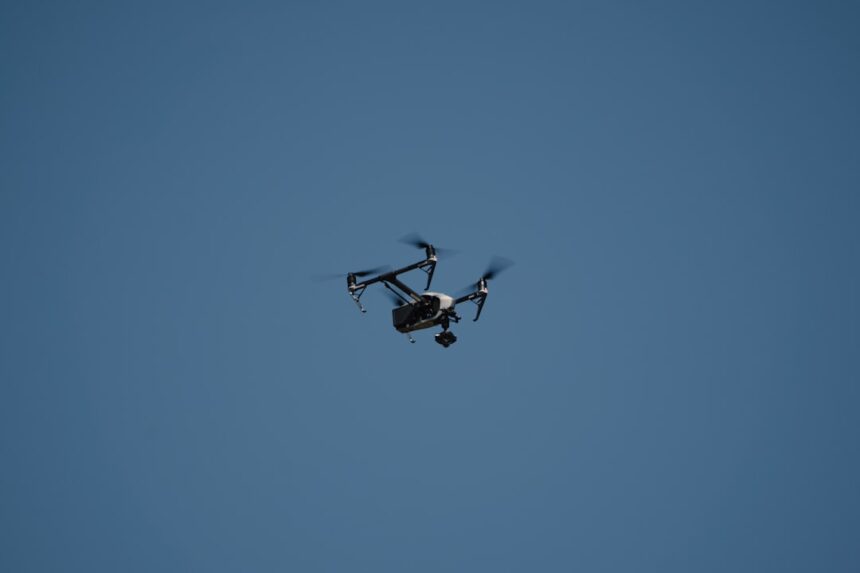
The procurement of advanced drone technology, often referred to in operational circles as “Shadow Spread,” is a complex and often contentious undertaking. Securing adequate funding for these vital assets requires navigating a labyrinth of budgetary processes, technical justifications, and strategic imperatives. This article will explore the multifaceted challenges and strategies involved in safeguarding financial resources for drone procurement, ensuring that these increasingly indispensable tools are available when and where they are needed.
The term “Shadow Spread” is not a formally codified designation within defense or homeland security budgets. Instead, it functions as an informal nomenclature used to describe the often dispersed and sometimes opaque allocation of funds dedicated to the acquisition, development, and integration of unmanned aerial systems (UAS), commonly known as drones. This technological domain is characterized by rapid innovation, a wide spectrum of applications – from reconnaissance and surveillance to strike capabilities and logistical support – and an ever-increasing reliance on them across various sectors. Consequently, the financial requirements for maintaining and expanding a robust drone capability are substantial and require a nuanced approach to budgeting and argumentation.
The Strategic Imperative for Drone Capabilities
Why Drones Are More Than Just Flying Cameras
The strategic importance of drones cannot be overstated. They offer a persistent, often less risky, and sometimes more cost-effective alternative to manned platforms for a multitude of missions. Their ability to operate in denied or dangerous environments allows for intelligence gathering, target reconnaissance, and even direct kinetic engagement without exposing human lives to immediate peril. This has made them a cornerstone of modern military and security operations, as well as a growing asset in civilian applications like disaster response, infrastructure inspection, and public safety. Ignorance of their strategic value is a costly oversight.
The Rapid Pace of Technological Advancement and its Financial Implications
The drone market is a high-stakes arena of continuous development. New sensors, improved flight endurance, advanced artificial intelligence for autonomous operation, and novel payload integration are constantly emerging. This relentless pace of innovation means that procurement strategies must be agile enough to incorporate the latest advancements while simultaneously avoiding the trap of obsolescence. Securing funding for systems that may have a limited shelf-life in terms of cutting-edge capability requires careful forecasting and a willingness to invest in future-proofing. Failing to keep pace is akin to trying to outrun a wildfire with a unicycle.
The Diversification of Drone Applications and Stakeholder Interests
The utility of drones extends far beyond traditional military applications. They are employed by law enforcement for situational awareness during critical incidents, by agricultural enterprises for crop monitoring, by energy companies for pipeline inspection, and by emergency services for search and rescue operations. This diversification means that agencies and organizations beyond the defense sector have a vested interest in drone technology and its associated funding. Navigating the competing demands and priorities of these diverse stakeholders can be a significant challenge when advocating for procurement resources.
In recent discussions surrounding the procurement funding for shadow spread drones, an insightful article can be found that delves into the implications and strategic importance of such technology in modern warfare. This article highlights the necessity of investing in advanced drone capabilities to enhance operational efficiency and maintain a tactical edge. For further reading, you can explore the article at this link: In The War Room.
Navigating the Budgetary Labyrinth: Identifying and Securing Funding Streams
The process of securing funding for “Shadow Spread” is not a monolithic endeavor. It involves identifying and tapping into a variety of budgetary mechanisms, each with its own set of rules, timelines, and justification requirements. Understanding these different avenues is crucial for maximizing the chances of successful acquisition.
Direct Procurement Budgets: The Traditional Path
The most straightforward, yet often the most competitive, avenue for drone funding lies within direct procurement budgets. These are funds specifically allocated by government agencies, departments, or organizational units for the acquisition of materiel.
Program of Record Funding
For established military or security programs, drones may be integrated into a “program of record.” This designation signifies a long-term commitment to a particular capability, with associated funding cycles built into the overall program budget. Securing inclusion in a program of record requires demonstrating a clear, enduring need and aligning the drone acquisition with the program’s overarching objectives.
Special Project or Initiative Funding
Beyond established programs, there are often ad-hoc or special project funds available for emerging technologies or unique operational requirements. These funds are typically more discretionary and may be allocated through competitive proposals or direct appeals to senior leadership. Demonstrating innovation and addressing urgent, unmet needs are key to accessing these resources.
Research and Development (R&D) Transfer to Procurement
In some instances, funding initially allocated for research and development of drone technology can be transitioned to procurement once a technology matures and demonstrates readiness for operational deployment. This pathway requires a clear demonstration of the technology’s transition readiness and a compelling argument for its immediate operational utility.
Indirect and Supplementary Funding: Beyond the Obvious
While direct procurement budgets are essential, they are not the sole source of funds for drone acquisition. Creative approaches often involve leveraging indirect and supplementary funding streams.
Grant Programs and Public-Private Partnerships
Many governments and foundations offer grant programs to support the adoption of innovative technologies, including drones, for specific public benefit purposes such as disaster relief, environmental monitoring, or infrastructure modernization. Furthermore, public-private partnerships can facilitate joint funding initiatives where private industry contributes resources in exchange for access to technology, expertise, or data.
Inter-Agency Transfers and Reallocations
Occasionally, funds may be reallocated or transferred between government agencies or departments to address emergent requirements. This often happens when one agency has surplus funds that can be more effectively utilized by another for a critical procurement. Building strong inter-agency relationships and maintaining open lines of communication are vital for identifying these opportunities.
Leveraging Existing Infrastructure and Training Budgets
Sometimes, the cost of drone procurement can be partially offset by drawing upon existing budgets for related infrastructure or training. For example, funds earmarked for the development of ground control stations or for the training of pilots and maintenance personnel could be seen as integral to the overall “Shadow Spread” cost and thus not solely reliant on new procurement funds.
Building the Case: Justifying Drone Procurement Needs
The most crucial element in securing funding for “Shadow Spread” is the ability to articulate a compelling and evidence-based justification for the expenditure. This goes beyond simply stating a desire for more drones; it requires a deep understanding of operational requirements, cost-benefit analyses, and strategic alignment.
Operational Requirements and Capability Gaps
Quantifying the Need: Data-Driven Arguments
The foundation of any procurement justification lies in clearly defined operational requirements. This involves a thorough analysis of current mission needs, identifying existing capability gaps that drones can fill, and quantifying the impact of these gaps on mission success. This is not a matter of opinion, but of empirical evidence.
Mission Analysis and Threat Assessment
A rigorous analysis of existing and anticipated missions, coupled with an objective assessment of evolving threats, provides the context for drone requirements. Understanding the evolving threat landscape, whether it involves peer adversaries, non-state actors, or natural disasters, is paramount in demonstrating the necessity of advanced drone capabilities.
Performance Metrics and Operational Effectiveness
Justifications must be tied to measurable performance metrics. What specific improvements in intelligence gathering, target identification, response times, or personnel safety will the new drones deliver? Demonstrating a clear link between the investment and tangible improvements in operational effectiveness is non-negotiable.
Cost-Benefit Analysis: The Economic Equation
Beyond operational needs, a robust cost-benefit analysis is essential to demonstrate the economic prudence of drone procurement. This involves comparing the costs of acquiring and operating drones with the potential costs of not acquiring them or of using alternative, potentially less effective, methods.
Total Cost of Ownership (TCO)
A comprehensive TCO analysis should account for all expenses associated with drones, including acquisition, training, maintenance, spare parts, software updates, and eventual disposal. This holistic view provides a more realistic picture of the financial commitment.
Return on Investment (ROI) in Operational Terms
While not always directly quantifiable in monetary terms, the “return on investment” for drones can be demonstrated through increased mission success rates, reduced risk to personnel, enhanced situational awareness leading to better decision-making, and potentially faster response times in critical situations.
Strategic Alignment and Future Preparedness
Aligning Drone Procurement with Overarching Strategic Goals
Procurement justifications must demonstrate a clear alignment with broader organizational or national strategic objectives. How will the proposed drone capabilities contribute to achieving these overarching goals, whether it be maintaining regional stability, enhancing domestic security, or fostering technological innovation?
Future-Proofing and Adaptability
The dynamic nature of drone technology necessitates a focus on future-proofing. Justifications should highlight the adaptability of the proposed systems to evolving threats, new mission sets, and future technological upgrades. Investing in modular and scalable solutions can offer greater long-term value.
Risk Mitigation and Force Multiplier Effects
Drones can serve as significant risk mitigators, reducing exposure to hazardous environments for human operators. Furthermore, they often act as force multipliers, extending the reach and effectiveness of existing personnel and assets. Demonstrating these qualitative benefits can be persuasive in funding discussions.
Overcoming Obstacles: Challenges and Mitigation Strategies in Drone Procurement Funding
The path to securing funding for “Shadow Spread” is rarely smooth. Various obstacles can impede progress, requiring proactive strategies and adaptive approaches to overcome them.
Budgetary Constraints and Competing Priorities
The “Crowded Fiscal Space” Effect
Government and organizational budgets are finite and often heavily contested. Drone procurement must compete with numerous other essential demands, from personnel salaries and healthcare to other critical infrastructure projects and defense systems. This requires making a strong case for the relative importance of drone capabilities.
Demonstrating Cost-Effectiveness Compared to Alternatives
To stand out in a crowded fiscal space, it is imperative to clearly articulate how drone procurement offers a cost-effective solution compared to alternative methods. This could involve comparing the cost of a drone mission to a manned aircraft mission or the cost of drone-based infrastructure inspection to traditional, labor-intensive methods.
Bureaucratic Hurdles and Procurement Regulations
Navigating Complex Procurement Processes
The acquisition of defense and security materiel is often governed by stringent and complex regulations designed to ensure fairness, transparency, and accountability. Understanding and meticulously adhering to these regulations is essential to avoid delays or disqualification.
Streamlining Acquisition Pathways
Where possible, efforts should be made to identify and utilize streamlined acquisition pathways for emerging technologies like drones. This may involve advocating for policy changes or exploring exceptions to standard procedures when justified by the urgency or unique nature of the requirement.
Public Perception and Political Considerations
Addressing Public Concerns about Drone Use
The public’s perception of drone technology can be varied, with concerns ranging from privacy issues to the potential for misuse. Effectively communicating the benefits and responsible deployment of drones can be crucial in garnering public and political support for procurement funding.
Transparency and Accountability Frameworks
Establishing clear frameworks for transparency and accountability in drone operations can help to build public trust. This includes outlining oversight mechanisms, ethical guidelines for deployment, and robust data security protocols.
Technical Challenges and Interoperability
Ensuring Technological Maturity and Reliability
Investing in unproven or immature technologies carries inherent risks. Justifications for procurement funding must demonstrate that the proposed drone systems are technologically mature, reliable, and have undergone rigorous testing and validation.
The Importance of Interoperability Standards
In environments where multiple agencies or allied forces operate, interoperability between different drone systems and their associated command and control infrastructure is paramount. Funding justifications should address how new drone procurements will integrate seamlessly with existing systems and adhere to relevant interoperability standards.
The recent discussions surrounding shadow spread drone procurement funding have highlighted the need for innovative solutions in military technology. As defense budgets continue to evolve, understanding the implications of these funding mechanisms is crucial for effective resource allocation. For further insights on this topic, you can explore a related article that delves into the intricacies of defense spending and its impact on procurement strategies. Check it out here: related article.
The Future of Shadow Spread: Sustaining and Evolving Drone Procurement
| Metric | Description | Value | Unit | Year |
|---|---|---|---|---|
| Procurement Budget | Allocated funds for shadow spread drone acquisition | 150 | Million | 2024 |
| Number of Drones Procured | Total shadow spread drones purchased | 75 | Units | 2024 |
| Cost per Drone | Average cost for each shadow spread drone | 2 | Million | 2024 |
| R&D Funding | Research and development budget for shadow spread drone technology | 30 | Million | 2024 |
| Operational Deployment | Number of drones deployed in active missions | 50 | Units | 2024 |
| Maintenance Budget | Annual funding for drone maintenance and upgrades | 10 | Million | 2024 |
Securing funding for drone procurement is not a one-time event but an ongoing process. The “Shadow Spread” will continue to evolve as technology advances and operational needs change.
Embracing Innovation and Adaptive Procurement Models
The Need for Continuous Investment in R&D
To maintain a technological edge, continuous investment in research and development dedicated to drone technology is essential. This not only fuels future procurement but also drives innovation that can lead to more cost-effective and capable systems.
Agile Acquisition and Prototyping
Adopting agile acquisition models and embracing prototyping can allow for faster insertion of new technologies and iterative development, reducing the risk of investing in solutions that quickly become outdated.
Fostering Collaboration and Knowledge Sharing
Building Consortia and Partnerships
Collaborations between government agencies, industry partners, and research institutions are vital for sharing best practices, identifying emerging needs, and pooling resources for larger procurement initiatives.
International Cooperation and Standardization
In an increasingly interconnected world, international cooperation on drone technology can lead to shared developmental costs, enhanced interoperability between allied forces, and the establishment of common standards that benefit all participants.
Investing in the Human Element: Training and Expertise
The Critical Role of Skilled Personnel
Even the most advanced drone technology is only as effective as the people who operate and maintain it. Sustained investment in training programs for pilots, sensor operators, maintenance technicians, and data analysts is a critical component of “Shadow Spread” funding.
Cultivating a Culture of Continuous Learning
The rapid evolution of drone technology necessitates a culture of continuous learning and adaptation among personnel. Funding should support ongoing professional development and opportunities to acquire new skills as technologies advance.
Securing funding for “Shadow Spread” is a strategic imperative that requires a deep understanding of technological advancements, budgetary realities, and operational needs. By employing rigorous justification, exploring diverse funding avenues, and proactively addressing challenges, organizations can ensure that these vital unmanned systems are adequately resourced to meet the demands of an increasingly complex world. The effective funding of drone procurement is not merely about acquiring hardware; it is about investing in enhanced situational awareness, reduced risk, and ultimately, greater operational effectiveness across a wide spectrum of critical missions.
FAQs
What is shadow spread drone procurement funding?
Shadow spread drone procurement funding refers to the financial resources allocated, often indirectly or through less transparent channels, to acquire drones for various purposes such as surveillance, defense, or commercial use.
Why is shadow spread funding used in drone procurement?
Shadow spread funding may be used to bypass standard budgetary processes, maintain confidentiality, or expedite the acquisition of drones without attracting public or competitor attention.
Who typically manages shadow spread drone procurement funding?
Such funding is usually managed by government agencies, defense departments, or private organizations involved in drone technology, often through specialized procurement or finance units.
What are the risks associated with shadow spread drone procurement funding?
Risks include lack of transparency, potential misuse of funds, reduced accountability, and challenges in auditing or oversight, which can lead to inefficiencies or ethical concerns.
How can organizations ensure transparency in drone procurement funding?
Organizations can implement clear reporting mechanisms, conduct regular audits, establish oversight committees, and adhere to procurement regulations to promote transparency and accountability in funding.