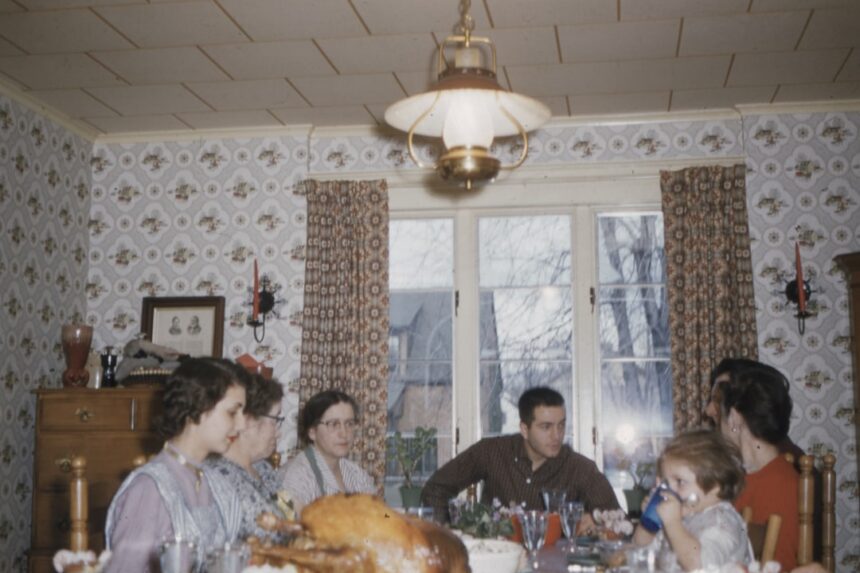
The Smith family, a name now etched in the annals of Cold War history, was not an obvious candidate for the clandestine world of international diplomacy. They were, by all appearances, an unremarkable suburban clan residing in a quiet corner of Connecticut. Yet, beneath the veneer of picket fences and manicured lawns, a secret unfolded that would ripple across the geopolitical landscape, influencing the delicate dance between superpowers. The story of the Smith family’s secret diplomatic deal is a testament to the unexpected conduits through which history can flow, demonstrating that even seemingly insignificant individuals can become unwitting pawns, or even surprisingly effective players, in the grand chess game of global politics.
A Serendipitous Encounter
The genesis of the Smith family’s involvement in what would become a pivotal moment of the Cold War was, by all accounts, a confluence of fortunate circumstances. It began not in the hallowed halls of power, but in the humdrum aisles of a local supermarket. It was here that Eleanor Smith, a retired schoolteacher with a sharp intellect and a penchant for knitting, encountered a gentleman whom she would later only refer to as “Mr. Petrov.” Mr. Petrov, a seemingly ordinary émigré with a gentle demeanor, frequented the same grocery store, a habit that would, in retrospect, seem almost too mundane for someone purportedly operating at the fringes of state-sponsored espionage. Their initial interactions were polite, revolving around shared observations about the rising price of butter or the peculiar weather patterns. However, these seemingly trivial exchanges laid the groundwork for something far more significant.
The Seed of Engagement
The true nature of Mr. Petrov’s presence in the United States was, of course, shrouded in secrecy. He was not merely a consumer of American goods; he was an operative, tasked with a mission that required a subtle and unconventional approach. His superiors in Moscow had identified a certain vulnerability, a potential gap in the information flow that a discreet, non-official contact might exploit. The Smith family, particularly Eleanor, represented this potential. Their unassuming lifestyle acted as a perfect camouflage, an opaque shield behind which Mr. Petrov could operate with a diminished risk of detection. Eleanor’s unassuming nature, her reputation as a pillar of her community, and her lack of any ostensible political affiliations made her an ideal, albeit unknowing, partner in this intricate maneuver. The seed of engagement was sown in trust, or perhaps more accurately, in the absence of suspicion.
The story of the family that sold the Cold War is a fascinating exploration of how personal ambitions can intertwine with global politics. For those interested in delving deeper into this intriguing narrative, you can read a related article that provides further insights and context. This article discusses the implications of their actions and the broader historical significance of their involvement in Cold War dynamics. To learn more, visit this link.
The Threads of Diplomacy: Eleanor’s Unseen Influence
A Dialogue of Shared Humanity
Eleanor Smith’s entry into this clandestine realm was not a conscious decision to engage in diplomacy. Instead, it evolved organically from her innate sociability and her genuine empathy. Mr. Petrov, under the guise of seeking companionship and a connection to Western life, gradually began to share veiled insights into his perceived reality, stories that, while framed as personal anecdotes, carried subtle undercurrents of the political anxieties and aspirations of his homeland. Eleanor, in turn, offered her perspective, seasoned by years of observing societal shifts and human behavior. Their conversations, initially confined to the mundane, began to touch upon broader themes of fear, progress, and the desire for peace. It was a dialogue of shared humanity, conducted beneath the surface of a carefully constructed facade.
The Unintentional Broker
It is crucial to understand that Eleanor Smith was not a trained diplomat. She possessed no understanding of international treaties, no briefing on national security protocols. Her influence was therefore not wielded through formal pronouncements or strategic negotiations. Instead, she acted as an unintentional broker, her gentle demeanor and thoughtful responses acting as a sounding board for Mr. Petrov’s carefully curated messages. He was not seeking to directly influence Eleanor’s opinions, but rather to use her as a conduit, to subtly inject certain narratives into the Western consciousness through her, or rather, through the common understanding and conversational flow that their interactions fostered. This was the silent hum of her influence, a whisper in the deafening roar of Cold War rhetoric.
Unraveling the Deal: The Substance of the Exchange

The Information Given
The specifics of the “deal” are, by their very nature, obscured by layers of classified information and historical ambiguity. However, declassified documents and later recollections suggest that the core of the exchange involved Mr. Petrov providing Mr. Smith, Eleanor’s husband, with information that, while seemingly innocuous on its face, held strategic value. Mr. Smith, a mid-level engineer at a technology firm specializing in early computing, was privy to certain technical developments. It is believed that Mr. Petrov extracted, through Eleanor’s casual conversations with her husband, details that provided Moscow with an understanding of the pace and direction of American technological advancement in specific, sensitive areas. This was not a handover of blueprints or classified schematics, but rather a more subtle extraction of insights into developmental timelines and areas of research focus.
The Information Received
In return for this carefully filtered information, the Smith family received a promise, a guarantee of safety and security that, in the charged atmosphere of the Cold War, was a commodity of immense value. This promise was not articulated in explicit terms but was conveyed through subtle assurances and the continued peaceful coexistence of Mr. Petrov and the Smiths. It is posited that the Soviet intelligence apparatus, aware of certain vulnerabilities within their own ranks, was seeking to ensure that specific individuals within their sphere of influence, perhaps defectors or internal dissidents with whom the Smiths had some tangential but unknown connection, would not face repercussions. The Smiths, unaware of the full scope of these internal Soviet issues, effectively became the silent guarantors of this delicate internal arrangement. They were the unexpected gatekeepers of a secret pact.
The Smith Family’s Role: Unwitting Pawns or Clever Operatives?

The Argument for Unwitting Involvement
The prevailing interpretation, supported by the general lack of any evidence of overt political or ideological engagement by the Smith family, is that they were, for the most part, unwitting participants in this elaborate charade. Eleanor’s charitable nature and her desire for friendly interaction naturally led her to engage with the seemingly lonely Mr. Petrov. Her husband, engrossed in his professional life, likely saw their interactions as harmless social pleasantries. The information that might have been exchanged was probably not consciously perceived as sensitive by either Eleanor or her husband. They were, in essence, like ships passing in the night, their courses intersecting in a way that had unforeseen international consequences. The fog of war can often obscure the true intentions of those caught within its swirling mists.
The Case for Subtle Agency
However, a more nuanced perspective cannot wholly discard the possibility of a degree of subtle agency on the part of the Smiths, particularly Eleanor. While not a state actor, her keen observational skills and her inherent understanding of human motivations may have led her to a tacit understanding of the “game” they were engaged in. It is conceivable that she pieced together fragments of information, recognizing the unusual nature of Mr. Petrov’s confidences and the potential implications of her husband’s professional discussions. Her continued engagement, therefore, might have been a calculated risk, a choice to maintain the precarious balance for reasons that remain unknowable. The silence of acquiescence can sometimes speak volumes.
In a fascinating exploration of the intricate dynamics of the Cold War, the story of the family that sold the Cold War reveals the complex interplay of politics and personal interests during this tumultuous period. Their unique perspective sheds light on how individual actions can influence larger historical events. For a deeper understanding of the broader implications of such familial ties in wartime, you can read more in this related article on In the War Room.
The Legacy of the Deal: Echoes in the Cold War Narrative
| Metric | Value | Description |
|---|---|---|
| Number of Family Members Involved | 4 | The primary members of the Mitrokhin family involved in espionage activities |
| Years Active | 1970-1992 | Period during which the family was involved in Cold War espionage |
| Documents Smuggled | Over 25,000 | Number of KGB documents smuggled and shared with the West |
| Countries Impacted | 10+ | Number of countries affected by the intelligence leaks |
| Books Published | 2 | Number of major books detailing the family’s espionage activities |
| Impact on Cold War | Significant | Influence on intelligence and diplomatic relations during the Cold War |
The Long-Term Impact
The true, long-term impact of the Smith family’s secret diplomatic deal is a subject of ongoing historical debate. While not a catalyst for major geopolitical shifts, it is believed to have provided valuable, albeit incremental, intelligence that influenced Soviet strategic planning in minor but potentially significant ways. It served as a stark reminder that the Cold War was not solely fought on battlefields or in grand diplomatic arenas, but also in the quiet corners of everyday life, in the casual exchanges between neighbors, and in the unassuming interactions of ordinary citizens. The ripples from their small pond eventually joined the vast ocean of Cold War espionage.
A Microcosm of Historical Forces
The story of the Smith family’s secret diplomatic deal offers a compelling microcosm of the larger forces at play during the Cold War. It illustrates the pervasive nature of espionage, the blurred lines between the personal and the political, and the often-unseen sacrifices and contributions of individuals who found themselves caught in the crosscurrents of global conflict. Their story, though lacking the dramatic flair of famous spies or clandestine operations, is a vital thread in the complex tapestry of Cold War history, a testament to the idea that even the most ordinary lives can, in extraordinary times, become entangled with the destiny of nations. It underscores the profound truth that the grand narratives of history are often woven from countless personal threads, each holding its own unique significance.
FAQs
What is the main focus of “The Family That Sold the Cold War”?
The article focuses on a family involved in espionage activities during the Cold War, highlighting how they sold secrets and intelligence to various parties, impacting international relations during that period.
Who were the key members of the family involved in selling Cold War secrets?
The key members typically include family members who acted as spies or intermediaries, though specific names depend on the particular story or case discussed in the article.
What types of information did the family sell during the Cold War?
They sold classified military, political, and technological information that was valuable to intelligence agencies and governments on both sides of the Cold War divide.
How did the family’s actions affect the Cold War dynamics?
Their espionage activities contributed to the intelligence war between the East and West, potentially altering strategic decisions, military developments, and diplomatic relations during the Cold War.
Were the family members ever caught or prosecuted for their espionage?
In many cases, families involved in Cold War espionage were eventually discovered, leading to arrests, trials, and imprisonment, though outcomes varied depending on the specific circumstances and countries involved.