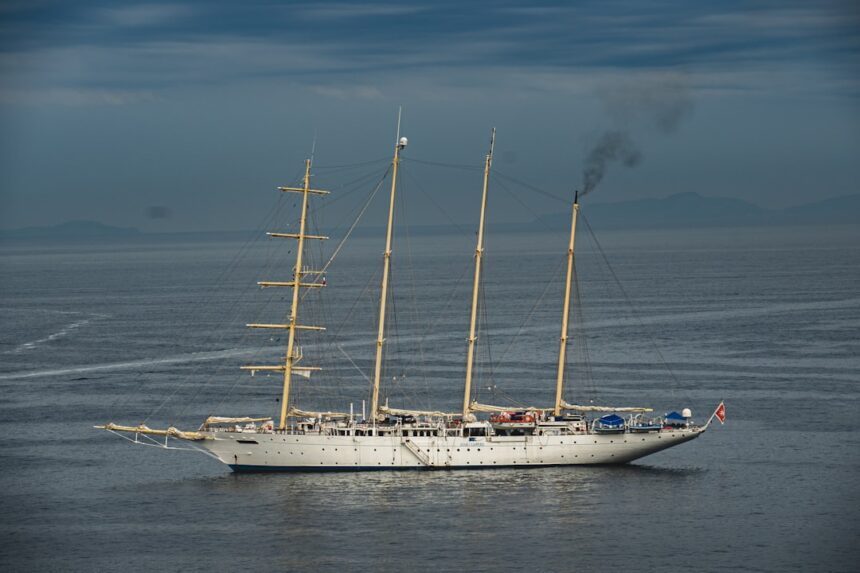
In the annals of American history, few stories are as intriguing as that of the secret CIA ship, a covert creation that emerged from the mind of the enigmatic billionaire Howard Hughes. This vessel, known as the Glomar Explorer, was not merely a ship; it was a symbol of Cold War ingenuity and the lengths to which the United States would go to secure its interests. Conceived in the early 1970s, the ship was designed for a singular purpose: to recover a sunken Soviet submarine, K-129, which had gone down in the Pacific Ocean.
The operation was shrouded in secrecy, with Hughes himself playing a pivotal role in its development. The Glomar Explorer was a marvel of engineering, equipped with advanced technology that was ahead of its time. Its design included a unique claw mechanism intended to lift the submarine from the ocean floor, showcasing Hughes’ commitment to innovation.
However, the ship’s true purpose was cloaked in layers of deception. To the public, it was presented as a deep-sea mining venture, but behind this facade lay a complex web of espionage and intelligence gathering. The ship’s creation marked a significant moment in the intersection of private enterprise and government operations, illustrating how Hughes’ vision aligned with national security objectives.
Key Takeaways
- Howard Hughes secretly designed a state-of-the-art ship for the CIA’s covert intelligence missions during the Cold War.
- The ship played a crucial role in espionage, gathering surveillance data on behalf of U.S. national security.
- Its maiden voyage involved top-secret operations that significantly influenced Cold War history.
- Declassified information has revealed the ship’s activities, dispelling some conspiracy theories while highlighting its technological innovations.
- The ship’s legacy continues to impact modern intelligence techniques and the evolution of CIA operations.
Howard Hughes: The Enigmatic Billionaire Behind the Project
Howard Hughes was a man of many contradictions—a brilliant aviator, a successful filmmaker, and an eccentric billionaire whose life was marked by both triumph and tragedy. Born into wealth in 1905, Hughes quickly established himself as a pioneer in aviation and film production. His relentless pursuit of perfection and innovation earned him a reputation as one of the most influential figures of his time.
However, his later years were marred by reclusiveness and mental health struggles, adding an air of mystery to his already enigmatic persona. Hughes’ involvement in the CIA’s covert operations was not merely a business transaction; it was a reflection of his complex character. He was drawn to challenges that pushed the boundaries of technology and human capability.
The Glomar Explorer project provided him with an opportunity to engage in a high-stakes game of espionage while simultaneously satisfying his thirst for adventure. Hughes’ ability to navigate the intricate relationship between private enterprise and government interests made him an ideal candidate for such a clandestine operation, further solidifying his legacy as a figure who straddled both worlds.
The CIA’s Involvement: Covert Operations and Espionage

The Central Intelligence Agency (CIA) has long been synonymous with covert operations and espionage, often operating in the shadows to protect national security interests. The agency’s involvement in the Glomar Explorer project exemplified its willingness to engage in unconventional methods to achieve its objectives during the Cold War. As tensions between the United States and the Soviet Union escalated, the need for intelligence gathering became paramount.
The CIA recognized that recovering the K-129 submarine could provide invaluable insights into Soviet military capabilities. The operation was not without its challenges. The CIA had to ensure that the project remained classified while simultaneously managing the complexities of working with a private contractor like Hughes.
This partnership highlighted the blurred lines between government and private industry during this period. The agency’s reliance on Hughes’ expertise and resources underscored its commitment to leveraging innovative solutions in its quest for intelligence superiority. As such, the Glomar Explorer became a critical asset in the CIA’s arsenal, representing a bold approach to espionage that would shape future operations.
The Design and Construction of the Ship: State-of-the-Art Technology
| Metric | Value | Description |
|---|---|---|
| Length Overall (LOA) | 300 meters | Total length of the ship from bow to stern |
| Beam | 45 meters | Width of the ship at its widest point |
| Draft | 12 meters | Vertical distance between waterline and bottom of hull |
| Displacement | 50,000 tons | Weight of water displaced by the ship |
| Hull Material | High-strength steel alloy | Material used for the ship’s hull construction |
| Propulsion System | Dual-fuel engines with electric drive | State-of-the-art propulsion technology for efficiency |
| Maximum Speed | 25 knots | Top speed achievable by the ship |
| Fuel Efficiency | 0.15 tons per nautical mile | Fuel consumption rate under normal operating conditions |
| Automation Level | Level 4 | Advanced automation for navigation and operations |
| Construction Time | 18 months | Duration from keel laying to delivery |
The design and construction of the Glomar Explorer were nothing short of revolutionary. Hughes enlisted some of the brightest minds in engineering and naval architecture to bring his vision to life. The ship was equipped with cutting-edge technology that included advanced sonar systems, dynamic positioning capabilities, and a specialized recovery system designed to lift heavy objects from great depths.
This state-of-the-art equipment was essential for executing the mission of recovering the K-129 submarine from over 16,000 feet beneath the Pacific Ocean. The construction process itself was shrouded in secrecy, taking place at a shipyard in California under tight security measures. Workers were often unaware of the true purpose of their labor, as they were instructed to focus solely on their specific tasks without knowledge of the larger mission at hand.
This compartmentalization was crucial for maintaining operational security, reflecting the CIA’s commitment to secrecy throughout the project. The Glomar Explorer’s design not only showcased technological advancements but also illustrated how innovation could be harnessed for covert operations during a time when intelligence gathering was becoming increasingly sophisticated.
The Purpose of the Ship: Intelligence Gathering and Surveillance
The primary purpose of the Glomar Explorer was intelligence gathering, specifically aimed at recovering sensitive materials from the sunken Soviet submarine K-129. The CIA believed that retrieving this submarine could yield critical information about Soviet nuclear capabilities and submarine technology. The stakes were high; success could provide the United States with a significant advantage in the ongoing Cold War.
The ship’s mission extended beyond mere recovery; it represented an opportunity to gain insights into Soviet military strategies and technological advancements. In addition to its primary mission, the Glomar Explorer also served as a platform for broader surveillance activities. Equipped with advanced listening devices and reconnaissance technology, it could monitor Soviet naval movements and communications in the Pacific region.
This dual-purpose functionality underscored the ship’s significance as an intelligence asset during a time when every piece of information could tip the balance of power between superpowers. The Glomar Explorer became emblematic of how maritime operations could be leveraged for strategic advantage in an era defined by espionage and secrecy.
The Maiden Voyage: Top-Secret Missions and Classified Operations

The maiden voyage of the Glomar Explorer took place under a veil of secrecy that would make any spy novel pale in comparison. Launched in 1974, this top-secret mission involved navigating treacherous waters while evading detection by Soviet forces. The crew operated under strict confidentiality agreements, fully aware that their actions could have far-reaching implications for national security.
As they set sail into uncharted territory, they were acutely aware that they were part of something much larger than themselves—a covert operation that could alter the course of history. During this initial voyage, the crew faced numerous challenges, including technical malfunctions and unpredictable ocean conditions. Despite these obstacles, they remained focused on their mission: to locate and recover K-129.
The operation required meticulous planning and execution, with every detail scrutinized to ensure success while minimizing exposure to potential adversaries. As they ventured deeper into enemy waters, the tension among crew members heightened; they understood that failure could not only jeopardize their mission but also expose sensitive intelligence operations to public scrutiny.
The Legacy of the Ship: Impact on Cold War History and National Security
The legacy of the Glomar Explorer extends far beyond its immediate mission; it has left an indelible mark on Cold War history and national security practices. Although ultimately unsuccessful in recovering K-129 intact, the operation demonstrated innovative approaches to intelligence gathering that would influence future missions. The lessons learned from this endeavor informed subsequent covert operations, highlighting the importance of technological advancements and strategic partnerships between government agencies and private enterprises.
Moreover, the Glomar Explorer’s existence underscored the lengths to which nations would go to protect their interests during a time characterized by paranoia and competition between superpowers. It served as a reminder that intelligence operations often operate in secrecy, with outcomes that can shape geopolitical landscapes for decades to come. As historians reflect on this period, they recognize that projects like the Glomar Explorer were pivotal in defining how nations approached espionage and intelligence gathering during one of history’s most tumultuous eras.
The Controversy Surrounding the Ship: Speculations and Conspiracy Theories
The Glomar Explorer has not been without its share of controversy and speculation over the years. Given its secretive nature and ties to both Howard Hughes and the CIA, conspiracy theories have flourished regarding its true purpose and activities. Some have posited that beyond recovering K-129, the ship may have been involved in other clandestine operations aimed at undermining Soviet interests or even conducting surveillance on other nations’ naval capabilities.
These theories have been fueled by limited information available to the public and sensationalized accounts from those who claim insider knowledge. As details about Hughes’ eccentric lifestyle emerged over time, so too did questions about his motivations for engaging in such high-stakes projects. While many aspects of the Glomar Explorer remain classified or obscured by time, its legacy continues to inspire intrigue and speculation about what truly transpired during its operational years.
The Declassification of Information: Shedding Light on the Ship’s Activities
In recent years, efforts to declassify information related to the Glomar Explorer have shed light on its activities and significance within Cold War history. As documents became available through Freedom of Information Act requests and government transparency initiatives, researchers began piecing together a more comprehensive narrative about this enigmatic vessel. These revelations have provided valuable insights into not only its mission but also broader intelligence strategies employed by the CIA during this period.
The declassification process has allowed historians to analyze how projects like the Glomar Explorer fit into larger patterns of espionage and military strategy during the Cold War. By examining previously classified documents, scholars have been able to contextualize Hughes’ involvement within a framework of national security concerns that defined an era marked by competition between superpowers. This newfound understanding has enriched discussions surrounding intelligence operations while also highlighting ongoing debates about transparency and accountability within government agencies.
The Ship’s Influence on Modern Intelligence Operations: Lessons Learned and Technological Advancements
The influence of the Glomar Explorer on modern intelligence operations cannot be overstated. Its innovative design and approach to covert missions set precedents for future endeavors in maritime surveillance and recovery operations. Lessons learned from this project have informed advancements in technology used by intelligence agencies today, emphasizing adaptability and ingenuity in addressing complex challenges.
Moreover, as nations continue to grapple with evolving threats in an increasingly interconnected world, insights gained from projects like the Glomar Explorer remain relevant. The importance of collaboration between private industry and government entities has become even more pronounced as technological advancements reshape how intelligence is gathered and analyzed.
The End of an Era: Retiring the Ship and its Impact on CIA Operations
As with all things, there comes an end to even the most remarkable chapters in history. The retirement of the Glomar Explorer marked not only a conclusion to its operational life but also signified a shift in how intelligence operations were conducted moving forward. By the late 1980s, advancements in technology had rendered some aspects of its mission obsolete; however, its legacy endured as a testament to human ingenuity amid geopolitical tensions.
The impact of retiring such an iconic vessel extended beyond mere operational considerations; it prompted reflections on how intelligence agencies would adapt to changing landscapes in national security threats. As new technologies emerged—such as satellite surveillance and cyber intelligence—the lessons learned from projects like those undertaken by Hughes became foundational elements shaping future strategies within agencies like the CIA. In conclusion, while Howard Hughes’ secret CIA ship may have faded from public consciousness over time, its story remains an integral part of Cold War history—a narrative woven with intrigue, innovation, and lessons that continue to resonate today.
For a deeper understanding of the historical context and implications of such secretive endeavors, you can read more in this related article on the topic at