The vast, indifferent ocean holds countless secrets, but few are as tantalizingly obscure and potentially significant as the alleged secret CIA burial of Soviet sailors at sea. This unsettling notion, while lacking definitive public confirmation, has been a persistent undercurrent in declassified documents and historical analyses, suggesting a covert operation with profound implications during the Cold War. The story, if true, paints a stark picture of clandestine intelligence gathering, the brutal realities of naval espionage, and the lengths to which superpowers would go to maintain their advantage, all hidden beneath the guise of an unmarked watery grave. To understand this alleged saga, one must peel back the layers of secrecy, examine the motivations, and consider the plausible scenarios that could have led to such a covert act.
The idea of a secret CIA burial of Soviet sailors at sea did not emerge from thin air. It is a narrative woven from fragments of declassified intelligence reports, survivor testimonies, and analytical interpretations by historians and researchers. These pieces, like a tattered map, hint at a clandestine operation that, if substantiated, would represent a chilling chapter in the annals of Cold War espionage.
Whispers in the Archives
The initial stirrings of this narrative can be traced back to the gradual release of previously classified documents by various intelligence agencies. These documents, often heavily redacted, provided tantalizing glimpses into the shadowy world of intelligence gathering, where information was currency and lives were often expendable. They spoke of covert naval operations, eavesdropping missions, and the dangers inherent in pursuing such high-stakes endeavors. While none explicitly detail “CIA burial,” the context surrounding them often points to the unfortunate demise of individuals involved in clandestine activities, leaving behind a chilling ambiguity.
The Human Cost of Espionage
Espionage, at its core, is a dangerous game. For the individuals involved, whether agents or unwitting participants, the risks are immense. The Cold War, a period of intense ideological struggle and technological arms race, amplified these risks exponentially. Naval espionage, in particular, was a crucial front, involving the interception of communications, the monitoring of military movements, and the attempted acquisition of sensitive technology. The individuals undertaking these missions operated on the razor’s edge, with the possibility of capture, death, or disappearance always looming. The story of secret burials at sea suggests that in some instances, the recovery and repatriation of fallen operatives, or even the acknowledgment of their loss, was deemed too risky or inconvenient, leading to drastic measures.
The Silence of the Deep
The ocean, in its immense depth and vastness, has always been a powerful metaphor for mystery and the unknown. It is a realm where secrets can be easily kept, and where the evidence of human activity can be quickly erased by currents and time. The concept of a burial at sea, by its very nature, is designed for oblivion. When coupled with the clandestine nature of intelligence operations, the secrecy surrounding such an event becomes a formidable barrier, making definitive proof incredibly difficult to obtain. The silence of the deep, in this context, becomes a testament to the effectiveness of the perceived cover-up.
The burial of Soviet sailors at sea by the CIA is a fascinating topic that sheds light on covert operations during the Cold War. For those interested in exploring this subject further, a related article can be found at In the War Room, which delves into the complexities of intelligence operations and their impact on international relations. This article provides a deeper understanding of the historical context and the ethical dilemmas faced by intelligence agencies during that era.
The Fateful Encounter: Submarines and Espionage
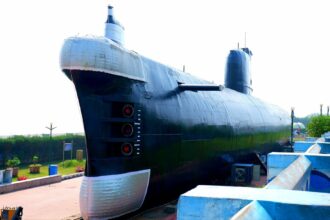
At the heart of many alleged secret CIA burials at sea lies the perilous world of submarine warfare and intelligence gathering. Submarines, the silent hunters of the deep, were not only weapons of war but also invaluable tools for espionage, capable of lurking in enemy waters and eavesdropping on critical communications.
The Silent Service on the Front Lines
During the Cold War, both the United States and the Soviet Union invested heavily in their submarine capabilities. These underwater vessels were the epitome of stealth, capable of projecting power and gathering intelligence without leaving a trace on the surface. Soviet submarines, in particular, were a constant source of concern and fascination for the West. Their movements, technological advancements, and operational capabilities were under intense scrutiny. The CIA, in turn, was tasked with understanding and countering these threats, often through daring and highly classified operations.
The Shadow of the “Foxtrot” and Beyond
While specific incidents remain shrouded in secrecy, historical accounts suggest that Western intelligence agencies, including the CIA, were interested in Soviet submarine technology and operations. Vessels like the Soviet Whiskey-class, Zulu-class, and later advanced designs like the Foxtrot-class, were prime targets for intelligence gathering. Operations designed to gather information about these submarines, their armaments, and their operational doctrines would have placed personnel in extremely high-risk environments. The potential for accidents, collisions, or direct engagement with Soviet naval forces would have been a constant threat.
The Unseen Theatre of the Sea
The operations involving submarines during the Cold War were often conducted far from the prying eyes of the public and even many within the governments themselves. These were missions conducted in the “unseen theatre of the sea,” where the stakes were incredibly high, and the consequences of failure could be dire. The perceived need for absolute secrecy and the potential for international incidents meant that any loss of personnel, especially those involved in clandestine operations, would have been handled with extreme discretion. This discretion, in the eyes of some historians, could have extended to the swift and unacknowledged disposal of bodies at sea.
The Hypothetical Scenario: Accidents, Capture, and Covert Actions

The narrative of secret CIA burials at sea is not a single, monolithic event, but rather a collection of possibilities arising from the inherently dangerous nature of intelligence operations involving submarines. Several plausible scenarios could have led to such clandestine actions.
Accidental Demise in Hostile Waters
The most straightforward explanation for a secret burial at sea involves an accident. During the Cold War, numerous close encounters between Soviet and American naval vessels, including submarines, were documented. These encounters, often occurring in contested waters or during sensitive surveillance missions, carried a significant risk of collision. If a Western vessel operating covertly in Soviet waters were to suffer a catastrophic accident, resulting in the loss of life, the immediate concern would be avoiding detection by Soviet forces. In such a scenario, a swift and unacknowledged burial at sea would have been a pragmatic, albeit grim, solution to prevent the recovery of bodies and potential diplomatic fallout. The ocean, in this instance, becomes a hastily prepared tomb.
The Fate of Captured Operatives
Another grim possibility revolves around the fate of operatives who might have been captured by Soviet forces. While the official policy for captured personnel is often a matter of international law and prisoner exchanges, the realities of Cold War espionage could have been far more complex. If captured agents were interrogated and then… eliminated, their bodies could have been disposed of at sea to prevent any evidence of their capture and subsequent demise from surfacing. This would have served to deny the Soviets any propaganda victories and to protect the operational integrity of future missions. The secrets they carried, and their very existence, would be buried with them.
The Unacknowledged Sacrifice
Beyond accidents and capture, there is also the possibility of covert operations that went disastrously wrong, leading to the deaths of operatives in circumstances that could not be officially acknowledged. These could have involved sabotage, clandestine insertions gone awry, or direct engagement with enemy forces where survival was impossible and recovery unfeasible. In these extreme situations, an immediate burial at sea, conducted in utmost secrecy, would have been the most efficient method to erase any traces of the operation and its casualties, preserving the deniability of the involved intelligence agencies. The ocean’s vastness would then serve as a silent accomplice, concealing the ultimate sacrifice.
The Role of Declassified Documents and Eyewitness Accounts

While concrete proof remains elusive, the whispers of secret CIA burials at sea gain some credence from the gradual declassification of government documents and the testimonies of individuals who may have had knowledge of such events. These are the scattered breadcrumbs leading through a dense forest of secrecy.
The Redacted Pages of History
The declassification process, a slow and often frustrating endeavor, has been a crucial avenue for uncovering the hidden aspects of the Cold War. Documents related to naval operations, intelligence gathering, and the activities of clandestine agencies have, over time, been released to the public. While these documents are rarely explicit in detailing secret burials, they often contain references to “personnel losses,” “unaccounted for,” or “disposal at sea” in contexts that suggest more than routine fatalities. Analysts pore over these redacted pages, like archaeologists deciphering ancient texts, searching for patterns and clues. The absence of explicit confirmation is not necessarily evidence of fabrication, but rather a testament to the effectiveness of the original secrecy.
Echoes of the Past: Survivor Testimonies
Occasionally, individuals who served in intelligence or military roles during the Cold War may, years later, offer testimonies that shed light on sensitive operations. These testimonies, while sometimes anecdotal and difficult to independently verify, can corroborate information found in declassified documents or offer new perspectives. The narratives of former naval personnel, intelligence officers, or even individuals involved in covert support roles might contain veiled references or direct accounts of unusual procedures related to the handling of deceased personnel in compromising situations. These voices from the past, though often hesitant, can add a human dimension to the abstract concerns of intelligence operations.
The Burden of Secrecy
It is important to acknowledge the immense burden of secrecy carried by individuals involved in clandestine operations. Those who witnessed or participated in such events may be bound by oaths of silence or carry the psychological weight of their experiences. Their testimonies, when they do emerge, are often delivered with a sense of urgency, a desire to finally bring certain truths, however unsettling, into the light. The fragmented nature of their accounts, and the potential for emotional bias, must be considered, but they remain vital pieces in the puzzle.
In a fascinating exploration of Cold War history, the article on the burial of Soviet sailors at sea delves into the covert operations conducted by the CIA during that era. This piece sheds light on the complexities of international relations and the lengths to which intelligence agencies would go to maintain secrecy. For those interested in learning more about this intriguing topic, you can read the full article here.
Implications and Legacy: The Unseen Scars of the Cold War
| Metric | Details |
|---|---|
| Operation Name | Unknown / Classified |
| Agency Involved | Central Intelligence Agency (CIA) |
| Subject | Burial of Soviet sailors at sea |
| Time Period | Cold War Era (approx. 1950s-1980s) |
| Number of Sailors Buried | Classified / Unknown |
| Purpose | Intelligence gathering and psychological operations |
| Location | International waters, primarily in the Atlantic and Pacific Oceans |
| Documentation Status | Mostly classified; some declassified documents available |
| Public Awareness | Low; limited information released to the public |
The alleged secret burial of Soviet sailors by the CIA, if proven, would carry significant implications, leaving an indelible mark on the understanding of Cold War dynamics and the ethical considerations of intelligence operations. This is a legacy written not in stone, but in the shifting sands of geopolitical history.
The Morality of Espionage at the Edge
The notion of secret burials raises profound ethical questions about the conduct of intelligence agencies. Is the preservation of national security so paramount that it justifies the clandestine disposal of human remains, thereby denying families closure and potentially obscuring the truth of an individual’s fate? This scenario forces a confrontation with the darker side of espionage, where the ends, however justifiable in the eyes of some, may cast a long shadow over the means. It highlights the constant tension between operational effectiveness and fundamental human decency. How far is too far when the pursuit of information can lead to such acts of ultimate concealment?
A Legacy of Unanswered Questions
The enduring mystery surrounding these alleged burials leaves a legacy of unanswered questions. For the families of the lost sailors, the pain of not knowing what truly happened to their loved ones would be unimaginable. The lack of official acknowledgment or a proper burial process would compound their grief, leaving a void that time may never fully fill. This unresolved sorrow underscores the human cost of the ideological battles fought in the shadows, a cost that extends far beyond the immediate participants.
Shaping Historical Perception
If confirmed, the existence of such operations would undoubtedly reshape the historical perception of the Cold War. It would serve as a stark reminder that the conflict was not merely a geopolitical chess game played out on diplomatic boards, but a brutal and often morally ambiguous struggle that touched the lives of individuals in profound and tragic ways. The ocean, often seen as a vast and empty expanse, would then be recontextualized as a repository of secrets, a silent witness to the extreme measures taken by nations in their quest for dominance. The story, or lack thereof, of these lost sailors becomes another scar etched onto the face of history, a testament to the lengths to which nations would go in the pursuit of their agendas. The ocean, in its silent depths, holds the echo of these men, a chilling testament to the invisible wars waged beneath the waves, and the ultimate silence imposed upon their earthly remains.
WARNING: The $800 Million Mechanical Failure That Almost Started WWIII
FAQs
What was the CIA’s involvement in the burial of Soviet sailors at sea?
The CIA’s involvement in the burial of Soviet sailors at sea primarily related to intelligence operations during the Cold War. The agency monitored Soviet naval activities and sometimes documented incidents involving Soviet sailors, including their burials at sea, as part of broader surveillance efforts.
Why were Soviet sailors buried at sea?
Soviet sailors were often buried at sea due to the nature of naval operations, where it was impractical or impossible to return bodies to land promptly. Burial at sea was a common naval tradition and practice to honor deceased sailors while maintaining operational security and efficiency.
Did the CIA conduct any secret operations related to Soviet naval burials?
There is no publicly verified evidence that the CIA conducted secret operations specifically targeting Soviet naval burials. However, the agency closely monitored Soviet naval movements and incidents, which may have included observing burial ceremonies as part of intelligence gathering.
How did the burial of Soviet sailors at sea impact Cold War naval relations?
The burial of Soviet sailors at sea was generally a routine naval practice and did not directly impact Cold War naval relations. However, incidents involving Soviet naval casualties could influence diplomatic and military tensions, especially if they occurred during confrontations or accidents involving U.S. forces.
Are there any known declassified documents about CIA surveillance of Soviet naval burials?
Some declassified CIA documents reveal surveillance and intelligence activities related to Soviet naval operations, including incidents at sea. While specific details about burials may be limited, these documents provide insight into how the CIA monitored Soviet naval personnel and activities during the Cold War.