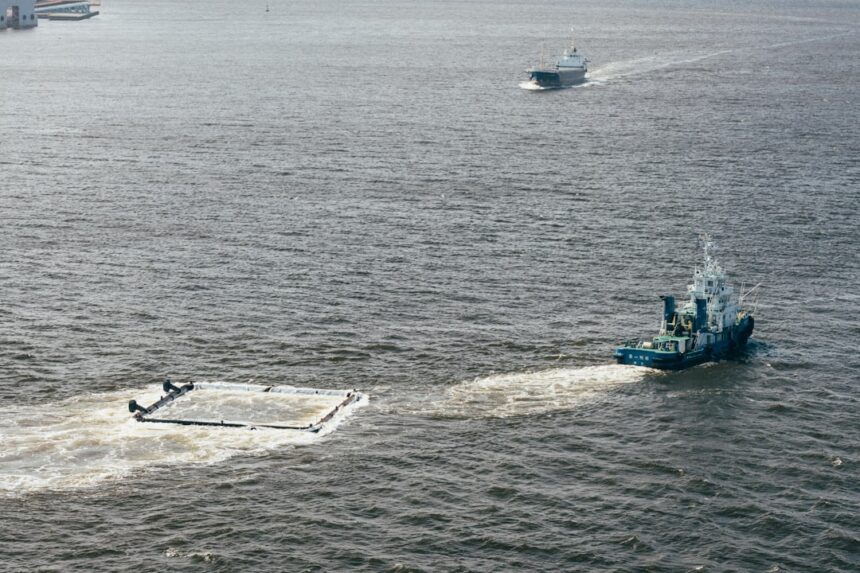
Historians and geopolitical analysts have long scrutinized the complex tapestry of Russia’s relationship with its former imperial and Soviet territories. One particularly intriguing, yet often overlooked, aspect of this historical dynamic is the phenomenon of Russian incursions into what were, at various points, designated as Soviet internal waters. To understand this, one must first grasp the legal and practical definitions of “internal waters” within the Soviet framework, and then trace the various instances where Russian actions, intentional or otherwise, challenged or redefined these boundaries. This article will delve into several key periods and geographical locations where such incursions occurred, exploring their motives, consequences, and lasting implications.
The concept of internal waters, as internationally recognized, refers to waters on the landward side of the baseline from which the breadth of the territorial sea is measured. These waters are considered an integral part of the state’s territory, subject to its complete sovereignty, much like its landmass. For the Soviet Union, a vast continental power with extensive coastlines and numerous inland seas, lakes, and navigable rivers, the demarcation and protection of internal waters held paramount importance.
Legal Frameworks and Declarations
The Soviet Union, from its inception, meticulously crafted a legal framework to assert its sovereignty over its internal waterways. This framework evolved significantly over time, adapting to technological advancements and changing geopolitical realities. Early decrees, often issued during the turbulent years of the Russian Civil War, laid the groundwork for state control over all navigable waters within its recognized borders. Later, with the establishment of the Soviet Union, these principles were codified and expanded.
- 1921 Decree on State Borders: This early legislation, while primarily focused on land borders, implicitly included inland waterways as an extension of state territory, restricting unauthorized access and navigation.
- 1927 Maritime Code: The Soviet Maritime Code provided a comprehensive legal basis for all maritime activities, including defining internal waters more explicitly as those waters enclosed by land territory or within straight baselines. This code also established rules for foreign vessel entry and navigation, often requiring special permits.
- Post-WWII Expansions: Following World War II, the Soviet Union absorbed new territories and adjusted its baselines, consequently expanding its internal water claims in areas like the Baltic Sea and the Black Sea. These adjustments were often unilateral and occasionally contested by other states.
Geographical Scope of Internal Waters
The geographical scope of Soviet internal waters was immense, encompassing a diverse array of hydrological features. This vastness created unique challenges for enforcement and presented numerous opportunities for unintentional or deliberate transgressions.
- Inland Seas and Lakes: The Caspian Sea, although a landlocked basin, was largely treated as an internal Soviet-Iranian condominium for many years, with significant portions of its northern and eastern sections under full Soviet control. Similarly, Lake Baikal, the world’s largest freshwater lake by volume, was entirely within Soviet territory and thus constituted internal waters.
- Major Rivers and Estuaries: The mighty Volga, the Dnieper, the Don, and their vast network of tributaries were the arteries of the Soviet interior. Their estuaries, as they met the open sea, were often subject to strict regulations, deemed crucial for national security and economic control.
- Coastal Indentations and Bays: Using the straight baseline method, the Soviet Union enclosed numerous bays and gulfs, such as the Gulf of Finland and portions of the White Sea, declaring them internal waters despite their significant size. This practice, while permissible under international law to a certain extent, was sometimes applied expansively.
In recent discussions surrounding maritime security, the issue of Soviet internal waters incursions has gained renewed attention. A related article that delves into the historical context and implications of these incursions can be found at this link. The article provides an in-depth analysis of the strategies employed by the Soviet Union and their impact on international relations during the Cold War, offering valuable insights into the ongoing debates about territorial waters and national sovereignty.
Early Soviet Era (1922-1941)
During the early Soviet era, the nascent state was focused on consolidation and industrialization. While overt “Russian incursions” might seem anachronistic given the unitary nature of the USSR, it’s crucial to understand that the concept of a multi-ethnic union was still evolving. Actions taken by the dominant Russian SFSR, especially concerning resource extraction or infrastructure development, could effectively be seen as infringing on the nascent, albeit legally subordinated, autonomy of other Soviet republics in their respective internal waters. Think of it as a mighty hand reaching into a smaller, albeit connected, vessel.
Resource Exploitation and Infrastructure Projects
The drive for rapid industrialization often trumped local concerns and republican sovereignty. Major projects, overseen by Moscow-based ministries, often disregarded the impact on specific republics.
- Caspian Sea Oil Exploration: The rich oil fields of the Caspian, particularly those off the coast of Azerbaijan SSR, were intensely exploited. Central planning dictated the pace and location of drilling, with little regard for Azerbaijani objections concerning environmental damage or the equitable distribution of profits. Naval vessels, under the command of the All-Union Navy, regularly patrolled these waters, effectively asserting Moscow’s control.
- Dnieper Hydroelectric Project (DnieproGES): While a monumental achievement, the construction of DnieproGES in the Ukrainian SSR, a project of vital strategic importance for the entire Soviet Union, significantly altered the natural flow of the Dnieper River. This transformation, while beneficial to the broader Soviet economy, impacted local communities and ecosystems within Ukrainian internal waters, often without significant consultation or compensation for the republic.
Border Demarcation and Enforcement
Even within the Soviet Union, the precise lines between republican internal waters were sometimes fluid or subject to administrative re-demarcation, particularly when resources were at stake.
- Adjustments in the Volga Delta: The complex delta of the Volga River, bordering the Kazakh ASSR (part of the Russian SFSR) and later the Kazakh SSR, saw adjustments in internal水域’s administration as fishing rights and navigation priorities shifted, often benefiting the larger Russian entity.
- Military Presence in Baltic Fleets: The Soviet Baltic Fleet, though operating for the entire USSR, was predominantly manned and commanded by personnel from the Russian SFSR. Its exercises and presence in the bays and harbors of the Estonian, Latvian, and Lithuanian SSRs, especially after their annexation in 1940, implicitly underscored Moscow’s ultimate authority over these newly acquired internal waters.
Post-War Expansion and Cold War Assertions (1945-1980s)
Following World War II, the Soviet Union emerged as a superpower, expanding its territorial claims and solidifying its geopolitical influence. This period saw a more overt and pervasive Moscow-centric control over all Soviet internal waters, often using the guise of national security to override republican interests. The iron curtain extended not just over land, but also over the internal seas and river systems of the Soviet empire.
Strategic Naval Bases and Defenses
The Cold War necessitated a robust defense posture, leading to the construction and expansion of numerous strategic naval bases within the internal waters of various republics. These installations were entirely under Moscow’s command.
- Crimean Naval Bases (Ukrainian SSR): Sevastopol, home to the Black Sea Fleet, became a fortress of Soviet power. While geographically located in the Ukrainian SSR, its administration and strategic importance were entirely dictated by Moscow. The fleet’s activities, including exercises and patrols, were effectively Russian-controlled operations within Ukrainian internal waters.
- Baltic Sea Defensive Networks: The internal waters of the Baltic republics were heavily militarized. Numerous naval bases, missile installations, and radar stations were established, often encroaching on valuable coastal areas and restricting recreational or economic activities for local populations. These were entirely Soviet federal projects.
Environmental Impact of Centralized Planning
The relentless pursuit of industrial and agricultural targets, often designed by central planners in Moscow, had profound and devastating impacts on the internal waters of many republics, demonstrating a clear “incursion” of central authority over local environmental stewardship.
- Aral Sea Catastrophe (Uzbek and Kazakh SSRs): Perhaps the most stark example, the diversion of the Amu Darya and Syr Darya rivers for cotton cultivation in Central Asia, a policy driven by Moscow, led to the catastrophic drying of the Aral Sea. This environmental disaster, occurring within the internal waters of the Uzbek and Kazakh SSRs, is a tragic testament to the unconstrained power of central planning over regional ecosystems.
- Nuclear Testing and Dumping: Various Soviet republics, particularly Kazakhstan and the Russian SFSR itself, hosted nuclear test sites. While the primary tests occurred on land, the dumping of nuclear waste, both civilian and military, into internal waters and seas, including the Barents Sea and parts of the Caspian Sea, represented a central government action with dire consequences for the specific república and its waterways.
Perestroika and Dissolution (1985-1991)
The twilight years of the Soviet Union, marked by Mikhail Gorbachev’s reforms of Perestroika and Glasnost, witnessed a resurgence of republican autonomy and a questioning of Moscow’s undiluted authority. This period saw the “Russian incursions” shift from centralized control to a more explicit assertion of Russian interests as the Union began to fray. The waters, once seemingly calm under totalitarian rule, began to churn with eddies of national identity.
Rise of Republican Sovereignty
As the central government weakened, republics increasingly asserted their sovereignty, including over their internal waters and natural resources. This led to tensions with Moscow and with the Russian SFSR.
- Baltic States’ Maritime Claims: The Baltic republics, emboldened by their push for independence, began to assert stricter control over their territorial and internal waters, challenging Soviet (and effectively Russian) naval dominance and raising questions about the ownership of strategic assets within their maritime zones.
- Ukrainian Efforts to Control Black Sea Fleet: Ukraine, as it moved towards independence, increasingly sought to claim control over the Black Sea Fleet and its bases in Crimea. This sparked a prolonged dispute with Russia, which viewed the fleet as an integral part of its historical and strategic heritage. The “incursions” here were not physical seizures of water, but rather conflicting claims over assets within internal waters.
Economic Disputes and Resource Control
The crumbling Soviet economy amplified disputes over resource control, particularly hydropower, fishing rights, and mineral extraction.
- Caspian Sea Resource Sharing Debates: As the Soviet Union fractured, the question of how to divide the rich energy resources of the Caspian Sea among the newly independent littoral states, including the Russian Federation, Azerbaijan, Kazakhstan, and Turkmenistan, became a flashpoint. This was no longer a matter of Moscow dictating terms, but of emerging nations, including Russia, vying for control over newly defined national internal waters.
- Volga-Baltic Waterway Administration: The vast network of canals and rivers connecting the Volga to the Baltic Sea, largely within the Russian SFSR but impacting upstream republics, became a point of discussion regarding inter-republican management and financial contributions. The old, centrally managed system was breaking down, and Russia, as the primary owner of these arteries, began to assert its management rights.
Recent tensions surrounding Soviet internal waters incursions have sparked significant discussions among analysts and historians. A comprehensive examination of these incidents can be found in a related article that delves into the geopolitical implications and historical context of such actions. For further insights, you can read more about this topic in the article available at In The War Room, which provides a detailed analysis of the strategic motivations behind these incursions and their impact on international relations.
The Post-Soviet Legacy (1991-Present)
| Year | Number of Incursions | Location | Type of Vessel | Response by Soviet Authorities | Outcome |
|---|---|---|---|---|---|
| 1960 | 5 | Baltic Sea | Military Submarines | Detainment and Interrogation | Release after Diplomatic Protest |
| 1970 | 8 | Black Sea | Research Vessels | Warning Shots Fired | Vessels Expelled |
| 1980 | 12 | Arctic Ocean | Fishing Boats | Arrests and Fines | Confiscation of Equipment |
| 1990 | 3 | Sea of Japan | Naval Ships | Naval Escort Out | Diplomatic Incident |
With the collapse of the Soviet Union, the concept of “Soviet internal waters” ceased to exist. Instead, the newly independent states established their own sovereign internal and territorial waters. However, the legacy of Soviet-era “Russian incursions” continues to cast a long shadow, leading to ongoing disputes and unresolved issues. The old currents still influence the new tides.
Unresolved Maritime Border Disputes
The hasty dissolution of the USSR left many maritime borders undefined or contested, leading to simmering tensions between Russia and its neighbors.
- Kerch Strait (Russia-Ukraine): The Kerch Strait, connecting the Azov Sea to the Black Sea, became a critical point of contention between Russia and Ukraine. The maritime boundary in this narrow strait, considered internal waters by both nations, was never formally delimited, leading to incidents like the 2018 Kerch Strait incident, where Russian forces seized Ukrainian naval vessels.
- Azov Sea Status: The Azov Sea, historically considered a shared internal sea by Russia and Ukraine, had its status thrown into question after 2014. Russia’s effective annexation of Crimea and its control of the Kerch Strait have led to a de facto declaration of the Azov Sea as Russian internal waters, a claim vehemently rejected by Ukraine.
Control of Strategic Infrastructure
Many strategic assets located within the internal waters of former Soviet republics, built during the Soviet era, remain subjects of contention.
- Black Sea Fleet in Crimea: Even after the formal division of the Black Sea Fleet between Russia and Ukraine, Russia retained a significant naval presence in Sevastopol under a lease agreement. Russia’s 2014 annexation of Crimea, however, effectively brought all Ukrainian internal waters surrounding Crimea under de facto Russian control, a move widely condemned internationally. This represents the ultimate “Russian incursion” into formerly Soviet, and then Ukrainian, internal waters.
- Baltic Sea Ports and Navigation Rights: While the Baltic states are now fully independent, Russia’s continued emphasis on sea lines of communication and its Kaliningrad exclave means that navigation and access through the national internal waters of Lithuania and Poland remain strategically sensitive. Russia’s military exercises in the Baltic Sea are often perceived by its neighbors as assertive posturing within waters close to their own internal zones.
The historical phenomenon of Russian incursions into Soviet internal waters is a multifaceted narrative of centralized power, resource demands, strategic imperatives, and the evolving tides of national identity. From the early Soviet emphasis on industrialization to the post-Soviet disputes over maritime borders, the dominant Russian state, through its various historical incarnations, has consistently shaped and often dominated the usage and definition of internal waterways across the vast Eurasian landmass. Understanding these historical patterns is crucial for comprehending the ongoing geopolitical tensions and maritime disputes in the post-Soviet space. The echoes of these past “incursions” continue to resonate in contemporary international relations, proving that the waters of history flow ever onward, sometimes through turbulent channels.
FAQs
What were Soviet internal waters incursions?
Soviet internal waters incursions refer to instances when foreign vessels or aircraft entered waters that the Soviet Union claimed as internal, often leading to diplomatic tensions or confrontations.
Why did the Soviet Union consider certain waters as internal?
The Soviet Union claimed certain maritime areas as internal waters based on its interpretation of international law, often extending territorial claims beyond internationally recognized limits to protect strategic interests and national security.
How did the Soviet Union respond to incursions into its internal waters?
The Soviet Union typically responded with warnings, shadowing, or intercepting foreign vessels and aircraft. In some cases, it involved diplomatic protests or military actions to assert its sovereignty.
Which countries were most involved in incidents of incursions into Soviet internal waters?
Countries such as the United States, NATO members, and neighboring states were most frequently involved in incidents, often related to Cold War surveillance, intelligence gathering, or freedom of navigation operations.
What impact did Soviet internal waters incursions have on international relations?
These incursions heightened Cold War tensions, contributed to naval confrontations, and influenced the development of international maritime law and agreements aimed at preventing conflicts in disputed waters.