The underwater domain, a frontier of immense strategic and scientific importance, has historically presented formidable challenges to human exploration and exploitation. Submarine technology, a cornerstone of naval power and deep-sea research, has undergone iterative advancements since its inception. This article explores significant breakthroughs that are currently revolutionizing submarine capabilities, pushing the boundaries of what is achievable beneath the ocean’s surface.
The development of Autonomous Underwater Vehicles (AUVs) represents a paradigm shift in underwater operations. Unlike traditional submarines, which require human crews, AUVs operate independently, performing missions ranging from scientific data collection to intelligence gathering without direct human intervention. This autonomy grants them extended operational durations, access to hazardous environments, and reduced operational costs, positioning them as a critical element in future naval strategies and scientific endeavors.
Enhanced Navigation and Communication Systems
The effectiveness of AUVs hinges on their ability to navigate accurately and communicate reliably in an environment that severely attenuates electromagnetic waves. Traditional GPS is ineffective underwater, necessitating alternative solutions.
- Inertial Navigation Systems (INS): These systems, often coupled with Doppler Velocity Logs (DVLs), provide precise positional data by continuously tracking the vehicle’s movement relative to its starting point. Accelerometers and gyroscopes measure changes in velocity and orientation, allowing the AUV to maintain a highly accurate estimate of its position over time, albeit with drift that needs periodic correction.
- Acoustic Positioning Systems: These systems use sound waves to determine the AUV’s position relative to fixed beacons or other underwater vehicles. Long Baseline (LBL), Short Baseline (SBL), and Ultra-Short Baseline (USBL) systems offer varying degrees of accuracy and range, each suited for different operational requirements. These systems act as underwater lighthouses, guiding the AUV through the darkest depths.
- Underwater Acoustic Modems: These devices facilitate data transfer between AUVs, surface vessels, and land-based stations. Advancements in acoustic modem technology have increased bandwidth and ranges, allowing for more complex data transmission and real-time mission updates. The ocean itself becomes the communication medium, albeit a challenging one.
Artificial Intelligence and Machine Learning Integration
The true potential of AUVs is unlocked through the integration of artificial intelligence (AI) and machine learning (ML). These capabilities empower AUVs to make autonomous decisions, adapt to changing environmental conditions, and optimize their mission profiles.
- Adaptive Path Planning: AI algorithms enable AUVs to plan and re-plan their routes in real-time, avoiding obstacles, optimizing energy consumption, and responding to dynamic mission objectives. This is akin to a seasoned explorer navigating an uncharted jungle, adapting to terrain as they progress.
- Intelligent Data Processing: ML algorithms allow AUVs to analyze sensor data onboard, classify objects, detect anomalies, and filter irrelevant information. This reduces the need to transmit raw, voluminous data to the surface, conserving energy and bandwidth, and enabling quicker decision-making.
- Swarm Robotics: The concept of multiple AUVs operating collaboratively as a “swarm” is gaining traction. AI coordinates these swarms, allowing them to perform complex tasks more efficiently than a single vehicle, such as mapping vast ocean areas or conducting coordinated surveillance. This distributed intelligence offers robustness and redundancy, much like a colony of ants working towards a common goal.
Recent advancements in submarine technology have been highlighted in an article discussing the latest breakthroughs in stealth capabilities and underwater communication systems. These innovations are set to revolutionize naval warfare and enhance the strategic advantages of modern submarines. For a deeper dive into these developments, you can read more in this related article at In The War Room.
Advancements in Stealth Technology: The Silent Hunters
Submarines derive their strategic value from their ability to operate undetected. Consequently, continued investment in stealth technology remains a critical area of innovation, focusing on reducing a submarine’s various signatures.
Acoustic Stealth: Quieting the Machine
Minimizing emitted noise is paramount for submarine survival. Every internal vibration, every moving part, is a potential beacon for detection.
- Advanced Propeller Designs: Skewed and highly non-uniform propeller blades reduce cavitation, the formation and collapse of vapor bubbles that generate significant noise. Computational Fluid Dynamics (CFD) aids in designing propellers that efficiently convert rotational energy into thrust with minimal acoustic footprint. These propellers are akin to silent wings, gliding through the water.
- Anechoic Coatings and Hull Materials: The external surfaces of modern submarines are often covered with anechoic tiles specifically designed to absorb active sonar pulses, preventing them from reflecting back to the source. Furthermore, advanced composite materials are being explored for hull construction, offering potential for reduced structural noise and greater depth capabilities compared to traditional steel hulls.
- Active Noise Cancellation (ANC): ANC systems use microphones to detect internal machinery noise and generate opposing sound waves to cancel it out. This technology, although complex to implement on a large scale, holds promise for further reducing the acoustic signature of internal components.
Non-Acoustic Signatures: Beyond Sound
While acoustic stealth is crucial, other signatures can betray a submarine’s presence, requiring holistic countermeasures.
- Magnetic Anomaly Detection (MAD) Reduction: Submarines possess a magnetic field due to their ferrous components. Demagnetization coils and the use of non-magnetic materials reduce this signature, making them harder to detect by MAD systems.
- Infrared Signature Management: Although less significant for submerged operations, the exhaust plumes or heat radiated from a surfaced or shallow submarine can be detected by thermal sensors. Designs that efficiently dissipate heat or minimize its outward projection are crucial for minimizing this signature.
- Pressure Wake Reduction: The movement of a large object through water creates a pressure disturbance. While difficult to eliminate completely, hydrodynamic hull designs and slow-speed operations can help minimize the pressure wake, making it harder to detect.
Powering the Depths: Energy Solutions for Extended Endurance

The greatest limitation for conventional submarines has always been their need to surface or snorkel to recharge batteries, making them vulnerable. Nuclear propulsion offers indefinite endurance, but its cost, complexity, and political implications restrict its widespread adoption. Therefore, significant research is focused on enhancing power generation for non-nuclear submarines.
Air-Independent Propulsion (AIP) Systems
AIP systems allow conventional submarines to operate submerged for weeks, not just days, significantly extending their endurance and reducing their vulnerability. They provide power without requiring atmospheric oxygen.
- Fuel Cells: Hydrogen-oxygen fuel cells generate electricity through an electrochemical reaction, producing water as a byproduct. They are highly efficient and produce minimal noise or heat, making them ideal for stealth operations. The challenge lies in safely storing the necessary hydrogen and oxygen onboard.
- Stirling Engines: These external combustion engines use a heat source (e.g., diesel fuel) to heat a working gas, which then drives pistons. The waste heat is discharged into the surrounding seawater. Stirling engines are robust and reliable, though generally less efficient than fuel cells.
- Closed-Cycle Diesel Engines: These systems involve recirculating exhaust gases, removing CO2, and adding oxygen from onboard storage. This allows the diesel engine to operate submerged, but the logistical burden of storing oxygen and managing exhaust remains a challenge.
Advanced Battery Technologies
Batteries are the primary power source for conventional submarines when submerged and not utilizing AIP. Breakthroughs in battery technology are directly enhancing their submerged endurance and power output.
- Lithium-Ion Batteries: These batteries offer significantly higher energy density and power output compared to traditional lead-acid batteries. This translates to longer submerged endurance, faster speeds, or the ability to power more advanced sensor systems. However, thermal management and safety protocols are critical due to their volatile nature.
- Solid-State Batteries: Still largely in research and development, solid-state batteries hold the promise of even greater energy density, faster charging times, and enhanced safety compared to traditional liquid electrolyte lithium-ion batteries. Their adoption could be a game-changer for future conventional submarine designs.
Advanced Sensors and Communications: Eyes and Ears Beneath the Waves
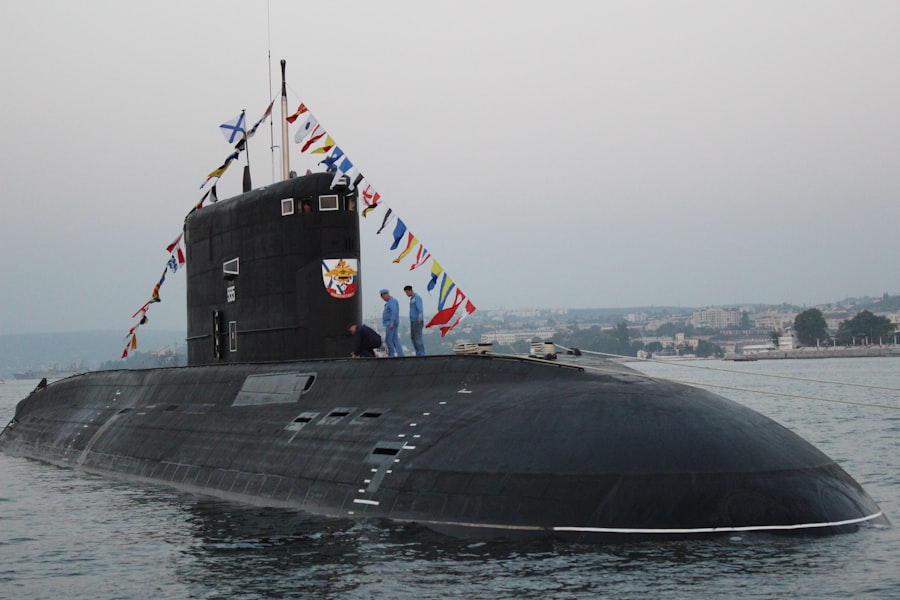
The ability to “see” and “hear” underwater without being detected is paramount for submarine operations. Innovation is continuous in developing more sensitive, accurate, and stealthy sensor systems, alongside robust communication links.
Passive Sonar Systems: Listening to the Ocean’s Symphony
Passive sonar detects sounds emitted by other vessels, a critical component of stealth.
- Large Aperture Arrays: Increasing the size and number of hydrophones in sonar arrays significantly enhances the ability to detect faint signals and pinpoint their direction. These arrays act as massive underwater ears, discerning distant whispers.
- Vector Hydrophones: These advanced hydrophones measure not only the pressure variations of sound waves but also the particle velocity, providing more directional information and reducing ambient noise.
- Low-Frequency Detection: While higher frequencies offer greater resolution, they attenuate rapidly. Research into very low-frequency passive sonar aims to detect distant contacts, albeit with lower resolution, providing early warning.
Active Sonar Systems: Illuminating the Depths
Active sonar emits sound pulses and analyzes the echoes, akin to a bat’s echolocation. While it risks revealing the submarine’s presence, it offers precise targeting and detection capabilities.
- Broadband Sonar: Instead of a single frequency, broadband sonar transmits a range of frequencies. This provides more detailed information about the target and improves resistance to countermeasures.
- Synthetic Aperture Sonar (SAS): This advanced active sonar creates high-resolution images of the seafloor or submerged objects by combining multiple sonar pings as the submarine moves. The effect is similar to creating a larger “virtual” antenna, greatly enhancing resolution.
- Clandestine Active Sonar Modes: Research focuses on developing ‘low-probability-of-intercept’ (LPI) active sonar techniques that utilize coded pulses or extremely low power levels, making detection by adversaries more challenging.
Beyond Acoustic: Non-Acoustic Sensors
Emergent sensor technologies offer entirely new ways to detect and classify underwater objects, moving beyond the traditional acoustic domain.
- Optical Imaging and Lidar: For relatively shallow waters or illuminated environments (e.g., by the submarine’s own lights), advanced cameras and underwater lidar systems can provide high-resolution visual data. These are crucial for tasks like mine countermeasures or wreck surveys.
- Gravimetric and Magnetic Sensors: Highly sensitive gravimeters could theoretically detect subtle changes in the Earth’s gravitational field caused by large submerged objects. Similarly, advanced magnetometers could detect residual magnetic signatures of submarines. These are generally long-range, low-resolution detection methods.
- Wake Detection Systems: Analyzing disturbances in the water, such as temperature, salinity, or bioluminescence changes left by a submarine, is a nascent but potentially revolutionary detection method.
Recent advancements in submarine technology have significantly enhanced underwater capabilities, making modern submarines more stealthy and efficient than ever before. These breakthroughs not only improve navigation and communication systems but also integrate advanced materials that increase durability and reduce noise. For a deeper understanding of these innovations, you can explore a related article that discusses the latest developments in submarine technology and their implications for naval warfare. To read more, visit this insightful piece.
Future Concepts and Emerging Technologies: A Glimpse into Tomorrow
| Breakthrough | Description | Year | Impact on Submarine Technology | Key Metrics |
|---|---|---|---|---|
| Air-Independent Propulsion (AIP) | Allows submarines to operate without surfacing for oxygen, increasing underwater endurance. | 2000s | Extended submerged endurance from days to weeks. | Underwater endurance: up to 3 weeks; Noise reduction: significant |
| Advanced Sonar Systems | Improved detection and tracking of underwater objects using active and passive sonar. | 2010s | Enhanced target detection range and accuracy. | Detection range: up to 100 km; Resolution: improved by 30% |
| Hybrid Electric Propulsion | Combines diesel engines with electric motors for quieter and more efficient operation. | 2015 | Reduced acoustic signature and improved fuel efficiency. | Noise reduction: 40%; Fuel efficiency: 20% improvement |
| Composite Hull Materials | Use of advanced composites to reduce weight and increase strength of submarine hulls. | 2020 | Improved stealth and deeper diving capabilities. | Hull weight reduction: 15%; Maximum depth increase: 10% |
| Autonomous Underwater Vehicles (AUV) Integration | Deployment of AUVs from submarines for reconnaissance and mine detection. | 2022 | Extended operational reach and enhanced mission versatility. | AUV range: 100+ km; Mission duration: up to 24 hours |
The trajectory of submarine technology points towards even more extreme levels of autonomy, deeper operational capabilities, and integration with broader networked naval forces.
Deep Sea Habitation and Exploration
The ability to build and sustain human presence in the abyssal plains remains a long-term goal. Materials science advancements are crucial here.
- High-Strength Composites: Materials like carbon fiber reinforced polymers (CFRP) offer superior strength-to-weight ratios compared to traditional steel, enabling hulls capable of withstanding immense pressures at greater depths.
- Pressure-Compensated Systems: All subsystems on deep-diving submarines must be designed to withstand or compensate for crushing pressures. This includes electronics encapsulated in oil-filled, pressure-compensated housings, and specialized hydraulic systems.
Hyper-Realistic Simulation and Training
The sophistication of modern submarines necessitates equally advanced training methods.
- Virtual Reality (VR) and Augmented Reality (AR): VR and AR systems allow crews to train in highly realistic simulated environments, replicating complex scenarios, emergencies, and tactical maneuvers without costly and risky real-world exercises.
- Digital Twins: Creating precise digital replicas of actual submarines, capable of simulating their performance under various conditions, allows for predictive maintenance, performance optimization, and scenario planning. This digital doppelganger becomes a powerful analytical and training tool.
Energy Harvesting and Self-Sustenance
For truly long-duration or permanent underwater deployments, future submarines may need to harvest energy from their environment.
- Thermal Energy Conversion: Utilizing temperature differences between different water layers to generate electricity, analogous to Ocean Thermal Energy Conversion (OTEC) plants.
- Current-Based Generation: Harnessing underwater currents to drive turbines and generate power, similar to hydroelectric power generation.
- Biological Energy Solutions: While highly speculative, research into bio-luminescent or symbiotic energy generation within specialized structures could offer long-term, low-power solutions for remote AUVs.
These advancements collectively paint a picture of an underwater future characterized by unparalleled autonomy, stealth, endurance, and sensory acuity. The evolution of submarine technology is a relentless pursuit, driven by strategic imperatives and the enduring human desire to explore and understand the profound mysteries of the ocean. The silent world beneath the waves is becoming increasingly accessible and strategically vital, thanks to these continuous breakthroughs.
FAQs
What are some recent breakthroughs in submarine technology?
Recent breakthroughs in submarine technology include advancements in stealth capabilities, improved battery and propulsion systems, enhanced sonar and communication technologies, and the integration of artificial intelligence for autonomous operations.
How have propulsion systems in submarines improved?
Modern submarines have seen improvements such as the development of air-independent propulsion (AIP) systems, which allow them to operate underwater for longer periods without surfacing, and more efficient nuclear reactors that provide greater endurance and speed.
What role does artificial intelligence play in submarine technology?
Artificial intelligence is increasingly used to enhance autonomous navigation, threat detection, and decision-making processes, enabling submarines to operate more effectively with reduced human intervention.
How have sonar systems evolved in recent submarine designs?
Sonar systems have become more sensitive and capable of detecting quieter targets at greater distances. Advances include the use of low-frequency active sonar, improved signal processing algorithms, and integration with other sensor data for better situational awareness.
What materials are being used to improve submarine stealth?
New materials such as anechoic coatings, advanced composites, and sound-absorbing tiles are used to reduce noise and radar signatures, making submarines harder to detect by enemy sensors.