The realm of underwater acoustics has long presented challenges akin to capturing whispers in a hurricane. Sound, the architect of communication, navigation, and ecological understanding in the aquatic environment, behaves in ways fundamentally different from its aerial counterpart. Historically, underwater sound detection relied on rudimentary hydrophones and sonar systems, providing a limited window into this hidden world. However, a new era is dawning, marked by sophisticated engineering solutions that are fundamentally revolutionizing our ability to record and analyze underwater sound. This article delves into the intricate engineering behind these advancements, exploring the principles, challenges, and innovations that are transforming underwater recording.
To appreciate the engineering marvels of underwater recording pods, one must first understand the unique physics governing sound in water. Water, being a far denser medium than air, exhibits distinct acoustic properties that influence how sound waves travel.
Density and Wave Speed
Pressure and Transmission
Salinity and Temperature Gradients
In the realm of underwater recording pod engineering, advancements continue to shape the way we explore and understand marine environments. A related article that delves into the latest innovations and technologies in this field can be found at this link. This resource provides valuable insights into the design and functionality of underwater recording devices, highlighting their significance in marine research and conservation efforts.
Engineering the Ideal Underwater Recording Pod: Material Science and Structural Integrity
The environment in which an underwater recording pod operates is unforgiving. Immense pressures, corrosive saltwater, and potential physical impacts necessitate the use of specialized materials and robust structural designs. The pod is not merely a container; it’s a precisely engineered vessel designed to shield delicate electronics from the ocean’s harsh realities.
Hydrostatic Pressure Resistance
Corrosion Resistance
Acoustic Transparency and Impedance Matching
Transducer Technology: The Ears of the Deep
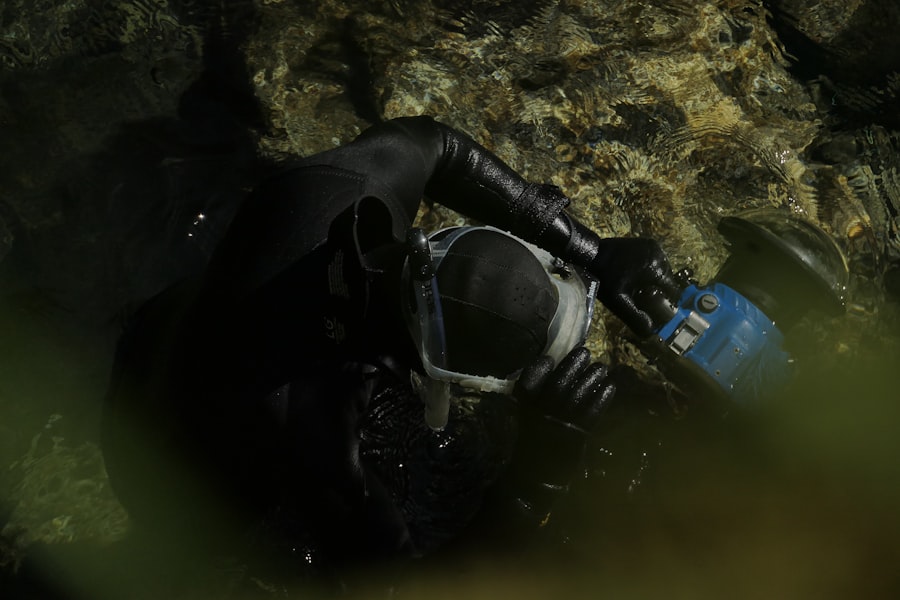
The heart of any underwater recording system lies in its transducer, the component responsible for converting acoustic pressure waves into electrical signals. The development of highly sensitive and broad-frequency-range transducers is a cornerstone of modern underwater acoustic recording.
Hydrophone Types and Sensitivity
Frequency Response and Bandwidth
Signal-to-Noise Ratio (SNR) Optimization
Signal Processing and Data Acquisition: Taming the Ocean’s Symphony
Once sound is captured by the transducers, it enters the realm of signal processing. The raw data from the underwater environment is often a complex tapestry of sounds, ranging from biological vocalizations to anthropogenic noise. Advanced processing techniques are crucial for isolating, analyzing, and interpreting this acoustic information.
Analog-to-Digital Conversion (ADC)
Noise Reduction and Filtering
Data Storage and Transmission
Recent advancements in underwater recording pod engineering have opened new avenues for marine research and exploration. These innovative devices are designed to capture high-quality audio and video in challenging underwater environments. For a deeper understanding of the implications of this technology, you can explore a related article that discusses the potential applications and future developments in this field. To read more about it, visit this insightful article that delves into the fascinating world of underwater technology.
Deployment and Maintenance: Ensuring Longevity in the Abyss
| Metric | Specification | Unit | Notes |
|---|---|---|---|
| Operating Depth | 300 | meters | Maximum depth for safe operation |
| Recording Duration | 72 | hours | Continuous recording time on full battery |
| Hydrophone Sensitivity | -165 | dB re 1V/μPa | Typical sensitivity of underwater microphone |
| Data Storage Capacity | 512 | GB | Internal solid-state storage |
| Power Supply | Li-ion Battery | Type | Rechargeable battery pack |
| Weight (in air) | 5.5 | kg | Including housing and electronics |
| Weight (in water) | 1.2 | kg | Apparent weight due to buoyancy |
| Operating Temperature Range | -5 to 40 | °C | Environmental temperature limits |
| Communication Interface | USB 3.0 / Wireless | Type | Data transfer methods |
| Dimensions (L x W x H) | 30 x 20 x 15 | cm | External pod size |
The most sophisticated recording pod is rendered useless if it cannot be reliably deployed and maintained in its operational environment. The engineering extends beyond the hardware itself to encompass the logistical and operational considerations necessary for long-term data collection.
Mooring Systems and Buoyancy Control
Power Management and Longevity
Remote Monitoring and Servicing
Environmental Impact Considerations
The engineering of underwater recording pods represents a confluence of disciplines, from mechanical and electrical engineering to material science and acoustics. Each component, from the casing that withstands crushing pressures to the algorithms that sift through sonic data, plays a critical role in unlocking the secrets of the underwater world. The evolution of this technology is not merely an incremental improvement; it is a revolution in our capacity to perceive and comprehend the vast, hidden sonic landscape beneath the waves.
The Future of Underwater Acoustics: Towards Autonomous and Intelligent Systems
The past decade has witnessed a rapid acceleration in the capabilities of underwater recording pods. What were once static, short-term deployments are evolving into dynamic, long-term platforms capable of intelligent data acquisition and analysis. This evolution is driven by several key technological advancements.
Miniaturization and Power Efficiency
Artificial Intelligence and Machine Learning for Acoustic Analysis
Networked Sensor Arrays and Distributed Sensing
Applications Driving Innovation: From Marine Biology to Defense
The demand for sophisticated underwater acoustic recording spans a diverse range of fields, each with its unique requirements and challenges. These diverse applications act as crucibles for innovation, pushing the boundaries of what is technically feasible and economically viable.
Marine Mammal Research and Conservation
Oceanographic Monitoring and Climate Change Studies
Offshore Infrastructure Development and Environmental Impact Assessment
Maritime Security and Undersea Warfare
Challenges and Limitations: An Ongoing Engineering Frontier
Despite the remarkable progress, significant challenges remain in the field of underwater acoustic recording. These are not insurmountable obstacles but rather ongoing areas of research and development that continue to shape the direction of engineering efforts.
Biofouling and its Acoustic Impact
Long-Term Power Solutions for Remote Deployments
Data Volume and Management for Global-Scale Networks
Understanding and Mitigating Anthropogenic Noise Pollution
The journey of revolutionizing sound, from the raw elemental forces of water to the intricate dance of electrical signals, is a testament to human ingenuity. Underwater recording pods are more than mere instruments; they are our eyes and ears in an alien realm, transforming our understanding of the ocean one acoustic signature at a time. As these technologies continue to mature, they promise to unveil ever deeper insights into the planet’s most enigmatic environment, revealing the silent narratives woven into the fabric of the ocean’s depths.
FAQs
What is an underwater recording pod?
An underwater recording pod is a specialized device designed to capture audio and sometimes video beneath the water’s surface. It is engineered to withstand high pressure, prevent water ingress, and provide clear recordings in aquatic environments.
What materials are commonly used in the construction of underwater recording pods?
Underwater recording pods are typically made from durable, corrosion-resistant materials such as marine-grade stainless steel, titanium, or reinforced plastics. These materials ensure the pod can endure harsh underwater conditions and maintain structural integrity.
How do underwater recording pods maintain audio quality underwater?
These pods use waterproof microphones and acoustic sensors designed to operate effectively in water. They often incorporate noise reduction technology and pressure-resistant housings to minimize distortion and capture clear sound despite underwater ambient noise.
What are the typical applications of underwater recording pods?
Underwater recording pods are used in marine biology research, underwater archaeology, environmental monitoring, and by the film and media industry for capturing aquatic sounds. They also assist in monitoring marine life behavior and underwater vehicle operations.
How deep can underwater recording pods operate?
The operational depth of underwater recording pods varies depending on their design and engineering specifications. Some pods are rated for shallow waters up to 100 meters, while advanced models can function at depths exceeding 1000 meters, suitable for deep-sea exploration.