Submarine technology has long been a frontier of innovation, pushing the boundaries of engineering and operational capability. Recent breakthroughs in this field represent not just incremental improvements, but genuine step-changes that are redefining what is possible beneath the waves. These advancements are born from a confluence of materials science, artificial intelligence, propulsion systems, and novel sensor technologies, each contributing to a more capable, stealthy, and autonomous underwater presence.
The hull of a submarine is its shield, its pressure vessel against the crushing weight of the ocean. Historically, this meant thick, heavy steel. However, new materials are now challenging this paradigm, offering superior strength-to-weight ratios and enhanced resistance to corrosive environments.
Composites and Advanced Alloys
The exploration of composite materials, such as carbon fiber reinforced polymers (CFRPs), is a significant development. These materials are not only lighter than steel, contributing to improved maneuverability and reduced fuel consumption, but they also possess inherent corrosion resistance and can be molded into complex shapes, potentially leading to more hydrodynamically efficient designs. Research is also ongoing into advanced metal alloys, including titanium and novel steel formulations, which offer greater tensile strength and fatigue resistance. The careful selection and application of these materials are crucial for optimizing both the performance and lifespan of submersible vessels.
Nanotechnology and Coatings
The application of nanotechnology is another area of emerging importance. Nanoscale coatings can provide enhanced protection against biofouling, the accumulation of marine organisms on the hull, which increases drag and reduces stealth. These coatings can also improve the acoustic properties of the hull, making submarines harder to detect. Furthermore, advancements in nanocoatings are being explored for their potential to reduce radar cross-section and thermal signatures, crucial elements in modern electronic warfare.
Morphing Hulls and Adaptive Structures
While still in the conceptual or early research phases, the idea of morphing hulls is gaining traction. Imagine a submarine hull that can subtly alter its shape to optimize for different operational conditions—perhaps becoming more streamlined for high-speed transit or adjusting its profile for stealthy maneuvering. This requires materials with remarkable flexibility and controllable structural integrity, a significant engineering challenge but one with profound implications for operational adaptability.
Recent advancements in submarine technology have been highlighted in an insightful article that explores the latest breakthroughs in underwater warfare capabilities. These innovations not only enhance stealth and maneuverability but also improve communication systems and energy efficiency. For a deeper understanding of these developments and their implications for naval strategy, you can read the full article at In the War Room.
Next-Generation Propulsion Systems
The engine room of a submarine is its heart, dictating its endurance, speed, and acoustic signature. Traditional diesel-electric and nuclear systems are being augmented and even replaced by more advanced and sustainable solutions.
Advanced Nuclear Reactors
For military submarines requiring extended submerged endurance and high operational tempo, nuclear power remains the dominant technology. However, even within this domain, there have been advancements. Newer reactor designs focus on enhanced safety features, improved fuel efficiency, and reduced maintenance requirements. The drive is towards smaller, more modular, and potentially inherently safer reactor designs that can increase operational flexibility and reduce the logistical footprint.
Fuel Cell Technologies
Fuel cells offer a promising avenue for both military and civilian submersibles, particularly for non-nuclear applications. Significantly, they operate silently and emit only water, providing a substantial stealth advantage and environmental benefit over traditional combustion engines.
Hydrogen-Based Fuel Cells
The primary focus here is on hydrogen-based fuel cells, which can convert hydrogen and oxygen into electricity, heat, and water. The challenge lies in the efficient and safe storage of hydrogen, which is often a volatile gas. Advances in solid-state hydrogen storage and the development of on-board hydrogen generation systems are critical enablers for this technology, moving it from the laboratory to practical deployment.
Other Electrochemical Systems
Beyond hydrogen, research into other electrochemical systems, such as direct methanol fuel cells or advanced battery technologies, continues. These may offer different trade-offs in terms of energy density, cost, and complexity, potentially serving niche applications or complementing existing power sources.
Electric Drive Systems
The integration of highly efficient electric drive systems, powered by advanced batteries or fuel cells, is another significant leap. These systems are inherently quieter than mechanical propulsion, contributing to reduced acoustic signatures. Moreover, the precise control offered by electric motors allows for enhanced maneuverability and silent running capabilities.
Enhanced Sensor and Sonar Suites
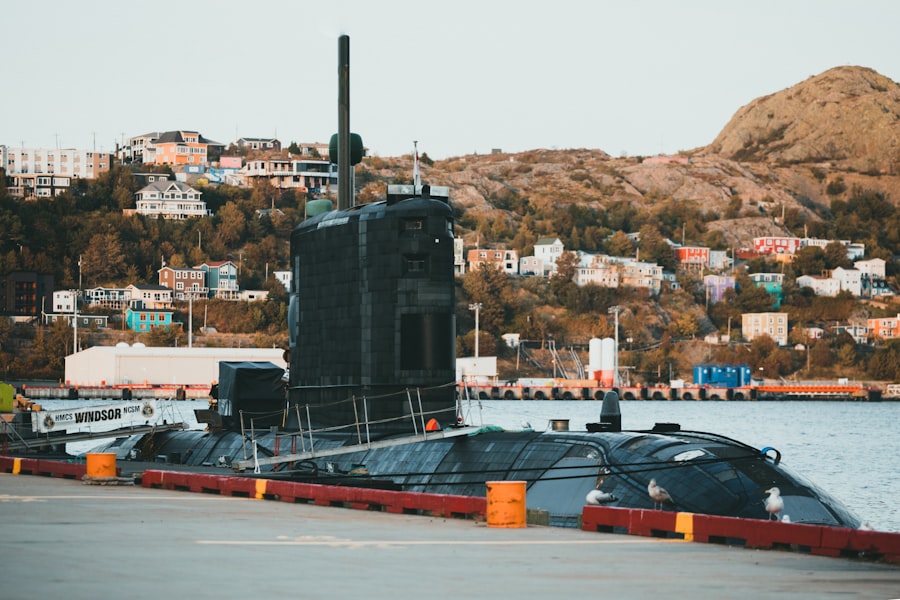
Detecting and being detected are the eternal game of cat and mouse in the underwater domain. Breakthroughs in sensor technology are tilting this balance, allowing submarines to “see” further, more clearly, and with greater subtlety.
Passive Sonar Advancements
Passive sonar relies on listening to the sounds emitted by other vessels. Modern passive sonar systems benefit from vastly improved hydrophone arrays, advanced signal processing algorithms, and machine learning techniques. These systems can now differentiate between a multitude of underwater sounds with unprecedented accuracy, identifying target types, their speed, and even their propulsion methods from longer ranges. The ability to filter out ambient noise and extract faint signals is akin to a seasoned musician picking out a single instrument in a symphony.
Active Sonar Innovations
While active sonar, which emits sound pulses and analyzes the echoes, can reveal a submarine’s presence, advancements are making it more versatile and discreet. New sonar frequencies and modulation techniques are being developed to provide higher resolution imaging while minimizing the “ping” that can give away a submersible’s position. Furthermore, the use of distributed sonar arrays, spread across the hull or deployed as independent nodes, allows for more comprehensive and less predictable acoustic mapping.
Non-Acoustic Sensing
The reliance on acoustics alone is being supplemented by a growing array of non-acoustic sensors.
Magnetic Anomaly Detectors (MAD)
Improvements in MAD technology allow for the detection of subtle variations in the Earth’s magnetic field caused by the presence of large metallic objects like submarines. These are often used in conjunction with other sensors for confirmation.
Electro-Optical and Infrared (EO/IR) Sensors
While limited by water clarity, advanced EO/IR sensors are being explored for very shallow water operations or for detecting surface phenomena associated with submarines, such as wakes or thermal plumes. The development of specialized optics that can “see” through turbid water is an area of active research.
Chemical and Biological Sensors
The detection of trace chemical or biological signatures left by submarines, such as exhaust byproducts or hull leachates, is a nascent but potentially powerful area of exploration for stealthy detection.
Autonomy and Artificial Intelligence Integration
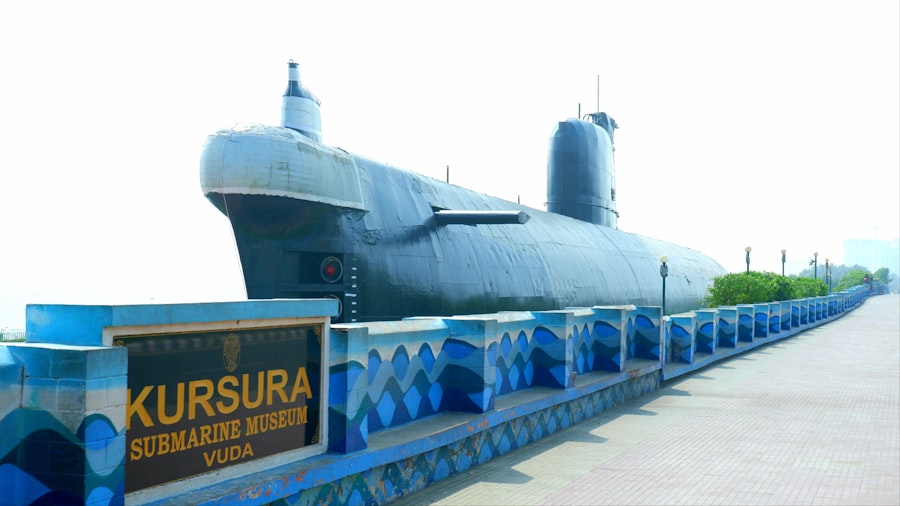
The modern submarine is evolving from a crew-dependent platform to one capable of significant autonomous operation, driven by advancements in AI.
Autonomous Navigation and Control
AI algorithms are enabling submarines to navigate complex underwater environments with minimal human intervention. This includes sophisticated pathfinding, obstacle avoidance, and dynamic replanning capabilities. The submarine can learn and adapt to changing conditions, making decisions in real-time that a human operator might not be able to process as quickly or effectively.
AI-Powered Sonar Analysis and Decision Making
As mentioned previously, AI is revolutionizing sonar analysis, allowing for faster and more accurate identification of targets. Beyond detection, AI is being integrated into tactical decision-making systems, enabling submarines to assess threats, formulate responses, and execute maneuvers with a degree of autonomy that enhances survivability and operational effectiveness. This is not about replacing human command but augmenting it, providing an intelligent co-pilot for the underwater realm.
Unmanned Underwater Vehicles (UUVs) and Swarms
The development of highly capable UUVs is a direct offshoot of this trend towards autonomy. These unmanned systems, ranging from small reconnaissance drones to larger, multi-functional platforms, can be deployed from submarines for extended missions. The concept of UUV swarms, where multiple interconnected vehicles coordinate their actions, offers a powerful new paradigm for underwater surveillance, mine countermeasures, and distributed sensing. The submarine acts as a mother ship, launching and coordinating these intelligent scouts.
Predictive Maintenance and System Health Monitoring
AI is also being applied to prognostics and health management of submarine systems. By analyzing vast amounts of operational data, AI can predict component failures before they occur, allowing for proactive maintenance and reducing the risk of mission-ending breakdowns. This is akin to having a highly trained mechanic constantly monitoring every bolt and pipe.
Recent advancements in submarine technology have significantly enhanced underwater capabilities, making them more efficient and stealthy than ever before. For those interested in exploring this topic further, a related article discusses the latest breakthroughs in submarine design and their implications for naval warfare. You can read more about these innovations in the article available at this link, which highlights how these developments are shaping the future of maritime defense strategies.
Enhanced Stealth and Counter-Stealth Technologies
| Breakthrough | Description | Year | Impact on Submarine Technology | Key Metrics |
|---|---|---|---|---|
| Air-Independent Propulsion (AIP) | Allows submarines to operate without surfacing for oxygen, increasing underwater endurance. | 2000s | Extended submerged endurance from days to weeks. | Underwater endurance: up to 3 weeks; Noise reduction: significant |
| Advanced Lithium-Ion Batteries | Improved energy storage enabling longer underwater missions and faster recharge times. | 2010s | Increased submerged speed and mission duration. | Energy density: 2-3x higher than lead-acid; Recharge time: reduced by 50% |
| Stealth Coatings and Hull Design | New materials and hull shapes reduce sonar detectability. | 2010s-2020s | Enhanced stealth capabilities, reducing detection range by enemy sonar. | Sonar cross-section reduction: up to 70% |
| Quantum Navigation Systems | Utilizes quantum sensors for precise underwater navigation without GPS. | 2020s | Improved navigation accuracy in GPS-denied environments. | Positioning accuracy: within centimeters over hours |
| Unmanned Underwater Vehicles (UUV) Integration | Deployment of autonomous drones from submarines for reconnaissance and mine countermeasures. | 2010s-2020s | Extended operational reach and reduced risk to crew. | Operational range: 50+ km; Mission duration: up to 24 hours |
Stealth, the ability to remain undetected, is arguably the most critical attribute of a modern submarine. Innovations in this area are multi-faceted, addressing acoustic, magnetic, thermal, and visual signatures.
Anomaly-Reducing Hull Designs
Beyond the materials mentioned earlier, the very shape of the hull is being re-evaluated for stealth. Designs that minimize reflections of sonar pulses and reduce hydrodynamic noise are paramount. This includes the use of non-faceted surfaces and “wedge” shapes that scatter sonar energy rather than returning a strong echo.
Advanced Acoustic Signature Reduction
This involves a multi-pronged approach. “Anechoic tile” coatings, composed of materials that absorb sonar energy, are becoming more sophisticated and effective. Innovations in machinery quieting, such as vibration isolation mounts and advanced mufflers, are also critical. The goal is to make the submarine sound like a distant whisper in the ocean’s vast chorus.
Counter-Measure Deployment Systems
Modern submarines are equipped with sophisticated systems for deploying countermeasures. These can range from acoustic decoys designed to confuse enemy sonars to expendable jammers that disrupt targeting systems. The ability to deploy these effectively and at the right moment is a critical aspect of survivability.
Thermal Signature Management
While limited by the ocean’s thermal mass, submarines do generate heat. Advanced cooling systems and hull designs that dissipate heat efficiently and minimize thermal gradients visible to infrared sensors are important. This involves not just reducing heat generation but also managing its escape into the surrounding water.
Signature Management Software
The integration of software that actively manages all of a submarine’s signatures is becoming increasingly important. This software can monitor acoustic, thermal, and magnetic emissions in real-time and adjust operational parameters to minimize detectability. It acts as a conductor, orchestrating the submarine’s symphony of silence.
These breakthroughs, taken together, signal a transformative era in submarine technology. The underwater world, once a realm of relative obscurity, is becoming increasingly transparent, and the vessels that navigate it are becoming ever more sophisticated, capable, and elusive. The relentless pursuit of innovation ensures that the submarine, a silent predator and a vital guardian, will continue to play a crucial role in the strategic landscape for decades to come.
FAQs
What are some recent breakthroughs in submarine technology?
Recent breakthroughs in submarine technology include advancements in stealth capabilities, improved battery and propulsion systems, enhanced sonar and communication technologies, and the integration of artificial intelligence for autonomous operations.
How have propulsion systems in submarines improved?
Modern submarines have seen improvements such as the development of air-independent propulsion (AIP) systems, which allow them to stay submerged longer without surfacing, and more efficient nuclear reactors that provide greater endurance and speed.
What role does artificial intelligence play in submarine technology?
Artificial intelligence is increasingly used for autonomous navigation, threat detection, data analysis, and decision-making, enabling submarines to operate more effectively with reduced human intervention.
How have sonar systems advanced in recent submarine designs?
Sonar systems have become more sensitive and capable of detecting quieter targets at greater distances. Advances include the use of low-frequency active sonar, improved signal processing, and integration with other sensor data for enhanced situational awareness.
What materials are being used to improve submarine stealth?
New materials such as anechoic coatings, advanced composites, and sound-absorbing tiles are used to reduce noise and radar signatures, making submarines harder to detect by enemy sensors.