The story of the K-129, a Soviet submarine lost at sea, culminated in one of the most audacious and technically complex deep-ocean recovery operations ever attempted. This monumental undertaking, known as Project Azorian, was spearheaded by the United States Central Intelligence Agency (CIA) and involved a level of ingenuity and perseverance that pushed the boundaries of what was believed possible in the late 1960s and early 1970s. The silent descent of the K-129 into the crushing abyss was a mystery, and its subsequent retrieval became a high-stakes game of cat and mouse played out in the unforgiving depths of the Pacific Ocean.
A Nuclear Deterrent Gone Dark
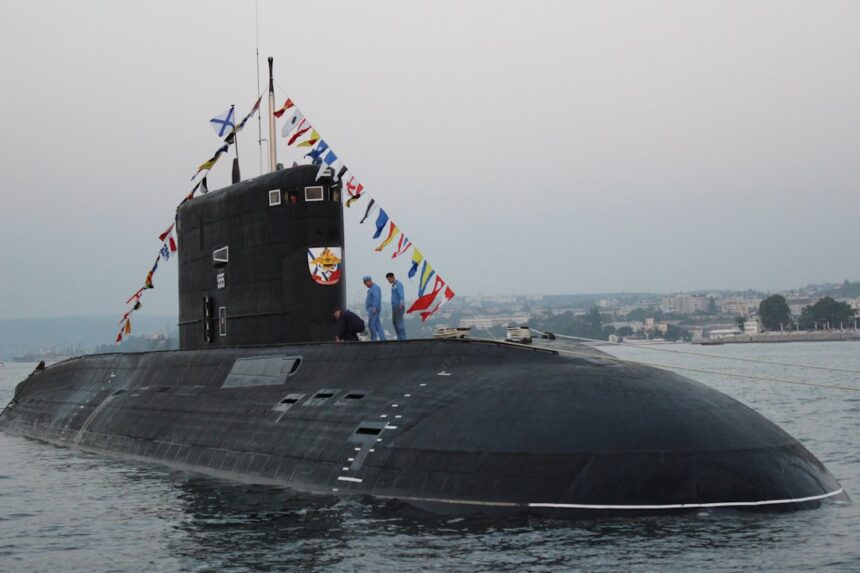
The K-129 was a Project 629-B (Golf II-class) diesel-electric submarine, a formidable vessel in the Soviet Union’s Ballistic Missile Submarine (BMS) fleet. Commissioned in 1961, it was designed to carry three R-21 ballistic missiles, each tipped with a nuclear warhead, making it a critical component of the Soviet nuclear deterrent. Operational in the Pacific Fleet, the K-129 was on a mission in March 1968 when it abruptly ceased all communication. Unlike vessels that signal their demise through distress calls, the K-129 went silent, leaving no immediate clues to its fate. This silence was a chilling void, a question mark hanging over the vast expanse of the ocean.
The Search and Discovery
The Soviet Navy initiated an extensive search operation, but the sheer scale of the Pacific made finding a submerged submarine akin to searching for a specific grain of sand on an endless beach. Meanwhile, the United States, through its sophisticated intelligence gathering capabilities, including hydrophone arrays deployed across the ocean floor, detected unusual seismic activity coinciding with the K-129‘s disappearance. These passive listening devices, like colossal underwater ears, picked up the muffled symphony of the ocean, and amidst the natural sounds, they detected the distinct acoustic signature of the submarine’s implosion and subsequent sinking. With this crucial initial data, American naval intelligence began to triangulate the potential location of the lost vessel. The estimated crash zone, a vast swathe of the Pacific thousands of feet below the surface, became the focal point of further investigation.
The Stakes of a Lost Soviet Submarine
The loss of a modern ballistic missile submarine was a significant event, not just for the Soviets but for global powers. For the United States, the K-129‘s location held immense strategic interest. The submarine carried nuclear warheads, and the possibility of these falling into the wrong hands, or even becoming unstable in the deep sea, was a grave concern. Beyond the nuclear threat, the submarine itself was a treasure trove of Soviet military technology. Recovering it could provide invaluable insights into Soviet submarine design, operational procedures, and communication systems. This knowledge would be a strategic advantage, a peek behind the Iron Curtain’s closed doors, aiding in understanding and potentially countering Soviet naval capabilities. The silence of the K-129 was not just a tragedy; it was a national security imperative for the United States.
The recent efforts to raise the K-129 submarine from the ocean floor have sparked significant interest in underwater recovery operations and their implications for historical research. For a deeper understanding of the challenges and technologies involved in such complex missions, you can read a related article that explores the intricacies of submarine recovery and its impact on naval history. Check it out here: Raising the K-129 Submarine: Challenges and Innovations.
The Dawn of Project Azorian: A CIA Undertaking
The Birth of an Audacious Idea
The intelligence gleaned from the acoustic data painted a grim picture: the K-129 had sunk to an estimated depth of over 16,000 feet in the frigid waters of the Pacific, approximately 1,500 miles northwest of Hawaii. The sheer depth rendered conventional recovery methods entirely impossible. It was a challenge that seemed to mock human capability, like trying to lift a mountain with a fishing line. However, the strategic significance of the K-129 was so profound that the CIA, operating under extreme secrecy, began to conceive of an operation that would defy all expectations. This was the genesis of Project Azorian, a name that would become synonymous with one of the most daring feats of deep-ocean engineering.
The Need for Secrecy: A Shadow Game
The Cold War was a landscape of constant espionage and counter-espionage, where every move was scrutinized, and every intelligence success was a victory in a protracted psychological war. A direct recovery of a Soviet submarine would be an overt act of aggression, potentially escalating tensions to uncontrollable levels. The CIA understood that this operation had to be conducted in the shadows, with a plausible cover story that would deflect any suspicion. The discovery and recovery of sensitive Soviet military hardware would be a profound blow to Soviet secrecy and a significant intelligence coup for the United States, but the risks associated with exposure were monumental.
The Cover Story: A Deep-Sea Mining Enterprise
To mask its true objective, the CIA conceived of an elaborate cover story: a deep-sea mining operation. This provided a perfectly logical reason for a large, specialized vessel to be operating in a remote part of the ocean for an extended period. A legitimate mining company, the Global Marine Development, Inc., was established as the front. This company announced its intention to explore and extract manganese nodules, a resource found on the ocean floor, from the very area where the K-129 lay. This narrative provided the necessary legitimacy and operational rationale, allowing a massive, clandestine project to unfold under the guise of commercial enterprise. The mining operation was the Trojan Horse, concealing the true prize within its belly.
The Technological Marvel: The Hughes Glomar Explorer
A Vessel for the Impossible
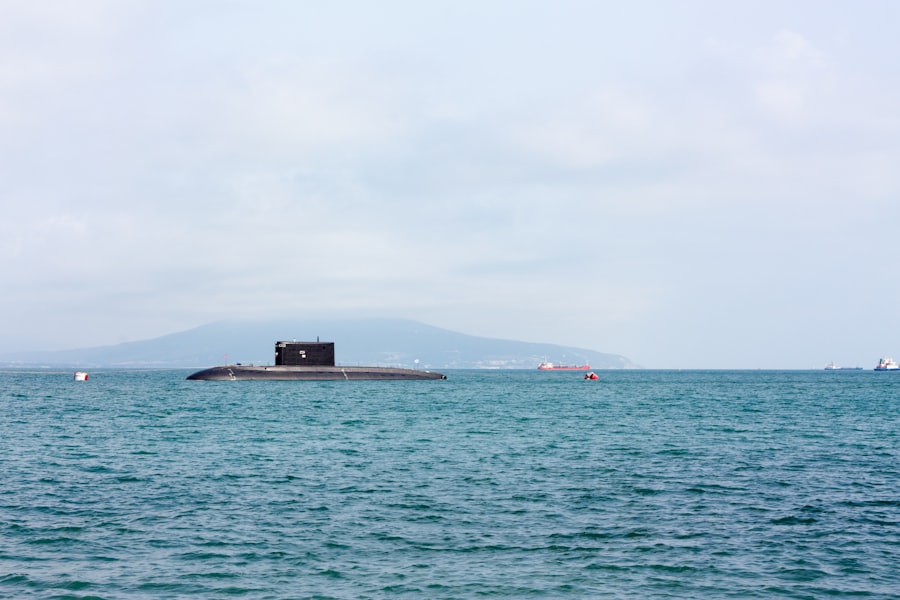
The core of Project Azorian was the recovery vessel itself. No existing ship possessed the capabilities to perform such a delicate and massive operation at such extreme depths. The CIA turned to Howard Hughes, a reclusive billionaire known for his ambitious and often extravagant technological endeavors. Hughes, through his Summa Corporation, agreed to build a specialized vessel designed for deep-ocean salvage. The result was the Hughes Glomar Explorer, a ship of unprecedented scale and technological sophistication. It was a floating testament to human ingenuity, a behemoth built to conquer the ocean’s deepest secrets.
The Heart of the Operation: The Capture Vehicle
The Glomar Explorer was not merely a large ship; it was a mobile factory and a precision instrument. Central to its design was a colossal, retractable moon pool – an opening in the hull that allowed equipment to be lowered directly into the ocean. Within this moon pool resided the “capture vehicle,” a highly advanced piece of engineering. This vehicle, nicknamed “Clover,” was a complex assembly of articulated arms, grasping mechanisms, and a platform designed to cradle and lift the submarine. It was the intricate choreography of these robotic arms that would have to secure the resting place of the K-129, a task requiring extraordinary precision.
The Lifting Mechanism: A Steel Waterfall
To lift the immense weight of the K-129 – estimated to be around 1,400 tons – a revolutionary lifting system was developed. This system involved a series of enormous steel collars that would be lowered around the submarine. These collars were attached to a massive steel pipe, a veritable waterfall of metal, which would then be gradually raised by the ship’s powerful winches. The entire process was designed to be slow and controlled, minimizing stress on the K-129 and the recovery equipment. The scale of this mechanism was staggering, a testament to the sheer force required to defy gravity at such depths.
The Delicate Dance of Recovery: Executing Project Azorian
The Deep-Ocean Waltz
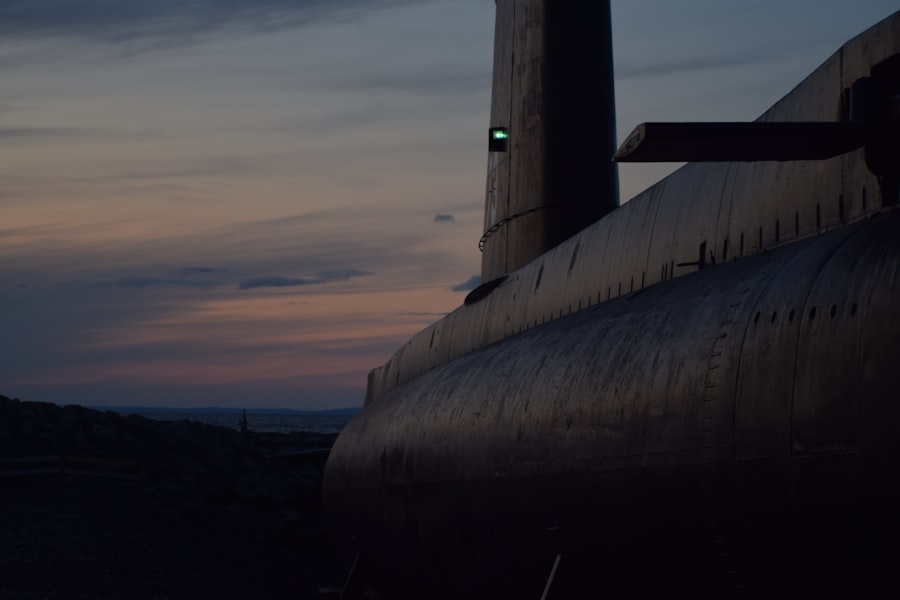
The actual recovery operation was a multi-year endeavor, commencing in the mid-1970s. The Glomar Explorer would sail to the predetermined coordinates, and the painstaking process of lowering the capture vehicle would begin. This was a delicate dance with the ocean, a slow descent into a world of crushing pressure and perpetual darkness. The capture vehicle, guided by sophisticated sonar and acoustic systems, had to be painstakingly maneuvered into position above the K-129. The slightest miscalculation could result in catastrophic failure, either damaging the submarine further or losing the capture vehicle itself.
Precision Below the Waves
The articulated arms of the capture vehicle were the instruments of this deep-ocean waltz. They had to gently but firmly grip the hull of the K-129, securing it for the arduous ascent. This required constant adjustments and real-time feedback from sensors. The pressure at these depths is immense, capable of crushing steel like a tin can, so the materials used in the capture vehicle and its components had to be exceptionally robust. Every movement was calculated, every maneuver a testament to the skill of the engineers and technicians controlling the operation from the surface.
The Ascent: A Tense Journey
Once the K-129 was secured, the ascent began. This was arguably the most tense phase of the operation. The massive steel collars were raised, slowly pulling the submarine from its resting place. The journey upwards was agonizingly slow, taking days. The immense forces at play made any sudden movements perilous. The risk of the submarine breaking apart under its own weight, or the lifting mechanism failing, loomed large. Each foot gained was a victory measured in immense tension and unwavering focus.
The Unexpected Challenge: The Half-Lifting
During one of the critical recovery attempts, a catastrophic event occurred. As the K-129 was being lifted, a significant portion of the submarine, including the missile compartment with its nuclear warheads, broke away and fell back to the ocean floor. This was a devastating setback, a stark reminder of the immense forces at play and the fragility of even the sturdiest materials under such conditions. The dream of a complete recovery was shattered, leaving only a partial prize.
The Divided Prize: What Was Recovered
Despite the catastrophic break, the forward section of the K-129, containing the control room and crew quarters, was successfully brought to the surface. This proved to be a treasure trove of intelligence for the United States. The section was towed to a classified location in the Pacific for examination. While the nuclear missiles were lost to the abyss, the recovered section provided invaluable information about Soviet submarine design, life support systems, and most importantly, the identities and resting places of the K-129‘s crew.
The efforts to raise the K-129 submarine from the ocean floor have sparked significant interest in military history and underwater recovery operations. A related article that delves into the complexities and challenges of such missions can be found on In the War Room. This piece offers insights into the technological advancements and strategic implications of recovering lost naval vessels, making it a valuable read for those intrigued by underwater archaeology and Cold War history. For more information, you can check out the article here.
The Aftermath and Legacy of Project Azorian
| Metric | Value | Unit | Description |
|---|---|---|---|
| Submarine Name | K-129 | – | Soviet Golf II-class ballistic missile submarine |
| Depth of Wreck | 4800 | meters | Approximate depth at which K-129 sank in the Pacific Ocean |
| Date of Sinking | 1968 | Year | Year when K-129 sank |
| Operation Name | Project Azorian | – | US operation to recover K-129 |
| Recovery Vessel | Glomar Explorer | – | Ship used to raise the submarine |
| Recovery Year | 1974 | Year | Year when the recovery operation took place |
| Estimated Weight of Submarine | 2000 | tons | Approximate weight of K-129 |
| Length of Submarine | 98 | meters | Length of the K-129 submarine |
| Recovery Depth Capability | 5000 | meters | Maximum depth capability of the Glomar Explorer’s lifting system |
| Duration of Recovery Operation | Several months | – | Time taken to complete the recovery operation |
The Intelligence Harvest: A Glimpse into the Soviet Mind
The salvaged section of the K-129 allowed American intelligence analysts to piece together crucial information about Soviet naval capabilities. They gained insights into the submarine’s internal layout, its communication equipment, and its operational procedures. Critically, the retrieved human remains of the Soviet crew were treated with respect. The US Navy conducted a subsurface burial service for the lost sailors, a gesture of solemn acknowledgment of their sacrifice, even during the height of the Cold War.
Leaks, Revelations, and Denials
Despite the intense secrecy surrounding Project Azorian, the sheer scale and cost of the operation, along with unusual activity detected by Soviet intelligence, inevitably led to speculation and leaks. In 1975, investigative journalist Jack Anderson published a groundbreaking article revealing the existence of Project Azorian and its true objective. This revelation sent shockwaves through the intelligence community and the public. The CIA, while not officially confirming the operation, maintained a policy of deliberate ambiguity, neither confirming nor denying the reports. This cat-and-mouse game of information continued for years, adding layers of intrigue to the already complex narrative.
The Enduring Enigma Awaiting Future Exploration
The full story of the K-129‘s loss and the subsequent recovery remains shrouded in some mystery. While Project Azorian yielded significant intelligence dividends, the ultimate fate of the missile compartment and its nuclear warheads continues to be a subject of speculation. The recovered portion of the submarine served as a stark reminder of the technological prowess and the immense risks involved in deep-ocean exploration and recovery. The K-129 rests, in part, on the ocean floor, with its story a testament to human ambition, the unforgiving nature of the deep sea, and the silent battles waged in the shadows during the Cold War. The silent depths still hold their secrets, and the legend of the K-129 serves as a powerful metaphor for the vast, unexplored frontiers that continue to challenge humanity.
FAQs
What is the K-129 submarine?
The K-129 was a Soviet Golf II-class ballistic missile submarine that sank in the Pacific Ocean in 1968 under mysterious circumstances.
Why was there an effort to raise the K-129 submarine from the ocean floor?
The United States initiated a secret project to recover the K-129 submarine to obtain Soviet military technology and intelligence during the Cold War.
How deep was the K-129 submarine located on the ocean floor?
The K-129 was located at a depth of approximately 16,500 feet (about 5,000 meters) in the Pacific Ocean.
What technology was used to attempt the recovery of the K-129?
The U.S. used a specially designed ship called the Hughes Glomar Explorer, equipped with advanced deep-sea recovery technology, including a large mechanical claw to lift the submarine.
Was the recovery of the K-129 submarine successful?
The recovery operation, known as Project Azorian, partially succeeded in raising a section of the submarine, but much of the vessel remained on the ocean floor, and many details of the mission remain classified.