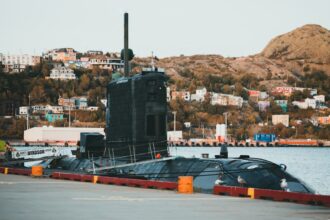
The Cold War was a crucible of technological innovation and clandestine operations, a global chess match played in the shadows as much as on the grand geopolitical board. Beneath the waves of the world’s oceans, two titanic powers, the United States and the Soviet Union, engaged in a silent, high-stakes game of undersea espionage. Two of the most audacious and technologically complex endeavors of this subterranean conflict were Project Azorian and Operation Ivy Bells. These were not mere skirmishes, but full-fledged surgical strikes against the enemy’s most guarded secrets, each pushing the boundaries of what was thought possible in the realm of covert intelligence gathering. Understanding these operations provides a crucial window into the nature of Cold War competition, demonstrating how both nations wielded their ingenuity and resources in a relentless pursuit of an advantage. Prepare to dive deep into the murky depths of submarine espionage, as we explore the profound impact and daring execution of Project Azorian and Operation Ivy Bells.
The genesis of Project Azorian lay in a catastrophic event for the Soviet Union: the sinking of the K-129 submarine in the Pacific Ocean in 1968. This diesel-electric attack submarine, a significant component of the Soviet Pacific Fleet, was not just any vessel. It represented a generation of Soviet naval technology, and with its loss came not only the tragedy of over 90 lost souls but also the disappearance of invaluable military secrets. The exact cause of the K-129’s demise remains a subject of debate, ranging from a faulty missile launch to an accidental explosion. However, the consequence for the United States was clear: a potential goldmine of intelligence lay at the bottom of the ocean, a veritable treasure chest waiting to be cracked open.
The K-129: A Technological Integral of Soviet Naval Power
The K-129 was a Golf II-class submarine, a variant of the earlier Golf I class, designed for both conventional and ballistic missile deterrence. Its operational capabilities included the deployment of R-21 ballistic missiles, a crucial element of the Soviet Union’s nuclear triad. For Soviet strategists, submarines like the K-129 were the unseen teeth of their naval power, capable of delivering a devastating retaliatory strike. Their ability to operate submerged for extended periods made them elusive and a constant threat. The loss of such a vessel was a significant blow to Soviet naval capability and prestige.
The Significance of Soviet Submarine Technology
Soviet submarine technology during the Cold War was characterized by a blend of robust engineering and, at times, ingenious adaptation. While often perceived as less sophisticated than their Western counterparts in certain areas, Soviet submarines were built for survivability and operational effectiveness. The K-129, as an example of their ballistic missile submarine fleet, represented a tangible threat and a significant investment of national resources. Gaining an understanding of its technological specifications, operational protocols, and most importantly, its cryptographic secrets, would offer the United States an unprecedented strategic advantage. This was not merely about knowing what weapons the Soviets possessed, but understanding how they operated them, how they communicated, and how they defended themselves.
Assessing the Strategic Implications of the K-129’s Wreckage
From the perspective of American intelligence, the sinking of the K-129 presented a unique and compelling opportunity. The wreckage could hold the key to unlocking critical Soviet military capabilities. Imagine a detective discovering the mastermind’s entire operation manual at the scene of a crime; the potential for understanding and preempting future actions is immense. The United States had been diligently tracking Soviet naval movements, but the K-129’s ultimate resting place was a mystery. Pinpointing its location was the first, and perhaps most formidable, hurdle. The implications of recovering material from the K-129 were vast:
- Intelligence on Ballistic Missile Technology: Understanding the R-21 missile system, its guidance systems, and its launch mechanisms would be invaluable.
- Cryptographic Materials: Recovering codebooks and other communication devices would allow the US to potentially decrypt Soviet communications.
- Operational Procedures and Tactics: Insights into Soviet submarine doctrine, deployment strategies, and operational readiness could be gleaned from onboard equipment and logs.
- Naval Engineering and Design: The physical submarine itself would provide a detailed blueprint of Soviet naval engineering capabilities.
The perceived value of this intelligence was so high that it spurred the development of an operation of unparalleled ambition: Project Azorian.
Project Azorian and Operation Ivy Bells are two fascinating covert operations from the Cold War era that highlight the lengths to which the United States went to gather intelligence on Soviet submarine technology. For a deeper understanding of these operations and their implications, you can explore a related article that delves into the intricacies of underwater espionage and the technological advancements of the time. To read more about this topic, visit this article.
Project Azorian: A Herculean Effort to Salvage the Unsalvageable
Project Azorian was not a simple recovery mission; it was a colossal undertaking, a feat of engineering and operational secrecy that bordered on the fantastical. Spearheaded by the Central Intelligence Agency (CIA) and supported by a consortium of private companies, this operation aimed to lift the K-129 from its grave over 16,000 feet below the surface of the Pacific Ocean. The sheer audacity of this objective is difficult to overstate. It was akin to trying to pull a skyscraper out of the Mariana Trench with nothing but a fishing line. The challenges were immense, spanning technological, logistical, and environmental hurdles.
The Technological Marvel of the Glomar Explorer
At the heart of Project Azorian was the development of a specialized vessel, the Glomar Explorer. This ship was not just a boat; it was a mobile industrial complex, designed to overcome the immense pressures and complexities of deep-sea salvage. Its most revolutionary feature was itsHughes Mining Vacuum (HMV), a colossal, articulated mechanical claw capable of grasping and lifting submarines. The Glomar Explorer was a ghost in the machine, a phantom ship built in secrecy, its true purpose veiled by a cover story of deep-sea mining for manganese nodules. This carefully crafted facade was essential to maintaining the secrecy of the operation, preventing Soviet intelligence from discovering the true nature of the venture.
The Hughes Mining Vacuum: A Deep-Sea Grappling Hook
The HMV was a testament to American ingenuity. This gargantuan piece of equipment, designed and built by Global Marine Inc., was designed to operate in the crushing depths where conventional submersibles could not survive. It was essentially a colossal, multi-jointed robotic arm equipped with a massive claw, capable of securing and lifting the K-129. The precision required to maneuver such a device at such extreme depths, in the absence of direct human intervention to control the finer movements, was a technological marvel. Imagine directing a surgeon’s scalpel with perfect accuracy from miles above, through miles of water, and you begin to grasp the complexity. The HMV’s design incorporated sophisticated hydraulic systems and advanced control mechanisms, making it a pioneering piece of underwater robotics.
Maneuvering the Kraken: The Challenges of Deep-Sea Retrieval
The actual process of lifting the K-129 was fraught with peril. The immense pressure at these depths could crush any conventional vessel, and the currents, though subtle, could still buffet the salvage equipment. The Glomar Explorer had to maintain its position with extreme accuracy, acting as a stable platform for the HMV. The process was slow, agonizingly so, with each millimeter of ascent representing a victory against the unforgiving environment. The sheer weight of the submarine, combined with the mass of the lifting equipment, placed unprecedented stress on the Glomar Explorer‘s systems. Furthermore, the ocean floor itself is not a flat, pristine surface. The K-129 was likely partially buried or resting on uneven terrain, adding further complications to the grappling process. The operation demanded a level of logistical coordination and engineering prowess that was, at the time, unparalleled.
The Cover Story: Mining for Nodules and Deception
The elaborate cover story was as critical to Project Azorian’s success as the engineering itself. The United States, through its shell corporation Global Marine, presented the Glomar Explorer as a vessel engaged in legitimate deep-sea mining operations. This served multiple purposes. Firstly, it provided a plausible reason for the ship’s presence in the area. Secondly, it allowed for the discreet construction and deployment of the specialized salvage equipment without raising immediate suspicion. The Soviet Union, while undoubtedly vigilant, would have been more inclined to view a mining operation as a commercial endeavor rather than a clandestine intelligence recovery mission. This sophisticated deception was a vital layer of protection, allowing the project to proceed under the radar, a ghost in the vast ocean.
Project Azorian and Operation Ivy Bells are two fascinating examples of Cold War espionage, showcasing the lengths to which the United States went to gather intelligence on Soviet submarine capabilities. For a deeper understanding of these operations and their implications on modern military strategy, you can explore a related article that delves into the intricacies of underwater surveillance and intelligence gathering. This insightful piece can be found here, providing a comprehensive overview of how these historical missions shaped contemporary naval tactics.
The Partial Success and the Lingering Questions
While Project Azorian did indeed manage to lift a significant portion of the K-129, including its iconic sail and a section of its missile compartment, the operation was not a complete success. A critical part of the submarine, believed to contain the most sensitive intelligence, broke away during the ascent and sank back to the ocean floor. Nevertheless, the salvaged materials provided an invaluable intelligence windfall. The recovered sections yielded intelligence on Soviet naval capabilities, including details about their nuclear missile systems and cryptographic methods. However, the ultimate prize, the full secrets of the K-129, remained partially elusive, leaving a lingering sense of what might have been.
Operation Ivy Bells: Tapping into the Enemy’s Undersea Communications

While Project Azorian focused on physically recovering enemy assets, Operation Ivy Bells took a different, yet equally audacious, approach to intelligence gathering: tapping directly into the enemy’s communication lines. This operation targeted Soviet submarine communication cables laid on the ocean floor, essentially planting a bug on the Soviets’ underwater telephone lines. The goal was to intercept classified communications between Soviet submarines and their command centers, providing real-time insights into their movements, intentions, and operational plans.
The Vulnerability of Undersea Cables
Undersea communication cables are the arteries of global communication, carrying vast amounts of data. During the Cold War, the Soviet Union, like the United States, relied heavily on these cables for both military and civilian communication. However, these cables, lying on the seabed, presented a unique vulnerability. They represented a physical, and therefore potentially exploitable, pathway for information transfer. The idea of intercepting these communications was, in essence, to eavesdrop on the enemy’s private conversations, a detective’s dream come true.
The Cold War Arms Race in Underwater Technology
The development of technology capable of accessing and tapping these deep-sea cables was a direct product of the Cold War arms race. Both nations were constantly seeking an edge, and the ability to intercept enemy communications was a significant advantage. This race spurred innovation in submersible technology, sonar capabilities, and miniaturization of electronic listening devices. The challenges were immense: operating in deep water, deploying and maintaining sensitive equipment without detection, and ensuring the integrity of the tapped signal. These were not simple wiretaps; they were sophisticated underwater operations requiring the highest level of technical expertise and secrecy.
The USS Halibut: A Dedicated Spy Submarine
The primary platform for Operation Ivy Bells was the USS Halibut, a specialized submarine designed and modified for intelligence-gathering missions. Initially a Regulus missile submarine, the Halibut was extensively refitted and equipped with specialized tools for electronic surveillance and cable tapping. It was designed to operate stealthily, to deploy and manipulate equipment on the seabed, and to survive in the challenging undersea environment. The Halibut‘s capabilities allowed it to remain submerged for extended periods, patiently awaiting the opportune moment to intercept Soviet communications.
Modifying a Warship into a Listening Post
The transformation of the USS Halibut was a remarkable feat of engineering and adaptation. Its missile tubes were replaced with equipment for deploying remotely operated vehicles (ROVs) and other specialized tools. A sophisticated array of sonar and sensor systems was installed, enabling the Halibut to detect and map undersea cables. The submarine was also equipped with a large hangar space to store and deploy the equipment necessary for tapping the cables, including a device that could be clamped onto a cable to siphon off its data. This made the Halibut not just a submarine, but a mobile, covert listening station, a silent predator lurking in the depths.
The Tapping Process: Implantation and Interception
The process of tapping Soviet undersea cables was intricate and dangerous. The Halibut would locate a target cable, typically a high-traffic route where sensitive Soviet military communications were likely to be transmitted. Using its ROVs and specialized manipulators, the submarine would then attach a listening device to the cable. This device would record and relay intercepted communications back to the Halibut. The operation required immense patience and precision. The crew had to avoid detection by Soviet sonar and patrol submarines, and the installation of the tap had to be done without damaging the cable or alerting the Soviets to its presence. It was like performing delicate surgery on a living organism, with the risk of discovery lurking in every shadow.
Maintaining Secrecy: The Silent Watch
Maintaining the secrecy of Operation Ivy Bells was paramount. Any hint of success would prompt the Soviets to take countermeasures, such as rerouting cables or deploying their own counter-intelligence assets. The Halibut and its crew operated under extreme secrecy protocols. Missions were often conducted in remote locations, and any retrieved intelligence was handled with the utmost discretion. The success of Ivy Bells depended on its ability to remain undetected, a silent predator feeding on the enemy’s secrets. The operational tempo was high, with the submarine often undertaking multiple deployments to different cable locations over its service life.
The Intelligence Goldmine and its Compromise
Operation Ivy Bells proved to be an exceptionally successful intelligence-gathering operation. For several years, the United States was able to intercept a significant volume of Soviet military communications, gaining invaluable insights into Soviet naval activities, strategic planning, and operational readiness. This information provided a critical advantage in understanding the Soviet threat and informing US defense policy. However, like many clandestine operations, Ivy Bells eventually met its undoing due to human frailty. In 1971, Soviet counter-intelligence managed to plant a device on one of the tapped cables, which later exploded, disabling the tap and potentially revealing the operation to the Soviets. This compromise marked the end of Ivy Bells’ most fruitful period, underscoring the constant cat-and-mouse game played by both sides.
The Legacy of Azorian and Ivy Bells: Defining Cold War Espionage
Project Azorian and Operation Ivy Bells stand as towering examples of the lengths to which nations would go to gain an intelligence advantage during the Cold War. These operations were not just technically challenging; they were ethically and psychologically demanding, pushing the boundaries of human endeavor in the pursuit of national security. Their legacies are complex, marked by both extraordinary success and profound limitations, ultimately shaping our understanding of Cold War espionage.
A Glimpse into the Submarine Shadow War
These operations provided a tangible glimpse into the vast and often unseen “submarine shadow war” that characterized the Cold War. Beyond the surface-level naval posturing, a silent, technological arms race unfolded beneath the waves. Azorian represented a bold, almost theatrical, attempt to seize intelligence directly from enemy wreckage, while Ivy Bells embodied a patient, insidious approach of intercepting communications. Together, they illustrate the multifaceted nature of undersea espionage, a realm where ingenuity and audacity were the currencies of power.
The Technological Arms Race Under the Waves
The development of the Glomar Explorer, the Hughes Mining Vacuum, and the specialized modifications to the USS Halibut are testaments to the relentless technological innovation driven by the Cold War. These were not incremental improvements; they were leaps in engineering designed to overcome seemingly insurmountable challenges. The constant quest for an advantage spurred the development of advanced robotics, deep-sea exploration technologies, and sophisticated electronic surveillance capabilities that would have lasting impacts beyond their military applications.
The Ethics and Morality of Covert Operations
The highly classified nature of both Project Azorian and Operation Ivy Bells raises ethical questions about the limits of state-sponsored espionage. While the pursuit of intelligence is a fundamental aspect of national security, the methods employed, such as the potential for grave desecration in Azorian and the violation of communication privacy in Ivy Bells, invite scrutiny. These operations, by their very nature, operated in a moral gray zone, where the ends were seen to justify the means, a common characteristic of the Cold War’s stark dichotomy.
The Unseen Cost of Secrecy and Deception
The human cost and the psychological toll on the personnel involved in these highly classified operations cannot be overlooked. The constant need for secrecy, the deception required to maintain the operations, and the inherent risks involved placed immense pressure on those undertaking these missions. The ethical considerations extend to the potential for unintended consequences, the risk of escalating tensions, and the long-term implications of actions taken in the shadows.
The Enduring Impact on Intelligence Gathering
The lessons learned from Project Azorian and Operation Ivy Bells continue to resonate in contemporary intelligence gathering. The principles of deep-sea salvage, remote operation of underwater vehicles, and sophisticated signal intelligence techniques have evolved and remain vital tools in the modern intelligence toolkit. These operations demonstrated the strategic importance of the undersea domain and the necessity of developing specialized capabilities to operate within it.
A Paradigm Shift in Deep-Sea Reconnaissance
Both operations fundamentally altered the paradigm of deep-sea reconnaissance. They proved that the seemingly inaccessible depths of the ocean could be a theater for intelligence gathering, provided that the necessary technological and operational resources were deployed. The success, albeit partial, of Azorian in recovering significant portions of a submarine, and the sustained intelligence gain from Ivy Bells, highlighted the immense potential for clandestine operations in this vast, unexplored frontier. These historical examples serve as foundational case studies for understanding the evolution of sub-surface intelligence capabilities.
In conclusion, Project Azorian and Operation Ivy Bells were not just chapters in Cold War history; they were pivotal moments that defined the very essence of covert submarine espionage. They stand as testaments to human ingenuity, courage, and the relentless pursuit of an edge in a world teetering on the brink. The echoes of these ambitious endeavors continue to shape the landscape of national security and remind us that even in the deepest, darkest places, the quest for knowledge is a powerful, and often perilous, driving force.
FAQs
What was Project Azorian?
Project Azorian was a secret CIA operation during the early 1970s aimed at recovering a sunken Soviet submarine, K-129, from the Pacific Ocean floor. The project involved the use of a specially designed ship, the Hughes Glomar Explorer, to raise parts of the submarine for intelligence purposes.
What was Operation Ivy Bells?
Operation Ivy Bells was a covert U.S. Navy mission during the Cold War that involved tapping into Soviet underwater communication cables in the Sea of Okhotsk. The operation aimed to intercept and gather intelligence on Soviet naval communications.
How did Project Azorian and Operation Ivy Bells differ in their objectives?
Project Azorian focused on physically recovering a sunken Soviet submarine to obtain intelligence materials, while Operation Ivy Bells was centered on electronic surveillance by tapping underwater communication cables to intercept Soviet military communications.
Were both Project Azorian and Operation Ivy Bells successful?
Project Azorian achieved partial success by recovering a portion of the submarine, though much of the operation remained classified and faced technical challenges. Operation Ivy Bells was successful in gathering valuable intelligence for several years until it was compromised in the early 1980s.
What impact did these operations have on Cold War intelligence efforts?
Both operations significantly enhanced U.S. intelligence capabilities during the Cold War. Project Azorian provided insights into Soviet submarine technology, while Operation Ivy Bells offered direct access to Soviet naval communications, contributing to strategic advantages in monitoring Soviet military activities.