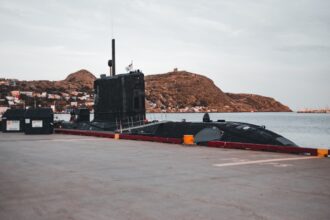
The ocean, a vast and largely unexplored frontier, has long held secrets within its depths. For decades, one such secret, a monumental undertaking shrouded in international intrigue and Cold War paranoia, lay buried beneath the Pacific’s waves. This is the story of Project Azorian, a clandestine operation by the U.S. Central Intelligence Agency (CIA) to recover a sunken Soviet submarine, the K-129, and its contents. The documentary, “Project Azorian: Uncovering the Secret History,” delves into the remarkable and often bewildering genesis, execution, and afterlife of this audacious gambit, piecing together a narrative that reads like a spy thriller, yet is firmly rooted in historical fact. This film offers a rare glimpse behind the curtain of covert espionage, revealing the sheer audacity and immense resources deployed in a shadowy battle for technological and intelligence superiority.
A Cold War Casualty
The year is 1968. The Cold War is at its zenith, an era of escalating tensions where every technological advancement and piece of intelligence is a currency of immense value. It is in this charged atmosphere that the Soviet submarine K-129, a Golf II-class diesel-electric ballistic missile submarine, met its end. The exact cause of the sinking remains a subject of debate, with theories ranging from a missile accident during a depth charge exercise to a structural failure under pressure. Whatever the cause, the K-129, carrying nuclear-tipped ballistic missiles and its entire crew, vanished approximately 1,560 nautical miles northwest of Hawaii. Its loss was a significant blow to the Soviet Union, not only in terms of military hardware but also in terms of the potential embarrassment of losing a state-of-the-art vessel. The Soviet Navy initiated search operations, but ultimately, the K-129’s resting place remained undiscovered by them.
The Discovery from Above
For the United States, the sinking of the K-129 presented a unique and tantalizing opportunity. U.S. intelligence, with its sophisticated surveillance capabilities, detected the Soviet sub’s distress signals and, crucially, its trajectory and eventual resting place. The U.S. Navy’s intelligence division, Task Force 14, using sound surveillance systems, was able to pinpoint the approximate location of the sunken vessel. This discovery was more than just a naval event; it was a strategic goldmine waiting to be unearthed. The potential to examine Soviet missile technology firsthand, to understand their operational capabilities, and to glean insights into their strategic thinking was an intelligence coup of unparalleled magnitude. The K-129 was not merely a wreck; it was a treasure chest of secrets.
The documentary “Project Azorian: The Secret History” delves into the covert operation conducted by the CIA to recover a sunken Soviet submarine from the depths of the Pacific Ocean during the Cold War. For a deeper understanding of the geopolitical implications and the intricate details surrounding this operation, you can explore a related article that provides additional insights and context. Check it out here: Related Article on Project Azorian.
Operation Azorian: The CIA’s Audacious Plan
Birth of a Secret Mission
The discovery of the K-129’s resting place in the crushing depths of the Pacific Ocean sparked intense debate and planning within the upper echelons of the U.S. government. The idea of recovering the submarine, a task of unprecedented engineering and logistical complexity, was born from the desire to deny the Soviets this technology and, more importantly, to acquire it for American analysis. The Central Intelligence Agency, with its mandate for covert operations and its access to vast resources, was ultimately tasked with spearheading this ambitious endeavor. The codename assigned to this highly classified operation was “Azorian.” The name itself, evoking ancient myths and far-flung lands, hinted at the epic scale and secrecy of the undertaking.
The Technological Hurdle: A Ship Unlike Any Other
The sheer depth at which the K-129 lay—over 16,000 feet—presented a formidable obstacle. No existing vessel or underwater recovery technology was capable of reaching and lifting such a massive object from such extreme depths. The challenge was akin to lifting a skyscraper from the deepest trench of the ocean. To overcome this, the CIA conceived of a revolutionary, custom-built recovery vessel. This ship, the Glomar Explorer, was designed by Admiral Hyman G. Rickover, the father of the nuclear Navy, and built by Lockheed Corporation. Its defining feature was a massive, retractable moon pool, a large opening in the center of the ship’s hull, through which a sophisticated lifting device could be lowered. This “capture claw,” a complex piece of engineering, was designed to grapple the submarine’s hull and slowly, painstakingly, lift it to the surface.
The Cover Story: A Mining Expedition
The enormous scale of the Glomar Explorer and its peculiar operations demanded a plausible cover story. Building and operating such a vessel in the open ocean would undoubtedly draw international attention, particularly from the Soviet Union. The CIA, therefore, concocted an elaborate deception: the Glomar Explorer was a civilian research vessel operated by a shell corporation called Global Marine. Its stated purpose was deep-sea mining, specifically searching for manganese nodules. This cover story, while intricate, served its purpose in masking the true objective of Project Azorian, allowing the operation to proceed under a veil of purported scientific inquiry rather than clandestine espionage. The ocean, a place of natural discovery, was ingeniously repurposed as a stage for a covert intelligence operation.
The Glomar Explorer: A Ship of Deception
A Technical Marvel
The Glomar Explorer was, in essence, a technological marvel of its time. Disguised as a commercial mining vessel, it housed an array of sophisticated equipment designed for deep-sea operations. Its sheer size and the presence of its enormous moon pool made it instantly recognizable, yet its true purpose remained a closely guarded secret. The ship was equipped with advanced navigation systems, powerful winches, and the cutting-edge lifting mechanism that was central to Project Azorian’s success. Its construction and operation were a testament to American ingenuity and its willingness to invest heavily in achieving its strategic objectives. It was a ship built not for commerce, but for conquest of the ocean’s depths.
The J.M. Martinac Shipbuilding Corporation
The construction of the Glomar Explorer was entrusted to the J.M. Martinac Shipbuilding Corporation in Tacoma, Washington. The scale of the project was immense, and the secrecy surrounding it meant that workers involved in its construction were kept largely in the dark about its ultimate purpose. The ship’s unique design, particularly the large moon pool, was a topic of much speculation, but the official explanation of deep-sea mining provided a convenient, albeit misleading, rationale. The shipyard, a place usually associated with the visible output of naval and commercial vessels, became a silent partner in a secret operation that would echo through the annals of espionage.
Global Marine: The Corporate Facade
To further distance the operation from the U.S. government, a shell corporation named Global Marine was established. This company, registered in Liberia, served as the official operator of the Glomar Explorer. This corporate facade was a crucial element of the deception, providing a layer of plausible deniability should the true nature of the mission be discovered. Global Marine’s operations were, in reality, entirely orchestrated by the CIA, a complex web of corporate structures designed to conceal the agency’s involvement. It was a clear illustration of how the Cold War spurred creative and often elaborate stratagems to maintain the advantage.
The Recovery: A Delicate Dance with the Abyss
The Great Lift: A Herculean Task
In the summer of 1974, after years of preparation and construction, the Glomar Explorer set sail for the recovery site of the K-129. The operation, dubbed “Salt Lake,” was a monumental undertaking. The process of lowering the massive lifting mechanism, the “capture claw,” to the ocean floor was a slow and meticulous endeavor, fraught with peril. The pressures at these depths are immense, capable of crushing any ordinary object. The claw, designed to engage with the K-129’s hull, had to be precisely maneuvered. Once secured, the arduous process of lifting the submarine began. This was a test of endurance and engineering, a painstaking ascent that could take days. Each inch gained was a victory against the crushing weight of the ocean.
Not All That Was Promised
The documentary reveals that the recovery operation was not entirely successful. While a significant portion of the K-129 was brought to the surface, it broke apart during the ascent, scattering debris across the ocean floor. Crucially, the section containing the submarine’s classified nuclear missile technology and cryptographic equipment was lost, sinking back to the depths. Thus, while the U.S. managed to retrieve parts of the Soviet submarine, including some of its crew’s remains, the primary intelligence prize – the intact missile systems – eluded them. The ocean, in its unforgiving embrace, retained some of its secrets.
The Aftermath of the Lift
The retrieved remains of the Soviet sailors were given a dignified burial at sea, a respectful acknowledgment of their service and sacrifice. However, the classified nature of Project Azorian meant that the true extent of the operation and its partial success remained a closely guarded secret for decades. The CIA continued to maintain the facade of deep-sea mining, and the Glomar Explorer was eventually retired from service. The legend of Project Azorian persisted within intelligence circles, a whispered tale of an audacious, almost mythical undertaking.
The documentary “Project Azorian: The Secret History” delves into the covert operations of the CIA during the Cold War, particularly focusing on the ambitious attempt to recover a sunken Soviet submarine. For those interested in exploring more about the intricacies of espionage and intelligence operations, a related article can be found at In the War Room, which provides deeper insights into the strategies and implications of such secret missions. This connection highlights the ongoing fascination with historical events that shaped modern intelligence practices.
The Unveiling: Decades in the Shadows
| Metric | Details |
|---|---|
| Project Name | Project Azorian |
| Operation Type | Secret CIA salvage operation |
| Year Conducted | 1974 |
| Location | North Pacific Ocean, near Kamchatka Peninsula |
| Objective | Recover sunken Soviet submarine K-129 |
| Submarine Depth | Approximately 16,500 feet (5,000 meters) |
| Recovery Vessel | Hughes Glomar Explorer |
| Duration of Operation | Several months in 1974 |
| Success Rate | Partial recovery of submarine sections |
| Documentary Release Year | Varies (e.g., 2010, 2018 versions) |
| Documentary Focus | Secret history, Cold War espionage, CIA operations |
| Notable Revelations | Details of covert salvage technology and geopolitical impact |
The Watergate Connection and the Media Leak
The existence of Project Azorian remained a closely guarded secret for years. However, the complex web of secrecy began to unravel in the mid-1970s, particularly in the wake of the Watergate scandal. Investigative journalists, digging into the covert activities of the U.S. government, began to uncover hints of a massive, clandestine operation involving a peculiar ship and an unusual mission. The New York Times, in particular, played a crucial role in bringing the story to light. The exposure of Project Azorian, even in piecemeal fashion, sent ripples through the intelligence community and the public consciousness.
The Documentary’s Revelation
The documentary “Project Azorian: Uncovering the Secret History” directly addresses the reader by piecing together these historical fragments and presenting a comprehensive account of the operation. It utilizes declassified documents, interviews with former intelligence operatives, engineers, and maritime historians, and archival footage to paint a vivid picture of Project Azorian. The film aims to lift the veil of secrecy that has long surrounded this remarkable undertaking, offering audiences an unprecedented understanding of the motivations, the immense challenges, and the unintended consequences of this covert mission. It is an attempt to bring to light a significant, yet largely unknown, chapter of the Cold War.
The Legacy of Azorian
Project Azorian stands as a testament to the extreme measures taken by both superpowers during the Cold War to gain a strategic advantage. It highlights the vast resources, the technological innovation, and the sheer human ingenuity that were poured into the clandestine battles waged far from the public eye. The operation, while not achieving its ultimate intelligence objective, undeniably pushed the boundaries of underwater engineering and covert operations. It serves as a compelling case study in the complexities of international espionage, the ethics of intelligence gathering, and the enduring power of secrets buried deep beneath the waves, secrets that this documentary seeks to finally explore.
FAQs
What was Project Azorian?
Project Azorian was a secret CIA operation during the Cold War aimed at recovering a sunken Soviet submarine, K-129, from the Pacific Ocean floor in 1974. The mission involved using a specially designed ship, the Hughes Glomar Explorer, to raise the submarine for intelligence purposes.
Why is Project Azorian considered a secret history?
The operation was highly classified due to its sensitive nature involving espionage and Cold War tensions. Details about the mission were kept secret for decades to avoid diplomatic fallout and to protect intelligence methods, making its history largely unknown until declassified documents and documentaries revealed the story.
What does the Project Azorian documentary cover?
The documentary explores the planning, execution, and aftermath of Project Azorian, including interviews with former CIA operatives, engineers, and historians. It provides insight into the technical challenges, political implications, and the broader context of Cold War espionage.
What was the outcome of Project Azorian?
The mission partially succeeded in recovering a section of the Soviet submarine, but much of the vessel remained on the ocean floor. The operation yielded valuable intelligence but also faced technical difficulties and secrecy challenges.
How did Project Azorian impact Cold War intelligence operations?
Project Azorian demonstrated the lengths to which the U.S. government would go to gather intelligence during the Cold War. It showcased advanced engineering and covert operations, influencing future espionage tactics and submarine recovery missions.