Project Azorian stands as one of history’s most audacious and enigmatic clandestine operations. Undertaken by the United States Central Intelligence Agency (CIA) in the 1970s, its primary objective was to recover a sunken Soviet submarine, the K-129, which had tragically sunk in the Pacific Ocean in 1968. This endeavor was not merely a salvage operation; it was a high-stakes gamble, a chess match played on the ocean floor with the spoils being invaluable intelligence and a potentially significant propaganda victory. The sheer scale of the undertaking, shrouded in layers of secrecy and deception, has cemented Project Azorian’s place as a landmark in the annals of covert action and a compelling case study in the future of secrecy itself.
The Silent Departure
The K-129 was a Project 629 diesel-electric ballistic missile submarine, a workhorse of the Soviet Pacific Fleet. On March 8, 1968, it departed from its base in Rybachiy, Kamchatka, on a routine patrol mission. Its mission was to observe American naval activities near Hawaii, a standard but critical role in the Cold War’s constant game of cat and mouse. The submarine carried a complement of 98 officers and crew, all bound together by the shared experience of life beneath the waves, a world of confined spaces and perpetual vigilance. Their departure, like so many others, was a silent one, a familiar ritual of the naval life.
An Unexplained Demise
The K-129 never returned to port. Its disappearance sent ripples of concern through the Soviet Navy, prompting immediate search efforts. However, the vastness of the Pacific Ocean is a formidable adversary, and the submarine’s signal eventually faded into the abyss. The official Soviet explanation for the sinking, as later revealed, was an internal explosion in one of its missile compartments, leading to its rapid descent. Yet, without the recovery of the hull, the exact cause remained, and to some extent still remains, a subject of speculation. The ocean had claimed its secret, burying it deep within its cold embrace.
The Intelligence Vacuum
For the United States, the loss of the K-129 presented a unique and compelling opportunity, albeit born from tragedy. The submarine was armed with nuclear-tipped ballistic missiles, and its operational systems, including its codebooks and advanced sonar technology, represented a treasure trove of intelligence. The ability to examine these components firsthand could provide unparalleled insights into Soviet naval capabilities, strategic intentions, and technological advancements. The thought of such sensitive material falling into the wrong hands, or remaining forever lost, was a strategically unacceptable outcome for the US intelligence community.
Project Azorian, a covert operation by the CIA in the 1970s to recover a sunken Soviet submarine, exemplifies the complexities of state secrecy and intelligence operations. For a deeper exploration of how such historical endeavors shape the future of secrecy and intelligence practices, you can read the related article on this topic at In the War Room. This article delves into the implications of past operations on contemporary intelligence strategies and the ongoing challenges of maintaining secrecy in an increasingly transparent world.
The Birth of an Audacious Plan: Project Azorian Takes Shape
The Strategic Imperative
The Cold War was a period characterized by an intense, often covert, competition for technological and military superiority. The sinking of the K-129 offered a fleeting window to gain a decisive intelligence advantage. The potential benefits of recovering the submarine were immense. It could reveal the secrets of Soviet crypto-graphic systems, the specifics of their missile deployment strategies, and the intricacies of their submarine detection technologies. This information was not merely academic; it was vital for the ongoing security and strategic planning of the United States.
The Scale of the Challenge
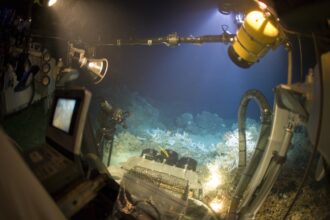
The K-129 had sunk in the depths of the Pacific Ocean, an area known as the abyssal plain, at a depth of approximately 16,000 feet. Recovering an object of that size and weight from such an extreme environment was, in the 1970s, a feat that bordered on science fiction. The technology required to achieve such a rescue did not readily exist off the shelf. It would necessitate the development of entirely new and highly sophisticated machinery, capable of withstanding immense pressure and operating with surgical precision in an environment vastly different from anything encountered on land.
The Genesis of the Cover Story
Given the sensitive nature of the mission, complete secrecy was paramount. The operation could not be attributed to the US Navy or the CIA. Therefore, a sophisticated cover story was essential. This cover story needed to be plausible enough to deflect suspicion from any naval or intelligence activities. The idea that emerged was a commercial deep-sea mining venture, specifically targeting manganese nodules, which were then believed to be a potentially valuable resource. This provided a legitimate reason for operating a large vessel in the remote Pacific and for employing sophisticated underwater equipment.
The Unveiling of the Glomar Explorer: A Trojan Horse of Ingenuity

A Vessel of Deception
At the heart of Project Azorian lay the Glomar Explorer, a colossal vessel purpose-built for the operation. This ship, resembling a massive floating dock with a complex array of cranes and equipment, was the physical embodiment of the deception. Its construction was disguised as part of a deep-sea mining research program, a facade painstakingly maintained by Global Marine Inc., a civilian company contracted by the CIA. The Glomar Explorer was designed with a unique “centerwell” mechanism, a large opening in the hull through which the salvage equipment could be lowered.
The Gigantic Cranes and the Capture Vehicle
The Glomar Explorer was equipped with an extraordinarily powerful lifting system, capable of hoisting immense weights. The key to the salvage operation was a massive, custom-built submersible called the Clementine, later known as the Mouth. This “capture vehicle” was designed to maneuver itself beneath the sunken submarine and, using a sophisticated docking and clamping mechanism, latch onto the K-129. Once secured, the Glomar Explorer‘s cranes would then lift the entire assembly slowly and carefully from the ocean floor.
The Technological Leap
The development of the Glomar Explorer and its associated salvage equipment represented a significant technological undertaking. It pushed the boundaries of engineering and materials science. The immense pressures at 16,000 feet would have crushed conventional submersibles and equipment. The solutions developed by American engineers were groundbreaking, requiring innovative designs for hydraulic systems, specialized alloys, and precise control mechanisms. This technological sophistication was, in itself, a testament to the dedication and ingenuity that underpinned Project Azorian.
The Expedition and the Ebb Tide of Success

The Voyage to the Abyss
In July 1974, the Glomar Explorer set sail for the designated recovery zone, a remote stretch of the Pacific Ocean southwest of Hawaii. The journey was fraught with anticipation and the constant threat of discovery. The crew onboard, a mix of CIA operatives, naval personnel in civilian guise, and civilian contractors, were all bound by the shared secret and the immense pressure of the mission. The vast ocean offered both concealment and an ever-present danger of a breach in security.
The First Attempt and the Tragic Setback
The initial salvage attempt was a harrowing affair. The Clementine successfully docked with the K-129, and the lifting process began. However, at a depth of approximately 6,000 feet, a critical structural failure occurred. A portion of the submarine, specifically the forward missile compartment, broke away from the main hull during the ascent. The bulk of the K-129, including its most sensitive intelligence-laden sections, plummeted back to the ocean floor, lost once more. This moment must have felt like a cruel twist of fate, a near-complete victory snatched away at the last moment.
A Partial Victory, A Lingering Mystery
Despite the catastrophic loss of the majority of the submarine, the salvage operation was not a complete failure. The detached forward section, which contained some of the K-129’s nuclear warheads and potentially some codebooks, was recovered. The recovered warheads were safely disarmed, and the retrieved components provided a limited but still valuable intelligence windfall. However, the primary objective – the full recovery of the K-129 – had not been achieved. The ocean floor held onto the majority of its secrets.
Project Azorian, a covert operation by the CIA to recover a sunken Soviet submarine, highlights the intricate balance between national security and the ethics of secrecy. As we look to the future of secrecy in intelligence operations, it is essential to consider the implications of such missions on public trust and accountability. For a deeper understanding of these themes, you can explore a related article that discusses the evolving landscape of intelligence and its impact on society. This insightful piece can be found here.
The Legacy of Azorian: A Blueprint for Future Secrecy
| Metric | Project Azorian | Future of Secrecy |
|---|---|---|
| Year Initiated | 1974 | Ongoing |
| Primary Objective | Recovery of Soviet submarine K-129 | Enhancing information security and intelligence gathering |
| Estimated Cost | Approximately 800 million | Varies by technology and scope |
| Secrecy Level | Top Secret | Increasingly complex with advanced encryption and AI |
| Technological Innovations | Deep-sea recovery vessel (Hughes Glomar Explorer) | Quantum cryptography, AI-driven surveillance |
| Impact on Intelligence Community | Set precedent for covert operations and technology use | Shaping future policies on privacy and data protection |
| Public Awareness | Low until partial disclosure in 1975 | Growing due to leaks and whistleblowers |
The Power of Deception
Project Azorian demonstrated the potent effectiveness of layered deception. The creation of a believable, albeit complex, cover story allowed a highly sensitive operation to proceed without immediate detection or interference. The use of a civilian façade, the elaborate construction of a specialized vessel, and the recruitment of a diverse workforce all contributed to an exceptionally successful veil of secrecy, at least for the duration of the operation itself. This approach, like a master magician’s misdirection, created a diversion that allowed the true act to unfold unseen.
The Limits of Technology and the Tides of Information
While Project Azorian showcased remarkable technological innovation, it also highlighted the inherent limitations of even the most advanced capabilities when confronted with the unforgiving realities of nature. The depth of the ocean proved a formidable barrier, and the stresses of the salvage operation exposed weaknesses in the engineering. Furthermore, the eventual, albeit limited, revelation of the project underscores that even the most tightly held secrets are not immune to time and external pressures. The tide of information, however slow, can eventually wear away the strongest defenses.
The Ethical and Philosophical Implications
The ethical considerations of Project Azorian are complex. The operation involved extensive deception, the manipulation of individuals for a clandestine purpose, and the handling of nuclear materials. The moral calculus of national security often involves difficult trade-offs, and Azorian stands as a stark example of such choices. Philosophically, it raises questions about the nature of truth, the role of covert action in international relations, and the perpetual tension between transparency and security. The ghost of the K-129 continues to haunt these debates, a silent testament to the often-unseen machinations of power. The future of secrecy, as evidenced by Project Azorian, will continue to be a delicate dance between the desire to know and the necessity of concealment.
FAQs
What was Project Azorian?
Project Azorian was a secret CIA operation in the early 1970s aimed at recovering a sunken Soviet submarine, K-129, from the Pacific Ocean floor. The mission involved the use of a specially designed ship, the Hughes Glomar Explorer, to covertly raise the submarine for intelligence purposes.
Why was Project Azorian considered significant in the history of espionage?
Project Azorian was significant because it demonstrated advanced underwater recovery technology and covert operations during the Cold War. It highlighted the lengths to which intelligence agencies would go to obtain critical information and marked a milestone in deep-sea salvage and secrecy.
What challenges did Project Azorian face in maintaining secrecy?
Maintaining secrecy was challenging due to the scale of the operation, the involvement of multiple contractors, and the need to disguise the true purpose of the Hughes Glomar Explorer as a commercial mining vessel. Despite efforts, some details eventually became public, leading to a rare example of a partially declassified covert mission.
How has Project Azorian influenced modern intelligence and secrecy practices?
Project Azorian influenced modern intelligence by showcasing the importance of technological innovation and compartmentalization in covert operations. It also underscored the need for balancing secrecy with operational transparency, shaping how agencies manage classified projects today.
What does the future of secrecy look like in intelligence operations?
The future of secrecy in intelligence operations is expected to involve advanced cyber capabilities, increased use of artificial intelligence, and enhanced encryption methods. However, it also faces challenges from greater information leaks, digital surveillance, and public demand for transparency, requiring evolving strategies to protect sensitive information.