Project Azorian, a clandestine operation veiled in secrecy, stands as a monumental testament to human ingenuity and an audacious gambit orchestrated by the Central Intelligence Agency (CIA) during the Cold War. Its primary objective: to recover a sunken Soviet submarine, the K-129, from the crushing depths of the Pacific Ocean. This was no mere salvaging operation; it was a complex ballet of engineering, logistics, and espionage, a deep-sea heist with the highest possible stakes. This article delves into the intricate technical specifications that underpinned Project Azorian, a project that pushed the boundaries of what was thought possible in underwater recovery and technological development.
The K-129, a diesel-electric submarine of the Project 629 (Golf II class) missile submarine, met its catastrophic end in March 1968. While the precise cause of its demise remains a subject of speculation, it is widely believed to have sunk approximately 600 nautical miles northwest of Hawaii. The submarine’s depth, estimated to be between 15,000 and 16,000 feet (approximately 4,500 to 5,000 meters), rendered conventional salvage methods utterly unfeasible. The sheer pressure at these abyssal depths is immense, capable of crushing even the most robust structures with ease. Imagine the weight of hundreds of elephants pressing down on every square inch – this was the environment the Project Azorian team sought to conquer.
The Significance of the K-129
The strategic importance of the K-129 could not be overstated. This particular submarine was believed to be armed with nuclear ballistic missiles, including several R-21 (SS-N-5 Serb) missiles, each tipped with a nuclear warhead. Recovering the K-129 offered the United States a treasure trove of intelligence.
Cryptographic Intelligence
The most immediate and sought-after intelligence would have been the submarine’s cryptographic equipment and codebooks. Access to Soviet naval codes would have been a priceless asset, allowing the US to decrypt Soviet communications and gain an unparalleled advantage in monitoring naval movements and strategic intentions. This intelligence alone could have tipped the scales of the Cold War balance in favor of the United States.
Technical Intelligence
Beyond cryptography, the submarine itself represented a significant technological prize. Understanding the inner workings of Soviet submarine technology, from sonar systems to propulsion and weapon delivery systems, would have provided invaluable insights into the capabilities and limitations of the Soviet naval arsenal. This knowledge could have informed US naval development, leading to the creation of countermeasures and more effective defense strategies. The missile technology itself, if recovered intact, would have offered a direct glimpse into Soviet nuclear missile capabilities, including their range, accuracy, and fusing mechanisms.
Political Implications
The recovery of a lost Soviet asset would have also carried significant political implications. It would have demonstrated a remarkable level of technological prowess to both allies and adversaries. While the operation was conducted in utmost secrecy, the very act of reaching such depths and recovering such a significant object, even if unknown to the public, would have been a powerful statement of capability.
Project Azorian, a covert operation by the CIA in the 1970s, aimed to recover a sunken Soviet submarine from the depths of the Pacific Ocean. For those interested in the technical specifications and the engineering challenges faced during this ambitious project, a related article can provide valuable insights. You can explore more about the intricacies of the operation and its technological aspects in this detailed analysis found at this link.
The Vessel: The Glomar Explorer
The cornerstone of Project Azorian’s technical prowess was the specially constructed vessel, the Glomar Explorer. This was not just a ship; it was a floating engineering marvel, designed from the outset for a mission of unprecedented difficulty. The Glomar Explorer was a maritime platform, a colossal beast of steel and ingenuity, engineered to be the ultimate deep-sea crane. Its massive size and unique design allowed it to house and operate the sophisticated equipment necessary for the Azorian endeavor.
Design and Purpose
The Glomar Explorer was a converted maritime research vessel, specifically modified to carry and deploy the massive recovery system. Its primary distinguishing feature was a large, semi-submersible hull, designed to provide exceptional stability in rough seas. This stability was crucial, as the recovery operation would demand precise positioning and control of heavy equipment over vast stretches of turbulent ocean.
The “Watson Box” and Moon Pool
A critical element of the Glomar Explorer‘s design was its “Watson box” – a massive opening in the center of the ship, extending down through the hull. This “moon pool” served as the gateway for the recovery equipment to descend into the ocean depths. This was the umbilical cord connecting the surface world to the silent abyss, a controlled aperture through which the impossible would be attempted. The moon pool’s design minimized the impact of surface waves on the submerged equipment, ensuring a more stable and controlled descent and ascent.
Stability and Displacement
The vessel’s immense displacement of approximately 50,000 tons, combined with its semi-submersible design, provided remarkable roll and pitch stability. This was akin to a rock rooted in the seabed, resisting the ocean’s capricious whims. The ability to maintain a stable platform at sea was a non-negotiable requirement for success.
Construction and Modification
The Glomar Explorer was not built from scratch for Project Azorian. Instead, it was a heavily modified civilian barge, the T-2 barge. The transformation from a relatively simple barge to a sophisticated deep-sea recovery platform was a colossal undertaking. The hull was significantly strengthened, and a massive internal structure was erected to support the enormous weight and stresses associated with the recovery equipment. This transformation was a testament to the resourcefulness and engineering prowess of the team, repurposing existing assets into instruments of unprecedented capability.
Hidden Capabilities
During its construction and modification, the Glomar Explorer‘s true purpose was carefully concealed. It was publicly presented as a deep-sea mining research vessel, a plausible cover story that deflected suspicion from its true clandestine mission. This deception was a vital layer of the operation’s security, ensuring that the Soviet Union remained unaware of the impending recovery attempt. The ship, in essence, wore a mask of innocence, belying the extraordinary power it harbored beneath its unassuming exterior.
The Recovery System: The Giant Claw
The heart of Project Azorian lay in its revolutionary recovery system, famously dubbed the “Giant Claw.” This was a piece of engineering so audacious, so intricate, that it bordered on the realm of science fiction. It was a mechanical leviathan, designed to descend thousands of feet, grasp a submerged submarine, and ascend with its immense prize intact. It was the culmination of years of research, development, and countless sleepless nights.
Design Principles
The design of the Giant Claw was dictated by the extreme environmental conditions of the deep ocean. Pressure, darkness, and the sheer weight of the target all presented formidable challenges. The system had to be robust enough to withstand these forces while also being precise enough to achieve a secure grip on a delicately balanced wreck.
Mechanical Gripping Mechanism
The core of the Giant Claw was a complex array of mechanical arms and grippers. These were designed to engage with specific points on the K-129’s hull, ensuring a secure and stable hold. The grippers were engineered to apply controlled pressure, avoiding damage to the submarine and its contents. The mechanism was a sophisticated puzzle, with each piece needing to fit perfectly to achieve the desired outcome.
Ballast and Buoyancy Control
The ability to control the descent and ascent of the massive claw was paramount. This was achieved through a sophisticated ballast system, which allowed engineers to precisely manage the weight and buoyancy of the Claw throughout its journey. This control system acted like the lungs of the machine, taking in and expelling water to navigate the vertical expanse.
Deployment and Operation
The deployment of the Giant Claw was a carefully orchestrated ballet of massive mechanical components. The entire system was housed within the Glomar Explorer‘s Watson box, ready to be lowered into the abyss.
The “Catio” – Submersible Platform
A key component of the deployment system was a submersible platform, often referred to as the “Catio.” This independent submersible, equipped with its own propulsion and maneuvering capabilities, acted as a guide and locator for the Giant Claw. Upon reaching the vicinity of the K-129, the Catio’s crew would meticulously position the Claw for engagement.
Precise Maneuvering
The descent of both the Catio and the Giant Claw required unparalleled precision. Using thrusters and sophisticated navigation systems, operators would guide the massive machinery through the water column, avoiding obstacles and ensuring that the Claw was aligned perfectly with the target. This was akin to threading a needle in a hurricane, demanding absolute focus and control.
The “Capture” Maneuver
The moment of truth was the engagement of the Claw with the K-129. This critical maneuver involved slowly lowering the Claw until its grippers engaged with designated points on the submarine’s hull. Once securely latched, the Claw, with the submerged submarine attached, would then initiate its ascent.
The Support Infrastructure: Communication and Navigation
Project Azorian was not merely about a ship and a giant claw; it was an ecosystem of interconnected systems, where communication and navigation were the vital arteries that sustained the entire operation. Without accurate positioning and seamless communication, the ambitious undertaking would have been doomed from the start. This was a nerve center, pulsing with data and directives, coordinating efforts across vast distances and depths.
Global Positioning and Navigation
Navigating to the precise location of the K-129, a point in the vast Pacific Ocean, required state-of-the-art navigation systems. The Glomar Explorer employed a combination of terrestrial and satellite-based navigation techniques to maintain its position with remarkable accuracy.
Loran-C and Omega Navigation
Early forms of electronic navigation, such as Loran-C and Omega, played a role in the initial positioning of the vessel. These systems provided relatively precise long-range navigation capabilities, helping to guide the Glomar Explorer to the general vicinity of the wreck.
Inertial Navigation Systems (INS)
For more precise maneuvering and tracking of the recovery equipment, Inertial Navigation Systems (INS) were crucial. These systems, which use gyroscopes and accelerometers, can track a vessel’s movement without external references, providing highly accurate positional data, especially for localized operations.
Doppler Sonar and Acoustic Navigation
Once on station and actively engaged in the recovery, Doppler sonar and acoustic navigation systems became indispensable. These systems allowed operators to accurately track the movement of the Giant Claw and its interaction with the seabed and the K-129, ensuring precise alignment and control during the delicate capture maneuver.
Communication Systems
Maintaining constant and secure communication between the Glomar Explorer, its support vessels, and potentially, remote intelligence agencies was a critical requirement.
High-Frequency (HF) Radio
Standard high-frequency radio communication was employed for general contact and data transmission between vessels. This provided a reliable, albeit sometimes limited in bandwidth, communication channel across the vast expanse of the ocean.
Satellite Communication (SATCOM)
For more secure and higher-bandwidth communication, satellite communication systems were utilized. These systems allowed for the transmission of more complex data, including early forms of video and detailed operational reports, back to intelligence agencies for analysis. The satellites acted as messengers in the sky, relaying vital information across continents.
Underwater Acoustic Communication
During the actual recovery phase, when the equipment was submerged, traditional radio waves would not penetrate the water. To overcome this, underwater acoustic communication systems were employed. These systems used sound waves to transmit data between the surface vessel and the submerged equipment, enabling real-time monitoring and control. This was akin to speaking in a secret language understood only by those submerged.
Project Azorian, a covert operation by the CIA during the Cold War, aimed to recover a sunken Soviet submarine from the depths of the Pacific Ocean. For those interested in the intricate technical specifications and challenges faced during this ambitious endeavor, a related article can provide valuable insights into the engineering feats achieved. You can explore more about this fascinating project and its implications in the article found at In The War Room. This resource delves into the operational details and the innovative technologies that made Project Azorian possible.
Security and Deception Measures
| Specification | Details |
|---|---|
| Project Name | Project Azorian |
| Purpose | Recovery of sunken Soviet submarine K-129 |
| Recovery Vessel | Hughes Glomar Explorer |
| Vessel Length | 618 feet (188 meters) |
| Vessel Beam | 102 feet (31 meters) |
| Recovery Depth Capability | Approximately 16,500 feet (5,000 meters) |
| Recovery Device | Mechanical claw (“Capture Vehicle”) |
| Project Duration | 1974 – 1975 |
| Estimated Submarine Weight | Approximately 2,000 tons |
| Recovery Success | Partial recovery of submarine sections |
Project Azorian was as much a triumph of engineering as it was a masterclass in clandestine operations. The paramount concern was to achieve its objective without the Soviet Union’s knowledge. This required a multi-layered approach to security and deception, designed to create a fog of secrecy around the operation. The entire endeavor was a carefully constructed illusion, a stage play on the high seas.
Maintaining Secrecy During Construction and Deployment
The very genesis of the project was shrouded in secrecy. The modifications to the T-2 barge were carried out in a way that minimized external observation. The construction of the Giant Claw and its associated equipment was also done under tight security protocols, with personnel carefully vetted and operations compartmentalized.
Cover Story: Deep-Sea Mining
As mentioned, the publicly presented cover story for the Glomar Explorer was that of a deep-sea mining research vessel. This provided a plausible explanation for its construction, its advanced equipment, and its presence in remote oceanic locations. The guise of commercial exploration was a subtle yet effective shield.
Compartmentalization of Information
Throughout the project, information was strictly compartmentalized. Personnel were only given access to the information necessary for their specific tasks, minimizing the risk of leaks. This ensured that no single individual possessed the complete picture of Project Azorian.
Operational Security
Once the Glomar Explorer was at sea, operational security remained a top priority.
Misinformation and Diversionary Tactics
There is speculation that diversionary tactics may have been employed to further mask the true nature of the operation. This could have involved creating the appearance of other research activities or movements that would draw attention away from the actual recovery zone.
Limited Crew and Tight Control
The crew of the Glomar Explorer was carefully selected, and operations were conducted under strict supervision. Any unauthorized communication or behavior was highly discouraged and would have resulted in immediate dismissal from the project. The ship was a closed ecosystem, with every element under tight control.
Continuous Threat Assessment
Throughout the mission, continuous threat assessments were conducted to monitor for any signs of Soviet surveillance or interference. This allowed the project leadership to adapt their strategies and maintain the element of surprise. The team was like vigilant sentinels, constantly scanning the horizon for any hint of discovery.
In conclusion, Project Azorian represents a watershed moment in the history of covert operations and deep-sea engineering. The technical specifications of its components, from the colossal Glomar Explorer to the intricate Giant Claw, underscore a level of ambition and innovation that pushed the boundaries of what was considered achievable. While the ultimate success of the mission in terms of intelligence gathered remains a topic of historical debate, the sheer audacity and technical brilliance of Project Azorian stand as an enduring testament to human ingenuity in the face of seemingly insurmountable challenges. The operation was a high-stakes gamble, a testament to the belief that even the most profound secrets of the ocean could be unearthed, if the right tools and the right minds were applied.
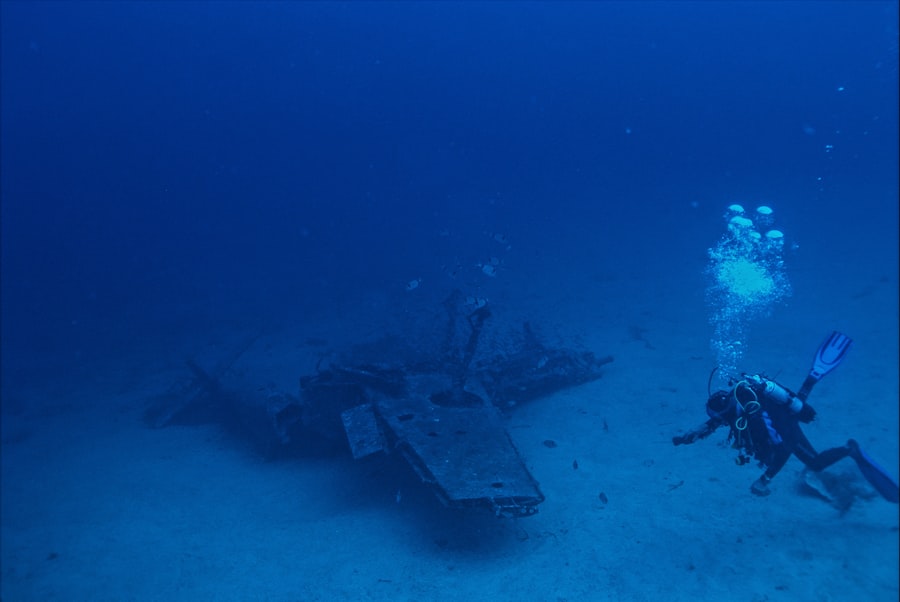
WATCH NOW ▶️ The CIA’s Impossible Mission To Steal A Nuclear Submarine
FAQs
What was the primary objective of Project Azorian?
Project Azorian was a secret CIA operation during the early 1970s aimed at recovering a sunken Soviet submarine, K-129, from the Pacific Ocean floor.
What type of vessel was used in Project Azorian?
The project utilized the specially designed ship named the Hughes Glomar Explorer, which was built to conduct deep-sea recovery operations.
What were some key technical features of the Hughes Glomar Explorer?
The Hughes Glomar Explorer was equipped with a massive mechanical claw, known as the “capture vehicle,” capable of operating at depths of approximately 16,500 feet (5,000 meters) to retrieve objects from the ocean floor.
How deep was the submarine that Project Azorian aimed to recover?
The Soviet submarine K-129 was located at a depth of about 16,500 feet (5,000 meters) in the Pacific Ocean.
Was Project Azorian successful in recovering the submarine?
Project Azorian partially succeeded; the recovery operation retrieved a portion of the submarine, but much of it remained on the ocean floor due to technical difficulties during the lift.