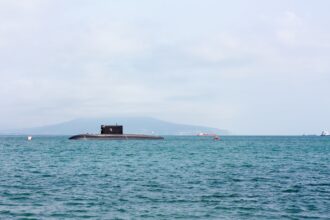
By the dawn of the Cold War, the ocean depths became another theater of operations, a silent battleground where technological prowess and espionage played out in the crushing darkness. Among the most audacious gambits enacted in this underwater domain was the CIA’s clandestine undertaking known as Operation Phoenix, a mission shrouded in secrecy aimed at salvaging the wreckage of a Soviet submarine from the seabed. This operation represented a high-stakes gamble, a quest to plunder the secrets locked within the steel tomb of a nation’s most advanced maritime technology.
The geopolitical landscape of the 1960s was a powder keg, with the United States and the Soviet Union locked in a perpetual struggle for technological and military superiority. The space race captured public imagination, but beneath the waves, a silent arms race was unfolding. The development of nuclear-powered submarines, capable of launching ballistic missiles, presented a grave threat and an irresistible intelligence prize. The ability to understand and counter these underwater behemoths was paramount for national security.
The Nuclear Imperative
The advent of nuclear submarines fundamentally altered the strategic balance. These vessels, propelled by nuclear reactors, possessed unparalleled endurance and speed, allowing them to patrol vast oceanic expanses undetected. Their payload of nuclear-tipped ballistic missiles posed an existential threat, capable of striking targets thousands of miles away. The United States, therefore, had an urgent need to glean any information that could provide an advantage in this escalating technological arms race. Understanding Soviet submarine design, propulsion systems, sonar capabilities, and weapon systems was vital.
The Intelligence Void
Despite extensive efforts, the intelligence gathered on Soviet submarine programs remained incomplete. While satellite imagery and electronic eavesdropping provided some insights, the physical examination of a captured or salvaged vessel offered a truly unparalleled depth of knowledge. Such an opportunity would be akin to a treasure hunter finally locating a lost pirate cove, brimming with untold riches of strategic information. The challenge, however, lay in the sheer audacity and technical complexity of retrieving such a prize from the unforgiving ocean floor.
The Unforeseen Opportunity: The Loss of K-129
In 1968, an event occurred that would provide the catalyst for Operation Phoenix. The Soviet submarine K-129, a Golf II-class diesel-electric ballistic missile submarine, sank in the Pacific Ocean under circumstances that remain the subject of speculation. The exact cause of its demise is still debated, but the fact remained: a substantial Soviet military asset now rested on the seabed, some 16,000 feet below the surface. This presented the United States with a tantalizing, albeit incredibly difficult, intelligence opportunity.
In a fascinating exploration of Cold War espionage, the CIA’s operation to raise a sunken Soviet submarine is detailed in an article that sheds light on the complexities and risks involved in such covert missions. This operation not only aimed to recover valuable intelligence but also showcased the lengths to which the United States was willing to go to gain an upper hand during a tense period in history. For more insights into this intriguing topic, you can read the full article at In The War Room.
The Immense Technical Hurdle: Plumbing the Depths
The prospect of lifting a submarine weighing thousands of tons from a depth that would crush a conventional submersible was a challenge of monumental proportions. It was a problem that pushed the boundaries of engineering and naval technology, a Gordian knot of immense complexity. The crushing pressures, the extreme cold, and the vast distances involved created an environment that was nothing short of alien.
Navigating the Abyss
Reaching the K-129 required specialized vessels and equipment that were either non-existent or in their nascent stages of development. Submersibles capable of withstanding such extreme pressures were rare, and the machinery needed to remotely manipulate and lift such a massive object was beyond the capabilities of most existing naval arsenals. The operation was akin to asking a surgeon to perform a delicate procedure within a microscopic laboratory suspended in the vacuum of space.
The Pressure Paradox
Water pressure increases dramatically with depth. At 16,000 feet, the pressure is approximately 7,000 pounds per square inch, enough to pulverize an object that has not been specifically engineered to withstand it. Any vessel or equipment used for the recovery had to be built with incredibly strong materials and sophisticated designs to resist this immense force. The very act of descending into such a zone was a technological feat in itself.
The Shadow of Detection
Operating on the ocean floor, especially when engaged in clandestine activities, carried a high risk of detection by Soviet naval forces. The operation had to be conducted with the utmost secrecy, employing subterfuge and innovative methods to mask their activities. Any perceived Soviet presence in the area would have been a red flag, potentially jeopardizing the entire mission and escalating tensions between the superpowers.
The Design of the Glomar Explorer: A Technological Marvel Takes Shape
To overcome the formidable technical challenges, the CIA, in collaboration with the U.S. Navy and industrial partners, embarked on the design and construction of a vessel unlike any seen before. This was not merely a ship; it was a floating laboratory, a mobile factory, and a high-tech crane all rolled into one. Its purpose-built nature was a testament to the desperation and the determination to achieve the mission’s objectives.
A Ship with a Secret Agenda
The vessel that would become the linchpin of Operation Phoenix was christened the Hughes Glomar Explorer. Officially, it was presented as a deep-sea mining vessel, designed to explore the feasibility of extracting manganese nodules from the ocean floor. This ingenious cover story served as a perfect smokescreen, allowing for the development and testing of technologies that would be utterly unachievable if their true purpose were known. It was a masterful piece of misdirection.
The Capture Component: The “Cigar” and the “Gargantuan Clamp”
The heart of the Glomar Explorer‘s capability lay in its unique apparatus. Central to the retrieval was a colossal, two-part mechanical gripper system. This system, often referred to as the “Cigar” due to its cylindrical shape, was lowered to the seabed. Once in position, it would open like a gargantuan pair of jaws, designed to envelop the raised section of the K-129. The engineering required to maneuver such a massive grapple in the ocean’s depths, with minimal visibility and under immense pressure, was astounding.
The Lifting Mechanism: Unprecedented Power
Once the “Cigar” had secured a portion of the submarine, the task of lifting it to the surface began. This was achieved by a massive steel pipe, known as the riser pipe, lowered from the Glomar Explorer. The “Cigar” was attached to the bottom of this pipe, and as the pipe was raised, it carried the captured submarine wreckage with it. The immense weight of the submarine and the pipe system demanded an unprecedented lifting capacity from the Glomar Explorer‘s winches and derrick.
The Covert Execution: Operation Phoenix in Action
With the Glomar Explorer ready, the operation moved from the drawing board to the vast expanse of the Pacific. The mission unfolded with a meticulous blend of advanced technology, stringent security protocols, and a healthy dose of luck. Every movement, every communication, was carefully orchestrated to avoid detection.
The Deceptive Demeanor of the Glomar Explorer
The Glomar Explorer‘s cover as a deep-sea mining vessel was rigorously maintained. Its crew was trained to play their roles convincingly, and its operations were designed to mimic genuine mining activities. The ship’s movements across the Pacific were logged under the guise of mineral exploration, a plausible if somewhat unusual pursuit for a vessel of its size and capabilities. This elaborate charade was the key to unlocking the mission’s potential.
The Risky Retrieval
The actual retrieval process was a nerve-wracking affair. The Glomar Explorer would position itself above the wreck site, a process that itself was fraught with challenges due to unpredictable ocean currents and the need for precise positioning. The riser pipe was then meticulously lowered, a process that could take days. Once the “Cigar” was in place, the delicate maneuvering to secure the submarine wreckage commenced. The slightest miscalculation could result in the loss of the precious cargo or, worse, the sinking of the retrieval apparatus itself.
The Unforeseen Complication: The Breakage of the Wreckage
During one of the retrieval attempts, a critical flaw in the plan, or perhaps a consequence of the K-129’s already compromised structural integrity, resulted in a catastrophic event. The immense strain of the retrieval process caused the submarine to break apart. The forward section, which contained the most sensitive intelligence, was too severely damaged and was lost as it plummeted back to the seabed. This was a bitter pill to swallow, a stark reminder of the unforgiving nature of the ocean and the limitations of even the most advanced technology.
In a fascinating exploration of Cold War espionage, the CIA’s operation to raise a sunken Soviet submarine has captured the attention of historians and enthusiasts alike. This daring mission not only showcased the lengths to which the agency would go to gather intelligence but also highlighted the technological innovations of the time. For those interested in delving deeper into this intriguing topic, a related article can be found here, providing further insights into the complexities and challenges faced during the operation.
The Aftermath and the Legacy: A Glimpse into the Soviet Underbelly
| Metric | Value | Description |
|---|---|---|
| Operation Name | Project Azorian | Code name for the CIA operation to raise the Soviet submarine |
| Submarine Type | Golf II-class | Type of Soviet submarine raised |
| Year of Incident | 1968 | Year the submarine sank |
| Year of Recovery | 1974 | Year the CIA conducted the recovery operation |
| Depth of Submarine | 16,500 feet (5,000 meters) | Depth at which the submarine was located |
| Recovery Vessel | HMS Hughes Glomar Explorer | Ship used for the recovery operation |
| Operation Duration | 5 months | Time taken to complete the recovery operation |
| Number of Crew Involved | ~250 | Approximate number of personnel involved in the operation |
| Recovered Submarine Sections | Partial (about one-third) | Amount of the submarine successfully raised |
| Primary Objective | Intelligence Gathering | To obtain Soviet missile technology and codes |
Despite the partial failure to recover the entire submarine, Operation Phoenix was not a complete loss. The portion of the K-129 that was successfully brought to the surface yielded an invaluable trove of intelligence. The secrets held within its steel hull provided a significant boost to American understanding of Soviet naval capabilities and nuclear technology.
The Fragmentary Victory
While the primary objective of recovering the entire submarine, and particularly its missile compartment, was not fully achieved, the salvage of a significant portion of the K-129 was still considered a major intelligence coup. The parts that were brought to the surface offered direct evidence of Soviet technological advancements, including cryptographic devices, sonar equipment, and even fragments of the submarine’s nuclear reactor. It was like finding a few precious gems from a sunken treasure chest.
Analyzing the Spoils: Deciphering Soviet Secrets
The retrieved wreckage was transported to a secure, clandestine facility where a team of scientists, engineers, and intelligence analysts began the painstaking process of disassembly and examination. Every bolt, every wire, every piece of metal was scrutinized. The information gleaned from these fragments was crucial in understanding the operational parameters of Soviet submarines, their communication systems, and the engineering principles behind their construction. This intel allowed the U.S. to develop countermeasures and improve its own submarine detection capabilities.
The Unseen Impact: Shaping Cold War Strategy
The intelligence gained from Operation Phoenix had a tangible impact on American defense strategy during the latter stages of the Cold War. By understanding Soviet vulnerabilities and technological strengths, the U.S. could refine its defensive and offensive strategies, effectively closing intelligence gaps and enhancing its own strategic posture. The operation, though shrouded in secrecy and marked by partial failure, contributed to the precarious balance of power that defined the Cold War era.
The Enduring Enigma and the Ongoing Debate
Operation Phoenix remains a subject of fascination and debate. The true extent of the intelligence gained, the exact reasons for the K-129’s sinking, and the full scope of the operation continue to be subjects of declassified documents and historical speculation. The mission stands as a testament to human ingenuity and the relentless pursuit of knowledge in the face of seemingly insurmountable obstacles, a stark reminder of the unseen battles waged in the silent depths of the ocean.
FAQs
What was the primary objective of the CIA in raising the sunken Soviet submarine?
The primary objective of the CIA was to recover the sunken Soviet submarine to gather intelligence, including cryptographic materials, technology, and other sensitive information that could provide insights into Soviet naval capabilities during the Cold War.
Where and when did the CIA conduct the operation to raise the Soviet submarine?
The operation took place in the Pacific Ocean near the coast of Hawaii in 1974. The CIA used specialized equipment and covert methods to locate and recover the submarine from the ocean floor.
What challenges did the CIA face during the recovery of the submarine?
The CIA faced numerous challenges, including deep-sea recovery at great depths, avoiding detection by Soviet forces, and safely retrieving delicate and potentially hazardous materials from the submarine without causing damage.
What was the significance of the materials recovered from the submarine?
The materials recovered, such as codebooks, encryption devices, and advanced Soviet technology, provided the United States with valuable intelligence that enhanced cryptographic efforts and improved understanding of Soviet naval operations and capabilities.
How did the operation impact U.S.-Soviet relations during the Cold War?
The operation heightened tensions between the U.S. and the Soviet Union, as it was a covert intelligence-gathering mission that violated Soviet sovereignty. However, the intelligence gained was considered crucial for U.S. national security and contributed to the broader strategic competition of the Cold War.