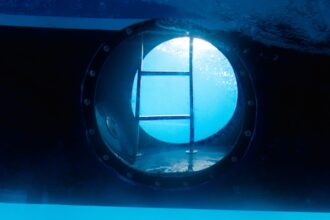
The Cold War, a period of geopolitical tension between the Soviet Union and the United States and their respective allies, was characterized by ideological conflict, an arms race, and extensive intelligence gathering. Within this clandestine struggle, both sides sought to exploit every technological advantage to gain insight into the other’s capabilities and intentions. One of the most audacious and successful intelligence operations of this era was “Operation Ivy Bells,” a joint venture by the United States Navy, the National Security Agency (NSA), and the Central Intelligence Agency (CIA). This operation, shrouded in secrecy for decades, represented a pinnacle of underwater espionage, allowing the United States a unique and invaluable window into Soviet naval communications.
The late 1960s saw a significant escalation in the Soviet Union’s naval power, particularly its submarine fleet. The proliferation of nuclear-armed submarines, capable of launching ballistic missiles, heightened the stakes of the Cold War. Understanding the operational patterns, deployment strategies, and communication methods of these Soviet vessels became a paramount intelligence objective for the United States. Traditional methods of intelligence gathering, such as aerial reconnaissance and signals intelligence (SIGINT) from land-based stations, often proved insufficient or too risky for capturing sensitive underwater communications.
The Problem of Underwater Communication
Soviet submarines, like their Western counterparts, relied primarily on underwater cables for secure communication between various bases and ships. These cables, typically laid on the seabed, were designed to be resistant to passive interception from surface vessels or intelligence submarines. Their deep placement and reinforced construction made direct tapping a significant technical challenge.
Identifying the Target
Intelligence analysts, through painstaking work and cross-referencing various sources, eventually pinpointed a critical underwater communication cable in the Sea of Okhotsk, a body of water off the eastern coast of the Soviet Union. This particular cable was believed to link the Soviet Pacific Fleet’s headquarters in Petropavlovsk-Kamchatsky to major naval airfields and other strategic installations. Its interception promised a treasure trove of information regarding Soviet naval operations.
For those interested in the intricacies of covert operations during the Cold War, the documentary on Operation Ivy Bells offers a fascinating look into underwater surveillance efforts. To further explore the context and implications of such espionage activities, you can check out a related article that delves into the broader strategies employed by intelligence agencies during that era. Read more about it here: Intelligence Operations in the Cold War.
The Technological Leap: Adapting for the Deep
The challenge of tapping a Soviet underwater communication cable was formidable. It required not just advanced diving capabilities but also sophisticated signal processing technology that could operate autonomously and discreetly in a hostile environment thousands of feet below the surface. This was a technological frontier, pushing the boundaries of what was then considered possible.
The USS Halibut: A Submarine Transformed
The USS Halibut (SSN-587), a former guided-missile submarine, was uniquely suited for this mission. Originally designed to carry Regulus cruise missiles, its missile hangers were reconfigured into a large “skirt” area, providing ample space for specialized equipment, including remote-controlled manipulators, observation systems, and most importantly, the elaborate tapping mechanism. The Halibut was effectively transformed into an underwater spy platform, a silent hunter of secrets.
Developing the “Bug”
The core of Operation Ivy Bells was the “bug” itself – a massive, cylindrical device weighing several tons and designed to inductively tap the Soviet cable. This meant it would listen to the electromagnetic signals emanating from the cable without actually physically piercing its insulation. This passive approach was crucial for maintaining secrecy, as it left no identifiable trace on the cable that could alert the Soviets to its presence.
Inductive Tapping: A Delicate Art
Inductive tapping relied on the principle of electromagnetic induction. The device would be clamped around the cable, and its sensors would detect the subtle electromagnetic fields generated by the electrical current flowing through the cable. These signals, though weak, carried the encrypted Soviet communications. The “bug” then amplified, processed, and recorded this data onto large magnetic tapes.
Executing the Mission: Under the Ice and in the Depths

The operational phase of “Ivy Bells” was a testament to the bravery and skill of the US Navy submariners and intelligence operatives involved. The Sea of Okhotsk presented a particularly harsh and challenging environment, characterized by deep waters, unpredictable currents, and in winter, a thick layer of ice.
The First Deployment: A Voyage into the Unknown
In 1971, the USS Halibut embarked on its inaugural mission to install the first “bug.” Navigating under the ice sheet, a dangerous endeavor in itself, the submarine meticulously located the target cable. Divers, operating in the icy depths, guided the massive tapping device into position, ensuring its proper alignment and secure attachment to the cable. The installation was a monumental achievement, a high-stakes gamble that paid off.
Regular Maintenance and Data Retrieval
Once installed, the “bug” operated autonomously, silently recording a constant stream of Soviet communications. Periodically, the USS Halibut, and later other purpose-built submarines such as the USS Parche and USS Richard B. Russell, would return to the site. Divers would retrieve the full data tapes and replace them with fresh ones. This cycle of deployment, retrieval, and analysis continued for over a decade, providing a consistent flow of critical intelligence.
The Technical Challenges of Retrieval
The retrieval operations were just as challenging as the initial installation. The “bug” was designed to withstand immense pressure and the corrosive effects of seawater. Retrieving it and its precious cargo required specialized tools and highly trained divers, operating under extreme conditions and constant risk of detection.
The Intelligence Bonanza: What Was Discovered

The information gleaned from Operation Ivy Bells was transformative. It provided the United States with an unprecedented understanding of Soviet naval capabilities and intentions, truly peering behind the Iron Curtain of submarine communications.
Unveiling Soviet Naval Doctrine
The intercepted communications provided invaluable insights into the Soviet Pacific Fleet’s operational doctrine, including their training exercises, deployment schedules, and strategic priorities. This information allowed US strategists to better predict Soviet reactions and anticipate potential threats.
Ballistic Missile Submarine Activities
Perhaps most crucially, Ivy Bells offered a direct window into the activities of Soviet ballistic missile submarines (SSBNs). Details regarding their mission profiles, patrol areas, and communication protocols were intercepted. This was critical for understanding the Soviet Union’s nuclear deterrent and for developing effective countermeasures.
Early Warning and Counter-Proliferation
The intelligence gathered also contributed to early warning capabilities, allowing the US to detect unusual Soviet naval movements or preparations. Furthermore, by understanding Soviet naval technology and communication methods, the operation helped inform US counter-proliferation efforts, particularly in the context of advanced weapons systems. The “bug” was a veritable Rosetta Stone for Soviet naval codes.
The Operation Ivy Bells documentary sheds light on a fascinating chapter of Cold War espionage, revealing the intricate underwater operations conducted by the United States. For those interested in exploring more about the broader implications of such covert missions, a related article can provide additional insights into the strategic significance of these operations. You can read more about it in this detailed analysis that discusses the technological advancements and the geopolitical landscape during that era.
The Betrayal: Aldrich Ames and the End of Ivy Bells
| Metric | Details |
|---|---|
| Title | Operation Ivy Bells |
| Type | Documentary |
| Subject | Cold War espionage operation by the US Navy |
| Year Released | 2017 |
| Duration | Approximately 60 minutes |
| Director | Unknown / Various sources |
| Main Focus | Underwater tapping of Soviet communication cables |
| Key Figures Featured | US Navy divers, intelligence officers |
| Languages | English |
| Availability | Streaming platforms and DVD |
The success of Operation Ivy Bells was directly tied to its secrecy. However, in the mid-1980s, this carefully guarded secret was compromised through one of the most damaging acts of espionage in US history.
Aldrich Ames: A Mole in the CIA
Aldrich Ames, a high-ranking CIA officer, began selling secrets to the Soviet Union in 1985 due to financial difficulties and disillusionment with his career. Over the next nine years, Ames provided the Soviets with a vast amount of classified information, including the details of Operation Ivy Bells.
The Soviet Discovery and Escalation
Armed with Ames’s betrayal, the Soviets quickly located the “bug” on their communication cable. They initially left it in place, allowing the US to continue “intercepting” what they believed to be genuine communications, while secretly feeding disinformation. This act of deception highlights the cynical and intricate nature of Cold War espionage. However, the Soviets eventually opted for a more overt message. In 1985, a Soviet salvage ship, the SSN Sevan, was observed operating precisely over the location of the main tapping device. The operation was subsequently confirmed to be compromised when a US Navy rescue vehicle, deep in the Sea of Okhotsk, photographed the severed cable and the missing “bug.”
The Aftermath of the Compromise
The loss of Operation Ivy Bells was a significant blow to US intelligence. A decade of invaluable data collection ceased abruptly. The incident underscored the devastating impact of insider threats and prompted a comprehensive review of counterintelligence procedures within US intelligence agencies. The compromised intelligence assets meant years of work were undone in a single act of treachery.
The Legacy of Operation Ivy Bells
Despite its eventual compromise, Operation Ivy Bells remains a landmark achievement in the history of intelligence gathering. It demonstrated the ingenuity, daring, and technological prowess of the United States in its efforts to counter the Soviet threat during the Cold War.
Pioneering Underwater Espionage
Ivy Bells set a new standard for underwater espionage. It pushed the boundaries of submarine technology, deep-sea diving, and signal intelligence. The lessons learned from its development and execution informed subsequent intelligence operations and technological advancements.
A Window into a Closed World
For over a decade, Operation Ivy Bells provided an unparalleled window into the otherwise opaque world of Soviet naval communications. It offered insights that could not have been obtained through any other means, directly impacting US national security strategies and contributing to the overall intelligence picture of the Soviet Union.
The Human Element: Courage and Professionalism
Beyond the technological marvels, Operation Ivy Bells was a testament to the courage and professionalism of the men and women involved. From the submariners who navigated treacherous waters and ice to the divers who performed dangerous installations and retrievals, and the analysts who sifted through mountains of intercepted data, their dedication was instrumental to the operation’s success. These individuals, often unsung heroes, operated in extreme conditions, aware of the immense risks, for the sake of national security.
A Cautionary Tale of Betrayal
The compromise of Ivy Bells by Aldrich Ames serves as a stark reminder of the inherent vulnerability of even the most sophisticated intelligence operations to insider threats. It underscores the critical importance of robust counterintelligence measures and the devastating consequences when those measures fail. The operation’s abrupt end served as a painful lesson, permanently etched in the annals of espionage history, demonstrating how a single point of failure can unravel years of meticulous planning and dangerous execution.
In conclusion, Operation Ivy Bells stands as a powerful metaphor for the Cold War itself: a silent, high-stakes battle fought in the shadows, where technological innovation and human daring converged in a relentless pursuit of information. It illuminated the vital role of intelligence in shaping geopolitical outcomes, and its story continues to fascinate and inform our understanding of that tense and pivotal era.
WATCH NOW ▶️ SHOCKING: Why the Seafloor Went Silent
FAQs
What is Operation Ivy Bells?
Operation Ivy Bells was a secret joint U.S. Navy, CIA, and NSA mission during the Cold War aimed at tapping Soviet underwater communication cables in the Sea of Okhotsk.
When did Operation Ivy Bells take place?
The operation began in the early 1970s and continued through the late 1970s, with the goal of gathering intelligence on Soviet naval communications.
What was the purpose of the Operation Ivy Bells documentary?
The documentary explores the history, execution, and significance of Operation Ivy Bells, highlighting the technical challenges and espionage efforts involved in the mission.
Who were the key personnel involved in Operation Ivy Bells?
The operation involved U.S. Navy divers, intelligence officers from the CIA and NSA, and technical experts who worked together to locate and tap the Soviet communication cables.
What impact did Operation Ivy Bells have on Cold War intelligence?
Operation Ivy Bells provided the U.S. with valuable intelligence on Soviet naval operations and communications, significantly enhancing U.S. strategic capabilities during the Cold War.