The specter of nuclear annihilation cast a long shadow over the 20th century, particularly during the Cold War. Moments of intense geopolitical tension often brought humanity to the brink, their resolution frequently hinging on the actions of individuals. This article explores one such critical juncture, focusing on the actions of a single man whose steadfast adherence to protocol and rational judgment averted a potentially catastrophic global conflict.
The period between the end of World War II and the dissolution of the Soviet Union was characterized by a precarious balance of power, known as the Cold War. Two ideologically opposed superpowers, the United States and the Soviet Union, engaged in a continuous arms race and proxy conflicts across the globe. This era was marked by a pervasive fear of nuclear war, a concept that, once understood, gripped the world’s imagination.
The Nuclear Arms Race
Both the United States and the Soviet Union rapidly developed and stockpiled nuclear weapons, creating arsenals capable of incinerating entire cities and potentially rendering the planet uninhabitable. This arms race fostered a doctrine of Mutually Assured Destruction (MAD), a grim understanding that a full-scale nuclear exchange would result in the annihilation of both belligerents. The existence of MAD, while terrifying, was also seen by some as a deterrent, albeit a fragile one.
Propaganda and Paranoia
Public discourse in both blocs was heavily influenced by propaganda, demonizing the opposing side and fueling widespread paranoia. Citizens were regularly subjected to civil defense drills, instructional films on surviving nuclear attacks, and news reports detailing the perceived threat from the “enemy.” This constant drumbeat of fear created an environment where suspicion and snap judgments could easily override logical reasoning.
The Cuban Missile Crisis Aftermath
While the Cuban Missile Crisis of 1962 is widely recognized as the closest the world came to nuclear war, its resolution did not eliminate the underlying tensions. Instead, it underscored the inherent dangers of brinkmanship and miscommunication. The years following the crisis saw continued military posturing and covert operations, maintaining a state of perpetual alert for strategic forces on both sides.
In a fascinating account of how a potential nuclear disaster was averted, a recent article highlights the pivotal role played by one man during a critical moment in history. This individual’s quick thinking and decisive actions prevented a catastrophic escalation that could have led to nuclear war. To explore this gripping story further, you can read the full article here: Nuclear War Avoided by One Man.
The Incident of September 26, 1983
On September 26, 1983, a critical incident unfolded within the Soviet early warning system, a network designed to detect incoming ballistic missiles. This event, largely unknown to the general public for many years, serves as a stark reminder of the delicate thread upon which global peace often hung.
The Oko System
The Oko system, meaning “Eye” in Russian, was a sophisticated satellite-based early warning network. Its purpose was to detect the launch of intercontinental ballistic missiles (ICBMs) from U.S. territory, providing Soviet leadership with crucial time to respond. Despite its advanced technology, the system was not infallible, particularly in an era of rapidly evolving technology and limited computational power.
False Alarm Protocol
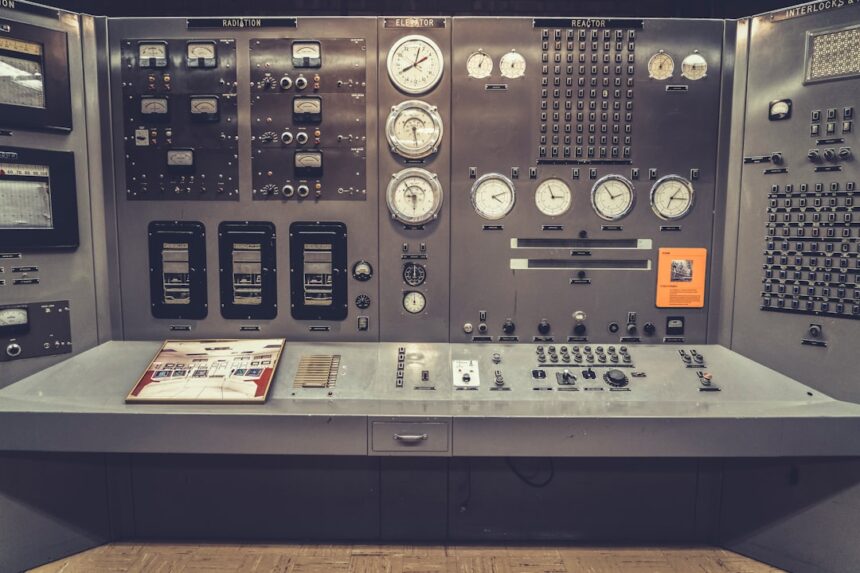
The protocols for responding to a missile launch were rigid and highly stressed. Upon detection, the system was designed to automatically trigger a series of alerts, escalating up the chain of command to the highest levels of Soviet leadership. At each stage, specific individuals were tasked with verifying the information and making critical decisions under immense time pressure.
The Anomaly Detection
In the early hours of September 26, 1983, at approximately 00:15 Moscow time, the Oko system, specifically the Serpukhov-15 command center, registered what appeared to be the launch of a single ICBM from the United States. Shortly thereafter, the system reported four additional launches, suggesting a coordinated first strike. This information rapidly propagated through the command center, generating a state of extreme urgency.
The Actions of Lieutenant Colonel Stanislav Petrov
Amidst the chaos and mounting pressure, the officer on duty at the Serpukhov-15 command center was Lieutenant Colonel Stanislav Petrov. His actions, or rather, his inactions, during this critical period, would ultimately determine the fate of millions.
Background and Training
Lieutenant Colonel Petrov was an experienced officer with a deep understanding of the Oko system and Soviet military doctrine. His training emphasized the importance of verifying all intelligence, particularly concerning such a catastrophic event as a nuclear attack. This background proved invaluable in the face of what later proved to be a system malfunction.
Initial Assessment
Upon receiving the initial alert, Petrov’s primary task was to assess the credibility of the reported launches. He was confronted with conflicting signals: the sophisticated technology of the Oko system was reporting an attack, yet his own gut feeling, informed by years of experience, raised immediate doubts. He considered several factors:
- Number of Missiles: The system reported five missiles. Petrov understood that a first strike by the United States would likely involve hundreds of missiles, not a mere five, to maximize destruction and cripple Soviet retaliation. A limited strike of five missiles seemed illogical from a strategic perspective.
- Targeting: The system did not provide specific target information for the incoming missiles, which was unusual for a genuine attack scenario.
- Reliability of the System: Petrov was aware of previous instances of system malfunctions and known vulnerabilities. He considered the possibility of a “single point of failure” or an unforeseen environmental factor.
The Decision to Disregard
Despite the alarms blaring, the computer screens flashing “LAUNCH,” and the intense pressure from his subordinates who were urging him to follow protocol, Petrov made the unilateral decision to report the incident as a system malfunction, not a genuine attack. He reasoned that if the United States were truly launching a first strike, it would be a massive, overwhelming assault, not a mere handful of missiles. He understood the potential consequences of his decision – if he was wrong, he would be responsible for failing to alert Soviet leadership to an actual attack. However, he also grasped the catastrophic implications of reporting a false alarm as real, which could have triggered a retaliatory strike and initiated World War III.
The Sunlight Anomaly
Subsequent investigation revealed that the “launches” were, in fact, caused by a rare atmospheric phenomenon. Sunlight reflected off high-altitude clouds, specifically cirrus clouds, creating reflections that the Oko satellites mistakenly interpreted as missile engine plumes. This highly improbable optical illusion, combined with a software bug, generated the false alarms. The “missiles” were nothing more than digital phantoms.
The Aftermath and Recognition

Petrov’s actions, though initially met with mixed reactions within the Soviet military, eventually garnered international recognition, albeit years after the event. The full extent of his bravery and critical thinking only became widely known with the declassification of information and his own willingness to speak about the incident.
Initial Soviet Response
Initially, Petrov received no official commendation. In fact, he faced scrutiny for not precisely following protocol. Some superiors were reportedly displeased that he had registered the incident as a “false alarm” in the military logbook rather than as a “missile launch.” However, he also faced no severe reprimand, suggesting that deep down, some in the high command understood the gravity of his decision and the inherent flaws in the system. He was eventually reassigned to a less sensitive post and retired from military service shortly thereafter.
International Recognition
It was only in the early 2000s, with increasing transparency regarding Cold War events, that Petrov’s story began to emerge internationally. He received numerous awards and accolades from peace organizations around the world. These included the “World Citizen Award” from the Association of World Citizens and later, the Dresden Peace Prize. Journalists and filmmakers sought him out, eager to document his extraordinary contribution to global peace.
The Human Element
Petrov’s story underscores the critical role of the human element in complex technological systems, especially those with life-or-death implications. Despite the sophistication of the Oko system, it was a human being, exercising judgment and critical thinking, who ultimately prevented a global catastrophe. This event serves as a powerful reminder that while technology can enhance capabilities, it cannot entirely replace human intuition, wisdom, and moral courage.
In a remarkable turn of events during the Cold War, one man’s decisive actions played a crucial role in preventing a potential nuclear catastrophe. This extraordinary story highlights the importance of individual courage and moral conviction in the face of overwhelming pressure. For a deeper understanding of this pivotal moment in history, you can read more about it in the article found here. The article delves into the details of how a single decision altered the course of history and averted disaster, reminding us of the profound impact one person can have on the world.
Lessons Learned and Future Implications
| Metric | Value | Description |
|---|---|---|
| Year | 1983 | The year when Stanislav Petrov averted a potential nuclear war |
| Incident Name | Petrov Incident | False alarm of incoming US missile attack detected by Soviet early-warning system |
| Number of Missiles Detected | 5 | Initial number of missiles reported by the Soviet system |
| Decision Time | ~15 minutes | Time Petrov had to decide whether to report the attack or not |
| Outcome | Nuclear war avoided | Petrov’s decision to classify the alert as a false alarm prevented escalation |
| Recognition | International acclaim | Petrov received awards and recognition for his role in preventing nuclear conflict |
The 1983 incident remains a poignant historical example of how close humanity came to its own destruction and offers valuable lessons for contemporary challenges.
Systemic Vulnerabilities
The incident exposed significant vulnerabilities within the early warning systems of both superpowers. It highlighted that even advanced technology could be prone to errors, malfunctions, or misinterpretations of environmental phenomena. This recognition led to a greater emphasis on redundant verification systems, improved communication protocols, and a deeper understanding of the inherent limitations of automated decision-making in high-stakes environments.
The Importance of Doubt
Petrov’s actions demonstrate the profound importance of questioning initial reports, particularly when the stakes are astronomically high. His willingness to doubt the infallibility of the machine, even when it contradicted established protocols, was his most heroic act. In a world increasingly reliant on artificial intelligence and automated systems, this lesson remains profoundly relevant. The capacity for independent thought and the courage to challenge assumptions are invaluable safeguards against catastrophic errors.
The Enduring Threat
While the Cold War has ended, the threat of nuclear proliferation and accidental nuclear war has not entirely dissipated. Several nations possess nuclear weapons, and geopolitical tensions continue to flare in various regions. The incident of September 26, 1983, serves as a perpetual cautionary tale, reminding us that vigilance, clear communication, and the human capacity for reasoned judgment are essential for maintaining global stability. We, as inhabitants of this planet, remain vulnerable to both technological failures and human error.
A Legacy of Prudence
Lieutenant Colonel Stanislav Petrov’s decision on that fateful night was not a moment of spectacular heroism in the traditional sense of battle, but a quiet act of immense consequence. He did not fire a shot or storm an enemy position; instead, he chose prudence over panic, skepticism over blind faith in technology. His legacy is one of the profound impact a single individual’s critical thinking and moral courage can have on the course of history, reminding us that at the precipice of disaster, the most powerful weapon can sometimes be the power of human discretion. His story serves as an enduring metaphor for the thin ice upon which humanity has often skated, and the unsung heroes who have quietly, yet decisively, steered us away from the abyss.
FAQs
Who was the man credited with avoiding nuclear war?
The man credited with avoiding nuclear war is Stanislav Petrov, a Soviet military officer who, in 1983, correctly identified a false alarm in the Soviet early-warning system and prevented a potential retaliatory nuclear strike.
What event led to the nuclear war scare that Stanislav Petrov helped prevent?
The event was a false alarm triggered by a malfunction in the Soviet Union’s early-warning satellite system, which incorrectly reported incoming U.S. missiles, potentially prompting a nuclear response.
How did Stanislav Petrov’s actions prevent nuclear war?
Petrov chose to doubt the satellite warning and decided not to report the alert as an actual attack, thereby preventing the Soviet military from launching a retaliatory nuclear strike based on faulty data.
Was Stanislav Petrov recognized for his role in preventing nuclear war?
Yes, although initially not widely known, Stanislav Petrov was later recognized internationally for his critical decision, receiving several awards and honors for his role in averting a nuclear disaster.
What lessons have been learned from the incident involving Stanislav Petrov?
The incident highlighted the dangers of relying solely on automated systems for nuclear decision-making and underscored the importance of human judgment in preventing accidental nuclear war. It also led to improvements in early-warning systems and protocols.