The precipice of global annihilation is a stark reminder of human vulnerability. It is against this backdrop that the actions of individuals can, in rare and pivotal moments, serve as crucial anchors, averting catastrophic outcomes. This article examines a specific instance where the decisions of one man, operating under immense pressure and with limited information, demonstrably played a role in preventing a nuclear war.
The Cuban Missile Crisis: A World on the Brink
The Cuban Missile Crisis, a thirteen-day confrontation in October 1962 between the United States and the Soviet Union, stands as arguably the closest the world has ever come to nuclear war. The discovery of Soviet ballistic missile facilities under construction in Cuba, just 90 miles off the coast of Florida, triggered a tense standoff that captivated and terrified global populations. The ensuing diplomatic and military maneuvering was a high-stakes chess game played with the fate of humanity as the prize.
Soviet Motivations: A Strategic Calculation
The Soviet Union’s decision to place nuclear missiles in Cuba was driven by a complex web of strategic considerations. At the outset of the crisis, the balance of nuclear power was heavily skewed in favor of the United States, which possessed a significant advantage in intercontinental ballistic missiles (ICBMs) capable of reaching Soviet territory. The placement of Soviet intermediate-range ballistic missiles (IRBMs) and medium-range ballistic missiles (MRBMs) in Cuba was seen as a way to rapidly redress this imbalance.
Redressing the Strategic Imbalance
The presence of Soviet missiles in Cuba drastically shortened the warning time for the United States in the event of a Soviet launch. This parity in delivery capabilities, even if on a regional scale, would have altered the perceived strategic calculus and potentially deterred a first strike by the U.S.
Protecting Cuba and Projecting Soviet Power
Beyond the strategic levelling, the deployment of missiles also served as a deterrent against a potential U.S. invasion of Cuba, particularly in the aftermath of the failed Bay of Pigs invasion in 1961. It also served as a potent symbol of Soviet commitment to its allies and a demonstration of its willingness to challenge U.S. influence in its traditional sphere of influence.
U.S. Response: The Weight of Decision
The discovery of the missile sites, confirmed through aerial reconnaissance, presented President John F. Kennedy with an unprecedented challenge. The immediate options ranged from a full-scale invasion of Cuba to diplomatic negotiations, with each path fraught with peril. The ExComm (Executive Committee of the National Security Council) became the crucible where these agonizing choices were debated.
The ExComm Debates: A Spectrum of Options
For thirteen days, President Kennedy convened his closest advisors – military leaders, diplomats, and intelligence officials – to dissect the unfolding crisis. The discussions within ExComm were often heated and represented a broad spectrum of opinions. Hawks advocated for immediate military action, including air strikes and a full invasion, arguing that inaction would be perceived as weakness and embolden further Soviet aggression. Doves, conversely, urged for a more cautious, diplomatic approach, emphasizing the potential for escalation and the horrific consequences of nuclear war. The air was thick with the scent of impending doom, a palpable tension that underscored the gravity of each utterance.
The Naval Blockade: A Calculated Risk
Ultimately, President Kennedy opted for a middle ground: a naval “quarantine” (a less belligerent term than blockade) of Cuba. This action aimed to prevent further Soviet military equipment from reaching the island while allowing time for diplomatic solutions and avoiding an immediate, direct military confrontation. This was akin to drawing a line in the sand, daring the opponent to cross it, but with the understanding that crossing it could trigger a world-ending conflagration.
Vasili Arkhipov: The Unsung Hero of the B-59
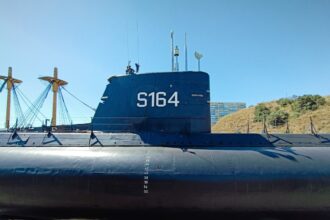
While the U.S. decision-making process was unfolding under intense scrutiny, a parallel and equally critical drama was taking place aboard a Soviet submarine, the B-59, in the Caribbean Sea. The B-59 was one of three Soviet submarines tasked with deploying submerged nuclear torpedoes. However, they were operating under extreme duress, unaware of the escalating tensions on the surface and cut off from communication with Moscow.
The Grim Conditions Aboard the B-59
The Soviet submariners operated in conditions that would test the resolve of any human. They were subjected to constant harassment by U.S. naval forces, which were dropping practice depth charges – intended to force the submarines to surface, but perceived by the crew as live attacks. The psychological toll of these attacks, combined with the claustrophobic environment of the submarine and the lack of communication, created an atmosphere of extreme stress and anxiety.
The Illusion of Attack: Depth Charges and Disorientation
The U.S. Navy’s actions, while not intended to be lethal, were sufficiently alarming to the crew of the B-59. The repeated explosions of depth charges on the hull created a disorienting cacophony and fueled the perception that they were under direct assault. The submarine’s communication equipment had also malfunctioned, leaving them isolated from any reliable intelligence about the broader crisis.
Limited Communication and Growing Desperation
The crew of the B-59 had been at sea for an extended period, operating under strict orders and with limited contact with the outside world. The continuous barrage of depth charges eroded their patience and fostered a sense of impending doom. Without clear directives or an understanding of the true nature of the U.S. actions, the crew, particularly the ship’s Political Officer, became convinced that war had already begun and that their only recourse was to launch their nuclear torpedoes.
The Critical Decision: A Counterargument Against Launch
It was in this desperate scenario that Vasili Arkhipov, the flotilla commander on board the B-59 (and second in command of the submarine), found himself at a critical juncture. The submarine carried three officers who had the authority to launch a nuclear torpedo. Two of them, Captain Valentin Savitsky and Political Officer Ivan Maslennikov, were convinced that an attack was underway and that retaliation was necessary. Arkhipov, however, held a different perspective. He understood the potential consequences of such an action far more acutely than his shipmates, having a broader awareness of the geopolitical situation from fragmented information and a more measured temperament.
The Veto Power: A Single Voice Against the Tide
Under Soviet naval protocol at the time, the launch of a nuclear weapon required the unanimous agreement of these three officers. Captain Savitsky, driven by the perceived immediate threat and the belief that war had been declared, vehemently pushed for a launch. Political Officer Maslennikov, similarly agitated and indoctricated with the belief in unwavering Soviet defense, supported the captain. It was Vasili Arkhipov, in the role of flotilla commander, who possessed the crucial third vote. He stood as a solitary dam against the surging tide of desperation and the looming spectacle of annihilation.
Persuasion and Preservation: A Calm Amidst the Storm
Arkhipov refused to consent to the launch. He argued, with considerable personal risk, that they did not know for certain that they were under attack, and that launching a nuclear weapon without authorization from Moscow would have catastrophic repercussions, not just for themselves but for the entire world. He engaged in a lengthy, tense debate with Savitsky, appealing to reason and the dire implications of their potential actions. His calm demeanor and logical arguments, in stark contrast to the palpable panic surrounding him, ultimately swayed the decision.
The Aftermath: Averted Catastrophe and Lingering Questions
The events aboard the B-59, and the broader resolution of the Cuban Missile Crisis, illustrate the delicate balance of power and the critical role of individual judgment in preventing global conflict. While Vasili Arkhipov’s actions are widely recognized as a pivotal moment, the full story of how nuclear war was averted remains a subject of historical inquiry and reflection.
The Resolution of the Crisis: A Compromised Peace
The crisis eventually de-escalated through a series of secret negotiations and public pronouncements. The Soviet Union agreed to dismantle its missile sites in Cuba in exchange for a public pledge from the United States not to invade Cuba and a secret agreement to remove U.S. Jupiter missiles from Turkey. This negotiated settlement, though not entirely satisfactory to all parties, provided a pathway back from the brink. The world exhaled, a collective breath held for thirteen terrifying days finally released.
The Significance of Arkhipov’s Choice: A Ripple Effect
Vasili Arkhipov’s decision to refuse consent for the launch of a nuclear torpedo had profound implications. Had he agreed, the consequences would have been immediate and catastrophic, most likely triggering a full-scale nuclear exchange between the United States and the Soviet Union. His dissent acted as a firebreak, preventing the spark that would have ignited the inferno. His actions serve as a powerful testament to the fact that even within rigid hierarchical structures, individual conscience and rational judgment can carry immense weight. It is a reminder that even when the system seems poised to fulfill its destructive destiny, a single dissenting voice can, like a well-placed pebble, alter the course of a destructive river.
Lingering Questions and Historical Debate
Despite the generally accepted narrative, the precise details of the negotiations and the extent of knowledge each side possessed at various points remain subjects of ongoing historical debate. The role of communication breakdowns, individual interpretations of events, and the psychological pressures faced by leaders on both sides continue to be analyzed. The story of Vasili Arkhipov, though often highlighted, is just one thread in a complex tapestry woven with threads of diplomacy, military strategy, and sheer chance.
The Weight of Responsibility: Individual Agency in Global Affairs
The story of Vasili Arkhipov serves as a compelling case study in individual agency within the context of global affairs. In an era defined by superpower brinkmanship and the existential threat of nuclear weapons, the decisions of individuals, even those operating in what may seem like subordinate roles, can have monumental consequences.
The Paradox of Power: From Subordinate to Savior
Arkhipov was not a head of state, nor a celebrated diplomat. He was a naval officer, operating under the command structure of a nuclear-armed state. Yet, his adherence to a principle of extreme caution, his refusal to succumb to the immediate pressures of his shipmates, and his reasoned argument against an escalatory action placed him in an extraordinary position of de facto power. He was a man on a submerged island of reason in a sea of escalating panic, with the fate of the world resting on his ability to persuade.
Institutional Constraints and Individual Morality
This situation highlights the inherent tension between institutional imperatives and individual morality. While military organizations are designed to enforce discipline and execute orders, the nature of nuclear weapons introduces a unique moral dimension. The sheer destructive power of these devices demands a level of ethical consideration that transcends mere obedience. Arkhipov’s actions suggest that, in the face of such overwhelming destructive potential, individual moral compasses become not just valuable, but essential.
The “What If” Scenario: A Constant Reminder
The “what ifs” that surround the Cuban Missile Crisis, and specifically Arkhipov’s role, are as potent as the events themselves. The historical record provides a comfort of sorts – that the worst was averted. However, it also serves as a stark “what if” scenario, a chilling reminder of how close humanity came to self-destruction, and how fragile the edifice of peace can be.
Lessons from the Brink: Nuclear Deterrence and Diplomacy
The Cuban Missile Crisis, and the pivotal actions of individuals like Vasili Arkhipov, offer enduring lessons about nuclear deterrence, the importance of communication, and the indispensable role of diplomacy. The very existence of nuclear weapons, a sword of Damocles perpetually hanging over humanity, necessitates a constant, vigilant effort to prevent their use.
The Psychology of Deterrence: A Dangerous Equilibrium
Nuclear deterrence, the concept that the threat of retaliation prevents a first strike, is a precarious equilibrium. It relies on the assumption that rational actors will always make the rational choice to avoid mutual destruction. The Cuban Missile Crisis demonstrated the inherent fragility of this equilibrium, where miscalculation, miscommunication, and extreme stress could destabilize the delicate balance. The B-59 incident, in particular, showed how easily psychological pressures could lead to a breakdown of rationality.
The Importance of Clear Communication Channels
The crisis underscored the critical importance of maintaining open and reliable communication channels between nuclear-armed states. The inability of the B-59 to communicate with Moscow was a significant factor in the escalation of tension on board. Similarly, the development of direct lines of communication, like the Moscow-Washington hotline, became a direct consequence of the near-catastrophe. It is like having a direct line to the fuse, allowing for its immediate disarming.
The Indispensable Role of Diplomacy: A Bridge Over Troubled Waters
Ultimately, it was diplomacy that resolved the Cuban Missile Crisis. While military posturing played a role, the ability of leaders to negotiate, compromise, and find common ground was paramount. The secret negotiations and the eventual agreement represent the triumph of reasoned discourse over the impulse for immediate, destructive action. Diplomacy, in these high-stakes moments, acts as the skilled architect building bridges over chasms of conflict, ensuring that the bridge does not collapse under the weight of aggression.
The Future of Nuclear Security: Vigilance and Responsibility
The lessons from the Cuban Missile Crisis are not merely historical footnotes. They remain acutely relevant in the ongoing pursuit of nuclear security. The proliferation of nuclear weapons, the rise of new nuclear powers, and the persistent threat of non-state actors seeking nuclear capabilities necessitate continued vigilance, robust diplomatic efforts, and a profound understanding of the catastrophic consequences of nuclear war. The actions of individuals like Vasili Arkhipov, though rooted in a specific historical context, serve as a perpetual reminder of the immense responsibility that rests upon all who hold power in the nuclear age, and the profound impact that one person’s judicious actions can have on the destiny of humankind.
FAQs
Who was the man credited with avoiding nuclear war?
The man credited with avoiding nuclear war is Stanislav Petrov, a Soviet military officer who, in 1983, correctly identified a false alarm in the Soviet early-warning system and prevented a potential retaliatory nuclear strike.
What event led to the nuclear war scare that Petrov helped prevent?
The event occurred on September 26, 1983, when the Soviet Union’s early-warning system detected what appeared to be an incoming missile strike from the United States. Petrov judged the alert to be a false alarm, which it ultimately was.
How did Stanislav Petrov’s decision impact global security?
Petrov’s decision to report the alert as a false alarm prevented a possible retaliatory nuclear attack by the Soviet Union, thereby averting a potential nuclear war and contributing to global security during a tense period of the Cold War.
What caused the false alarm in the Soviet early-warning system?
The false alarm was caused by a rare alignment of sunlight on high-altitude clouds and the satellite’s orbit, which the early-warning system misinterpreted as missile launches.
Has Stanislav Petrov been officially recognized for his actions?
Yes, Stanislav Petrov has received international recognition and several awards for his role in preventing nuclear war, although he was not widely acknowledged in the Soviet Union at the time.