The demarcation of the border between Texas and Mexico has been a persistent source of contention, with the Nueces River and the Rio Grande standing as two principal focal points of this historical struggle. While the Rio Grande ultimately became the internationally recognized boundary, the claim and intermittent control of the Nueces River region by both nations, particularly Texas, carved a complex and often bloody chapter into the narrative of the borderlands. This article delves into the historical origins of this dispute, its evolution, and its lasting impact.
The dispute over the Nueces River’s role in defining the border between Texas and Mexico did not arise in a vacuum. Its roots are deeply embedded in the fragmented and often contradictory claims of colonial powers and, later, the nascent nations of Texas and Mexico.
Spanish Colonial Ambitions and the Wild Frontier
The Spanish Empire’s initial foray into the territory that would become Texas was characterized by ambitious but often sparsely implemented claims. The Spanish crown viewed these lands as a buffer zone, a vast expanse to protect its more settled territories in Mexico from potential incursions by European rivals and indigenous tribes.
The Foundation of Settlements and Missions
Spanish colonization efforts were focused on establishing missions and presidios, sparsely populated outposts intended to evangelize indigenous populations and assert Spanish sovereignty. These early establishments were concentrated further south and east, leaving the region between the Nueces and Rio Grande largely unsettled by Europeans.
Cartographic Ambiguity and Unclear Boundaries
Early Spanish maps of the region were often imprecise and reflected a fluid understanding of territorial limits. The concept of a strictly defined border was less of a priority than establishing spheres of influence and controlling access to valuable resources. This inherent ambiguity laid the groundwork for future disputes.
Mexican Independence and the Texas Question
Following Mexico’s independence from Spain in 1821, the vast territory of Coahuila y Tejas remained largely underdeveloped and sparsely populated. The Mexican government, eager to populate and develop its northern frontier, began to encourage immigration, particularly from the United States.
The Empresario System and American Settlement
The Mexican government, through the empresario system, facilitated the settlement of large tracts of land by American colonists. Stephen F. Austin, the most prominent empresario, played a pivotal role in attracting settlers and establishing the foundations of Anglo-American society in Texas. However, these arrangements did not inherently resolve the question of the southern boundary of these new settlements.
The Shifting Sands of Governance
The transition from Spanish to Mexican rule proved to be a complex process, with varying degrees of autonomy granted to different regions. Texas, as part of Coahuila y Tejas, experienced administrative shifts that further complicated matters of territorial definition at a local level.
The Nueces River and Rio Grande border conflict has deep historical roots, reflecting the complexities of territorial disputes in the United States. For a more in-depth analysis of this ongoing issue, you can read a related article that explores the historical context and implications of the conflict. To learn more, visit this article for a comprehensive overview.
The Rise of the Nueces as a Contested Line
As Anglo-American settlement swelled in Texas, the Nueces River gradually emerged as a de facto line of demarcation, though its official status remained a point of contention. For the settlers and the burgeoning Texan administration, it represented their practical dominion.
The Texas Revolution and the Assertion of the Rio Grande
The Texas Revolution, initiated in 1835, was fueled by a complex interplay of grievances, including disagreements over governance, slavery, and the issue of the southern border. For the Texan revolutionaries, the Rio Grande emerged as the definitive southern boundary of their aspirations.
The Vision of “Republic of the Rio Grande”
The desire to include the territory between the Nueces and the Rio Grande within the proposed Republic of Texas was a significant factor in the revolution. This ambition was not merely about land; it was about securing resources, controlling trade routes, and establishing a strong, defensible frontier.
Military Engagements and Declarations of Sovereignty
The Texan army, in its campaigns against Mexican forces, actively asserted control over territory extending to the Rio Grande. Declarations of independence and subsequent actions by the Texan government solidified this claim as a cornerstone of their national identity and territorial integrity.
Mexican Rejection and the Stubborn Fence
Mexico, however, viewed Texan claims to the territory south of the Nueces as an unconscionable encroachment. The Mexican government consistently maintained that the Nueces River constituted the true border, a position rooted in its understanding of colonial Spanish boundaries and its own sovereignty.
The Political Imbalance of Power
Following the Texan victory at San Jacinto, the newly independent Republic of Texas found itself in a precarious position. While militarily successful, its territorial claims were not universally recognized, and Mexico remained a powerful neighbor unwilling to cede territory without a fight.
The Persistent Shadow of Reconquest
The Mexican government, stung by the loss of Texas, harbored a persistent desire for reconquest. This aspiration fueled a reluctance to formally recognize Texan independence on Texan terms, including its expansive territorial claims. The Nueces, in this context, became a symbolic as well as a physical barrier.
The U.S.-Mexican War: The Rio Grande Becomes the Unwavering Anchor

The annexation of Texas by the United States in 1845 provided the catalyst for a direct confrontation with Mexico and irrevocably shifted the status of the border. The U.S., inheriting Texas’s claims, championed the Rio Grande as the legitimate boundary.
The Dispute Over Thornton’s Crossing and the Spark Ignites
The immediate trigger for the U.S.-Mexican War was a skirmish between U.S. and Mexican troops in a disputed territory between the Nueces and the Rio Grande. This incident, often referred to as Thornton’s Affair or the Thornton Skirmish, provided President James K. Polk with thecasus belli he sought.
Polk’s Expansionist Ambitions
President Polk harbored an ardent belief in Manifest Destiny, the idea that the United States was divinely ordained to expand its dominion and spread democracy across the North American continent. The annexation of Texas and the subsequent war were central to this expansive agenda.
Diplomatic Maneuvers and Missed Opportunities
Prior to the outbreak of hostilities, diplomatic efforts to resolve the border dispute proved fruitless. Mexico was unwilling to recognize Texan independence or its claims to the Rio Grande, while the United States was determined to secure its newly acquired territory and potentially acquire more.
The Treaty of Guadalupe Hidalgo: Solidifying the New Line
The war concluded with a decisive American victory and the signing of the Treaty of Guadalupe Hidalgo in 1848. This treaty formally ended the U.S.-Mexican War and, crucially, established the Rio Grande as the international border between the United States and Mexico.
The Cession of Vast Territories
The treaty resulted in Mexico ceding an enormous swathe of territory to the United States, including present-day California, Nevada, Utah, Arizona, New Mexico, and parts of Colorado and Wyoming. This land represented a significant expansion of American territory.
A Bitter Pill for Mexico
For Mexico, the Treaty of Guadalupe Hidalgo was a humiliating and deeply resented capitulation. The loss of so much territory was a severe blow to its national pride and economic potential. The Rio Grande, once a contested river, was now an undeniable line in the geopolitical sand.
The Legacy of the Nueces: A Lingering Shadow and Cultural Divide
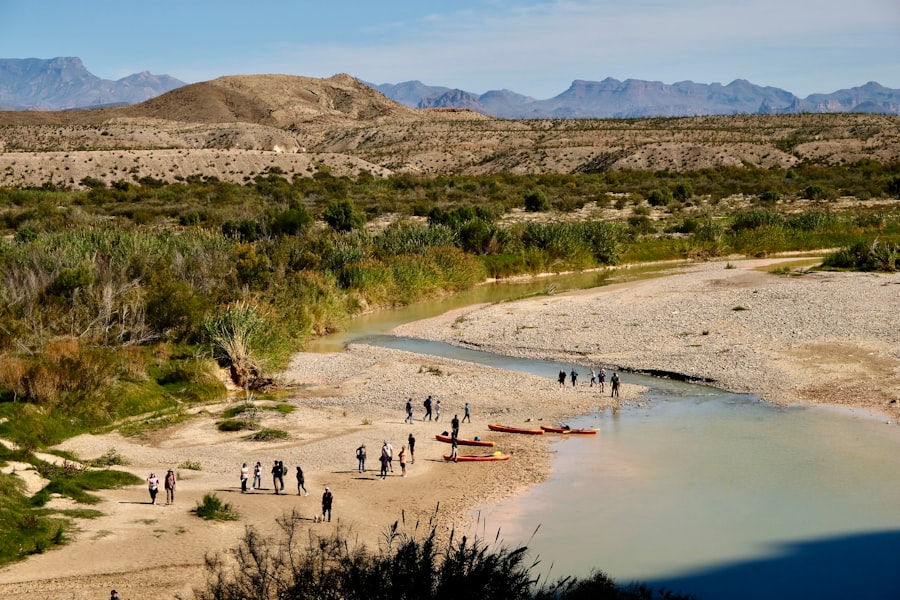
Though the Rio Grande was definitively established as the border, the historical significance of the Nueces River as a contested zone left an indelible mark on the region and its people. The area between the two rivers, known as the Zapata and Webb Counties in Texas, and the Mexican states of Tamaulipas and Nuevo León, experienced a unique historical trajectory shaped by this proximity to perpetual contention.
The “Nueces Strip” and its Unique Identity
The region between the Nueces and the Rio Grande, often referred to as the “Nueces Strip,” developed a distinct cultural and economic identity. For decades, it remained a sparsely populated area, a frontier buffer that saw intermittent clashes, smuggling, and a blend of cultures shaped by proximity to both nations.
Ranching and Border Culture
The primary economic activity in the Nueces Strip was ranching. Vast cattle ranches dotted the landscape, their owners navigating the complex realities of border life. This fostered a unique border culture, one characterized by resilience, adaptability, and a deep connection to the land.
The Shadow of Violence and Lawlessness
The unresolved nature of the border early on, and the subsequent militarization of the region, meant that the Nueces Strip was often a place where lawlessness could flourish. Raids, cattle rustling, and skirmishes were not uncommon, shaping the perception of the area as a rugged and somewhat untamed frontier.
The Unseen Scars on the Landscape and the People
The historical conflict over the Nueces and the subsequent militarization of the border left more than just political boundaries. It etched itself onto the landscape and into the collective memory of the people who lived there.
Geographical Echoes of Conflict
The landscape itself bears the echoes of past struggles. Old fortifications, remnants of territorial disputes, and the very patterns of settlement reveal the historical narrative of a region caught between two powerful forces.
Generational Memories and the Weight of History
For many families in the border region, the history of the Nueces River dispute is not merely a chapter in a history book; it is a lived experience passed down through generations. These memories, often tinged with hardship and the struggle for survival, continue to influence the region’s identity.
The ongoing border conflict between the Nueces River and the Rio Grande has deep historical roots and continues to influence regional dynamics today. For those interested in exploring the complexities of this issue further, a related article provides valuable insights into the historical context and current implications of the dispute. You can read more about it in this detailed analysis, which sheds light on the various factors that have shaped the tensions in this area over the years.
The Enduring Significance: Beyond the Geographical Line
| Aspect | Nueces River | Rio Grande | Border Conflict Relevance |
|---|---|---|---|
| Location | Central Texas | South Texas, forming US-Mexico border | Disputed boundary between Texas and Mexico in 1830s |
| Length | 315 miles (507 km) | 1,896 miles (3,051 km) | Rio Grande is the official border river today |
| Historical Significance | Claimed by Mexico as southern Texas border | Recognized by US as Texas border after annexation | Dispute led to the Mexican-American War (1846-1848) |
| Conflict Period | 1836-1846 | Post-1846 | Border conflict centered on which river was the boundary |
| Outcome | Mexico lost claim to Nueces River boundary | Rio Grande established as official border by Treaty of Guadalupe Hidalgo | US gained large territories including Texas |
The story of the Nueces River versus the Rio Grande is more than just a tale of two rivers vying for dominance as a border. It is a microcosm of broader historical forces: the clash of empires, the ambitions of expansion, and the enduring struggle for self-determination.
The Fluidity of Borders and the Rigidity of Claims
The historical narrative demonstrates how borders, though seemingly fixed on a map, can be fluid and contested. The Nueces River, at one point a prominent claimant, was ultimately superseded by the Rio Grande, illustrating how geopolitical shifts can redraw the very lines on the earth.
The Metaphor of Riverbanks
One can view the Nueces and the Rio Grande as two riverbanks, each representing a different claim and a different vision for the land. The current that flowed between them was not just water, but the aspirations, ambitions, and conflicts of nations.
The Unseen Costs of Border Conflicts
The historical conflict over the Nueces and the Rio Grande underscores the human cost of border disputes. It led to displacement, violence, and a lingering sense of insecurity for those who lived in the contested zones.
The Human Element of Territoriality
Behind the grand pronouncements of national sovereignty lie the individual lives forever altered by the drawing and redrawing of lines on paper. The struggle for land is, at its heart, a struggle for home, for belonging, and for a secure future.
The Continuous Evolution of the Borderlands
The border between the United States and Mexico is not a static entity. It continues to evolve, shaped by economic, social, and political forces. The historical disputes over the Nueces and the Rio Grande serve as a potent reminder of the complex and often challenging nature of this dynamic frontier.
The Economic Lifelines and the Social Fabric
The rivers themselves remain vital economic lifelines for both nations, supporting agriculture, industry, and communities. The social fabric of the borderlands is a complex tapestry woven from the threads of two cultures, constantly interacting and reshaping each other in the shadow of historical contention.
In conclusion, while the Rio Grande stands as the resolute demarcator today, the ghost of the Nueces River’s claim lingers, a testament to the turbulent and formative years of the Texas-Mexico border. The struggle for sovereignty and territorial definition between these two rivers laid bare the ambitions of nations and left an enduring legacy on the land and its people.
FAQs
What is the Nueces River vs Rio Grande border conflict?
The Nueces River vs Rio Grande border conflict was a territorial dispute between the United States and Mexico in the mid-19th century. It centered on the disagreement over the southern boundary of Texas, with the U.S. claiming the Rio Grande as the border and Mexico asserting the Nueces River as the boundary.
When did the Nueces River vs Rio Grande border conflict occur?
The conflict primarily took place in the late 1840s, culminating in the Mexican-American War from 1846 to 1848. The dispute over the border was a key factor leading to the war.
Why was there a disagreement over the border between the Nueces River and the Rio Grande?
The disagreement arose because Texas, after gaining independence from Mexico in 1836 and later joining the United States in 1845, claimed the Rio Grande as its southern border. Mexico, however, did not recognize Texas’s independence or its claim and maintained that the border was the Nueces River, which lies further north.
What was the outcome of the Nueces River vs Rio Grande border conflict?
The conflict resulted in the Mexican-American War, which ended with the Treaty of Guadalupe Hidalgo in 1848. The treaty established the Rio Grande as the official border between Texas and Mexico, significantly expanding U.S. territory.
How did the Nueces River vs Rio Grande border conflict impact U.S.-Mexico relations?
The conflict heightened tensions between the United States and Mexico, leading to war and long-term distrust. It also reshaped the geopolitical landscape of North America, with the U.S. acquiring vast territories in the southwest, influencing future diplomatic and border issues.