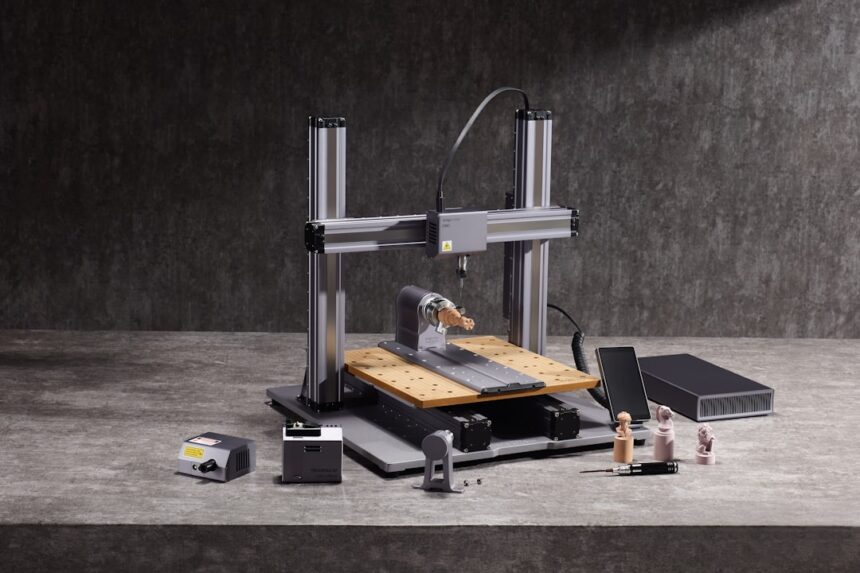
Nine-axis milling machines represent a significant evolutionary leap in manufacturing technology, a lineage that can be traced, perhaps surprisingly, to the technological anxieties and ambitions of the Cold War. These complex machines, capable of achieving a degree of freedom in machining previously unimaginable, are not merely sophisticated tools; they are the hardened descendants of a technological arms race that spurred innovation across multiple scientific and engineering disciplines. Examining their development requires looking beyond the immediate marvel of their capabilities and understanding the historical crucible from which they emerged. The very concept of multi-axis machining, while conceptualized earlier, gained considerable momentum and funding during this period, as nations vied for technological supremacy.
The Shadow of Sputnik and the Drive for Aerospace Dominance
The Soviet Union’s launch of Sputnik in 1957 sent shockwaves through the United States, igniting a fervent desire to regain and surpass Soviet technological achievements. This event, though focused on space, inadvertently cast a long shadow over other critical technological sectors, particularly those that underpinned aerospace capabilities. The development of advanced aircraft, rockets, and missiles demanded components of unprecedented complexity and precision. Traditional three-axis milling machines, while capable, were reaching their inherent limitations when faced with the intricate geometries required for supersonic flight or orbital mechanics. The ability to sculpt metal with greater degrees of freedom became not just desirable, but a strategic imperative. The need to machine complex aerodynamic surfaces, intricate combustion chambers, and lightweight structural components drove the search for more advanced machining solutions. The Cold War landscape was a fertile ground for such innovation, where national security became the powerful engine of technological progress.
Early Forays into Multi-Axis Machining
Even before the overt demands of the space race, engineers were exploring ways to overcome the limitations of linear motion. The concept of rotational axes on a milling machine was not entirely new. Early attempts often involved swiveling the workpiece or the cutting tool, but these were typically limited to two or three rotational possibilities, often at the expense of rigidity and accuracy. The challenge lay in integrating multiple, precisely controlled rotational axes with the linear X, Y, and Z axes in a manner that was both robust and repeatable. This period saw the development of rudimentary five-axis machines, which, while a significant step, still fell short of the universal machining capabilities that would later emerge. These early machines were like rudimentary surveyors, capable of mapping out basic terrain but struggling with the intricate details of a mountain range.
The Arms Race as a Catalyst for Research and Development
The sheer scale of military spending during the Cold War provided an unparalleled opportunity for research and development in areas that might otherwise have languished due to economic constraints. Funding flowed into universities, research institutions, and defense contractors, fostering an environment where bold, often expensive, technological endeavors could be pursued. The quest for superior weaponry, whether for air, land, or sea, necessitated advancements in materials science, computer control, and, crucially, in the manufacturing processes that could bring these advanced designs to life. The idea of a milling machine that could shape a component from virtually any angle was a tantalizing prospect for designers of complex weaponry, from the aerodynamic surfaces of fighter jets to the propellant chambers of advanced artillery.
In the context of advanced manufacturing technologies during the Cold War, the development of nine-axis milling machines played a crucial role in enhancing precision engineering for military applications. For a deeper understanding of how these innovations influenced the arms race and technological advancements of that era, you can explore a related article that delves into the intersection of machinery and geopolitics. To read more, visit this article.
The Leap to Five Axes: A Foundation for Greater Freedom
From Linear to Rotational: The Conceptual Shift
The transition from purely linear milling to the incorporation of rotational axes marked a fundamental paradigm shift in machining. Instead of merely moving a tool in straight lines along three perpendicular axes, the introduction of rotational axes allowed the cutting tool to approach the workpiece from a multitude of angles. This meant that complex curves, undercuts, and internal features could be machined in a single setup, dramatically reducing the need for multiple re-fixturing operations. Each re-fixture introduces the potential for error, like a poorly placed step in a labyrinth, compromising the precision of the final part. Five-axis machining, therefore, was not just an incremental improvement; it was a revolutionary step towards achieving true three-dimensional freedom in material removal.
The Evolution of Machine Tool Design
The engineering challenges in developing stable and accurate five-axis machines were substantial. Designers had to grapple with issues of kinematic design – the precise and predictable motion of all machine components. This involved creating robust structures that could withstand the forces of cutting while maintaining extreme positional accuracy, even with the added complexity of pivoting and rotating elements. The development of specialized spindles, integrated with swiveling heads and tilting tables, was crucial. These early five-axis machines were often bespoke creations, the result of extensive engineering effort and iterative refinement, a testament to the prevailing “necessity is the mother of invention” ethos of the era.
The Impact on Key Industries
The advent of five-axis machining had a profound and immediate impact on industries that relied on complex, high-precision components, most notably the aerospace sector. The ability to machine intricate turbine blades for jet engines, complex airframe components with compound curves, and aerodynamic surfaces for missiles became significantly more efficient. This translated into lighter, stronger, and more aerodynamically efficient aircraft, directly contributing to the military advantages sought during the Cold War. Beyond aerospace, industries like defense manufacturing, medical device production, and high-performance automotive engineering also began to leverage these new capabilities.
The Unlocking of Nine Axes: A Symphony of Motion

Defining the Nine Axes: Beyond the Standard
While five-axis machining provides significant freedom, the concept of a nine-axis milling machine pushes the boundaries further, representing a peak of complexity and capability. The “nine axes” typically refers to the integration of three orthogonal linear axes (X, Y, Z) with at least six additional rotational or translational axes. These additional axes can manifest in various configurations, often involving multiple articulating heads, articulating tables, or even a combination of both. This allows for an unprecedented degree of control over the toolpath and the orientation of the cutting tool relative to the workpiece. Think of it as moving from a sculptor with a chisel to a sculptor with a versatile robotic arm capable of reaching into every nook and cranny.
Kinematic Configurations and Their Advantages
The specific kinematic configurations of nine-axis machines are diverse and depend on the manufacturer’s design philosophy and the intended applications. Some machines employ a dual-head system, where two independent milling heads can work simultaneously or sequentially on the same workpiece, or even on different workpieces. Others feature highly articulated tool heads that can achieve extreme angles of reach and access. The precise arrangement of these axes is a complex engineering puzzle, akin to solving a multidimensional Rubik’s Cube, where every movement must be precisely calculated to achieve the desired outcome without collision. The advantage lies in creating truly “done-in-one” manufacturing processes for highly complex parts.
The Role of Advanced Control Systems
The sophistication of nine-axis milling machines is intrinsically linked to the advancements in their control systems. These machines require highly intelligent computer numerical control (CNC) systems that can manage the simultaneous movement of up to nine axes with incredible precision. The software must be capable of translating complex CAD/CAM (Computer-Aided Design/Computer-Aided Manufacturing) models into intricate machine toolpaths, ensuring that collisions are avoided and that the desired surface finish and dimensional accuracy are achieved. The development of such control systems was a monumental undertaking, requiring breakthroughs in real-time processing, path planning algorithms, and sensor integration.
Applications and Implications: From Legacy to Modernity
The Enduring Legacy in Defense Manufacturing
The technologies that underpinned the development of advanced multi-axis milling machines during the Cold War have an enduring legacy in modern defense manufacturing. While the geopolitical landscape has shifted, the demand for high-precision, complex components for advanced military hardware remains. Nine-axis machines are instrumental in producing critical parts for next-generation fighter jets, submarines, and missile systems, where the integration of complex geometries with exotic materials is paramount. The Cold War laid the groundwork, but the need for cutting-edge defense capabilities continues to drive the application of these advanced manufacturing tools.
Expanding Horizons: Beyond Military Applications
While defense applications remain a significant driver, the capabilities of nine-axis milling machines have transcended their military roots and are now finding increasing use in a variety of civilian industries. The aerospace sector, for example, continues to benefit, with applications in commercial aircraft, satellite components, and space exploration hardware. The medical device industry utilizes these machines for producing highly intricate surgical instruments, implants, and prosthetics that require extreme precision and biocompatible materials. Furthermore, the energy sector, particularly in the development of specialized components for turbines and advanced power generation systems, is also seeing the benefits of this technology.
The Manufacturing Paradigm Shift
The widespread adoption of nine-axis milling machines signifies a broader shift in the manufacturing paradigm. These machines enable the production of parts that were previously impossible or prohibitively expensive to manufacture. This opens up new avenues for product design and innovation, allowing engineers to push the boundaries of what is achievable. The ability to create highly integrated components, reduce part count, and optimize for performance and weight has a ripple effect across entire industries. It is an evolution from simply building to precisely sculpting, where the machine becomes an extension of the designer’s imagination.
The advancements in nine axis milling machines during the Cold War era played a significant role in enhancing manufacturing precision and efficiency, which was crucial for military applications. For a deeper understanding of how these technological innovations influenced the arms race and industrial capabilities, you can explore a related article that delves into the intricate relationship between machinery and military strategy. This insightful piece can be found here.
The Future Trajectory: Continued Innovation and Integration
| Metric | Details |
|---|---|
| Machine Type | Nine Axis Milling Machine |
| Era | Cold War Period (1947-1991) |
| Primary Use | Precision machining for aerospace and military components |
| Axis Configuration | 9 axes including linear and rotary movements |
| Typical Materials Processed | Aluminum, Titanium, Steel alloys |
| Accuracy | ±0.005 mm |
| Spindle Speed | Up to 12,000 RPM |
| Control System | Early CNC (Computer Numerical Control) systems |
| Production Volume | Limited, specialized military and aerospace parts |
| Significance | Enabled complex part manufacturing critical for Cold War defense technology |
Advances in Machining Strategies and Tooling
The evolution of nine-axis milling machines is far from over. Ongoing research and development are focused on further enhancing their capabilities through improvements in machining strategies and tooling. This includes the development of advanced adaptive machining techniques that can dynamically adjust cutting parameters based on real-time sensor feedback, further optimizing efficiency and surface finish. New tool materials and geometries are also being developed to tackle increasingly challenging materials and complex part geometries. The pursuit of faster, more accurate, and more versatile machining is a continuous process.
The Synergy with Digital Manufacturing and AI
The future of nine-axis milling machines is inextricably linked to their integration with broader digital manufacturing ecosystems. This includes seamless integration with advanced simulation software, additive manufacturing processes (3D printing), and the growing field of Artificial Intelligence (AI). AI can play a crucial role in optimizing machining processes, predicting tool wear, and even generating optimal toolpaths for highly complex parts. The convergence of these technologies promises to unlock unprecedented levels of automation, efficiency, and design freedom. Imagine a manufacturing system that intelligently learns and adapts, a symphony orchestrated by digital intelligence.
The Continued Pursuit of Complexity and Efficiency
As the demands for higher performance, greater efficiency, and novel designs continue to grow across industries, the importance of sophisticated manufacturing technologies like nine-axis milling machines will only increase. Their development, though rooted in the strategic imperatives of the Cold War, has ultimately provided the world with a tool of immense creative and productive potential. The ability to precisely shape materials with such a high degree of freedom is not just a testament to engineering ingenuity; it is a powerful enabler of future technological advancement, a legacy forged in the crucible of competition and refined by the relentless pursuit of progress.

WATCH NOW ▶️ WARNING: The $17M Deal That Blinded The US Navy
FAQs
What is a nine axis milling machine?
A nine axis milling machine is a highly advanced CNC (Computer Numerical Control) machine tool that can move a cutting tool or workpiece along nine different axes simultaneously. This allows for extremely complex and precise machining operations, often used in aerospace, automotive, and military manufacturing.
How were nine axis milling machines related to the Cold War?
During the Cold War, advanced manufacturing technologies like nine axis milling machines were developed and utilized to produce sophisticated military equipment and aerospace components. These machines enabled the production of complex parts with high precision, which was crucial for defense and space race technologies.
What advantages did nine axis milling machines provide during the Cold War era?
Nine axis milling machines offered enhanced precision, flexibility, and efficiency in manufacturing complex parts. This capability was vital for producing advanced weaponry, aircraft components, and missile parts, giving countries a technological edge in the Cold War arms race.
Were nine axis milling machines widely available during the Cold War?
No, nine axis milling machines were not widely available during the Cold War. They were cutting-edge technology primarily used by leading military and aerospace manufacturers in superpower countries like the United States and the Soviet Union, often kept under strict security due to their strategic importance.
How has nine axis milling technology evolved since the Cold War?
Since the Cold War, nine axis milling technology has advanced significantly with improvements in computer control, software, and materials. Modern machines are more precise, faster, and easier to program, and they are now used in a broader range of industries beyond military applications, including automotive, medical, and consumer electronics manufacturing.