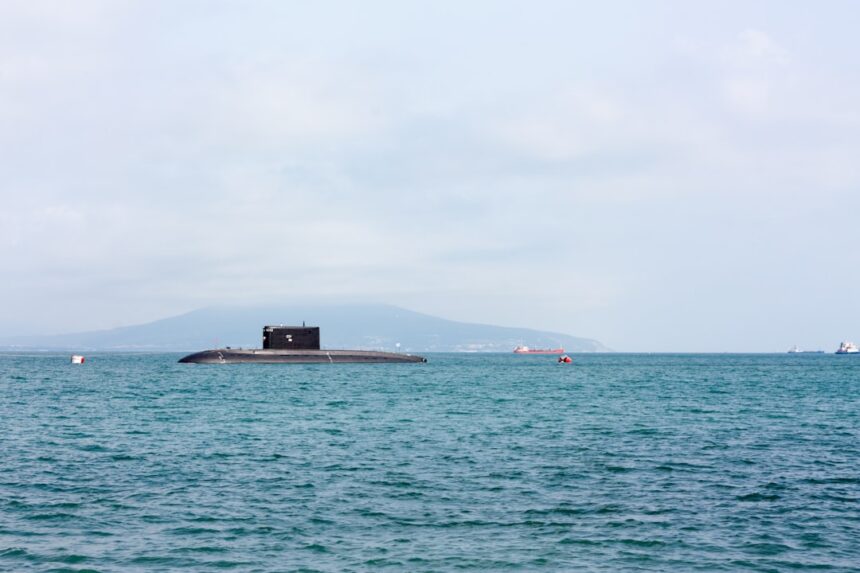
Submarine operations, inherently reliant on stealth, face a persistent and evolving adversary: detection. The underwater environment, while seemingly vast, presents complex acoustic and sensor landscapes that can betray a submarine’s presence to sophisticated sonar systems. Maintaining a secure operational profile requires a continuous assessment and adaptation of maneuvering tactics to minimize the probability of detection. Traditional approaches to submarine navigation and operational positioning have relied on established doctrines and predictable patterns, which, while effective against less advanced threats, become increasingly vulnerable as detection technologies mature. The introduction of Randomized Pilotage Envelopes (RPEs) represents a conceptual shift, aiming to inject a calculated degree of unpredictability into submarine maneuvering, thereby complicating enemy surveillance efforts and enhancing operational security. This article will explore the rationale behind RPEs, their potential implementation, the technical considerations involved, and the broader implications for submarine warfare.
The Evolving Threat Landscape and the Erosion of Predictable Stealth
Acoustic Signatures and Their Exploitation
Submarine propulsion systems, machinery, and hull movements generate acoustic signatures – the distinct sounds that can be detected and analyzed by enemy hydrophones. These signatures, while intentionally minimized, are not entirely silent. Historically, submarines have operated within acoustically favorable regions or employed specific maneuvering profiles to reduce their acoustic footprint. However, advances in broadband sonar, towed array technology, and passive acoustic sensing have increased the likelihood of detecting even faint sounds over greater distances. The ability of adversaries to cross-correlate acoustic data from multiple sensors and to employ sophisticated signal processing algorithms to identify and track submarine sounds poses a significant challenge to traditional stealth doctrines.
Non-Acoustic Detection Methods
Beyond acoustics, submarines are susceptible to non-acoustic detection. These include:
Magnetic Anomaly Detection (MAD)
MAD systems detect disturbances in the Earth’s magnetic field caused by the large metallic mass of a submarine. While typically employed by airborne platforms at a lower altitude, the range and sensitivity of these systems are continually improving.
Wake Detection
Submarine wakes, though often subtle, can be detected through various means, including optical observation (especially in clear waters or surface conditions), thermal imaging, and even variations in water salinity or minor surface disturbances.
Wake Imaging Sonar
Some advanced sonar systems are capable of imaging the disturbed water column left by a submarine, effectively “seeing” its path even after the submarine itself has moved on.
The cumulative effect of these evolving detection capabilities is a reduction in the effectiveness of predictable stealth. If an adversary can anticipate a submarine’s likely maneuvers or operational areas based on historical data or doctrine, they can concentrate their surveillance efforts accordingly, increasing the probability of detection.
In the realm of submarine security, the concept of randomized pilotage envelopes has garnered attention for its potential to enhance navigational safety and operational effectiveness. A related article that delves deeper into this topic can be found at this link, where it discusses innovative strategies and technologies aimed at improving the security protocols surrounding submarine operations. This exploration is crucial as it addresses the evolving challenges faced by naval forces in maintaining secure and efficient underwater navigation.
The Concept of Randomized Pilotage Envelopes (RPEs)
Redefining Navigational Predictability
Randomized Pilotage Envelopes are designed to counteract the predictability inherent in traditional submarine operational methodologies. Instead of adhering to predefined routes or predictable maneuvering grids, RPEs introduce a dynamic and statistically random element into the submarine’s positioning and movement within a defined operational area. The core idea is to generate a probabilistic distribution of potential locations and trajectories, making it significantly harder for an adversary to anticipate the submarine’s exact position at any given moment.
Operational Area Definition and Envelope Generation
Defining Operational Boundaries
The first step in implementing RPEs involves defining a specific operational area. This area is typically characterized by tactical considerations, such as the mission objective, the expected adversary presence, environmental factors, and the submarine’s operational capabilities. The boundaries of this area are crucial for constraining the randomization process.
Algorithmic Generation of Envelopes
Within these defined boundaries, specialized algorithms are employed to generate the RPEs. These algorithms do not merely select random points; they define probabilistic envelopes that dictate the submarine’s potential locations and movement patterns over a given period. This involves parameters such as:
Probability Density Functions
The algorithms can utilize probability density functions (PDFs) to assign varying likelihoods of the submarine being in different sub-regions within the operational area. Regions outside certain tactical considerations might have extremely low or zero probability.
Movement Vector Randomization
Instead of following a straight line or a predefined curve, the submarine’s movement vectors (direction and speed) are randomized within acceptable operational parameters. This randomization is not arbitrary but is constrained by factors such as endurance, acoustic stealth considerations, and the need to maintain operational effectiveness.
Temporal Variation
The nature and size of the RPE can change over time. This temporal variation can be pre-programmed or dynamically adjusted based on the perceived threat level or changes in the operational environment. For instance, the envelope might expand or contract, or the probability distributions might shift.
The Statistical Advantage
The statistical advantage of RPEs lies in the fact that a deterministic attacker, even with advanced sensor capabilities, faces a significantly larger search space and a lower probability of targeted engagement. If the adversary’s intelligence suggests the submarine is within a certain box, and that box is the RPE, they cannot precisely know where to allocate their most effective sensors or strike assets. This effectively “blurs” the submarine’s signature across a wider calculated area, forcing the adversary to either expend more resources on broader surveillance or accept a higher risk of missing their target.
Implementation Challenges and Technical Considerations
The Need for Advanced Automation and Control Systems
The effective implementation of Randomized Pilotage Envelopes necessitates a high degree of automation and sophisticated control systems aboard the submarine. The instantaneous generation and execution of randomized maneuvers require real-time processing power and robust command and control mechanisms.
Real-time Situational Awareness
Submarine commanders and the onboard systems require constant and accurate situational awareness. This includes detailed knowledge of the submarine’s own position, speed, and heading, as well as comprehensive intelligence on the adversary’s deployment, sensor coverage, and potential threat vectors. RPEs rely on this data to dynamically adapt the randomization within the defined operational parameters.
Autonomous Navigation and Maneuvering
The control systems must be capable of autonomously executing the generated pilotage envelopes. This means the submarine can, to a certain extent, navigate and adjust its course and speed without constant direct human input for every minor adjustment, under the overarching guidance of the RPE algorithms. This frees up the crew for higher-level tactical decision-making and threat assessment.
Integration with Sensor and Combat Systems
The RPE system needs to be seamlessly integrated with the submarine’s sensor suites and combat systems. For example, potential threats detected by sonar could trigger a rapid recalculation of the RPE to move the submarine into a less probable or tactically advantageous position.
Computational Demands and Processing Power
Generating and adapting complex RPEs in real-time places significant computational demands on the submarine’s onboard systems.
Algorithmic Complexity
The algorithms underpinning RPE generation can be computationally intensive, especially when dealing with multiple variables, real-time data inputs, and dynamic environmental conditions. This requires powerful processors and efficient software architecture.
Data Fusion and Analysis
The system must be adept at fusing and analyzing data from various sources – internal navigation systems, external intelligence feeds, and onboard sensors – to inform the RPE generation process.
Hardware Specifications
Modern submarines already possess advanced computational capabilities, but the adoption of RPEs might necessitate further upgrades, potentially including specialized hardware accelerators or distributed computing architectures, to handle the sheer volume of calculations required.
Maintaining Operational Effectiveness and Safety
While enhancing stealth, RPEs must not compromise the submarine’s ability to perform its primary mission or jeopardize its safety.
Mission Constraint Adherence
The randomized maneuvers must always remain within the operational parameters dictated by the mission. For example, a RPE designed for rapid transit would have different randomization characteristics than one designed for prolonged covert observation.
Environmental and Navigational Hazards
The RPE generation algorithms must incorporate real-time data on bathymetry, seabed conditions, known minefields, and other potential navigational hazards. The randomization should avoid areas that pose an unacceptable risk.
Acoustic Signature Management
Crucially, the randomized maneuvers themselves should not introduce new or increased acoustic signatures. The randomization should occur within the submarine’s inherent low-noise operational capabilities. If a randomized maneuver would significantly increase noise, the algorithm must reject that option or select a less noisy alternative.
The Tactical Implications of Randomized Pilotage

Enhancing Survivability in Anti-Submarine Warfare (ASW) Engagements
The primary tactical benefit of RPEs is their potential to significantly enhance a submarine’s survivability in ASW environments.
Increased Uncertainty for the Attacker
By making the submarine’s position less predictable, RPEs create uncertainty for ASW forces. Instead of a precise track, an adversary might have a probabilistic “envelope” of where the submarine could be. This forces the attacker to adopt a broader search pattern, increasing their reaction time and reducing the effectiveness of their concentrated assets.
Reduced Probability of Intercept and Attack
If the adversary cannot accurately predict the submarine’s course or location, the probability of them successfully intercepting or attacking it is reduced. This is particularly important in scenarios where the submarine is operating in contested waters with significant ASW presence.
Psychological Impact on the Adversary
The knowledge that submarines are employing unpredictable maneuvering tactics can also have a psychological impact on ASW forces, potentially leading to increased operational tempo, resource allocation challenges, and a general sense of unease.
Denying Predictable Sensor Placement for Adversaries
Exploiting “Blind Spots” and Coverage Gaps
RPEs can be used to strategically position the submarine in areas that are less likely to be under consistent or effective surveillance. The randomization allows the submarine to explore a wider range of positions within its operational area, potentially finding and exploiting temporary “blind spots” or limitations in the adversary’s sensor coverage.
Frustrating Fixed Sensor Arrays
Fixed sonar arrays or surveillance posts are particularly vulnerable to predictable patterns. By constantly varying its position and movement within the RPE, a submarine can make it difficult for these fixed assets to maintain continuous tracking or gather consistent data.
The Role of Offensive Operations
While primarily a defensive tactical enhancement, RPEs can also have implications for offensive operations.
Creating Opportunities for Ambush
By operating within an RPE, a submarine can position itself in a manner that creates unexpected opportunities for offensive action. An adversary, accustomed to predictable patterns, might lower their guard in certain areas, only to be surprised by the submarine’s emergence from an unexpected location.
Maintaining Covertness During Offensive Maneuvers
When a submarine needs to maneuver into a firing position or evade immediate threats after an attack, RPEs can help maintain its covertness during these critical moments. The randomized movement can mask the intent of the maneuver, preventing the adversary from immediately anticipating the next action.
In recent discussions about enhancing submarine security, the concept of randomized pilotage envelopes has gained attention for its potential to mitigate risks associated with underwater navigation. A related article on this topic can be found at In the War Room, where experts delve into innovative strategies that could revolutionize how submarines operate in contested environments. By exploring these advanced methodologies, naval forces may significantly improve their operational security and effectiveness.
Future Developments and Strategic Implications
| Category | Data/Metric |
|---|---|
| Randomized Pilotage Envelopes | 10 |
| Submarine Security | High |
The Arms Race in Stealth and Detection
The development and adoption of technologies like Randomized Pilotage Envelopes are indicative of an ongoing arms race between offensive and defensive capabilities. As submarines develop advanced methods to evade detection, adversaries will undoubtedly develop more sophisticated methods to counter them.
Countering RPEs: Predictive Analytics and AI
Future ASW efforts will likely focus on developing advanced predictive analytics and artificial intelligence (AI) algorithms to counter RPEs. This might involve:
Machine Learning for Pattern Recognition
AI could be trained to recognize subtle deviations from random behavior or to identify emerging patterns even within randomized datasets.
Multi-Sensor Fusion and Correlation
More sophisticated AI could be used to fuse data from an ever-increasing number of sensors – acoustic, non-acoustic, and even cyber – to build a more complete picture and overcome individual sensor limitations.
Probabilistic Targeting Models
Instead of targeting a specific point, future ASW might employ probabilistic targeting models that can identify the highest probability areas of submarine presence within an RPE and allocate assets accordingly.
Integration with Other Stealth Technologies
RPEs are unlikely to be a standalone solution. Their effectiveness will be amplified when integrated with other advancements in submarine technology.
Advanced Acoustic Silencing
Continued improvements in hull design, propulsion systems, and quieting technologies will reduce the submarine’s intrinsic acoustic signature, making even randomized movements less detectable.
Improved Deception and Electronic Warfare
The integration of RPEs with advanced deception techniques and electronic warfare (EW) capabilities could further confuse adversaries by masking the submarine’s true presence or generating false targets.
Underwater Unmanned Vehicles (UUVs)
The use of UUVs in conjunction with manned submarines could also play a role, potentially acting as decoys or extending surveillance capabilities in ways that complement RPE-enabled maneuvering.
The Strategic Advantage of Enhanced Stealth
The ability to operate with a higher degree of stealth and unpredictability provides a significant strategic advantage.
Deterrence and Power Projection
Submarines are key components of strategic deterrence and power projection. Enhancing their survivability directly strengthens these capabilities, making a nation’s submarine force a more credible threat and a more resilient asset in times of crisis.
Information Superiority and Intelligence Gathering
Stealthy submarines are vital for intelligence gathering and reconnaissance. RPEs can facilitate prolonged and covert operations, allowing for the collection of critical information with a reduced risk of compromise.
Operational Flexibility
The ability to operate more freely and with less fear of immediate detection provides greater operational flexibility. Submarines can undertake a wider range of missions, in more challenging environments, and for longer durations, knowing their stealth is less susceptible to predictable exploitation.
In conclusion, Randomized Pilotage Envelopes represent a forward-thinking approach to submarine security in an era of escalating detection capabilities. By introducing calculated unpredictability into submarine maneuvering, RPEs aim to fundamentally alter the attacker-defender dynamic, shifting the advantage towards the submarine. While significant technical and operational challenges remain, the potential benefits in terms of enhanced survivability, operational effectiveness, and strategic advantage warrant continued research, development, and eventual implementation. The evolution of ASW and submarine stealth continues, and RPEs are a significant step in that ongoing process.
FAQs
What is randomized pilotage?
Randomized pilotage is a navigation technique used to enhance security by varying the route and timing of a vessel’s movements to prevent predictability and potential targeting by adversaries.
What are pilotage envelopes?
Pilotage envelopes are predefined areas or routes within which a vessel must navigate, often to ensure safe passage through restricted or challenging waters. They may also be used to enhance security by controlling and monitoring vessel movements.
How does randomized pilotage enhance submarine security?
Randomized pilotage enhances submarine security by making it more difficult for adversaries to predict the movements and locations of submarines. By varying the routes and timing of submarine movements, randomized pilotage reduces the risk of detection and potential targeting.
What are the benefits of using randomized pilotage for submarine security?
The benefits of using randomized pilotage for submarine security include increased operational security, reduced vulnerability to potential threats, and enhanced protection of sensitive maritime assets and activities.
Are there any challenges or limitations associated with randomized pilotage for submarine security?
Challenges and limitations associated with randomized pilotage for submarine security may include increased operational complexity, potential impact on operational efficiency, and the need for effective coordination and communication among relevant stakeholders.