The Cold War, a period of intense geopolitical tension and ideological rivalry, was characterized by an unprecedented race for technological superiority between the United States and the Soviet Union. Nowhere was this clandestine competition more fervent than in the realm of naval warfare. The oceans, vast expanses that served as both highways and battlegrounds, became the silent stage for a technological arms race, much of which remained shrouded in secrecy for decades. The revelations that have emerged in recent years regarding naval technology leaks from this era paint a picture of daring espionage, strategic miscalculations, and the profound impact of stolen knowledge on the course of military development. These leaks were not mere academic curiosities; they were often the keys that unlocked strategic advantages, fundamentally altering the perceived balance of power and influencing the design of warships, submarines, and the very doctrines that governed their deployment.
The ocean depths, a realm of perpetual twilight, served as a fertile ground for clandestine operations during the Cold War. Both superpowers understood that naval dominance was crucial. The United States, with its global reach and reliance on maritime trade, acutely felt the threat of Soviet submarines capable of interdicting its supply lines. Conversely, the Soviet Union, possessing a vast coastline and seeking to project power beyond its immediate sphere, aimed to challenge American naval supremacy. This dynamic fueled an intense and often shadowy campaign of information gathering.
The Art of the Silent Steal
Espionage during the Cold War was a multifaceted endeavor, employing a range of sophisticated and often audacious methods. For naval technology, this meant venturing into the heart of enemy operations, from the shipyards where new vessels were being constructed to the secure facilities where cutting-edge research was conducted. Agents, often operating under deep cover, risked severe consequences for even the slightest slip-up. The information they sought was not just theoretical; it was about tangible designs, operational parameters, and the very soul of a nation’s maritime defense.
Decrypting the Enigma
One of the most impactful avenues of information acquisition involved the meticulous efforts to break enemy codes and ciphers. The ability to read intercepted communications was akin to having a direct line into the opponent’s strategic thinking. For naval forces, this meant understanding patrol routes, fleet movements, and the deployment of new weapons systems. The race to develop more advanced cryptography and to break the adversary’s systems was a constant cat-and-mouse game, with fortunes in the war of information turning on the cleverness of cryptanalysts on both sides.
The Cold War era was marked by intense competition not only on land and in the air but also beneath the waves, as naval technology became a critical component of military strategy. Recent discussions surrounding the leaks of classified naval technology have sparked renewed interest in this period, highlighting the potential implications for modern naval warfare. For a deeper dive into the intricacies of these leaks and their historical context, you can read the article available at this link.
Submarine Secrets: The Silent Hunters and Their Vulnerabilities
Submarines represented a particularly sensitive area of naval technology, embodying the concept of stealth and the potential for devastating surprise attacks. The development of quieter propulsion systems, advanced sonar detection, and more potent weaponry for submarines became a paramount objective for both the US and the USSR. Leaks in this domain had the potential to expose critical vulnerabilities and accelerate the arms race in underwater warfare.
The Quiet Revolution: Propulsion Systems
The noise generated by a submarine’s engines was, for a long time, its Achilles’ heel. Early diesel-electric submarines were limited by their need to surface or snorkel for air, making them vulnerable to detection. The development of nuclear propulsion was a game-changer, allowing submarines to remain submerged for extended periods. Information regarding the design, efficiency, and operational characteristics of these nuclear reactors, or conversely, advancements in quieting conventional diesel-electric systems, would have been invaluable to an adversary. Leaks concerning the precise acoustic signatures of these new propulsion systems, or methods to detect them, would have allowed for the rapid development of countermeasures.
The Eyes and Ears of the Deep: Sonar and Detection
Sonar technology is the lifeblood of submarine warfare. The ability to detect an enemy submarine before it detects you, or to remain undetected while hunting, is the ultimate advantage. This includes not only the performance of active sonar (which emits a ping) but also the subtle art of passive sonar (which listens for ambient noise). Leaks revealing the range, resolution, or specific frequencies used by an opponent’s sonar systems would have been catastrophic. Conversely, intelligence about breakthroughs in noise reduction, hull design to minimize acoustic reflections, or the development of new stealth materials would have allowed for the rapid enhancement of one’s own submarine’s survivability.
Recent discussions surrounding Cold War naval technology leaks have shed light on the intricate web of espionage and innovation during that era. A fascinating article that delves deeper into this topic can be found at In The War Room, where the implications of these leaks on modern naval strategies are explored. The revelations not only highlight the technological advancements of the time but also raise questions about the security measures in place to protect sensitive information.
The Spearhead: Torpedoes and Missile Systems
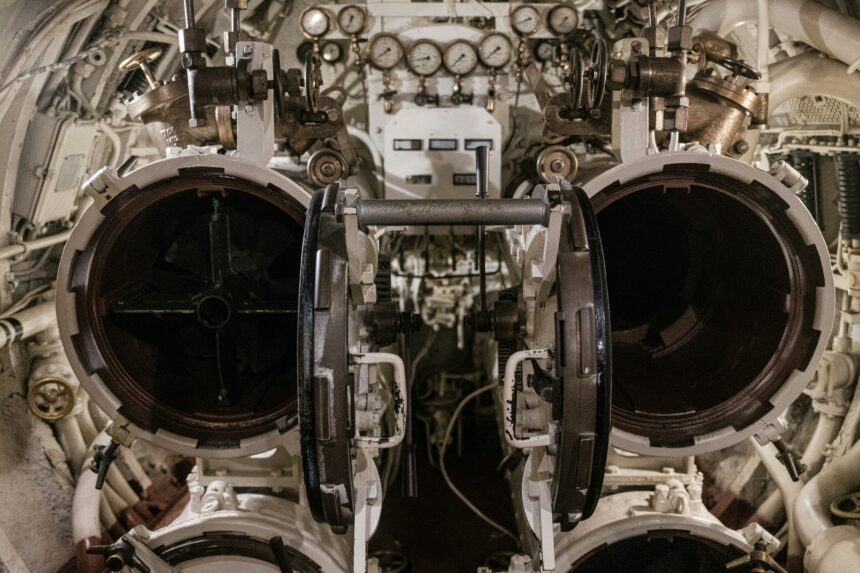
While stealth is crucial for submarines, their offensive capability is equally vital. Torpedoes, the traditional underwater weapon, became increasingly sophisticated with advanced guidance systems and warheads. The development of submarine-launched ballistic missiles (SLBMs) added a strategic nuclear dimension to underwater warfare. Any leak pertaining to the design of these weapons, their guidance accuracy, range, or the development of countermeasures against them, would have had profound implications for strategic deterrence and naval power projection. For instance, knowledge of a new torpedo’s evasion capabilities or a novel deployment method for SLBMs could have rendered existing defenses obsolete.
Surface Fleet Revelations: The Battleships of the Cold War
While submarines operated in the hidden depths, the surface fleet remained the visible projection of naval power. Aircraft carriers, destroyers, cruisers, and other warships were essential for power projection, escorting convoys, and conducting amphibious operations. Leaks concerning their design, armament, protection, and operational capabilities were of immense strategic value.
The Bulwark: Hull Design and Armor
The fundamental integrity of a surface vessel lies in its hull design and protective armor. Information regarding the composition of advanced steel alloys, the effectiveness of compartmentalization against damage, or the development of new armor plating technologies would have been a significant prize. Adversaries would have sought to exploit any weaknesses in hull construction or armor to maximize the effectiveness of their own anti-ship weaponry. Conversely, intelligence about defensive innovations would have driven the development of more potent offensive systems.
The Arsenal: Guns, Missiles, and Electronic Warfare
The offensive capabilities of surface fleets evolved dramatically during the Cold War. The transition from large-caliber naval guns to guided missile systems, and the increasing importance of electronic warfare, represented major technological leaps. Leaks concerning the targeting systems of new missiles, their range and destructive power, or the effectiveness of electronic countermeasures (ECM) and electronic counter-countermeasures (ECCM) could have given one side a decisive advantage. Understanding an opponent’s radar frequencies, jamming capabilities, or missile fuzing mechanisms would have allowed for the development of effective countermeasures, effectively disarming their offensive might before it could be unleashed.
The Floating Airfields: Aircraft Carriers and Their Support
Aircraft carriers were the crown jewels of many navies, serving as mobile airbases capable of projecting air power across vast distances. Intelligence related to carrier design, flight deck operations, aircraft catapult systems, and the protection of these vulnerable behemoths would have been exceptionally valuable. Information about new carrier-based aircraft, their performance characteristics, or their armaments would have also been a major intelligence coup. Understanding the vulnerabilities of a carrier strike group, from its air defenses to its escort vessels, would have allowed for the development of strategies to neutralize this potent force.
Post-Cold War Echoes: The Lasting Impact of Leaked Secrets

The fall of the Berlin Wall and the dissolution of the Soviet Union did not entirely extinguish the legacy of Cold War naval technology leaks. Many of the technologies and strategies that were developed and refined during this period continue to shape modern naval warfare. The revelations of past espionage serve as a stark reminder of the constant threat of cyber warfare and the persistent human desire for strategic advantage.
The Unseen Hand: How Leaks Reshaped Naval Doctrines
The impact of naval technology leaks extended beyond the technical specifications of individual weapons or vessels. These leaks often influenced the very way navies were conceived and employed. If a nation discovered it had a significant technological disadvantage in a particular area, it might be compelled to develop new doctrines that emphasized asymmetric warfare or relied more heavily on intelligence gathering. Conversely, a perceived technological superiority might lead to more aggressive or assertive naval postures. The constant flux of information, both gained and lost, was a critical driver of evolving naval strategy.
The Ghost in the Machine: Contemporary Relevance
Even today, the ramifications of Cold War-era naval technology leaks can be felt. The fundamental principles of submarine design, sonar operation, and missile guidance developed during that period remain germane. Furthermore, the methods of espionage and counter-espionage employed then have, in many ways, laid the groundwork for modern cyber warfare. Understanding how sensitive information was extracted and protected in the past offers valuable lessons for safeguarding critical infrastructure and military secrets in the 21st century. The technological arms race of the Cold War, with its hidden battles and illuminated secrets, continues to cast a long shadow over the present and future of naval power.

WATCH NOW ▶️ WARNING: The $17M Deal That Blinded The US Navy
FAQs
What were some key naval technologies developed during the Cold War?
During the Cold War, significant naval technologies included nuclear-powered submarines, ballistic missile submarines (SSBNs), advanced sonar and radar systems, guided missile destroyers and cruisers, and stealth technology for ships and submarines.
Why were naval technology leaks significant during the Cold War?
Naval technology leaks were significant because they could compromise national security by revealing sensitive information about a country’s military capabilities, allowing adversaries to develop countermeasures or replicate advanced technologies, thus shifting the balance of power.
Which countries were primarily involved in Cold War naval technology espionage?
The primary countries involved in naval technology espionage during the Cold War were the United States and the Soviet Union, along with their respective allies. Both sides engaged in intelligence gathering to gain advantages in naval warfare capabilities.
How were Cold War naval technology leaks typically discovered?
Leaks were often discovered through counterintelligence operations, defectors, intercepted communications, surveillance, and investigations into suspicious activities within military or defense contractor organizations.
What impact did Cold War naval technology leaks have on modern naval warfare?
Cold War naval technology leaks accelerated the development and proliferation of advanced naval systems worldwide, influencing modern naval warfare by prompting innovations in submarine stealth, missile technology, electronic warfare, and naval strategy.