Naval command and control (C2) systems are the central nervous system of modern navies, enabling the coordination of diverse assets across vast and often hostile environments. These complex webs of communication, computation, and human decision-making are critical for everything from basic navigation to high-intensity warfare. However, this intricate architecture is not without its vulnerabilities, some inherent to the maritime domain and others emerging from the increasing reliance on technological solutions. Understanding these weaknesses is paramount for safeguarding national security and ensuring the effectiveness of naval forces in an increasingly contested global landscape.
The very nature of operations at sea inherently amplifies many vulnerabilities that might be less pronounced in land-based or air-based C2. The vast distances, unpredictable weather, and the constantly shifting electromagnetic spectrum all contribute to a challenging operational environment.
Communication Impairment through Distance and Obstruction
The curvature of the Earth significantly limits line-of-sight communications, necessitating reliance on satellite or high-frequency (HF) radio, both of which have their own drawbacks.
Limited Line-of-Sight Communications
Naval vessels, operating far from shore-based infrastructure, often cannot utilize reliable, high-bandwidth terrestrial networks. This forces them to depend on methods that are inherently less resilient or robust. The horizon, a physical boundary, acts as a communication barrier, preventing direct radio transmission between distant ships or between ships and shore stations without elevated relays.
Reliance on Satellite Communications (SATCOM)
SATCOM provides global coverage, making it indispensable for naval C2. However, it introduces a single point of failure – the satellite itself. Furthermore, ground stations that manage SATCOM links are often fixed and publicly known, presenting attractive targets.
- Geostationary Orbits: While providing continuous coverage over a wide area, geostationary satellites are highly predictable in their position, making them susceptible to kinetic or electronic anti-satellite (ASAT) attacks.
- Low Earth Orbit (LEO) Constellations: While more resilient due to their numbers and rapid movement, LEO constellations are still vulnerable to jamming and cyberattacks on their ground segment. Their sheer volume also presents a larger attack surface.
Susceptibility of High-Frequency (HF) Radio
HF radio offers a degree of resilience due to its ability to bounce signals off the ionosphere, allowing for beyond-line-of-sight communication without satellites. However, it is inherently low-bandwidth and susceptible to atmospheric interference, making it unsuitable for large data transfers or real-time command.
- Solar Flares and Ionospheric Disturbances: Geomagnetic storms and solar flares can severely disrupt or completely blackout HF communications, introducing significant communication gaps.
- Low Bandwidth Limitations: The limited data transfer rate of HF makes it inefficient for transmitting complex targeting data, video feeds, or large intelligence packets, forcing a reliance on more vulnerable, higher bandwidth alternatives.
Environmental Degradation of Sensor and Communication Systems
The harsh marine environment, with its corrosive saltwater, extreme temperatures, and powerful storms, constantly threatens the physical integrity and performance of C2 systems.
Saltwater Corrosion and Equipment Failure
Salt spray and high humidity accelerate corrosion in electronic components and structural elements, leading to premature failure of antennas, connectors, and internal circuitry. Regular maintenance is crucial, but the constant exposure remains a significant challenge.
Extreme Weather and System Stress
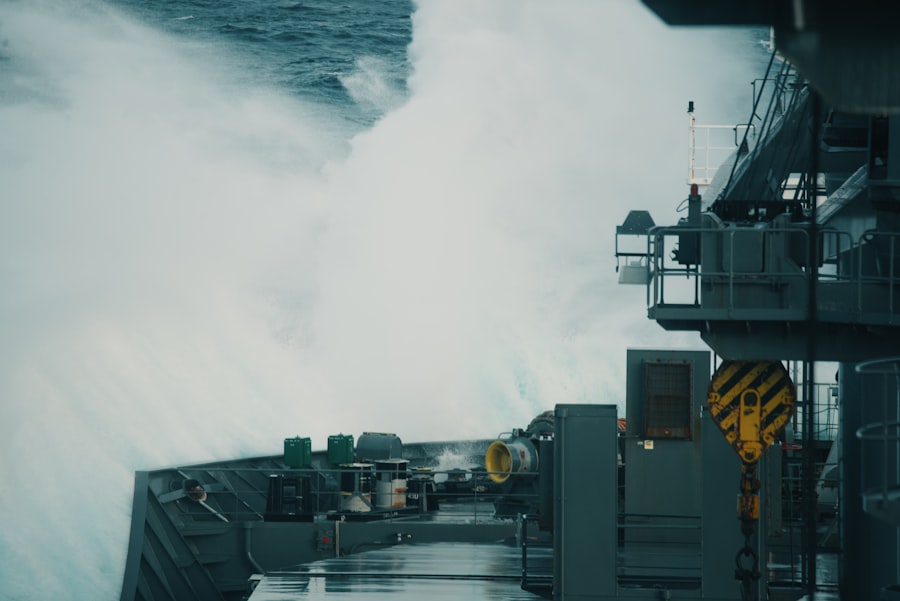
Heavy seas, high winds, and icing can damage antennas, disrupt satellite links, and even impair radar performance. During critical operations, such weather conditions can introduce dangerous blind spots and communication blackouts.
Naval command and control vulnerabilities have become a pressing concern in modern maritime operations, as highlighted in a related article on the topic. The article discusses the various threats that naval forces face in maintaining effective communication and coordination, particularly in contested environments. For more in-depth analysis and insights, you can read the article here: Naval Command and Control Vulnerabilities.
The Digital Frontier: Cyber Vulnerabilities
As naval C2 systems become increasingly integrated and digitized, they inherit the full spectrum of cyber threats. The interconnectedness that offers efficiency also creates an Achilles’ heel, a vast digital attack surface ready for exploitation.
Software and Hardware Exploitation
Modern naval platforms are essentially floating data centers, running complex operating systems and proprietary software. Each line of code represents a potential entry point for adversaries.
Operating System and Application Vulnerabilities
Like any computer system, naval C2 relies on operating systems (OS) and applications that can contain exploitable bugs, backdoors, or outdated security patches. Adversaries actively probe for these weaknesses to gain unauthorized access or disrupt operations.
- Supply Chain Compromise: The global nature of technology supply chains means that hardware or software components could be infiltrated or tampered with at any stage before reaching their final naval destination. This “Trojan horse” approach can embed hidden vulnerabilities.
- Insider Threats: Disgruntled employees or agents within the naval forces or contracting companies can intentionally introduce vulnerabilities or compromise systems, often with significant repercussions.
Network Infrastructure Weaknesses
The intricate networks that link sensors, weapons systems, and command centers aboard a vessel, and between vessels, are ripe targets.
- Wireless Network Insecurity: While efforts are made to secure wireless communications, vulnerabilities in Wi-Fi or other wireless protocols can be exploited to gain access to internal networks.
- Unpatched Network Devices: Routers, switches, and other network hardware often have factory default configurations or unpatched vulnerabilities that can be leveraged by attackers.
Data Integrity and Confidentiality compromised
The information flowing through C2 systems is the lifeblood of naval operations. Its compromise, whether through alteration or exposure, can have devastating consequences.
Data Manipulation and Deception
Adversaries can inject false data into C2 systems, leading to incorrect tactical decisions, misidentification of targets, or even fratricide. This “fog of war” can be artificially thickened through sophisticated cyber means.
- GPS Spoofing: Altering GPS signals can lead to vessels navigating off course, into dangerous waters, or to erroneous target locations. This is effectively rendering the ship blind to its true position.
- Sensor Data Tampering: Manipulating radar returns, sonar readings, or electro-optical imagery can create phantom contacts or hide actual threats, sowing confusion and delays in response. This can turn a perfectly clear picture into a deceptive mirage.
Exfiltration of Sensitive Information
Critical intelligence, operational plans, and proprietary technology can be stolen through cyber espionage, undermining future operations and providing adversaries with invaluable insights.
- Encryption Weaknesses: Flaws in cryptographic algorithms or weak key management practices can allow adversaries to decrypt sensitive communications and data, effectively listening in on private conversations.
- Human Element in Cyber Security: Phishing, social engineering, and poor cyber hygiene among personnel remain a primary entry point for sophisticated cyberattacks, exploiting human psychology as a vulnerability.
Denial of Service (DoS) and Disruptive Attacks
Beyond subtle infiltration, direct disruptive attacks aim to disable or degrade C2 capabilities, effectively paralyzing naval forces.
Jamming and Electronic Warfare (EW)
Electronic warfare involves deliberately disrupting or manipulating the electromagnetic spectrum to deny, degrade, or deceive an adversary’s C2 systems.
- Communication Jamming: Overwhelming communication frequencies with noise renders them unusable, severing the vital link between command and units. This can be likened to shouting so loudly that nobody else can be heard.
- Radar Jamming: Emitting powerful signals to obscure or distort radar returns, making it difficult for ships to detect threats or navigate effectively. This can make a clear sky appear full of ghosts or make actual targets disappear.
Cyber-Physical Attacks
These attacks target the operational technology (OT) systems that control physical processes, moving beyond data to directly impact the functioning of the vessel itself.
- Weapon System Disablement: Cyberattacks could prevent weapons from firing, misdirect them, or even cause them to malfunction in a dangerous way.
- Engine and Propulsion System Interference: Disrupting the control systems for engines or steering can leave a vessel dead in the water or steer it into danger, transforming a warship into a derelict adrift.
Human Factors: The Irreducible Component

While technology dominates discussions of C2 vulnerabilities, the human element remains a crucial, and often unpredictable, variable. Operators and decision-makers are both the greatest asset and a potential weak link in the C2 chain.
Cognitive Overload and Stress
In high-intensity combat, operators are bombarded with vast amounts of information, often under extreme pressure. This can lead to errors in judgment, delayed responses, or overlooking critical data.
Information Saturation
Modern C2 systems generate immense amounts of data from numerous sensors and intelligence sources. Processing and synthesizing this information effectively under duress is a significant cognitive challenge.
- Alert Fatigue: Constant, low-priority alerts can lead operators to become desensitized, potentially overlooking a critical warning amidst the noise.
- Decision Paralysis: An overwhelming amount of information can sometimes lead to an inability to make timely decisions, a phenomenon known as “analysis paralysis.”
Stress and Fatigue Induced Errors
Prolonged operations, lack of sleep, and the inherent dangers of naval warfare can significantly impair cognitive function, leading to mistakes in data entry, communication, or tactical assessment.
Training Gaps and Human-Computer Interface Issues
Even the most sophisticated C2 system is only as effective as the personnel operating it. Insufficient training or poorly designed interfaces can undermine technological advantages.
Inadequate System Familiarization
Operators who are not thoroughly trained on the intricacies of complex C2 systems may not fully exploit their capabilities or, worse, misinterpret system outputs, leading to erroneous actions.
- Rapid Technological Evolution: The pace of technological advancement means that C2 systems are constantly being updated. Ensuring that training keeps pace with these changes is a continuous challenge.
- Simulation vs. Real-World Experience: While simulations are invaluable, they cannot fully replicate the sensory and psychological pressures of real-world combat, which can expose gaps in training.
Poor Human-Computer Interface (HCI) Design
Cluttered displays, unintuitive controls, and poorly designed information visualizations can hinder operators’ ability to quickly and accurately process information and make decisions.
- Cognitive Ergonomics: If the C2 system’s interface does not align with natural human cognitive processes, it can increase the likelihood of errors and slow down response times.
- Lack of Standardization: Different systems within a C2 architecture may have varying interfaces, requiring operators to adapt to multiple interaction methods, increasing the cognitive load.
The Electromagnetic Spectrum: An Invisible Battlefield
The electromagnetic spectrum (EMS) is the medium through which much of modern naval C2 operates. It is also a fiercely contested battleground where adversaries seek to gain an advantage.
Spectrum Congestion and Interference
The limited nature of the EMS means that many users compete for bandwidth, leading to potential interference and the risk of communications being jammed simply by accident.
Unintentional Interference
A multitude of devices, from radar systems and communication links to personal electronics, all emit and receive electromagnetic signals. This can lead to unintentional interference, degrading the performance of C2 systems.
- Growing Number of Emitters: As more and more devices become networked and reliant on wireless communication, the EMS becomes increasingly crowded, increasing the likelihood of interference.
- Bandwidth Scarcity: Specific frequencies are optimal for various types of communications. Competing demands for these finite resources can lead to degraded performance or the need to use suboptimal channels.
Intentional Jamming and Deception
Adversaries actively employ electronic warfare to intentionally disrupt, deny, or deceive naval C2 systems operating within the EMS.
- Offensive Electronic Attacks: These are designed to directly prevent or degrade the use of the EMS by an adversary, including jamming communications, radars, and navigation systems. This is akin to blinding an opponent with a powerful light or drowning out their voice with deafening noise.
- Electronic Support Measures (ESM): This involves passively listening to and analyzing an adversary’s EMS emissions to gather intelligence, identify vulnerabilities, and locate enemy forces. This allows adversaries to build a precise picture of naval C2 networks without ever firing a shot.
- Electronic Protection (EP): These are defensive measures taken to protect friendly use of the EMS from adversary electronic attacks, including frequency hopping, spread spectrum techniques, and anti-jamming technologies. This is a constant game of cat and mouse, where one side seeks to disrupt and the other seeks to protect.
Stealth and Detection Avoidance vs. Communication Needs
The very act of communicating necessarily emits signals, creating a fundamental tension between the need for stealth and the need for robust C2.
Low Probability of Intercept (LPI) Communications
Naval forces endeavor to use LPI techniques to minimize the chances of their communications being detected by adversaries. However, LPI systems often come with trade-offs.
- Reduced Bandwidth: Many LPI techniques inherently reduce the amount of data that can be transmitted, limiting their applicability for high-volume C2 traffic.
- Complex Implementation: LPI systems can be more complex to operate and manage, requiring specialized training and equipment.
Signature Management Challenges
Every emission from a naval vessel – radar, radio, even engine heat – contributes to its detectable signature. Minimizing this signature while maintaining C2 functionality is a constant balancing act.
- Active vs. Passive Sensors: The reliance on active sensors (e.g., radar, active sonar) necessarily gives away a vessel’s position, even if briefly. Passive sensors (e.g., ESM, passive sonar) are stealthier but may have limitations in range or accuracy.
- Emission Control (EMCON): Strict EMCON policies can reduce a vessel’s detectable signature but can also severely restrict communication capabilities, potentially isolating units at critical moments. This is a deliberate sacrifice of connectivity for stealth, a risky gamble in a fast-paced conflict.
In conclusion, the vulnerabilities of naval command and control systems are multifaceted, extending from the vastness of the ocean to the minute details of computer code and the unpredictable nature of human behavior. Addressing these weaknesses requires a holistic approach, encompassing robust cyber defenses, resilient communication architectures, advanced electronic warfare capabilities, rigorous training, and a deep understanding of the human element. Just as a ship’s hull protects it from the elements, a comprehensive and robust C2 system, constantly adapted and fortified, is essential to protect a nation’s naval power from the myriad threats that lurk beneath the surface, within the airwaves, and in the digital ether. Ignoring these vulnerabilities is akin to leaving the helm unattended in a storm; the consequences could be catastrophic.

SHOCKING: How the KGB Read Our Nuclear Codes for 18 Years
FAQs
What is naval command and control?
Naval command and control refers to the systems, processes, and personnel involved in directing naval forces during operations. It includes communication networks, decision-making protocols, and information management to ensure effective coordination and mission success.
What are common vulnerabilities in naval command and control systems?
Common vulnerabilities include cyberattacks, electronic warfare interference, outdated software, communication disruptions, insider threats, and physical sabotage. These weaknesses can compromise the integrity, availability, and confidentiality of command and control functions.
How can cyber threats impact naval command and control?
Cyber threats can disrupt communication networks, manipulate or steal sensitive data, disable critical systems, and degrade situational awareness. Such attacks can hinder decision-making and operational effectiveness, potentially leading to mission failure.
What measures are taken to protect naval command and control systems?
Protection measures include implementing robust cybersecurity protocols, regular system updates and patches, encryption of communications, continuous monitoring for intrusions, personnel training, and redundancy in communication channels to ensure resilience.
Why is it important to address vulnerabilities in naval command and control?
Addressing vulnerabilities is crucial to maintain operational readiness, ensure secure and reliable communication, protect sensitive information, and prevent adversaries from gaining strategic advantages. Effective command and control is vital for the success and safety of naval missions.