The depths of the ocean remain one of Earth’s final frontiers, a realm of immense pressure and perpetual twilight. Within this vast, silent expanse, a unique form of communication and detection unfolds, one that underpins a critical aspect of modern naval warfare: the identification of submarines through their acoustic signatures. Prominent among these signatures are narrowband tonals, distinct, pure-frequency sounds that act as an auditory fingerprint, offering vital clues to the presence and type of submerged vessels. This article will delve into the world of narrowband tonals, exploring their origins, detection methods, analytical processes, and the strategic implications they hold for submarine identification.
Narrowband tonals are not mere random noise; they are highly specific sound frequencies, characterized by their narrow bandwidth. Imagine the difference between a chaotic symphony orchestra playing at random and a single, perfectly tuned violin note held for an extended period. The latter is akin to a narrowband tonal. In acoustic terms, this means the energy of the sound is concentrated within a very small range of frequencies. This sharp focus on specific frequencies is what makes them so distinguishable from the broader spectrum of ambient ocean noise, which is a cacophony of sounds ranging from the clicks of marine life to the rumbling of distant geological activity.
The Sources of the Sound: Mechanical Origins
The origin of these pure-frequency sounds within a submarine is primarily mechanical. Submarines, like any complex machinery, generate vibrations. These vibrations can be transmitted through the hull and radiated into the surrounding water, becoming acoustic emissions. Essentially, the submarine is a walking, or rather, a gliding, orchestra of machinery, and certain instruments within that orchestra produce particularly clear and resonant notes.
Propulsion Systems and Their Harmonic Echoes
The most significant contributors to narrowband tonals are typically the submarine’s propulsion systems.
Propeller Cavitation: The Whisper of Rotating Blades
A primary source is propeller cavitation. As the propeller blades rotate at high speeds, they can create low-pressure areas on their surfaces. If this pressure drops below the vapor pressure of the water, tiny bubbles of water vapor form. When these bubbles collapse, they generate small implosions, creating a characteristic broadband noise. However, under certain operating conditions, particularly at specific rotational speeds and blade angles, this cavitation can produce discrete, high-energy tones at specific frequencies. These frequencies are directly related to the propeller’s rotational speed, the number of blades, and the blade geometry. Think of it as the distinct hum a fan makes when its blades are slightly unbalanced – a recurring sound at a specific pitch. This humming, however, is far more focused and predictable.
Gear Trains and Machinery Noise: The Rhythmic Heartbeat
Beyond the propellers, other rotating machinery within the submarine contributes to the acoustic signature. Gearboxes, pumps, compressors, and electric motors all possess rotating components and meshing gears. Imperfections, tolerances, and the inherent dynamic forces within these systems can generate tonal frequencies. These are often referred to as “machinery tones” and are linked to the specific rotational speeds of the shafts and the number of teeth on meshing gears. These tones can be thought of as the rhythmic heartbeat of the submarine, with different organs producing their own distinct tempos.
Auxiliary Systems: Smaller Notes in the Symphony
While propulsion and main machinery are dominant, smaller auxiliary systems also contribute to the acoustic landscape.
Ballast Pumps and Hydraulic Systems: The Gurgles and Sighs
Ballast pumps, critical for controlling the submarine’s buoyancy, can generate tonal noise due to their pumps and motors. Similarly, hydraulic systems, used for various operations like opening hatches or controlling maneuvering surfaces, can also produce distinct tones. These might be less powerful than the main propulsion tonals but can still be discernable and contribute to the overall acoustic profile. These are the subtler gurgles and sighs that are part of the submarine’s deeper breathing.
Recent advancements in submarine identification techniques have highlighted the significance of narrowband tonals in enhancing detection capabilities. An insightful article discussing these developments can be found at this link. The article delves into the methods used to analyze narrowband acoustic signals, which are crucial for distinguishing submarines from other marine vessels, thereby improving maritime security and operational effectiveness.
The Eavesdroppers of the Abyss: Detecting Narrowband Tonals
The detection of these faint whispers from the deep requires sophisticated acoustic sensors, primarily hydrophones. These underwater microphones are the ears of naval forces in the maritime domain.
The Role of Hydrophones: Capturing the Sonic Imprint
Hydrophones are designed to be highly sensitive to pressure variations in the water, which are the physical manifestations of sound waves. They convert these pressure variations into electrical signals that can then be processed and analyzed.
Arrays and Their Collective Wisdom
Modern submarine detection relies heavily on hydrophone arrays. Instead of relying on a single listening point, these arrays consist of multiple hydrophones strategically placed, often on the hull of a surface ship or towed behind it. This spatial arrangement offers several advantages.
Beamforming: Focusing the Listening Cone
One crucial technique employed with hydrophone arrays is beamforming. This process electronically “steers” the array’s sensitivity in a particular direction. By aligning the signals from multiple hydrophones in a specific way, an array can effectively focus its listening efforts on a particular sector of the ocean. This allows for the isolation of sounds originating from a target direction while suppressing noise from other directions, like shining a spotlight in a dark room.
Triangulation and Localization: Pinpointing the Source
By analyzing the time differences at which a sound arrives at different hydrophones within an array, or by using multiple arrays at different locations, the precise location of the sound source can be determined. This process, akin to how our two ears help us pinpoint the direction of a sound, allows naval forces to not only detect but also track the movement of submarines.
Sonar Systems: The Active and Passive Ears
Naval forces utilize different types of sonar to detect underwater targets.
Passive Sonar: Listening Without Revealing
Passive sonar systems are the primary tools for detecting narrowband tonals. They consist of hydrophone arrays that simply listen to the ambient sounds in the ocean. This is like a hunter silently observing their prey without making a sound. The advantage of passive sonar is that it does not reveal the presence of the listening platform.
Active Sonar: The Ping of Curiosity
Active sonar systems, in contrast, emit sound pulses (pings) into the water and then listen for the echoes that return from any objects, including submarines. While effective for detecting objects, the active ping itself is a giveaway, informing any attentive listener of the presence and general location of the sonar platform. Therefore, for covert submarine identification, passive sonar is the preferred method.
Unraveling the Acoustic Code: Analysis of Narrowband Tonals

Once detected, the true challenge lies in analyzing these narrowband tonals to extract meaningful information. This is where acoustic signal processing and intelligence come into play.
Spectrogram Analysis: Painting the Soundscape
A fundamental tool for analyzing acoustic signals is the spectrogram. This is a visual representation of the frequency content of a sound over time. It essentially plots frequency on the vertical axis, time on the horizontal axis, and the intensity or energy of the sound at each frequency and time point is represented by color or shade. Narrowband tonals appear as distinct, bright, horizontal lines on a spectrogram, standing out against the fainter, broader patterns of ambient noise.
Identifying Distinctive Frequencies: The Unique Signatures
Each operating submarine, due to its unique design and machinery, will have a characteristic set of dominant tonal frequencies. These frequencies are not arbitrary; they are directly linked to the physical characteristics of the submarine’s components.
Harmonic Relationships: The Family Tree of Tones
Often, the tonal frequencies emitted by a submarine are not solitary. They appear as a fundamental frequency and its harmonics. Harmonics are integer multiples of the fundamental frequency. For example, if a fundamental frequency is 100 Hz, its harmonics would be 200 Hz, 300 Hz, 400 Hz, and so on. The presence and spacing of these harmonics are like the branching structure of a family tree, providing further clues to the origin of the sound.
Modulations and Variations: The Subtle Nuances
While tonals may appear stable, they are rarely perfectly constant. Variations in propeller speed, engine load, or even minor environmental changes can cause subtle modulations in the frequency or amplitude of these tones. These modulations can provide additional identifiers, revealing operational patterns or the operational status of the submarine. Imagine a singer holding a note, but with subtle vibrato or slight changes in volume – these are the nuances that expert listeners can discern.
Database Matching and Signature Recognition: The Acoustic Library
Naval acoustic intelligence departments maintain vast databases of known submarine acoustic signatures. When a set of narrowband tonals is detected and analyzed, it is compared against this library.
Known Signatures: The Catalog of Submarine Sounds
These databases contain signatures of various submarine classes, including their specific propeller frequencies, gear mesh frequencies, and other characteristic machinery tones. The process of matching a new detection to a known signature is like cross-referencing a suspect’s fingerprints against a criminal database. It allows for the identification of the specific submarine class, and sometimes even the individual vessel.
“Out-of-Class” Signatures: The Mystery Signatures
When a detected signature does not match any known profile in the database, it can indicate the presence of a new or rare submarine class, or a submarine operating in an unusual mode. These “out-of-class” signatures represent significant intelligence challenges and opportunities, requiring further analysis and potentially new cataloging.
Beyond Identification: The Strategic Leverage of Narrowband Tonals
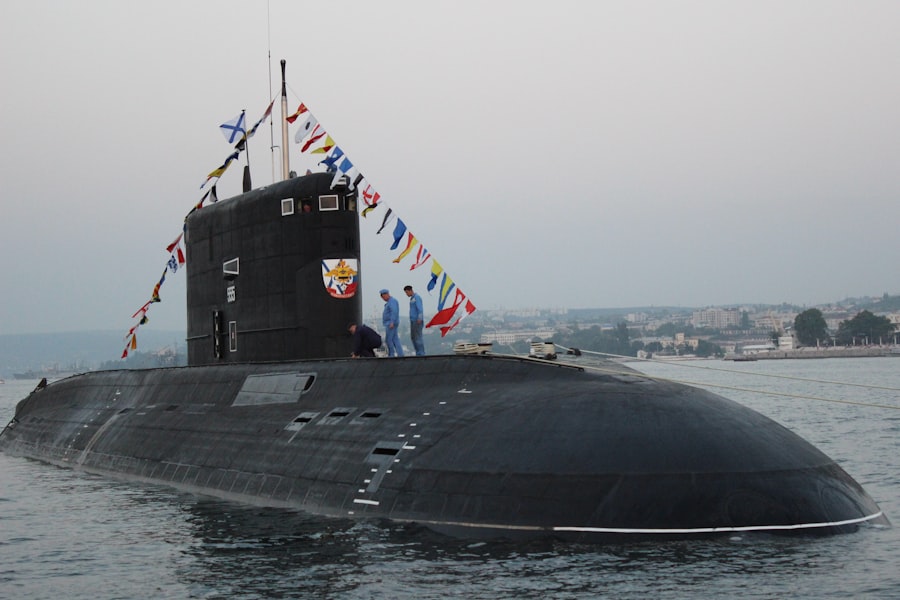
The ability to identify a submarine through its narrowband tonals carries profound strategic implications, influencing operational planning and maintaining a delicate balance of power in the undersea domain.
Intelligence Gathering and Situational Awareness: Knowing the Enemy
The principal use of narrowband tonal identification is to enhance intelligence gathering and maintain situational awareness. Knowing where enemy submarines are, what type they are, and how they are operating is paramount for defensive and offensive naval operations.
Threat Assessment and Force Protection: Guarding the Seas
By identifying submarines, naval forces can assess potential threats to shipping lanes, naval assets, and friendly forces. This information allows for the deployment of countermeasures, the rerouting of vessels, and the strategic positioning of anti-submarine warfare (ASW) assets. It’s like a security guard knowing the identities of all individuals present in a sensitive area.
Operational Planning and Doctrine: Shaping the Battlespace
The knowledge of submarine presence and capabilities directly influences naval operational planning. Knowing the type of submarine encountered can inform tactical decisions, such as the optimal deployment of ASW weapons or the best strategies for evasion or engagement. It shapes the very way battles are fought in the silent depths.
Deterrence and Psychological Warfare: The Invisible Deterrent
The very capability to detect and identify submarines through their acoustic signatures acts as a powerful deterrent. The knowledge that their presence can be detected, even in the vastness of the ocean, forces potential adversaries to be more cautious and limits their freedom of action. This invisible deterrent is a cornerstone of maritime security.
Recent advancements in narrowband tonals submarine identification have significantly enhanced naval capabilities, allowing for more accurate detection and classification of underwater threats. A related article discusses the implications of these technologies on modern warfare and maritime security. For more insights on this topic, you can read the article here, which explores the evolving strategies in submarine detection and the role of acoustic signatures in naval operations.
The Evolving Landscape: Future Trends in Submarine Acoustics
| Metric | Description | Typical Range | Unit | Relevance to Narrowband Tonals |
|---|---|---|---|---|
| Frequency Resolution | Ability to distinguish close tonal frequencies | 0.1 – 1 | Hz | High resolution needed to separate narrowband tonals |
| Signal-to-Noise Ratio (SNR) | Ratio of tonal signal power to background noise | 10 – 40 | dB | Higher SNR improves tonal detection and identification |
| Bandwidth of Tonal | Width of the tonal frequency component | 0.5 – 5 | Hz | Narrow bandwidth indicates tonal purity and source characteristics |
| Duration | Length of tonal emission | 0.1 – 10 | seconds | Longer duration tonals are easier to identify |
| Fundamental Frequency | Base frequency of the tonal signal | 50 – 500 | Hz | Characteristic of specific submarine machinery or propeller blade rate |
| Harmonic Content | Presence of integer multiples of fundamental frequency | Varies | Ratio or count | Helps differentiate between submarine classes and machinery types |
| Source Level | Acoustic power output of the tonal source | 120 – 180 | dB re 1 μPa @ 1m | Higher source levels improve detection range |
| Propagation Loss | Reduction in tonal signal strength over distance | Variable | dB/km | Critical for estimating detection range and identification accuracy |
The sophisticated nature of submarine detection, particularly through narrowband tonals, is a dynamic field constantly evolving with advancements in technology and counter-detection measures.
Advancements in Sensor Technology: Sharper Ears
Ongoing research and development focus on creating more sensitive and sophisticated hydrophones and sonar systems. These advancements aim to detect fainter tonals at greater distances and improve the ability to distinguish complex acoustic signatures amidst increasing ocean noise pollution.
Digital Signal Processing and Machine Learning: The Intelligent Analyst
The application of advanced digital signal processing techniques and machine learning algorithms is revolutionizing acoustic analysis. These technologies can process vast amounts of acoustic data in real-time, identifying subtle patterns and anomalies that might elude human analysts. Artificial intelligence is becoming an increasingly powerful tool in this auditory battle.
Submarine Counter-Measures: The Art of Silence
In response to advancements in detection, submarines are continually evolving their own counter-measures to reduce their acoustic signatures.
Stealthed Propellers and Machinery: The Art of Muting
This includes the design of advanced, low-noise propellers, the development of quieter machinery, and the implementation of sophisticated vibration damping systems. The goal is to make the submarine’s acoustic fingerprint as faint and indiscernible as possible, like a master of disguise blending into the background.
Deception and Evasion Tactics: The Auditory Red Herrings
Submarines also employ deception tactics, such as generating false acoustic signals or operating at depths and speeds that minimize tonal generation. This creates “auditory red herrings” designed to mislead or confuse enemy sonar operators.
In conclusion, narrowband tonals are more than just sounds in the ocean; they are integral components of a complex underwater informational ecosystem. Their detection, analysis, and understanding are vital for maintaining maritime security, power projection, and the delicate balance of global naval operations. As technology continues to advance, the silent conversation of the deep, carried on the wings of these pure-frequency sounds, will undoubtedly continue to evolve, shaping the future of undersea warfare and naval intelligence.

WATCH NOW ▶️ WARNING: The $17M Deal That Blinded The US Navy
FAQs
What are narrowband tonals in submarine identification?
Narrowband tonals refer to specific, discrete frequency signals emitted by submarines, often from machinery or propulsion systems. These tonal signals are used in sonar analysis to identify and classify submarines based on their unique acoustic signatures.
How do narrowband tonals help in identifying submarines?
Narrowband tonals provide distinct frequency patterns that can be detected and analyzed by passive sonar systems. By comparing these tonal frequencies to known submarine acoustic profiles, analysts can determine the type, class, or even the specific submarine emitting the sound.
What equipment is used to detect narrowband tonals from submarines?
Passive sonar arrays and hydrophones are commonly used to detect narrowband tonals. These devices capture underwater sound waves, which are then processed using signal analysis software to isolate and identify tonal frequencies characteristic of submarines.
Are narrowband tonals unique to each submarine?
While many submarines produce similar tonal frequencies due to common machinery, variations in design, maintenance, and operational conditions create unique acoustic signatures. These subtle differences in narrowband tonals can help differentiate between individual submarines or classes.
What challenges exist in using narrowband tonals for submarine identification?
Challenges include background noise interference, signal attenuation over distance, and the presence of multiple vessels producing overlapping tonal signals. Additionally, submarines may employ noise reduction technologies or operational tactics to minimize detectable narrowband tonals, complicating identification efforts.