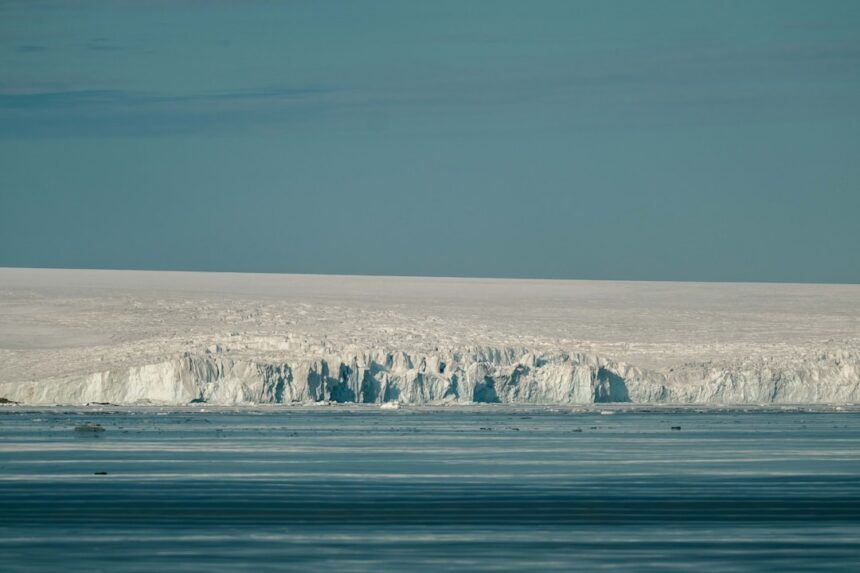
The Arctic region, characterized by its unique environmental conditions and remote geography, serves as a critical area for the study of Extremely Low Frequency (ELF), Very Low Frequency (VLF), and High Frequency (HF) signals. These signals, which are part of the electromagnetic spectrum, play a significant role in various scientific and practical applications, including communication, navigation, and space weather monitoring. The propagation of these signals is influenced by the Arctic’s atmospheric and ionospheric conditions, making it a fascinating subject for researchers and scientists alike.
As the Arctic continues to undergo rapid changes due to climate change and increased human activity, understanding these signals becomes increasingly vital. ELF signals, typically ranging from 3 Hz to 30 Hz, are primarily used for communication with submarines and other underwater vehicles. VLF signals, on the other hand, range from 30 Hz to 300 kHz and are utilized for long-distance communication, particularly in maritime and aeronautical contexts.
HF signals, spanning from 3 MHz to 30 MHz, are essential for shortwave radio communications and can travel long distances by reflecting off the ionosphere. The Arctic’s unique atmospheric conditions can enhance or disrupt these signals, making their study crucial for ensuring reliable communication and navigation in this remote region.
Key Takeaways
- Arctic ELF/VLF/HF signals are crucial for understanding space weather and its impact on communication and navigation.
- Monitoring these signals helps mitigate disruptions in critical communication and navigation systems.
- Advanced technologies and international collaboration enhance the effectiveness of Arctic signal monitoring.
- Monitoring efforts have significant implications for national security and the protection of Arctic ecosystems.
- Ongoing research and innovation are essential for improving future monitoring and safeguarding Arctic environments.
Importance of Monitoring Arctic Signals
Monitoring Arctic ELF, VLF, and HF signals is essential for several reasons.
Understanding how these signals propagate in the Arctic can help researchers predict and mitigate the effects of space weather on communication systems and satellite operations.
As global reliance on technology increases, ensuring the integrity of communication networks becomes paramount, particularly in remote areas where traditional infrastructure may be lacking. Moreover, monitoring these signals can aid in understanding climate change’s impact on the Arctic environment. The region is experiencing unprecedented warming, leading to changes in atmospheric composition and behavior.
By studying ELF, VLF, and HF signals, scientists can gain insights into how these changes affect not only local ecosystems but also global weather patterns. This knowledge is crucial for developing effective strategies to address climate change and its far-reaching consequences.
Understanding the Effects of Arctic Signals on Communication and Navigation

The effects of Arctic ELF, VLF, and HF signals on communication and navigation systems are profound. In the Arctic, where traditional communication infrastructure is often sparse or non-existent, these signals serve as lifelines for ships, aircraft, and research stations. However, the unique atmospheric conditions in the region can lead to signal degradation or interference.
For instance, ionospheric disturbances caused by solar flares can disrupt VLF and HF communications, leading to potential safety hazards for vessels navigating through icy waters. Furthermore, the propagation characteristics of these signals can vary significantly based on time of day and season. During periods of high solar activity, the ionosphere can become more turbulent, affecting signal clarity and reliability.
Understanding these variations is crucial for ensuring that communication systems remain operational under all conditions. Researchers are continually working to develop models that predict how Arctic signals will behave in different scenarios, allowing for better preparedness in the face of potential disruptions.
Role of ELF/VLF/HF Signals in Studying Space Weather
ELF, VLF, and HF signals play a pivotal role in studying space weather phenomena. The interaction between solar wind and the Earth’s magnetic field generates a variety of electromagnetic waves that can be detected as ELF and VLF signals. By monitoring these signals, scientists can gain insights into solar activity’s impact on the Earth’s atmosphere and magnetosphere.
This information is vital for understanding space weather events such as geomagnetic storms, which can have significant effects on satellite operations, power grids, and communication systems. In addition to monitoring solar activity, ELF and VLF signals can also provide information about lightning strikes and other atmospheric phenomena. The detection of these signals allows researchers to study the global electrical circuit of the Earth and its relationship with space weather.
By analyzing the data collected from Arctic monitoring stations, scientists can develop more accurate models of space weather events and their potential impacts on technology and human activities.
Challenges of Monitoring Arctic Signals
| Frequency Band | Frequency Range (kHz) | Typical Applications | Monitoring Parameters | Arctic Monitoring Relevance |
|---|---|---|---|---|
| HF (High Frequency) | 3 – 30 MHz | Long-distance communication, ionospheric studies | Signal strength, ionospheric reflection, noise levels | Monitoring ionospheric disturbances and solar activity effects |
| VLF (Very Low Frequency) | 3 – 30 kHz | Submarine communication, lightning detection, space weather | Signal propagation, lightning-induced signals, geomagnetic activity | Tracking geomagnetic storms and auroral activity |
| ELF (Extremely Low Frequency) | 3 – 30 Hz | Submarine communication, geophysical monitoring | Magnetic field variations, natural ELF emissions | Monitoring Earth’s magnetic field fluctuations and seismic precursors |
Despite the importance of monitoring Arctic ELF, VLF, and HF signals, several challenges hinder effective data collection and analysis. One significant obstacle is the harsh environmental conditions prevalent in the Arctic region. Extreme cold temperatures, ice cover, and limited accessibility can make it difficult to establish and maintain monitoring stations.
Additionally, logistical challenges associated with transporting equipment to remote locations further complicate efforts to gather data consistently. Another challenge lies in the interference caused by natural phenomena such as auroras and geomagnetic storms. These events can introduce noise into the signal data, making it challenging to distinguish between useful information and background interference.
Researchers must develop sophisticated filtering techniques to isolate relevant signals from noise while ensuring that they do not inadvertently discard valuable data.
Technologies and Methods for Monitoring Arctic Signals
To overcome the challenges associated with monitoring Arctic ELF, VLF, and HF signals, researchers have developed various technologies and methods tailored to the unique conditions of the region. One approach involves deploying advanced sensor networks equipped with specialized antennas designed to capture low-frequency signals effectively. These antennas are often placed at strategic locations to maximize coverage while minimizing interference from environmental factors.
In addition to traditional monitoring techniques, researchers are increasingly utilizing satellite-based systems to gather data on Arctic signals. Satellites equipped with advanced sensors can provide real-time information about ionospheric conditions and signal propagation characteristics across vast distances. This approach allows for a more comprehensive understanding of how ELF, VLF, and HF signals behave in response to changing environmental conditions.
Collaborative Efforts in Monitoring Arctic Signals
Collaboration among international research institutions is crucial for effectively monitoring Arctic ELF, VLF, and HF signals. Given the global implications of space weather events and climate change, scientists from various countries are joining forces to share data, resources, and expertise. Collaborative initiatives often involve joint research projects that leverage each partner’s strengths to enhance data collection efforts in the Arctic.
These networks facilitate real-time sharing of information related to signal propagation and ionospheric conditions. By pooling resources and expertise, researchers can develop more robust models that improve predictions of how Arctic signals will behave under different circumstances.
Implications for National Security and Defense
The monitoring of Arctic ELF, VLF, and HF signals has significant implications for national security and defense strategies. As geopolitical tensions rise in the Arctic region due to increased shipping routes and resource exploration, reliable communication systems become essential for military operations. Understanding how these signals propagate in the unique Arctic environment allows defense agencies to develop strategies that ensure secure communications even in challenging conditions.
Moreover, monitoring space weather events is critical for protecting military assets from potential disruptions caused by geomagnetic storms. By staying informed about solar activity and its effects on communication systems, defense agencies can implement contingency plans that minimize risks associated with signal degradation or loss during critical operations.
Protecting Arctic Wildlife and Ecosystems from Signal Interference
While monitoring Arctic ELF, VLF, and HF signals is essential for various scientific and practical applications, it is equally important to consider the potential impact on local wildlife and ecosystems. The introduction of new technologies for signal monitoring may inadvertently disrupt natural habitats or interfere with animal behavior. For instance, certain frequencies may affect migratory patterns or breeding behaviors of species native to the region.
To mitigate these risks, researchers must adopt a holistic approach that balances technological advancement with environmental conservation. This includes conducting thorough assessments of potential impacts before deploying new monitoring equipment in sensitive areas. By prioritizing ecological considerations alongside scientific objectives, researchers can ensure that their efforts do not compromise the integrity of Arctic ecosystems.
Future Prospects in Monitoring Arctic Signals
The future prospects for monitoring Arctic ELF, VLF, and HF signals are promising as advancements in technology continue to evolve. Emerging technologies such as artificial intelligence (AI) and machine learning are being integrated into data analysis processes to enhance signal detection capabilities. These tools can help researchers identify patterns within complex datasets more efficiently than traditional methods.
Additionally, as international collaboration expands in response to shared challenges posed by climate change and space weather events, opportunities for joint research initiatives will likely increase. This collaborative spirit will foster innovation in monitoring techniques while ensuring that diverse perspectives contribute to a comprehensive understanding of Arctic signals.
The Continued Importance of Monitoring Arctic ELF/VLF/HF Signals
In conclusion, monitoring Arctic ELF, VLF, and HF signals remains a critical endeavor with far-reaching implications for communication systems, space weather research, national security, and environmental conservation. As the Arctic undergoes rapid changes due to climate change and increased human activity, understanding these signals becomes increasingly vital for ensuring reliable communication networks while safeguarding local ecosystems. The challenges associated with monitoring these signals necessitate innovative solutions that leverage advanced technologies and collaborative efforts among international research institutions.
By prioritizing both scientific advancement and environmental stewardship, researchers can continue to unravel the complexities of Arctic signals while contributing to a sustainable future for this fragile region. The continued importance of monitoring these frequencies cannot be overstated; they serve as a window into understanding not only our planet’s behavior but also our place within it amidst an ever-changing world.
Recent advancements in monitoring high-frequency (HF), very low frequency (VLF), and extremely low frequency (ELF) signals in the Arctic have opened new avenues for understanding atmospheric and environmental changes in this sensitive region. For a deeper dive into the implications of these monitoring techniques, you can read more in the article available at this link. This article discusses the significance of these frequencies in tracking climate patterns and their potential impact on Arctic ecosystems.
WATCH THIS! 🎬 America’s Nuclear City Was a Lie: The Russian Base That Made Iceworm Obsolete
FAQs
What do HF, VLF, and ELF stand for in Arctic monitoring?
HF stands for High Frequency, VLF stands for Very Low Frequency, and ELF stands for Extremely Low Frequency. These terms refer to different ranges of radio frequencies used in monitoring and communication systems in the Arctic region.
Why are HF, VLF, and ELF frequencies important for Arctic monitoring?
These frequency bands are crucial for Arctic monitoring because they can penetrate the ionosphere and travel long distances, enabling communication and data transmission in the remote and harsh Arctic environment where conventional methods may fail.
What types of phenomena are monitored using HF, VLF, and ELF in the Arctic?
These frequencies are used to monitor natural phenomena such as geomagnetic storms, auroras, ionospheric disturbances, and seismic activity. They also support communication with submarines and other remote sensing applications.
How does the Arctic environment affect HF, VLF, and ELF signal propagation?
The Arctic environment, with its unique ionospheric conditions and geomagnetic activity, can influence the propagation of these frequencies. Variations in solar activity and geomagnetic storms can enhance or disrupt signal transmission.
What equipment is used for HF, VLF, and ELF monitoring in the Arctic?
Specialized antennas, receivers, and transmitters designed to operate at these frequencies are deployed in the Arctic. These include ground-based monitoring stations, satellite systems, and underwater communication devices.
Are HF, VLF, and ELF signals used for communication or only for monitoring?
Both. HF, VLF, and ELF signals are used for scientific monitoring of environmental conditions and for communication purposes, especially for secure and reliable communication with submarines and remote Arctic stations.
What challenges exist in HF, VLF, and ELF Arctic monitoring?
Challenges include extreme weather conditions, limited infrastructure, ionospheric variability, and interference from natural and man-made sources, all of which can affect signal quality and reliability.
How does Arctic monitoring using these frequencies contribute to scientific research?
Monitoring HF, VLF, and ELF signals helps scientists understand space weather effects, geomagnetic phenomena, and Earth’s electromagnetic environment, which are vital for improving communication systems and predicting natural hazards in the Arctic.