You stand at the precipice of a new era in naval operations. The vast blue expanse, once dominated by brute force and hull-to-hull combat, is now a complex chessboard, a kinetic ballet of interconnected systems and rapid decision-making. Modern naval warfare is not about the loudest bang, but the smartest strategy, the most adaptable technology, and the keenest foresight. You, as a navigator of these shifting tides, must understand the currents of change.
The very nature of the maritime domain has undergone a radical transformation. Gone are the days when naval power was solely measured by the number of battleships you could deploy. Today, the operational environment is layered, contested, and increasingly opaque. You are no longer just fighting on the surface; you are operating within a symphony of electromagnetic signals, under the watchful eye of satellites, and in concert with forces operating from land and air.
The Rise of Asymmetric Threats
You face adversaries who may not possess the sheer tonnage of your fleets but wield potent, often unconventional, capabilities. These are the silent submarines that can remain undetected for weeks, the fast-attack craft that can swarm with surprising speed and ferocity, and the anti-ship missiles that can strike from afar with devastating accuracy. Your challenge is to counter these dispersed, adaptive threats that can emerge from unexpected corners of the ocean, much like a single, well-aimed arrow can pierce even the most formidable armor.
The Importance of the Littoral Environment
While the open ocean remains a vital theater, you are increasingly drawn to the complex and strategically critical littoral zones. These are the shallow waters near coastlines, teeming with civilian traffic, underwater obstacles, and the ever-present threat of land-based defenses. Navigating these areas requires a delicate touch, a blend of precision and overwhelming force where a single misstep can have cascading consequences. Think of it as threading a needle in a hurricane; the stakes are immense, and the margin for error is razor-thin.
The Infosphere as a New Domain
Beyond the physical realm, you must contend with the digital battlefield. Cyber warfare has become an intrinsic element of modern conflict, capable of disrupting communications, disabling weapon systems, and sowing disinformation. You are not just fighting with steel and ordnance; you are also waging a war of bytes and algorithms. A breach in your network can be as crippling as the sinking of a capital ship, rendering your most advanced platforms inert.
Naval warfare has evolved significantly over the years, with advancements in technology and strategy playing crucial roles in shaping modern maritime conflicts. For a deeper understanding of contemporary naval strategies and their implications, you can explore the article on naval operations at this link: In the War Room. This resource provides valuable insights into the complexities of naval engagements and the strategic considerations that influence naval power in today’s geopolitical landscape.
Technological Leaps: The Digital Fleet
The hardware of naval warfare has been profoundly reshaped by technological innovation. Your vessels are no longer just platforms; they are intelligent nodes within a larger network, bristling with sensors, advanced weaponry, and sophisticated command and control systems. The future of your naval power lies in the seamless integration and intelligent application of these cutting-edge technologies.
Unmanned Systems: The Extension of Your Reach
You are witnessing the proliferation of unmanned vehicles across all domains. Unmanned aerial vehicles (UAVs) provide persistent intelligence, surveillance, and reconnaissance (ISR) over vast distances, acting as your eyes in the sky. Unmanned surface vehicles (USVs) can patrol choke points, conduct mine countermeasures, and even deliver payloads, extending your operational reach without exposing your crew to undue risk. Submarine drones, or unmanned underwater vehicles (UUVs), can chart treacherous seabeds, conduct anti-submarine warfare (ASW) patrols, and gather vital intelligence in denied areas. These unmanned systems are not replacing human crews but are augmenting them, acting as tireless sentinels and dexterous extensions of your will.
Advanced Sensor Networks: Seeing the Unseen
The ability to detect and identify threats in a cluttered and electronically contested environment is paramount. You rely on sophisticated multi-spectral sensors, advanced radar systems, and passive acoustic arrays to paint a detailed picture of the battlespace. The development of phased-array radar allows for rapid scanning and precise tracking of multiple targets simultaneously, while advancements in infrared and electro-optical sensors offer superior performance in low-light conditions. You are building a collective consciousness for your fleet, where each sensor contributes to a comprehensive understanding of the unfolding events, much like individual neurons forming a complete thought.
Network-Centric Warfare: The Power of Connectivity
The cornerstone of modern naval strategy is network-centric warfare. This concept emphasizes the importance of interconnectedness, allowing for the rapid sharing of information and the coordinated action of disparate forces. Your vessels, aircraft, and even ground units are linked in a robust communication network, enabling real-time situational awareness and synchronized operations. This allows you to prosecute targets with unparalleled speed and efficiency, as information flows like blood through the arteries of your force. A delayed piece of intelligence can be the difference between a successful strike and a missed opportunity.
Directed Energy Weapons: The Future of Punch
You are at the dawn of a new era in naval weaponry with the advent of directed energy weapons (DEWs). Lasers, capable of blinding sensors and destroying drones, and high-power microwave weapons, designed to disrupt electronic systems, are becoming increasingly viable. These weapons offer the promise of precision strike, reduced collateral damage, and a seemingly inexhaustible supply of ammunition. They represent a paradigm shift, moving away from the kinetic expenditure of projectiles towards the instantaneous application of energy.
Strategic Doctrines: Adapting to the New Normal

The evolution of technology has necessitated a corresponding evolution in your strategic thinking. Old doctrines, forged in the crucible of past conflicts, must be re-evaluated and adapted to the complexities of the modern maritime environment. You must embrace flexibility, agility, and a proactive approach to anticipating emergent threats.
Distributed Lethality: Spreading the Threat
A key philosophical shift is towards distributed lethality. Instead of concentrating your most powerful assets in large, vulnerable formations, you are dispersing them, making your entire fleet a threat. Every vessel, regardless of size, is equipped with potent offensive capabilities, forcing adversaries to spread their attention and resources thin. This is akin to scattering thorny vines across a field; no single point is easily bypassed.
Multi-Domain Operations: Orchestrating the Battlefield
Modern conflict is no longer confined to a single domain. You must seamlessly integrate operations across the sea, air, land, space, and cyber realms. Your naval forces must be able to operate in concert with airborne assets, ground forces, and even space-based capabilities, creating a synergistic effect that overwhelms the adversary. Imagine a conductor leading an orchestra; each instrument plays its part, but it is the conductor’s vision that harmonizes them into a powerful crescendo.
Information Dominance: The Ultimate Weapon
In the information age, possessing superior situational awareness and denying your adversary the same is a critical strategic advantage. You strive for information dominance, ensuring your forces have the most accurate, timely, and comprehensive understanding of the battlespace. This involves robust intelligence gathering, secure communication channels, and the capability to disrupt or degrade enemy information systems. Knowledge, in this context, is not just power; it is survival.
Deterrence in the Gray Zone
You also operate in the nebulous “gray zone” – the space between overt conflict and peace. This can involve proxy warfare, cyber intrusions, economic coercion, and political subversion. Your naval presence, even in peacetime, can serve as a powerful deterrent against these subtle yet destabilizing actions. Your ships are not just warships; they are diplomatic tools, projecting stability and demonstrating commitment to international norms.
The Human Element: The Enduring Core
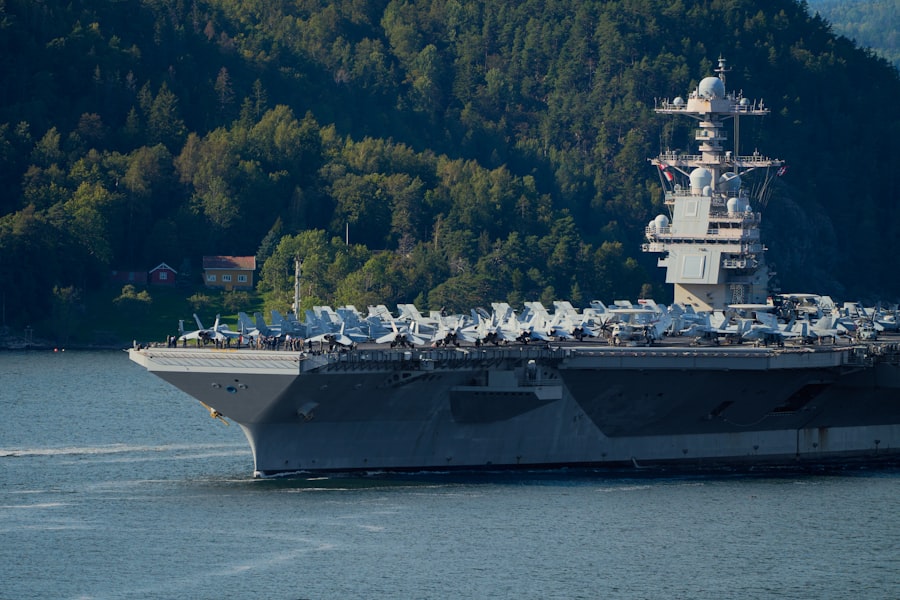
Despite the relentless march of technology, the human element remains the irreducible core of your naval power. The most advanced systems are only as effective as the individuals who operate, maintain, and command them. You must invest in the training, education, and well-being of your sailors and officers.
The Importance of Training and Education
You require sailors who are not only proficient in operating complex machinery but also possess the critical thinking skills to adapt to rapidly changing scenarios. Continuous training, realistic simulations, and a culture of learning are essential to keep your forces at the cutting edge. You are developing problem-solvers and strategists, not just operators.
Leadership and Decision-Making Under Pressure
In the chaotic environment of naval combat, decisive leadership and sound judgment are paramount. Your officers must be equipped to make difficult decisions under immense pressure, often with incomplete information. The ability to remain calm, assess the situation, and act decisively can mean the difference between victory and defeat. You are cultivating the courage and wisdom to steer the ship through any storm.
Crew Complement and Well-being
As technology automates many tasks, you are re-evaluating crew complements. The goal is not simply to reduce numbers but to optimize human-machine teaming. Furthermore, the mental and physical well-being of your crews, especially during long deployments in isolated environments, is crucial for sustained operational effectiveness. A tired and demoralized crew is a vulnerability, regardless of the technology they command.
Naval warfare has evolved significantly over the years, adapting to new technologies and strategies that shape modern conflict at sea. For those interested in exploring this topic further, a related article discusses the impact of unmanned systems on naval operations and their potential to revolutionize maritime combat. You can read more about this fascinating development in the field by visiting this detailed analysis.
The Future Outlook: Navigating Uncharted Waters
| Metric | Description | Example/Value |
|---|---|---|
| Number of Ships | Total naval vessels involved in a conflict | 150 ships (Battle of Leyte Gulf, 1944) |
| Ship Types | Categories of ships used in naval warfare | Aircraft carriers, destroyers, submarines, cruisers |
| Range of Naval Guns | Maximum effective firing distance of naval artillery | Up to 20 miles (16-inch guns on Iowa-class battleships) |
| Submarine Stealth Duration | Time a submarine can remain undetected underwater | Up to 90 days (nuclear-powered submarines) |
| Aircraft Carrier Air Wing Size | Number of aircraft deployed on a carrier | Approximately 60-90 aircraft |
| Missile Range | Distance naval missiles can travel | Up to 1,500 km (Tomahawk cruise missile) |
| Naval Battle Duration | Typical length of major naval engagements | Several hours to multiple days |
| Casualties | Number of personnel lost in naval battles | Over 6,000 (Battle of Jutland, 1916) |
The landscape of modern naval warfare will continue to shift. You must remain vigilant, adaptable, and forward-looking to anticipate and counter emerging threats. The sea is a dynamic and unforgiving medium, and only those who can master its challenges will prevail.
The Persistent Challenge of Anti-Access/Area Denial (A2/AD)
Adversaries are investing heavily in A2/AD capabilities, aiming to deny your access to critical maritime areas. This involves a layered defense of over-the-horizon radars, long-range anti-ship missiles, submarines, and air defenses. Your challenge is to develop strategies and technologies that can penetrate or bypass these formidable defenses, like a sculptor chipping away at an intractable block of marble.
The Role of Alliances and Partnerships
In an increasingly interconnected world, no single navy can operate in isolation. You rely on strong alliances and partnerships to share intelligence, conduct joint exercises, and maintain a global presence. These collaborations are essential for collective security and for projecting a unified front against potential adversaries. They are the interlocking gears that make a larger machine turn.
The Continuous Evolution of Technology
The pace of technological advancement shows no signs of slowing. You must commit to continuous research and development, exploring new concepts, materials, and weapon systems. The navies that embrace innovation and adapt quickly will be the ones that shape the future of naval warfare. You are not just preparing for tomorrow; you are building it, one breakthrough at a time. Your vigilance and adaptability are the true anchors in a constantly churning sea.
WATCH NOW▶️ Submarine detection technology history
FAQs
What is naval warfare?
Naval warfare refers to combat conducted on or under the sea, involving warships, submarines, and other naval forces. It includes battles, blockades, and control of sea routes.
What are the main types of naval vessels used in naval warfare?
The main types of naval vessels include aircraft carriers, destroyers, frigates, submarines, cruisers, and amphibious assault ships. Each serves different roles such as air support, surface combat, underwater warfare, and troop transport.
How has naval warfare evolved over time?
Naval warfare has evolved from ancient rowing galleys and sailing ships to modern steel warships equipped with advanced technology like radar, missiles, and nuclear propulsion. The introduction of aircraft carriers and submarines significantly changed naval strategies.
What are common tactics used in naval warfare?
Common tactics include blockades to restrict enemy movement, fleet engagements to gain control of sea areas, submarine warfare to disrupt shipping, and amphibious assaults to land forces on hostile shores.
Why is control of the sea important in naval warfare?
Control of the sea allows a nation to protect its trade routes, project military power, secure supply lines, and prevent enemy forces from moving freely. It is crucial for both economic security and military strategy.