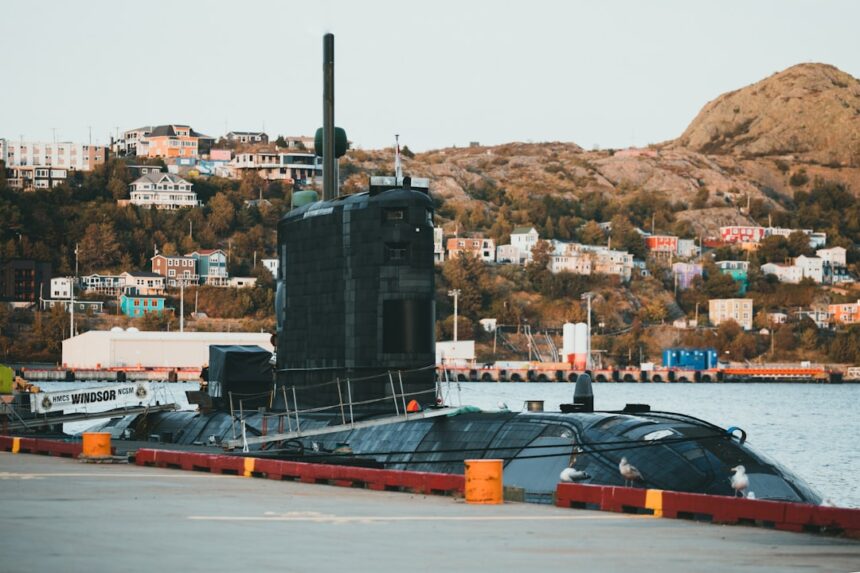
Submarine warfare has evolved significantly since its inception, becoming a critical component of modern naval strategy. The stealth and versatility of submarines allow them to operate undetected beneath the ocean’s surface, making them formidable assets in both offensive and defensive operations. Historically, submarines have played pivotal roles in major conflicts, from World War I to contemporary military engagements.
Their ability to launch surprise attacks, gather intelligence, and disrupt enemy supply lines has made them indispensable in naval warfare. The strategic importance of submarines extends beyond mere firepower; they serve as a deterrent against potential adversaries. Nations invest heavily in submarine technology and capabilities, recognizing that a robust submarine fleet can influence geopolitical dynamics.
As global tensions rise and maritime disputes become more pronounced, the role of submarines in maintaining national security and projecting power continues to grow. Understanding the intricacies of submarine warfare is essential for comprehending modern military operations and the future of naval engagements.
Key Takeaways
- Submarine warfare relies heavily on advanced technology, intelligence, and effective tactics for successful operations.
- Sonar and acoustic technologies are critical for detecting and countering submarine threats.
- Communication, coordination, and crew training are essential components for operational efficiency and safety.
- Submarines play a strategic role in modern naval warfare, influencing decision-making and defense planning.
- Future developments in submarine technology and strategy will continue to shape naval combat dynamics.
Understanding Submarine Technology and Capabilities
The technology that underpins submarine warfare is complex and continually advancing. Modern submarines are equipped with sophisticated systems that enhance their operational capabilities, including advanced propulsion systems, stealth technologies, and weaponry.
This capability significantly extends their operational range and strategic flexibility. In addition to propulsion advancements, modern submarines are outfitted with cutting-edge sensors and weapons systems. These include torpedoes, cruise missiles, and mines, which can be deployed with precision against a variety of targets.
The integration of advanced navigation systems and automated controls further enhances their effectiveness in complex maritime environments. As technology continues to evolve, submarines are becoming increasingly capable of conducting multi-domain operations, integrating air, land, and cyber capabilities into their missions.
Importance of Intelligence and Surveillance in Submarine Warfare
Intelligence and surveillance are paramount in submarine warfare, as they provide the necessary situational awareness for effective decision-making. Submarines operate in a domain where visibility is limited, making it crucial for commanders to gather accurate information about enemy movements and capabilities. This intelligence can be obtained through various means, including satellite reconnaissance, aerial surveillance, and signals intelligence.
Moreover, submarines themselves play a vital role in intelligence gathering. Their ability to operate covertly allows them to collect valuable data on enemy naval activities without detection. This information can be used to inform strategic planning and operational tactics, ensuring that commanders have a comprehensive understanding of the battlefield.
In an era where information dominance is key to success, the integration of intelligence and surveillance into submarine operations is more critical than ever.
Effective Submarine Tactics and Maneuvers
Submarine tactics are designed to exploit the unique advantages of underwater operations while mitigating inherent risks. One fundamental tactic is the use of stealth to approach enemy vessels undetected. Submarines often employ a variety of maneuvers to evade detection, such as changing depth or speed and utilizing natural underwater features for concealment.
These tactics allow submarines to position themselves advantageously for surprise attacks or reconnaissance missions. Another effective tactic involves the use of coordinated attacks with other naval assets. Submarines can work in conjunction with surface ships and aircraft to create a multi-layered defense or offense.
For instance, while surface vessels engage an enemy fleet, submarines can target supply lines or command ships from below the surface. This synergy enhances the overall effectiveness of naval operations and complicates the enemy’s response options.
Communication and Coordination in Submarine Warfare
| Metric | Description | Typical Values | Strategic Importance |
|---|---|---|---|
| Submarine Detection Range | Maximum distance at which a submarine can be detected by sonar or other sensors | 5-20 nautical miles | Critical for early warning and evasion |
| Submarine Endurance | Duration a submarine can operate underwater without surfacing | 20-90 days (nuclear), 1-3 days (diesel-electric) | Determines operational range and stealth capability |
| Weapon Loadout | Number and types of torpedoes, missiles, and mines carried | 12-40 weapons | Defines offensive and defensive capabilities |
| Speed (Submerged) | Maximum underwater speed of the submarine | 20-35 knots | Influences tactical maneuvering and evasion |
| Stealth Features | Technologies and design elements to reduce noise and detection | Acoustic tiles, anechoic coatings, quiet propulsion | Enhances survivability and surprise attack potential |
| Communication Range | Distance over which submarines can communicate while submerged | Up to 20 nautical miles (VLF/LF) | Important for coordination and command |
| Patrol Area Coverage | Geographical area a submarine can effectively monitor or control | Thousands of square nautical miles | Determines strategic influence in maritime zones |
Effective communication and coordination are essential components of successful submarine operations. Given the unique challenges posed by underwater environments, maintaining contact with command structures and other units is critical. Submarines often rely on secure communication systems that can transmit data while minimizing the risk of detection by adversaries.
Coordination among submarine crews is equally important during missions. Submarines operate with small crews who must work closely together to execute complex tasks under pressure. This requires a high level of training and trust among crew members, as well as clear protocols for communication during operations.
The ability to share information quickly and accurately can mean the difference between success and failure in high-stakes scenarios.
Utilizing Sonar and Acoustic Technology for Submarine Detection

Sonar technology is at the heart of submarine warfare, serving as the primary means of detecting underwater threats and navigating through complex environments. Active sonar systems emit sound waves that bounce off objects in the water, allowing submarines to identify nearby vessels or underwater features. Conversely, passive sonar systems listen for sounds generated by other vessels, providing valuable information about enemy movements without revealing the submarine’s position.
The effectiveness of sonar technology is continually being enhanced through advancements in acoustic processing algorithms and sensor design. Modern submarines are equipped with sophisticated sonar arrays that can detect even the faintest sounds produced by enemy ships or submarines. This capability allows submarines to maintain situational awareness while remaining hidden from enemy detection efforts.
Countermeasures and Defense Against Submarine Attacks
As submarine warfare has evolved, so too have the countermeasures designed to detect and neutralize these stealthy vessels. Anti-submarine warfare (ASW) strategies encompass a range of tactics and technologies aimed at identifying and targeting enemy submarines before they can strike. These include deploying sonar buoys, utilizing maritime patrol aircraft equipped with advanced sensors, and employing surface ships with ASW capabilities.
In addition to detection efforts, countermeasures also involve developing technologies that can neutralize submarine threats once identified. Torpedoes designed specifically for anti-submarine warfare are equipped with advanced guidance systems that allow them to home in on their targets effectively. Furthermore, naval forces often conduct joint exercises to enhance their ASW capabilities, ensuring that they remain prepared to counter any potential submarine threats.
Role of Submarines in Modern Naval Warfare
Submarines play a multifaceted role in modern naval warfare that extends beyond traditional combat scenarios. They serve as strategic deterrents capable of launching nuclear strikes if necessary, thereby contributing to national security on a global scale. The presence of a capable submarine fleet can deter potential aggressors from engaging in hostile actions against a nation or its allies.
Moreover, submarines are increasingly utilized for unconventional warfare operations such as special forces insertion or intelligence gathering missions. Their stealthy nature allows them to operate in denied areas where surface vessels may be vulnerable. As geopolitical tensions continue to rise in various regions around the world, the role of submarines as versatile tools for power projection and strategic influence becomes ever more pronounced.
Training and Skill Development for Submarine Crews
The effectiveness of submarine operations hinges on the training and skill development of their crews. Operating a submarine requires specialized knowledge across various disciplines, including navigation, engineering, weapons systems operation, and emergency procedures. Comprehensive training programs are essential to ensure that crew members are well-prepared for the challenges they may face during missions.
Simulation-based training has become increasingly prevalent in preparing submarine crews for real-world scenarios. Advanced simulators replicate various operational environments and emergency situations, allowing crew members to practice their skills in a controlled setting before deploying into actual missions. This hands-on experience fosters teamwork and enhances decision-making abilities under pressure—critical components for success in submarine warfare.
Strategic Planning and Decision Making in Submarine Warfare
Strategic planning is a cornerstone of successful submarine operations, requiring careful consideration of various factors such as mission objectives, environmental conditions, and potential adversary actions. Commanders must analyze intelligence reports and assess risks before making decisions regarding deployment or engagement strategies. The ability to adapt plans based on real-time information is crucial in dynamic maritime environments.
Decision-making processes within submarine operations often involve collaboration among various levels of command. Senior officers provide overarching strategic guidance while junior officers contribute insights based on their expertise and situational awareness. This collaborative approach ensures that decisions are well-informed and take into account multiple perspectives—ultimately enhancing operational effectiveness.
Future Trends and Developments in Submarine Warfare
As technology continues to advance at an unprecedented pace, the future of submarine warfare promises to be shaped by several emerging trends. One significant development is the increasing integration of unmanned systems into submarine operations. Unmanned underwater vehicles (UUVs) can be deployed for reconnaissance or mine detection missions, augmenting traditional submarine capabilities while reducing risk to human crews.
Additionally, advancements in artificial intelligence (AI) are poised to revolutionize decision-making processes within submarines. AI algorithms can analyze vast amounts of data from sensors and intelligence sources more quickly than human operators, providing commanders with actionable insights in real time. This integration could enhance situational awareness and improve response times during critical operations.
In conclusion, submarine warfare remains a vital aspect of modern military strategy characterized by its complexity and evolving nature. As nations continue to invest in advanced technologies and training programs for their submarine fleets, understanding the intricacies of this domain becomes increasingly important for military planners and analysts alike. The future will undoubtedly bring new challenges and opportunities as submarines adapt to an ever-changing global landscape.
Submarine warfare strategy has evolved significantly over the years, adapting to new technologies and geopolitical landscapes. A related article that delves into the intricacies of modern submarine tactics can be found on In The War Room.
For more insights, you can read the article [here](https://www.inthewarroom.com/).
FAQs
What is submarine warfare strategy?
Submarine warfare strategy refers to the tactics and methods used by naval forces to deploy and utilize submarines effectively in combat. It involves stealth, surprise attacks, reconnaissance, and disrupting enemy supply lines.
How do submarines contribute to naval warfare?
Submarines contribute by providing stealthy surveillance, launching torpedoes or missiles against enemy ships and submarines, gathering intelligence, and enforcing blockades. Their ability to operate underwater makes them difficult to detect and counter.
What are the primary objectives of submarine warfare?
The primary objectives include sinking enemy vessels, protecting friendly naval assets, gathering intelligence, disrupting enemy supply and communication lines, and maintaining control over strategic maritime areas.
What types of submarines are used in warfare?
There are mainly two types: attack submarines (SSNs) designed to seek and destroy enemy submarines and surface ships, and ballistic missile submarines (SSBNs) equipped with nuclear missiles for strategic deterrence.
How do submarines avoid detection?
Submarines avoid detection by operating silently, using advanced sound-dampening technologies, traveling at low speeds, and utilizing the ocean’s thermal layers to mask their sonar signatures.
What role does technology play in submarine warfare strategy?
Technology is crucial, including sonar systems, stealth materials, advanced propulsion, communication systems, and weaponry. These advancements enhance detection capabilities, stealth, and combat effectiveness.
How has submarine warfare strategy evolved over time?
Submarine warfare has evolved from simple underwater torpedo attacks in World War I to complex, multi-role platforms capable of launching guided missiles, conducting electronic warfare, and performing special operations in modern navies.
What are the challenges faced in submarine warfare?
Challenges include detecting enemy submarines, maintaining communication while submerged, navigating underwater hazards, and countering anti-submarine warfare tactics such as sonar detection and depth charges.
Can submarines be used for non-combat purposes?
Yes, submarines are also used for reconnaissance, scientific research, search and rescue missions, and as platforms for special forces operations.
What is the importance of submarine warfare in modern naval strategy?
Submarine warfare remains vital for maintaining naval superiority, strategic deterrence, and securing maritime trade routes, making it a key component of modern naval defense and offense strategies.